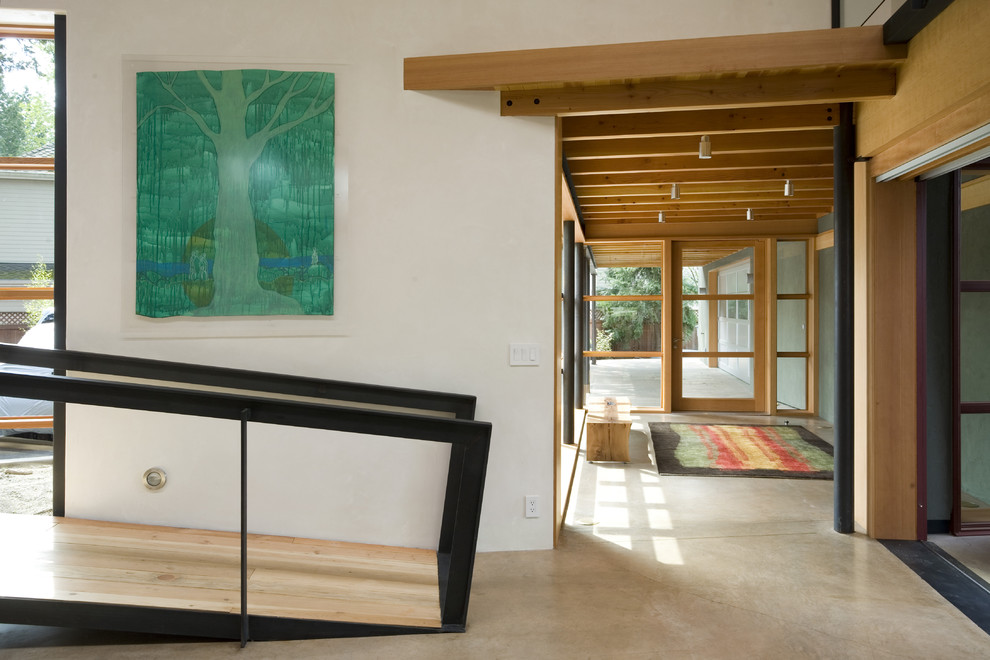
Wider hallways and turn zones allow individuals with wheelchairs to easily turn and navigate. Aim for a minimum of 5 feet wide on average; however, some in motorized chairs will need a more generous 7 feet radius to turn their chairs.
Universal Design--2013 Interior ramp; turning space for Electric wheelchairs. A covered or sheltered entryway offers homeowners and visitors alike shelter from the weather. This benefits those with mobility aids who need to put things aside to manipulate keys and doors. For even quicker access, keyless push-button entry systems eliminate the need to fuss with keys, and a door with a lever handle is easier to manipulate than a thumb latch or round knob. Keep this area well lit for safety reasons, too.
Add to ideabook by Camber Construction by Camber Construction
Consider having a bench or other landing space outside the entry door to put packages on.
Wider hallways and turn zones allow individuals with wheelchairs to easily turn and navigate. Aim for a minimum of 5 feet wide on average; however, some in motorized chairs will need a more generous 7 feet radius to turn their chairs.