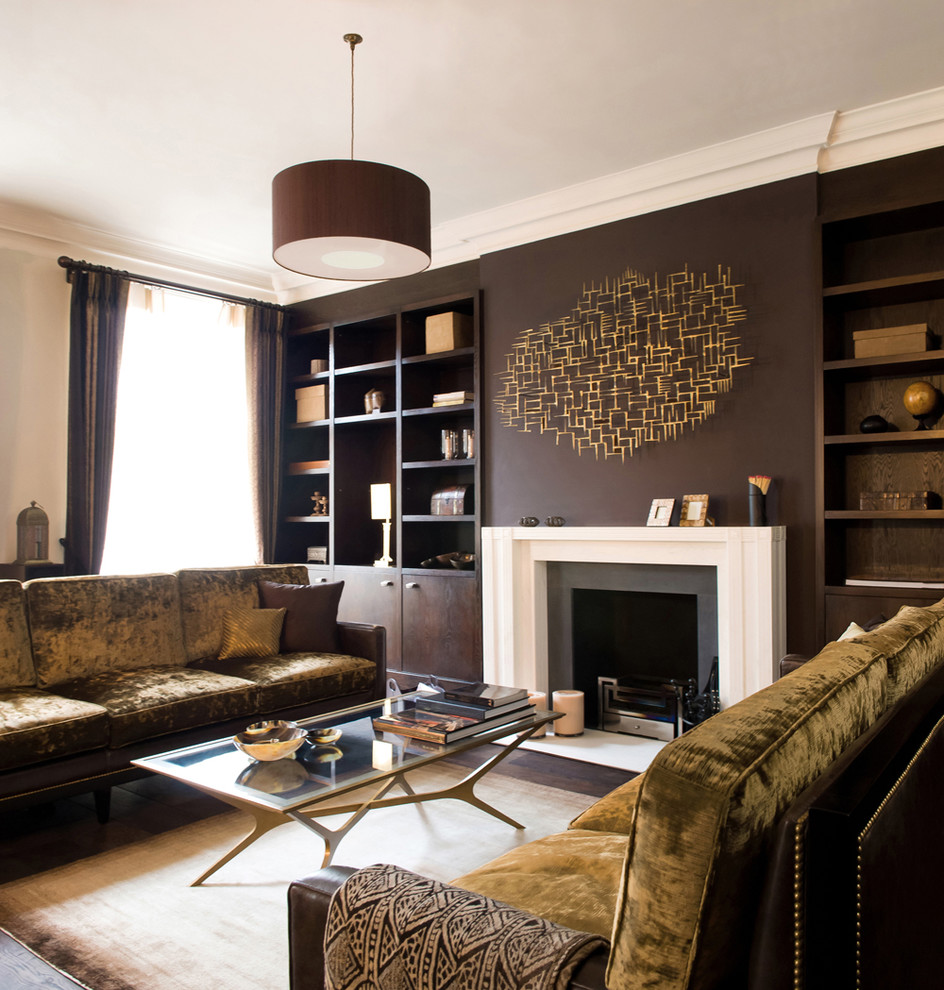
Painting a dark color on walls. "Painting dark colors is more difficult and less forgiving than painting light colors," says Storey. Be prepared for three coats of paint — sometimes four — to get the proper dark hue on your walls.Deciding whether or not to prime is often an issue with dark paint colors. "When doing light to light or dark to dark, you don't usually need primer," says Rick Watson, manager of product information at Sherwin-Williams. Otherwise, you'll want to use a high-hiding primer that's designed for the material you're painting. Jordan recommends using a gray-shaded primer to help reveal a color's depth. "When a primer is tinted to the right shade of gray, light absorption and reflection find a harmonized
balance, offering maximum top-coat coverage and great hiding and color vibrancy," she says. Again, painting technique is important. "Darker colors are fuzzier and are more likely to leave marks where they dry faster," says Davison. Since these colors can bleed, paint carefully and quickly. "Be more methodical than you would with a light color, as roller marks can be more apparent with a darker color," says Storey. He recommends using a roller with a shorter nap (3/8 inch to 1/2 inch) to make sure the paint is applied smoothly. Be careful not to put on too much paint in one coat, which can look uneven when it dries.