Software
Houzz Logo Print
dogonit_gw

are red currants supposed to be horribly bitter??

19 years ago

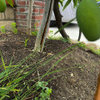
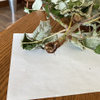
hi all, i'm new to the garden web so please forgive me if i leave out a bit of importent info. we've just moved to a new house in montana from virginia and there are several red currant bushes in the yard. i don't have any experience with currants at all and i was very excited when i saw the bushes. but when i tried one it was so bitter i had to spit it out. i've heard about people eating these things with sugar, but i can't imagine any amount of suger would make them palatable. there was no sweetness at all, maybe a little tart, but mostly BITTER!! and it stays with you, i had that bitter taste in my mouth for an hour. best i can tell they're ripe, sort of translucent and look pretty much like pictures i've seen of red currants. what i want to know is if this is typical of currants, or just mine? we're in zone 4, can't remember if it's 4a or 4b. the bushes are established, the largest probably about 7-8feet tall. that one is watered daily, the smaller bushes are not. all the berries are bitter. no idea how the bushes were treated prior to us moving here, but the previous owners said they never did anything with them. there are even a few bushes with orange berries that look just like the red ones, only the different color. maybe slightly less bitter, but they're still pretty bad. if there's something i can do to sweeten them up, some sort of fertilizer or something i'll definitely give it a shot. but these things are so bitter i can't imagine ever eating one voluntarily. any help or advice would be greatly appreciated. thanks!

Comments (17)

  • 19 years ago

    I have never heard of them being bitter, just really sour. Are you certain they are red currants?

  • 19 years ago

    My red currants have been done bearing fruit since June.

    My guess is you are not eating red currants.....maybe cranberry viburnum?

    ~Chills

  • 19 years ago

    dogonit:

    I think Chills may have hit the nail on the head here. The red lake currants I have grown here also ripened by late June. But I had a couple of large bushes called "bush cranberry" by the mailorder nursery, which is the viburbam, and they hung on until September. And boy, did they taste awful. The bushes were aggressive and becoming very large, the berries useless, so I took them out.

    Of course, ordinary bog cranberries taste pretty bad until they are cooked into a sauce, but we tried that with the bush types and they still tasted awful.

    Don Yellman, Great Falls, VA

  • 19 years ago

    well, you all got me thinking so i googled the cranberry veburnum and that's not it, the leaves aren't even close. also googled currants and found out that it's not that either. go figure.... should have done that first. the berries look so much like currants i just figured that's what they were, plus the previous homeowners said they were currants too. but the leaves aren't anythign close to the maple like shape they're supposed to be. they're more a rounded teardrop shape, about 1 1/2" long. the leaves and berries are at the end of the stem and are mixed in w/ each other. most the berries are gone now thanks to the birds, but a lot are left on the biggest bush. looks like just about all the foliage and berries are on the outside of the bush starting at about 3' above the ground.
    i'm leaning towards ripping them all out, (maybe burning them down lol) but won't get around to it till next spring or summer so i've got a little time to figure out what they are. if anybody's got any ideas i'd appreciate it, i'm just bummed that they aren't really currents lol... many thanks you guys, :)

  • 19 years ago

    You may have gotten into some of the wild cherries that grow in this country- they can be horribly bitter until a frost hits them, and some of them grow fairly bushlike. They have been ripening the last week or two. The waxwings hit them pretty hard.

    We have a lot of mountain ash, also, but they tend to be more tree-like. Waxwings love these, too. There are bush-appearing mountain ashes. There's also several hawthornes, but they're usually edible enough off the shrub without a frost, and it's late for them unless you're very high up. My wife adds that these are purple. Do you have a picture handy?

    It just occured to us that there's a bush honeysuckle around here that might fit your description. Nobody ever tries to eat it ... :-)

    You might find the Peterson Field Guide ROCKY MOUNTAIN WILDFLOWERS Craighead, Craighead and Davis useful, and we also use Kirk's WILD EDIBLE PLANTS of the Western United States (Naturegraph, 1970) as well as Rydberg's "FLORA" Volumes (Dover, 1971.

    Probably a good idea to familiarlize yourself with some of this stuff if you want to eat much of it!

    Good luck, and welcome to Montana.

    M

  • 19 years ago

    Here's a long shot, but I was looking in my yard today and it appears (after too long, IMHO) that my Autumn Olive (which was ordered and planted as a goumi) has small red (with silverish speckles) fruit on it.

    They're bitter with a little tartness that mellows to slight-sweetness as one chews them.

    Maybe that's what you've got. The leaves are somewhat tear shaped and silvery on the bottom. The leaves and stems can be speckled with reddish-brown as well.

    I hope you find out what it is (and don't eat more until you find out!).

    ~Chills

  • 19 years ago

    I support Mark's suggestion that they might be honeysuckle. Your description sounds a lot like them. They are commonly planted as part of a windbreak and if left to grow with good moisture, will reach 12-15 feet, sometimes 20'. They grow as a large bush, and can be pruned as a hedge and kept small if desired. The bark tends to be pretty light colored, and on older stems it often gets to looking a bit shaggy. They usually bloom in mid to late May and can be quite pretty then--not solid flowers, but a lot of flowers backgrounded by the green leaves. The flowers are usually some version of white, yellow, pink, or red and have a nice fragrance. The fruit colors up in mid to late summer and is usually red or orange. Double fruits are quite common. Your description of the taste is quite indicative. Honeysuckle may have some components that are a little toxic, but it is just plain bitter so nobody would ever eat the large quantity required to get sick, and then it would probably only cause a stomach upset. The birds love it, both for the fruit and it can get quite thick and makes great shelter in the winter.

    Honeysuckle are prone to aphid infestations which can result in deformed and discolored branch tips. Some varieties are resistant, but I don't find it is usually worth it to control the aphids as they don't really hurt the plant. Just cut the ends of the branches off and dispose if they bother you.

  • 19 years ago

    I forgot to mention the currants. There are the common currants you see advertised in the catalogs which have thorny (more like prickly hairs) stems and don't seem to get much more than 2-3 feet high (although wild ones are about all I see). The fruit is usually fairly small but good and can be red, orange, white, or black depending on the variety of bush.

    There is another native currant (we refer to them as June berries) which is also a rubus species, but it is quite different. It can get 5-6 feet tall, has no thorns, and has a bright yellow bloom in April/May, the center is kind of like a very small daffodil and rimmed with red. It is extremely fragrant with the scent of cloves and can be quite captivating. The fruit ripens in Aug to Sept. when they turn deep purple/black and are about the size of blueberries. Good for pies, jam, etc. and if left on the bush, will dry over time and taste good dried. Birds eat them over the winter also. The leaves are also maple leaf shaped and it turns an attractive red or orange in the fall.

    Finally, there are the service berries, sometimes called June berries, and called Saskatoons in Canada. They are a larger bush from the prunus family, not a currant. Sometimes also called the western blueberry. It blooms heavily in May with white flowers and a nice fragrance. The fruit ripens from early July to late Aug. depending on elevation. The plant seems to like moister areas and often grows along streams and in draws on the plains. Birds love the fruit, which grows to between 1/4 and 1/2 inch in diameter and looks more like a blueberry. You may have a competition with the birds to get any. This bush also has very attractive orange/red foliage in the fall. Depending on the variety and genetic makeup of the plant, it will grow to 6 to 15 feet, although you can prune out the larger stems to keep a smaller height.

    All of these are very winter hardy, have good fruit, and are suitable for growing in limited spaces or as an edible lanscape plant.

  • 19 years ago

    Take a look at the link below and see if the photos match your plant. Also, do a Google image search for Lonicera tatarica.

    Beeone, I think you meant Ribes, not Rubus. Sounds like Ribes aureum, Golden Currant or Clove Currant.

    Here is a link that might be useful: Lonicera tatarica

  • 19 years ago

    wow, you guys are a huge help, esp marknmt & beeone. i apppreciate all the imput. i went out and took a good look and googled some images, and i'm willing to bet that you two are right on w/ the honeysuckle. the bark is pretty much as beeone describes. have no idea how it flowers as we've only been in the house for a month.

    and yeah, my husband fussed at me for eating something & not knowing what it was. said i deserved the bitter taste in my mouth for doing it lol.... never occured to me they could be toxic, guess it's a good thing i didn't cook up a big batch of jam with the things. :-)

    my husband has also been laughing at me trying to figure out what these bushes are, i'm sure he'll be releaved to hear the end of it lol... i have a feeling these bushes will be removed, not really fond of the placement and from what i've read they're not the best things to have around anyway. the birds like the berries, but i've also read that the berries aren't that good for them, too many carbs or something, who'd have guessed... but if anybody knows of any benefits to keeping them i'd be happy to hear them. i'd hate to regret pulling them up later. regardless i'm thinking maybe i'll plant something w/ edible berries, i'm afraid i've got the idea in my head now and i just HAVE to have something to replace the blueberries i had to leave behind in VA. thanks again you guys! :)

  • 19 years ago

    hey kiwinut, jsut noticed your post. yes, my bushes are similar, but i think much larger and not as full on the bottom. wish i'd seen that post before i ate one of those berries, YUCK!! lol :-)

  • 19 years ago

    Dogonit, what part of the state did you land in? We're in Mizzou. (Don't worry, I won't make you come over and have dinner with us ...)

    :-)M

  • 19 years ago

    we're in townsend, i think it's about 30 miles or so south of helena. i absolutely love living in Montana!! everybody is sooo friendly, unlike the daily rudeness and attitude i got from almost everybody in VA (norfolk area) And the mountains are beautiful, but a little scary for me i must confess. i was born and raised in dallas TX, and have lived in SE VA for the last 17 years so i'm used to HOT and FLAT! i'm already cold in the evenings and at night, and will NOT drive over a pass unless i absoultely can't help it LOL... Luckily no passes on the way to helena. :) We've got a great view of the mountains from our house though, and can see the whole town and Canyon Ferry Lake. i'm going to have to get used to the different growing conditions around here though. i'm assuming a shorter and milder growing season that what we're used to (zone 7-8). we try to have a big garden every year, lots of tomatoes, peppers, summer squash, corn, and all that. i've been told it'll all grow ok except for the corn (sob!).

    anyway, thanks for all the help. do you think ROCKY MOUNTAIN WILDFLOWERS would give me some ideas of what to plant around here? or any other suggestions? it'll be next spring before i do anything, but i need to find some local plants to plant around in the areas that aren't irrigated. some wild flowers sound like a good idea, my daughter'd love that. we've got 3 acres, only one of which is grass, the rest is rocks, these thorny scrubby things, tumbleweed looking things, and dried up horse poop from the previous owners lol... thanks again mark! :-)

  • 19 years ago

    You're right, Kiwinut, shortly after I posted it I realized I got the name wrong, it is ribes.

    The one we have is probably the clove currant. Compared to the other ones, I certainly like it. No stickers to worry about, much larger, tasty fruit, very early to green up in the spring and a wonderful scent when it blooms. Only downfall it has is that it tends to get powdery mildew with sprinkler irrigation, but other than the appearance of the leaves, it doesn't hurt it.

    Dogonit: Don't worry, you should be able to grow sweet corn with no problem. Just don't plant any long season corn. Anything under 90 days should be OK. 65 day corn will do great, but something in the 75-85 day range will taste better. Start by getting seed locally at a Co-op or feed/farm supply store where they sell it in bulk as they will carry varieties that will mature. Just scoop out a small package and enjoy. Treated seed (usually it will be pink or red) tends to do better as the seed treatment helps hold off soil insects and disease while the corn is germinating. It can take a little longer to get it to germinate in the spring with the cooler soils and treatment helps prevent it from rotting, or you can wait to plant until later in May when the soils warm up more.

    Get to know your Univ. of Mont. Extension agent and if you are dealing with trees or landscaping and some acreage, visit with your local conservation district.

  • 19 years ago

    kiwinut: YEAH! i can get my fresh from the garden corn!! i'd been told not to bother with it around here, but i'm definitely going to try now. hadn't thought of an extension agent, good idea. i'm clueless about native plants around here, everything is so foreign to me now. definitely willing to learn though. thanks again! just love this website :)

  • 19 years ago

    Dogonit,

    If you do decide to replace whatever it is you have, I would second the recommendation for a clove currant. Mine is a Crandall, and the berries are much sweeter than I had expected them to be.

    As for what to plant, I would also second the recommendation to get to know your extension agent (and any neighbors that garden). I would also suggest you take a look at the High Country Gardens website and catalog. Although they are in New Mexico, they specialize in plants that grow well in the intermountain West, including Wyoming and Montana. The catalog can give you a lot of good ideas.

    And if you look in on us on the Rocky Mountain forum, you'll find a lot of friendly people from Colorado, Wyoming and Montana who will be happy to answer any questions you may have.

    Welcome to the West!

  • 19 years ago

    Hi again Dogonit. Beeone tells it like it is- you'll be eating your own corn, tomatoes, even eggplant and sometimes canteloupe.

    I don't know what the laws are regarding transplanting from the wild, but my own thought is that if done with an eye to conservation it's harmless. Many populations tolerate a little thinning. We've moved a few things -ferns, larkspur, violas (Johnny jump-ups) that have done well, but we were disappointed when a ladyslipper orchid (cypripedium montanum) died out after a couple or three years. We would not have lifted that one except that it was in the way of road construction.

    Rocky Mountain Wildflowers is a good choice, in my mind. There are others, but the Craigheads know their stuff from long experience. Local nurseries should be good. I lean towards older, funkier outfits. My wife worked for one just west of Helena in the 60's, but the name escapes me.

    As to the weather, remember there's no such thing as bad weather, just inappropriate clothing. Lay in a supply of polypro long johns, fleece jackets and vests, Woolrich and Pendleton shirts, gloves and mitten liners, and a few nice wool sweaters, and, of course, Malone pants (with suspenders, I hope!) for real comfort. Dress in layers so you can customize yourself to the (ever-changing) conditions. Insulated coveralls can make a world of difference when you're ice-fishing on Canyon Ferry or Georgetown Lake in the middle of the night in December.

    Montana people aren't like those back east because they're rarer. In the east there are so many people they get in the way, and people need to shout to be noticed. In the West there's so few, outside of our little cities, that you tend to be glad to see them when you can, and a whisper can be a shout. At the same time, we tend to value our privacy, and the opportunity to be alone in the hills or on a lake or river somewhere. Sometimes the measure of a good friend is somebody you can be alone with without much talk- so you may run into a peculiar kind of taciturnity.

    Plus, there's some jerks, too, but that's another story ...

    Best,

    M