Software
Houzz Logo Print
ktee_gw

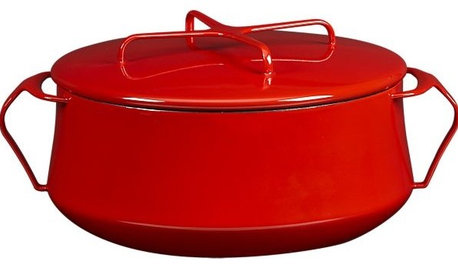
LOOKING for: Recipes using my new Le Creuset Dutch Oven

20 years ago

I just got a new Le Creuset Dutch Oven and don't know what to make in it. At least, I know the right place to come for some recipes. Any suggestions? Any and all recipes are welcome! I would like something rather low calorie. Thanks...oops, I think that should read French oven, right?

Comments (8)

  • 20 years ago
    last modified: 11 years ago

    It doesn't need a "special recipe"...chili, beef stew, bean soup, potroast, braised lamb shanks, chicken and dumplings....and the newest to me: Bread.
    Just use your regular recipes in your new pot.
    Linda C

    Here is a link that might be useful: minimalist bread

  • 20 years ago
    last modified: 11 years ago

    I'm sure that is true, Linda, but I just need a jump start. A tried and true recipe that just tastes great made in the Le Creuset!

  • 20 years ago
    last modified: 11 years ago

    So, if you're looking to christen it with something different, you might try:

    Morrocan Tagine of Chicken with Prunes

    6 large chicken pieces (basically, a cut-up chicken)
    1 onion cut in thin rings
    2 onions, finely diced
    1 tsp saffron
    1 1/2 tsp grated fresh ginger
    salt
    12 oz pitted prunes
    1 qt water

    Combine the chicken, diced onions, saffron, ginger, salt, half the prunes, and water in your dutch oven. Cover and simmer gently over low heat, turning the chicken periodiclaly and stirring occasionally.

    After the first hour of cooking arrange the sliced onions on top of the chicken pieces. Arrange the remaining prunes around the chicken and continue to cook, uncovered, on low heat for another 30 minutes. Add small amounts of water if the original stock reduces too quickly before the chicken is cooked. Be careful not to add too much water, as the sauce should be plentiful but thick.

    Adjust the seasoning to taste. When the chicken is cooked, the prunes are soft, and the stock is thick, serve hot with either couscous or boiled rice and veggies of your choice.

    From: A Taste of Africa

  • 20 years ago
    last modified: 11 years ago

    Now that Ive got some time to type them up, Ktee, here are a few more. Each of these should adapt well to your new LC Dutch oven; they've all worked well in my old one:

    POT AU FEU

    3 lb lean brisket
    1 piece salt pork
    1 onion stuck with 2 cloves
    9 carrots, peeled
    1 turnip, peeled
    4-5 leeks, washed
    water
    1 tsp dried thyme
    1 tbls salt
    1 stewing hen
    6 potatoes
    1 head cabbage, quartered
    1 lb pearl onions
    3 tbls butter
    Sprig parsleyÂ1 tsp sugar

    Put the brisket, salt pork, onion, leeks, celery, 3 carrots, turnip, parsley and thyme in a large kettle. Cover with water and bring to boil. Add 1 tbls salt, lower the heat, and simmer 1 ½ hours. Then add the chicken. Continue cooking until meat and fowl are tender, about an hour.

    Half hour before serving add potatoes with their skins left on, the cabbage, and remaining carrots. Continue cooking until vegetables are soft.

    Meanwhile, brown pearl onions in butter and cook until soft. Add a little sugar to give them a nice brown glaze.

    Serves in large soup bowls with some of the onions.

    LAMB & CABBAGE CASSEROLE

    Trim 3 pounds boned lamb shoulder and cut it into 1 ½ inch cubes. Trim, quarter, and remove the core from a 2 ½ pound head of white cabbage. Blanch the cabbage in boiling water for 2 minutes, drain it, and cut it into ½-inch thick slices.

    In a large kettle with tight-fitting lid arrange the lamb and cabbage in layers, seasoning each layer with salt, using 1 tbls in all, and pepper to taste. Add 3 cups boiling water and simmer the mixture, covered, for 2 hours.

    Slice a 1-ound head of curly cabbage (Savoy), well trimmed, into ½ inch slices and arrange them on top of the lamb and cabbage. Simmer the mixture, covered, for 40 minutes more.

    Let the mixture cool to room temperature. Reheat the mixture and simmer it for 10 minutes more. Let the mixture cool again, and reheat it in a moderate oven (350F) for 25 minutes.

    Sprinkle with 2 tbls chopped parsley. Serves 6-8.

    From: Gourmet Magazine

    CRANBERRY POT ROAST

    2-3 pound venison roast (or substitute beef)
    1 small onion, chopped
    1 stalk celery, chopped
    1 ½ cups cranberries
    1 tbls mixed sweet herbs
    1 tsp nutmeg
    1 tbls maple sugar
    2 cloves
    1-1 ½ cups cider or apple juice
    Salt & Pepper to taste
    Flour
    Oil

    Sprinkle meat with slat & pepper. Dust with flour. Sear in a little hot oil on all sides. Set aside.

    Sauté onions & celery until tender. Add balance of ingredients. Return meat to pot.

    Simmer until meat is soft, about 2 hours.

    TRANSYLVANIAN CHICKEN STEW

    Cut two 3-pound chickens into serving pieces and pat them dry with paper towels.

    In a saucepan sauté 6 slices bacon, cut into 1-inch pieces, until they are lightly browned, add 1 large onion, sliced, and cook the mixture over moderately high heat until the onion is softened. Stir in 1 tbls sweet Hungarian paprika, add the chicken, and spoon the bacon mixture over it. Sprinkle the chicken with salt and pepper and cook the mixture, covered, stirring occasionally and adding ½ cup water or stock, a little at a time, to keep the chicken moist, for 45 minutes.

    Add ½ pound smoked sausage or kielbasa, thinly sliced, and cook the mixture for 15 minutes. Add 3 large green peppers, thinly sliced, 1 pound green beans, broken into 1-inch pieces, and ½ cup each of tomato sauce with basil and chicken stock, and cook the mixture, covered, stirring occasionally, for 20 minutes or until the vegetables are tender. Add salt & pepper to taste. Serves 6-8.

    From Gourmet Magazine.

    SHRIMP & SAUSAGE

    1 ½ lb peeled shrimp
    2 links smoked hot sausage
    1 tsp sweet basil
    1 tbls paprika
    Salt
    1 clove garlic, crushed
    1 cup beer
    ½ cup onion, sliced
    Pinch cayenne
    Oil

    Slice sausage. Fry in oil with the garlic and remove from pan.

    Sauté shrimp in same pan until pink.

    Return sausage to the pan, with the onion, slat, basil, and beer. Simmer 5 minutes. Serve hot over rice.

  • 20 years ago
    last modified: 11 years ago

    Since I don't make stews or many soups, I wasn't sure what to do with the Le Creuset. Thanks, gardenlad. I really appreciate it. This is a good start.

  • 20 years ago
    last modified: 11 years ago

    I made the corn chowder recipe I just just posted in my LC Dutch Oven (I guess I could have made it in my stock pot, but it was delicious anyway!)

  • 20 years ago
    last modified: 11 years ago

    Check out this web address: Lots and all kinds of recipes for using your Dutch Oven!!

  • 20 years ago
    last modified: 11 years ago

    Nice link, lisbet. But, of course, they're talking about true Dutch ovens over there, whereas ktee's "Dutch oven" is actually a flat-bottomed kettle with a cover.

    True Dutch ovens were immensely popular well into the 19th century, especially among those without a permanent kitchen. For instance, they were necessary items for chuck wagon cooks on the cattle drives, and women on wagon trains.

    Previously they were all but essential, as the only ways to bake were either with a Dutch oven; with an oven built-in to the fireplace; or by going to a communal bakery of some sort.

    In the early 19th century, "portable" cast-iron cookstoves were introduced and started becoming popular. With one of those, the nature of baking (and other cookery) changed. You now had an enclosed heat source, and no longer needed to provide heat (in the form of coals) on top and bottom of your pot. So the legs and deep-recessed lids were replaced by flat bottomed kettles with lids. These could be used either on top of the range, or inside the oven, as needed. And they've remained essentially unchanged since. The major changes have been enamaling the cast iron, and making them out of other materials.

    IMO, however, once you move away from cast iron---enameled or not---what you have is just another pot, even though they are called "Dutch ovens."

    Meanwhile, true Dutch ovens remained popular with campers, hunters, and other outdoor enthusiests; and, comparatively more recently, by historical reenactors. I've got five or six of them, in different sizes, and use them quite often.

    Other hearthware, btw, also had legs. In the 18th century, for instance, the technical difference between a skillet and a frying pan was that the former had legs. Later on, about the time of the War of Northern Aggression, legged-skillets were called "spiders." These were made of tinplate, for the most part, and had much longer legs, because they were used over open flames, rather than over coals.

    Reason for the legs on hearthware is that much cooking was done over coals on the hearth, itself, rather than over flames in the actual firebox. That sort of thing was reserved for dishes that would get boiled, and they were prepared in hanging kettles suspended by ginpoles, originally, then by swinging cranes later on. Indeed, for a woman, particularly on the frontier, the great labor-saving device was replacing the ginpole with a crane. Cranes could be retrofit, but a built-in oven required building a new house. So it's understandable why the portable cookstoves caught on so quickly.

    Wheweee! Sorry. That's probably a lot more than y'all wanted to know.

Sponsored