Software
Houzz Logo Print
lseltzer317537

Is aerating and overseeding my Kt. Bluegrass lawn a waste of time?

10 years ago

I hear a lot of conflicting information about aerating and overseeding bluegrass lawns. I'm not sure I should bother this fall. (I own an aerator but I've never used it before.)

My lawn is looking okay this year, no real problems, but it could be thicker and more lush.

Some say it's a waste of time and money to aerate and overseed it. The reasoning there is that it grows via rhizome and hence spaces itself, unlike other grasses. Since the rhizome spreads and that's where the grass sprouts, the same argument has been made for overseeding - that it is a waste of time.

I am sure lawn care companies would be only too delighted to aerate my lawn for me and charge me an arm and a leg for an overseed. And since I'm an industrious girl I'm sure I could get out there and do it myself. But would it make a difference? Would I be better off with a sack of milorganite and a drop spreader to thicken it up a bit?

Comments (4)

  • 10 years ago
    last modified: 10 years ago

    I wouldn't overseed bluegrass unless you have large empty spots. If it's just a little thin but uniform it should fill in on its own, eventually.

    In regards to aeration, take a 4" screwdriver and stick it in the ground the day after watering. If it goes in easily all the way you probably don't need to aerate. Did I just say that?

    I'm not a fan of Milorganite. It's about 10 times more expensive per pound of nitrogen than other nitrogen sources with nothing to show for it. Get a bag of synthetic fertilizer and apply it at bag rate. Do 3-4 more applications this fall, KBG needs 4-5 pounds of nitrogen a year to be at its best.

    Send a soil sample to Logan Labs and post results here. MorpheusPA will give you instructions on how to balance your soil and create the best conditions for your KBG to thrive.

  • 10 years ago

    I don't think you need to aerate it. If your soil is hard, the solution is to apply shampoo at 3 ounces per 1,000 square feet and water that in as described below.

    If you have thin KBG in a shady area, then overseed with a fine bladed fescue that will tolerate the shade. Otherwise good lawn care should help. What is good lawn care? The following is in order of importance with 1 being much more important than 2 or 3.

    1. Watering: Deep and infrequent is the mantra for watering. This is for all turf grass all over the place. Deep means 1 inch all at one time. Put some cat food or tuna cans around the yard, and time how long it takes your sprinkler(s) to fill all the cans. Memorize that time. That will be the time you water from now on. My hose, sprinkler and water pressure takes 8 full hours to fill the cans. Your time will likely be less. I like gentle watering. As for watering frequency, that depends on the daytime air temperature. With temps in the 90s, deep water once per week. With temps in the 80s, deep water once every 2 weeks. With temps in the 70s, deep water once every 3 weeks. With temps below 70, deep water once a month. Note that you have to keep up with quickly changing temps in the spring and fall. This deep and infrequent schedule works in Phoenix and in Vermont, so it should work for you. The reason for deep and infrequent is to grow deeper, more drought resistant roots and to allow the soil to dry completely at the surface for several days before watering again. If it rains, reset your calendar to account for the rainfall. It is not uncommon on this site for someone to write in to say that simply fixing their watering was all they needed and everything cleared up.

    2. Mowing. Mulch mow KBG at the mower's highest setting every week during the growing season.

    3. Fertilizer. Fertilize on Memorial Day, Labor Day, and about Thanksgiving depending on the grass. The last one for the year should be after the grass stops growing, but before it turns brown. The last one should be a fast release, high N fertilizer. I think you get more bang for your buck by using organic fertilizer like soybean meal, Milorganite, corn meal, alfalfa pellets (rabbit chow), or corn gluten meal. Apply any of those at 15 pounds per 1,000 square feet as often as you can afford to (in addition to the above 3 dates). The NPK numbers are lower for organics than for chemical fertilizers, but the goodness of the material is not measured in terms of NPK. Organic fertilizers are absolutely no hassle to use. You can't make a mistake and burn the grass. It doesn't wash away except under extraordinary circumstances (like flooding). You cannot over apply unless you smother the grass with it (about 70 pounds per 1,000 square feet will do that). Organics don't need to be watered in. And organics work as shown in this picture.

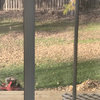
      That picture was sent in by mrmumbles a few years ago. He dropped a couple handfuls of alfalfa pellets in mid May and took this picture in mid June. You can see the improved color, density, and growth.

    And here's a picture of morpheuspa's KBG lawn where he practices deep and infrequent watering. The neighbors water every day. Picture was taken in July several years ago.

  • 10 years ago

    Well I'm convinced. Tbh I haven't ever watered my lawn. I just wait for it to rain because 0.8 acres is a lot of sprinklers...but maybe a half dozen of those isn't the worst idea. For beastly hot intervals. I appreciate this advice!

  • 10 years ago

    You don't technically have to water bluegrass lawns in summer. I didn't do it this year because we were under a drought watch. Although there were no restrictions, they did request that we limit our water usage if we could. I could, so I did. :-)

    The grass blasted out and looked terrible from mid June to late July when rainfall resumed. Now it's recovering nicely, but still has some dormant areas that will need more consistent rainfall and cooler temperatures.

    Appropriate feeding is directly related to bluegrass' thickness, and it should be fed about four pounds of nitrogen per year. Using a synthetic, off the shelf fertilizer, that's 1 pound each on Memorial Day, Labor Day, October first, and when the grass stops growing but it's still green (Thanksgiving-ish for me here in PA, but it varies year by year).

    As noted, proper soil balance is also important. A soil that's wildly short in any resource simply can't grow a great lawn.

Sponsored
Preferred General Contracting, Inc.
Average rating: 4.8 out of 5 stars17 Reviews
Fairfax County's Specialized, Comprehensive Renovations Firm