

Oohh heaven is a place on Earth (apologies to Belinda Carlisle)
SE Australia trip report part 1!!!
(Note in advance that I may not have time to reply consistently, as I'll continue to be on the road for some days.
Also the image color balance will not be up to my usually high standards, as I don't have a calibrated IPS monitor to work on. This is a cheaper, older laptop I brought with me and the screen stinks)
Due to various circumstances I found myself once again between IT contracting opportunities - and decided I had to pull the trigger on this trip. Whether I have the money down the road (and whether I had it now!) I may not have the energy or willpower to do this in a few years. Besides the dollar is strong and airfares are relatively reasonable versus historic norms. I won't say how much the trip is costing me, but I will say at times in the past it could have cost well over $1000 more than it is costing now. So now was the best time to do it.
Let's start in the Dandenong Ranges east of Melbourne, at the National Rhododendron collection. Don't worry, I won't bore you with TOO many pictures of them haha.
Here's the main entrance path past the entry/gift shop. That nearly 3 story tall ironclad - the biggest rhodie I've personally seen in my life - the splendid tree ferns, and well over 100' tall, enormous Eucalypts give you just a hint of how special this garden is. It is huge, and utterly spectacular.

Here are some typical plantings. I got VERY lucky as they are having an extremely cold spring for them. This is their May, but usually in a climate this mild, as is the case in California, the peak bloom would be in April. I was actually sure I was going to miss peak bloom, but couldn't take off in October because we were wrapping things up at my last job.

Of course they have a Wollemia. Theirs was the best looking, the ones at Cranbourne and Melbourne Botanic gardens seem somewhat bedraggled. Make sense as it comes from a cooler, mountain climate.

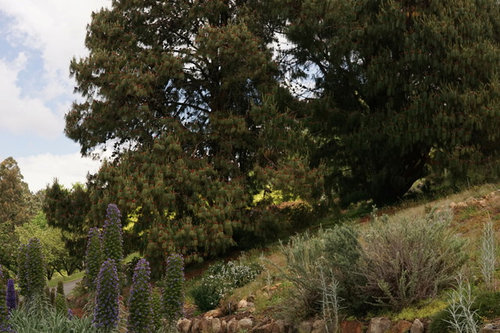
Some Echiums and (perhaps?) Pinus patulas:
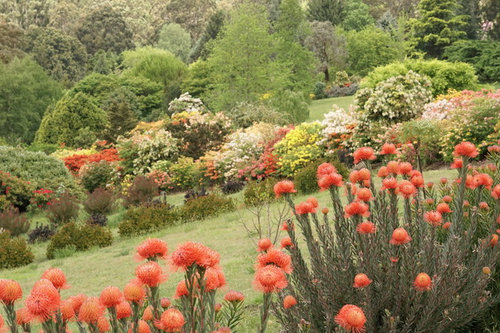
South African Proteaceae absurdly combine with English Rhododendron and Ghent azalea hybrids, all of them looking perfectly happy. This is only done in one area.

The tree canopy here is mostly gigantic Eucs. From what I can tell, this is the area in greater Melbourne where they attain the biggest size for whatever reason. Perhaps it's the high rainfall combined with protection from winds. I talked to a nursery owner and he told me the problem with the big Eucs (gum trees) is they have weak root system, and fall over in wind storms. The garden seems to be in a relatively sheltered, high valley.
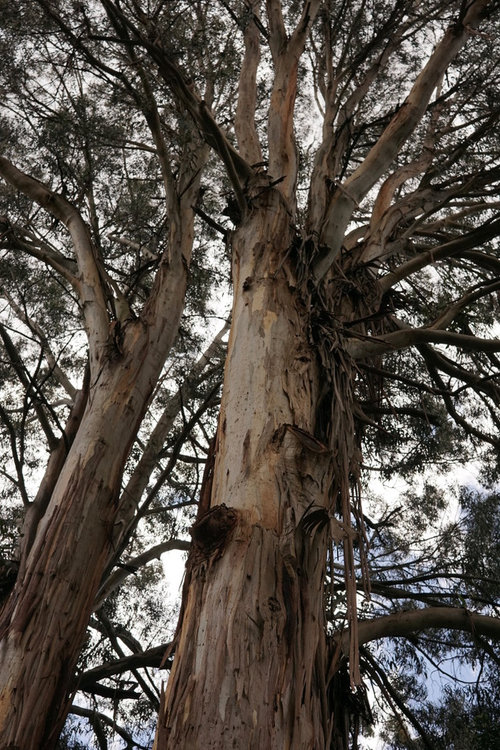
Quite a few were definitely over 100'. I haven't seen any other area with plants consistently as big, but they could be out there, off the beaten tourist's path.
They are mild enough to grow Vireyas outside. These are the rhododendrons of tropical highland areas.
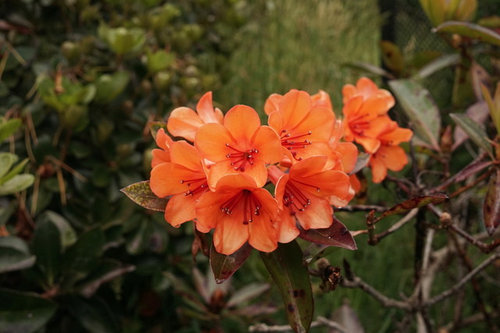
Nor is there any challenge in growing the spicily scented cinnabarina series rhodies of the High Himalayas.

Lastly, they had the biggest, healthiest looking big leafs I've ever seen. Not sure which one this is, none of them were labeled.

Continuing...
Comments (37)
 UpperBayGardener (zone 7) thanked rhizo_1 (North AL) zone 7
UpperBayGardener (zone 7)
Original Author10 years agolast modified: 10 years agoI'll conclude this garden visit with their view over the Yarra Valley:

Leading me to some general pictures of "what it's like to be in the area"
Typical tree ferns in older growth forested areas. It's kinda funny to be somewhere where they are almost weeds, and not seen as particularly notable.

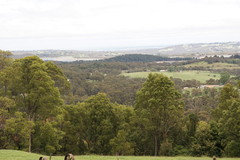
typical view, this time towards the south, not the north:
Typical thing you see in gardens - a showy native Grevillea hybrid, and a Cedrus deodara:

General remarks about horticulture in the area:
As I drove from Melbourne Airport to the eastern suburbs where I was staying for the first 3 nights, I was at first somewhat disappointed with the state of horticulture here. Clearly, they don't plant as much a variety of things as they could. Particularly telling is palms...I suspect in the suburbs of Sydney I'm going to see a lot more variety on that front. You don't see many, and when you do see them they are plain old Phoenix. I think that, just as some people in Norcal don't like them and think they are too "Socal" looking, some people around here just think they don't belong in Melbourne. Callistemons are widely planted (=over planted) and seem to be the "crape myrtle" of the area. The standard gas station plant. Native Proteaceae like Banksia are used for landscaping, but much less often.
However, when you get into the mountains - low as they are - the climate changes even with a slight change in elevation (the higher adiabatic lapse rate I've talked about) and the slightly moister, cooler climate really 'opens the throttle' on what you see. It also seems to attract more people who are into gardening. There are HUGE rhododendrons, and not just the ironclads you see near sea level, but showier English hybrids. There is just about any northern hemisphere tree or shrub you can think of, as well as many mysterious Australian ones, like the native Hibiscus which come in several different colors, the native plumeria, etc. etc. Some northern hemisphere trees are especially common, like what I suspect was Robinia × slavinii ‘Hillieri’. But it's still mild enough for zone 9b things, like Echiums. The native variegated Pittosporum is especially popular. Everywhere though, there's the lush backdrop of thick growth of ferns, calla lilies, and exotic vines like Tropaeolum. Overall it's quite stunning, and there aren't many places that create the same lush feel of horticultural abandon. The Italian Lakes region is probably the closest. Also, to some degree, parts of the Bay Area and Northern California.
A few plants are surprisingly absent. I haven't seen a single bougainvillea. Nor a single Ilex. Perhaps they are considered invasive, or I just missed them. Hardly any south African aloes...though they are in the botanical gardens, people just don't seem to plant many of them. Conifers are overall quite uncommon, other than Cedrus deodara...but for some reason, very few of those are spectacular in the way they are in California. It's actually a bit funny: though the landforms and overall scenery are broadly similar to northern California, the "standard" large tree here is a broad leaved Eucalypt. Just as Eucs look vaguely out of place in Norcal, conifers look vaguely out of place here. In the Dandenongs you sometimes see small patches of Pinus radiata I guess, little plantations for pulpwood maybe? Along the coast there are a few Monterrey Cypress. Strangely, the Norfolk Island pine has no trouble growing inland - I saw a few - but it only commonly planted at the seashore. I have not seen a single monkey puzzle and it genuinely shocking. Maybe Peter is correct and some local root rot organism kills them.
Ok...onto the Melbourne Botanic Garden. Which proves pretty conclusively what can be grown there, which is A LOT of plants.
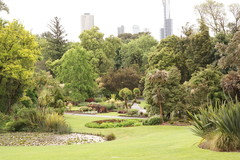
Here's a overview of typical plantings:
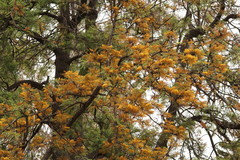
I finally got to see a huge Grevillea robusta in bloom:
One mystery to me - again on the "why is the plant not common" front - was that I didn't see a single Cupressus cashmeriana in the salubrious climate of the mountains...where they should be perfectly happy. But there is a good one at Melbourne Botanic...so I'm guessing they were just never promoted by local nurseries and thus are not found elsewhere:

I could have just missed them...but I was keeping my eyes peeled for any noteworthy plants.
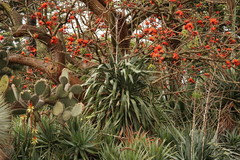
Of course there is are spectacular collection of dry land plants. Between this and the Australian Garden at Cranbourne, it easily rivals what you can see at the Huntington. Look at that Erythrina! Elsewhere in the garden was the tallest I'd ever seen...must have been close to 50' high.
Finally, onto that garden, which focuses solely on native plants. It's a newer garden but they've really put a lot of thought into it. I almost skipped it but I'm glad I didn't. The docents there were SUPER nice, especially when they'd found out I'd come 10000 miles to see them!
The variety of Australian Myrtaceae is really remarkable. It seems like many of the showy "Gum trees" are actually not genus Eucalyptus, but something else. This pink barked one is something else but I forget the specific genus:

I finally got to see a Richea, the remarkable Tasmanian plants that are essentially heathers that have evolved to look like yuccas.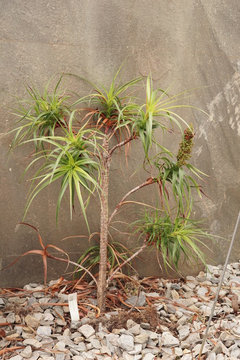
They've cleverly put them on the south side of these huge rocks (yes, the SOUTH side LOL) to help keep them cool.
Related Professionals
West Palm Beach Landscape Architects & Landscape Designers · Oklahoma City Landscape Architects & Landscape Designers · Fredericksburg Landscape Architects & Landscape Designers · Beatrice Landscape Architects & Landscape Designers · Hackettstown Landscape Architects & Landscape Designers · Elmira Landscape Architects & Landscape Designers · La Crosse Landscape Architects & Landscape Designers · Great Bend Landscape Contractors · Wichita Landscape Contractors · Dayton Landscape Contractors · Erie Landscape Contractors · Fayetteville Home Additions · Crestview Home Additions · Spartanburg Home Additions · Bend Home AdditionsUpperBayGardener (zone 7)
Original Author10 years agolast modified: 10 years agoConcluding for now, a couple more pictures...
Grass trees at Cranbourne:

And a view of the Southern Ocean, about 3 hours west of Melbourne.

Ok more coming...eventually. Enjoy. I put up with 28 hours of flying and waiting in airports so you didn't have to!
EDIT - couple pics from my phone that I forget.
Typical row of Norfolk Island Pine aff. - seen in any coastal town in Victoria. Also notice the fire status board.

Banksia street tree:
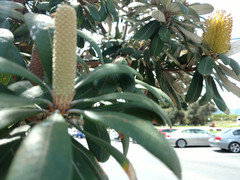
Strange companions at the Melbourne Botanic Garden: Cedar of Lebanon and Cedar of Papua New Guinea LOL.

 UpperBayGardener (zone 7) thanked Dave in NoVA • N. Virginia • zone 7A
 UpperBayGardener (zone 7) thanked gardener365
 10 years ago
Thanks for that, David. It's great to see such wonderful photos of a place I've longed to visit but will likely never manage to........unless I suddenly latch onto a winning lottery ticket!! I have always had a very strong affinity for southern hemisphere plants and it's great to see them flourishing in their native environment.
UpperBayGardener (zone 7) thanked gardengal48 (PNW Z8/9)- 10 years agolast modified: 10 years ago
Those are Norfolk Island pines - they have the Star Pine habit, unlike the Cook Pines that are often grown in its place.
That Kashmir Cypress is denser and with smaller sprays than elsewhere, as though conditions are marginal for it in some way.
Here that tight growth on Cypress Family conifers appears to be associated with coolness. Likewise many of them grow tightly in much of Britain. Now familiar demonstration of this phenomenon is how same Leyland cypress clones can look like Italian cypress or like Monterey cypress depending on the district.
But cooler areas apparently aren't always those that cause growth behavior of this nature. For instance Nootka Cypress and other out of their area conifers growing in the hot climate of Sacramento behave in a similar fashion, growing densely - and in this instance also shrub-like.
UpperBayGardener (zone 7) thanked Embothrium  10 years ago
Thanks, David. Envy a bit your traveling & nice to see the unusual things there. Getting to be summer down under!
UpperBayGardener (zone 7) thanked bengz6westmd- 10 years ago
It's nice to see pictures from there by somebody who knows plants. Excellent!
I enjoyed looking at each picture and spent some time doing it.
Thank you very much.
UpperBayGardener (zone 7) thanked Mike McGarvey UpperBayGardener (zone 7)
Original Author10 years agolast modified: 10 years agoEmbo...another very curious thing is that Cedrus deodara here do not have as much of a "scarecrow" shape when young, but more of a tight, conical appearance. May be related to what you were mentioning. In any case like I said both the big ones and small ones look better in California or the PNW. It's just one of those odd little things that indeed, only a plant lover would notice. (I myself love the scarecrow look). Thanks for the confirmation on the NIP.
 10 years ago
G'day, David, and welcome to Oz! That's a really nice travelogue you're putting together.
That pinkish "gum" looks to be one of my favourites, Angophora costata...
"The
genus Angophora is closely allied to Corymbia and Eucalyptus (family Myrtaceae) but differs in that it usually has opposite leaves and possesses
overlapping, pointed calyx lobes instead of the operculum or lid on the flower
buds found in those genera."And the Banksia is a B. integrifolia.
Keen to see more pics as you head north...
UpperBayGardener (zone 7) thanked shaxhome (Frog Rock, Australia 9b)- 10 years ago
The pictures are beautiful, and makes me sad that I will never be able to go there.
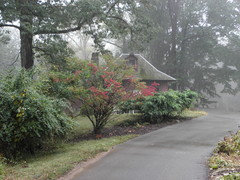
The first picture of the gazebo reminds me of a picture that I took in southern Indiana. USA I always found it interesting that we take vacations to see pretty scenery, but can not see the scenery around the place where we live
UpperBayGardener (zone 7) thanked krnuttle - 10 years ago
Good point^.
Great trip, davidrt. More travel envy right here! I enjoy looking at gardening shows etc. from that nation.
UpperBayGardener (zone 7) thanked wisconsitom  UpperBayGardener (zone 7) thanked Gibson Zone 9 (Central Valley, CA)
UpperBayGardener (zone 7)
Original Author9 years agolast modified: 9 years agoPART 2 - Interior Victoria, Snowy Mountains and Canberra
Shax...that named did ring a bell and you are of course you correct about which species they are, per an expert on native AU flora I was fortunate enough to meet up with.
I wanted to see plenty of the true countryside of Australia, so after seeing the Great Ocean Rd. I drove up to the north via an more interior route. One thing following up from the prior comments - as you went inland, the Cedrus deodara became more "normal" looking for us. As we see them in CA, the PNW and the Southeast. I started noticing this in the town of Ballarat. Interesting, the typical rural farms north of Port Campbell have hardly ANY exotic plants near the main house. Often you just see a small 1 story house with a couple native gums giving shade, and a few rose bushes. Not a single palm for miles and miles, even though the climate is still 10a or 9b at worst.
Another thing I wanted to comment on is that white barked birches are extremely popular in any town in Victoria, even fairly far inland, and they look perfectly happy. Probably one of the top 3 northern hemisphere trees there.
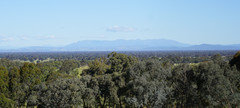
My first night stop was in the town of Wangaratta. Here's a view of the Victorian Alps, which are slightly in front of the Snowy Mountains from this POV.
On the way to the Snowy Mountains, I drove past Lake Hume. Although exotic plants are also uncommon here, there was a guy who had a bunch of huge Archontophoenix or similarly tropical looking palms in his yard. Proving the climate is still quite mild even this far inland.

One by one I started going through successively higher mountain passes. But the valley areas were still very mild, as is evidenced by this picture of the town of Corryong - elevation 1000 ft - with huge skydusters.
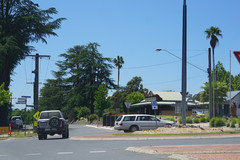
In the town of Khacoban you have to buy a $17 AUD pass to visit the Snowy Mountains. There are two routes through the mountains, one by AU's tallest mountain, and the other, less traveled, via the Kiandra Pass. Which also passes Australia's highest town, Cabramurra. I took that one. But I was still treated to some views of Mt. Kosciuszko on the drive.
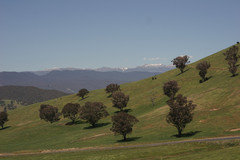
At about 3300 feet, I saw the first wild tree ferns I'd seen since I was way back on the coast, at the Otway Park section of the Great Ocean Rd.
As I kept climbing, I got to the areas where the valleys are so cold, no native trees can grow at all. You can see the snowplow guideposts.

Eventually I descended into the Monoro Plain, spending a night at Cooma before leaving for Canberra.We've read online of Australians disparaging the climate of Canberra as cold...but I don't see what the fuss is about. Many of the plants you can see at the Melbourne Botanic Garden, you can also see here. Their slightly cooler nights also let them showcase rare plants from drier parts of AU, like the famous desert pea.

cont...
UpperBayGardener (zone 7)
Original Author9 years agolast modified: 9 years agoAnd another odd rhododendron relative from cool coastal areas:

They have a Norfolk Island Pine, but it isn't very big. Maybe it gets somewhat frosted. Bigger was this Hoop Pine:

Their selection of rare natives was really stunning. Maybe better showcased here than at either Melbourne Garden. For example, this Callistemon polandi had very showy reddish new growth. It was about 15' tall...so obviously no major problem being frosted back, even though it comes from far northern Queensland! I took a lot of pictures of crazy rare Myrtaceae and Proteaceae and might put them in another thread.

Here's a classic Aussie scene: Doryanthes and a gigantic white barked gum:

There are various Waratahs here and some are huge 15' tall trees:
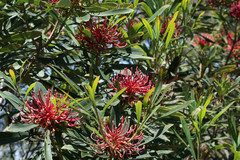
They are mild enough for the odd looking bottle trees:

OK...all for now. In a few days, the stunning Illawarra Coast and the Blue Mountains!- 9 years ago
Thanks david -- seems like you're having a good time. Wish I were there. Last 2 days here were 40 mph winds and blowing snow.
UpperBayGardener (zone 7) thanked bengz6westmd - UpperBayGardener (zone 7) thanked User
- 9 years ago
Another fine report. I can't however reconcile that birches comment. It just doesn't make sense-at all. At the risk of offending, these weren't per chance Malaleuca or some such, were they? I know the first time I saw those things in Florida, the first thought I had was birch. I hardly think you'd err that way, but I just can't account for that particular statement. Is it not much, much too hot? I know Victoria is a big place, but I never thought of any of it as birch country.
Oh, and "hoop pine"at least to my eyes, in this photo-looks more like a Casuarina. Could be wrong about that but it looks to be. Fairly blurry so could be off on that.
UpperBayGardener (zone 7) thanked wisconsitom - 9 years agolast modified: 9 years ago
David, when you travel through the glorious Blue Mountains (you'll want to take heaps of pics of the incredible huge escarpments, and I recommend a diversion to the Mt Tomah Botanic Garden), if you find yourself near my beautiful home town of Mudgee, feel free to give me a call for a catch up. My local number 0401 *** 661.
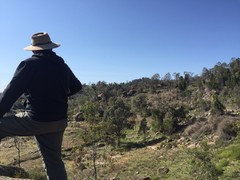
I do work during the days but will find time to greet you and chew the fat. You may even find some things of interest on my own humble 100 acres of Oz bushland...
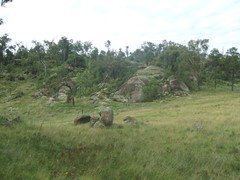 UpperBayGardener (zone 7) thanked shaxhome (Frog Rock, Australia 9b)
- 9 years ago
Sure doesn't look right for birch-any birch. Dry, scrubby land, not at all typical of a birch forest area. Weird. And if not for that link, unbelievable.
- 9 years ago
Tom...if you're referring to my 2 pics directly above your post, it IS dry scrubby land, and not a birch to be seen. I wouldn't waste the water on them. The only non Oz native trees on my place are in the fruit orchard...
UpperBayGardener (zone 7) thanked shaxhome (Frog Rock, Australia 9b) UpperBayGardener (zone 7)
Original Author9 years agolast modified: 9 years agoTom,
it is understandable to be skeptical but the strange combinations of things is what makes gardens in SE Australia so weird and wonderful. You can see a yard where the main landscaping consists of Betula pendula and Yucca elephantipes, the latter ALSO being one of the most popular northern hemisphere plants in the suburbs! Melbourne in degrees F is only about 6F warmer than England in the summer...on average. Hardly warm by our standards at all. Almost like Portland, Maine: 79F/60F. During heatwaves, however, it can get a lot hotter. And presumable the birches down there have defoliated in the worst summers.
And btw the She Oaks are incredibly wispy! The Canberra Australian National Garden has a huge collection of them, but I walked right past it w/o taking any pictures because they all look the same to me.
Shax,
I'm having to write "in arrears" - so the posts are a few days behind the trip. I might get caught up tonight. I got into Christchurch very late last night. Would love to have seen your place but really had limited time...I do have things to get back to and am having to pay a neighborhood kid to keep my 100+ potted plants taken care of. Thanks for the kind offer though...if supersonic flight ever becomes feasible and cheap, I plan to visit Australia frequently haha. Some Australians have gently ribbed me for complaining about the flight length. They are used to having to fly that long to get anywhere else in the world. It's interesting in speaking to them...so many people here have been to the US. While I doubt more than 5% of people in the US have been to AU or NZ, if that.
UpperBayGardener (zone 7)
Original Author9 years agolast modified: 9 years ago"Some people have all the fun." fun would be being able to afford taxis LOL. Last night my flight was late so I got to Christchurch after the last bus for downtown left. Had to drag my 80 lbs of baggage WAY back to the terminal and ask about other options. (they put the public bus stop in a very out of the way spot...clearly they favor the taxi companies in this regard) Luckily there is a kind of taxi/bus hybrid airport shuttle that is < 1/2 the cost of the taxis but I ended up waiting for 30 minutes. Didn't get settled in my room until past midnight. But, all kidding aside, I am having fun. But it's a different kind of fun that a lot of people's vacations, and more work, too. My legs are still sore from hiking up the Illawarra escarpment.
Anyhow only agenda in Christchurch is to see the Botanic Garden here which is a short walk away...so that's all for now.
- 9 years ago
Thanks for taking the time to post the narrative and all the pictures.
UpperBayGardener (zone 7) thanked Toronado3800 Zone 6 St Louis - 9 years ago
Indeed, a most strange set of possibilities. Wonder if bronze birch borer heard the siren call of those pendulas? That's a N. American native pest so maybe not in Aussie. But they sure find that tree with ease when it is brought to these shores!
UpperBayGardener (zone 7)
Original Author9 years agoThey generally look so healthy, my impression is that that pathogen doesn't exist here.
- 9 years ago
Insect. I was partially in jest-but I suppose in this day of items being on one side of the earth in the morning and on the other side in the afternoon, all is possible. I shouldn't think BBB would actually show up there, but then again..........
UpperBayGardener (zone 7)
Original Author2 years agolast modified: 2 years agoThere's a lot of 'junk bumping' of old threads going on, which threatens to push others off the 'cliff'. So, I'm doing something I hardly ever do. Bumping one of my own threads, adding content of course.
Here are a few more pics from my 2016 trip that I thought people might find interesting. I'll add one more batch a little later this afternoon.
First...
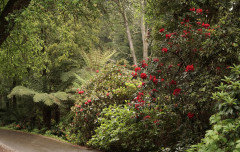
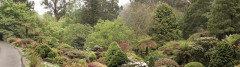
Another couple representative scenes from the incredible National Rhododendron Garden of Australia in Olinda. This location, in the low Dandenong mountains east of Melbourne, nevertheless has a much cooler, wetter climate than the small increase in elevation - to around 1500' - would imply. This is because the adiabatic lapse rate in the Southern hemisphere is higher than in the northern hemisphere. It's by no means what us North Americans would consider cold, of course. Probably downtown Melbourne is zn 10b, and this is zone 10a. Summers here, temperature wise, are about similar to Seattle/southern UK conditions, though with a little more rain than Seattle, and a little less than at least the wetter, western parts of England and Wales. Spring is the wettest season.The winters are superficially "chilly" but definitely milder than all but the very mildest parts of the UK, and obviously anywhere in the PNW including the SW Oregon coast, which has lower record lows of around -8C vs -3C or -4C. A correspondent on the defunct English GOTE forum told me these tropical looking Puka trees from NZ could generally not survive long term in Cornwall. Perhaps just on the Scilly Islands.
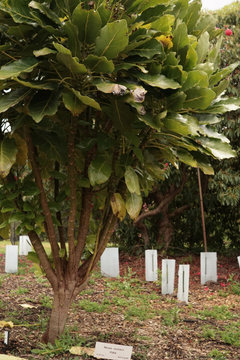
Here's a typical scene in the countryside of the Dandenongs. A hoop pine or Norfolk Island pine, some South African pincushions, and green rolling hillsides.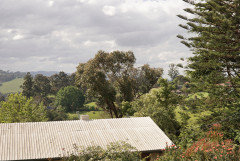
I talked about how serious AU was about controlling invasives. Good for them.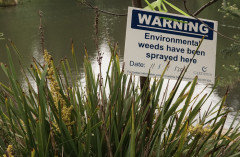
Here was a parrot wheedling fries from tourists in a park.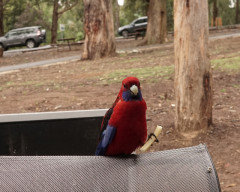
A view of the amazing selection of succulents at the Melbourne Botanical Garden.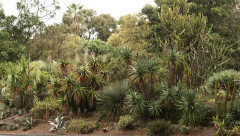
A wonderful droopy pine in that arboretum - perhaps Pinus patula.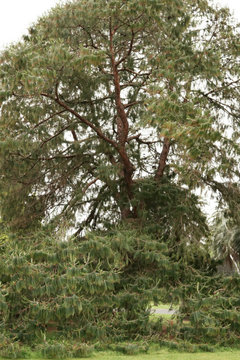
An amazing bed of "kangaroo paws" at the Cranbourne Botanical garden, an hour or so outside of Melbourne.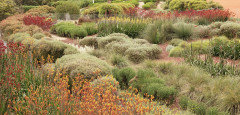
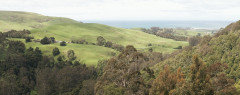
End of part 1:The beautiful scenery of the south coast...Antarctica far off in the distance!
UpperBayGardener (zone 7)
Original Author2 years agolast modified: 2 years agoThreading back for a bit, I want to cover my couple visits to garden centers in the Dandendongs. This was the only place on the trip to AU & NZ I had the chance to drop in and see what a GC looks like. At Emerald Garden Center I took more pictures, but talked more to the very nice people at Paddy's Plants. They were super friendly and interested that an American knew something of the region, horticulturally speaking.
Here's a view of the main sales area at Emerald. Although NH (going to start using that as an abbreviation for Northern Hemisphere!) plants are, along with all other plants from outside AU, highly restricted, they obviously got plenty of good ones in before the quarantines. You can see a lot of colorful maples here. I think I also might spot Toona 'Flamingo' which was a common ornamental, and in fact the first place I saw it. They were gorgeous pinky-orange throughout the mountains and coastal parts of Victoria. Mine only colors if we have a perfect 'slow motion' springtime; if it gets too hot too fast, like this year, the pink color doesn't form as well and quickly vanishes. They surely perform better in the PNW.
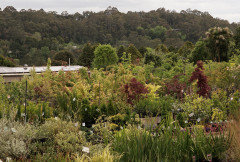
And one more picture from the coast, of Nasturtiums being weeds. I envy the places where even the weeds are beautiful, which is also the case of the UK and their much hated Impatiens glandulifera. I didn't get a good picture but Watsonias are planted in many Dandenong private gardens, and obviously spread very aggressively, as plain-old orange daylilies might around here.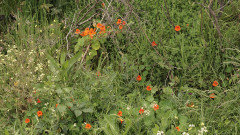
Before we leave the coast, one more picture of the Southern Ocean. I did visit "Twelve Apostles" and other attractions of the Great Ocean Road, but figure they will be well covered by many other travel sites/instagram feeds/whatever.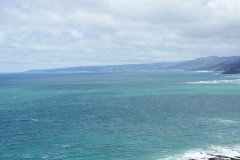
I'm glad I briefly swung by the interior town of Ballarat. It's amusing that it's considered to have a very harsh climate - at least by Victorian standards - but is still mild enough for date palms. I spotted this fine Sequioadendron in an old church yard.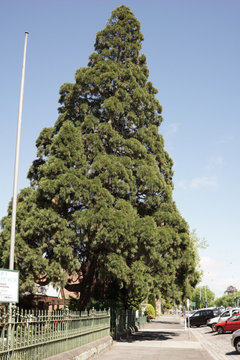
The airbnb I had in Wangaratta had a superb view of the distant "Victorian Alps". These are the home of the 3rd or 4th hardiest gum tree, Eucalyptus neglecta, which has become somewhat popular in the US. Alas I also had a really annoying issue with this Airbnb, that started my long slow souring on them...such that after 2019 I won't stay in one unless it's an emergency. But I digress.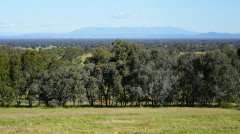
Another thing not quite related to horticulture but I am ethically obligated and I daresay, spiritually bound to point out. IF YOU EVER GO TO THE SOUTHERN HEMISPHERE, REMEMBER TO GO OUT ON A CLEAR NIGHT AND LOOK AT THE STARS. Perhaps, due to a paucity of the ethically obligated AND well-traveled in my life (haha), *nobody* told me this. THANK GOODNESS on a lark I went out to get something in my car and looked up. My jaw dropped. TBH I'm surprised this is not more written about in travel literature - but - I'm not even into astronomy but my mind was absolutely blown away by 1) how different it looked and 2) how much 'starrier' it seemed. I think what I saw was the Carina nebula...in any case, I wasn't really able to capture with my camera but here's a pic anyhow. (This being a very rural part of AU obviously reduced light pollution.) (And I had never tried to do astrophotography, before, or since! Take me word for it...it's impressive)
Here was sunrise over the 'Alps' LOL.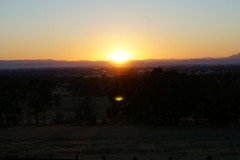
On the drive towards the Snowy Mountains and the VIC/NSW border, I saw various pine plantations.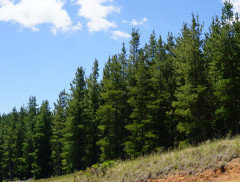
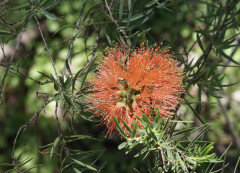
I believe in Northern Spain, there are Eucalyptus plantations to return the favor. 🤣I spoke above about the maddening variety of AU Proteaceae and Myrtaceae at the Australian National Botanic Gardens in Canberra. I could do a whole thread with my pics - but, of course, they have limited relevance to most of us, in terms of what we can grow in our garden - but I'll just add one. This is Melaleuca fulgens of Western Australia. Various plants of WA have to be grafted to grow in NSW or VIC, because of the climate differences. This one might be ok on its own roots just because Canberra has a reputation of being 'chilly' and a bit dry.
In fact, in the woodland valley that is something of the centerpiece of the garden, there's a discrete misting system to keep the trees ferns happy. But still it would seem like an incredibly mild climate to any American not from coastal California!UpperBayGardener (zone 7)
Original Author2 years agoTravelogue finishes here: https://www.houzz.com/discussions/4307028/au-nz-travelogue-conclusion
 2 years ago
Nice tour! I have spent almost no time studying plants from AU & NZ, and have avoided the trip due to amount of time required in a airplane, but you’ve whet my appetite. The closest I’ve been to the Snowy Mountains is watching the movie The Man From Snowy River, which my horse-crazy girls watched multiple times.
UpperBayGardener (zone 7) thanked maackiaUpperBayGardener (zone 7)
Original Author2 years agoFascinating. I had not heard of that movie. It was actually filmed in Mansfield, Victoria.



UpperBayGardener (zone 7)Original Author