Software
Houzz Logo Print
deven_webster

Foundation experts pls help! contractor wont help even under warranty!

8 years ago
last modified: 8 years ago

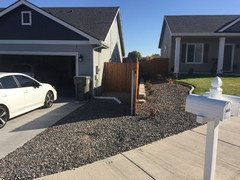
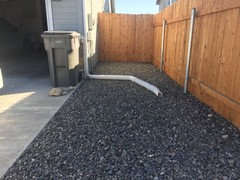
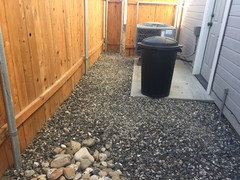
I’ve had something stuck in my head for quite some time now and I’ve tried to google my question and I just can’t seem to get a clear answer. Long story short I live in a home that just turned a year old. I’ve been having some drainage problems which has already created foundation problems on one side of my home. The home came laid out with concrete landscaping border around the home and layered around the permitter with landscaping rocks so I know this can make the grade look very deceiving. I pull back large sections of the rock and the fabric and soil is completely washed out or eroded, bulging, all around terrible grade. I’ve noticed massive rocks everywhere in the soil. Took me 4 hrs to plant a few flowers and shrubs out front because I had nothing but a 50 pound rock hammer and had to bang through the soil and grab massive boulders out of it. At least 30 rocks ranging in different masses. Its clear my entire foundation is probably burried with large rocks everywhere. A house is being built down the street and I watched them do the foundation, and witnessed them use the same soil they dug out to backfilll the foundation, full of big rocks. What I’m getting at is this as big a problem as I think it is? Doesn’t rocks create air pockets deep within the soil and cause settling? I have settling happening all over my house, and it’s thick, rocky hard clay soil.. if this is typically unethical/against code id love to know. Because I think the city inspector ought to know this is what they are doing. I have compaction problems everywhere, I pulled back landscape rocks and found a large hole leading underneath my driveway. Can anyone help me understand this? Various pics below I’ll take more tomorrow of the side with the bad grade. Also I’m considering filing a lawsuit i think it’s hard to argue somebody messed up somewhere right? That kind of foundation damage on a home a year old just doesn’t happen overnight. I’m at my wits end with this any professional/experienced advice is much appreciated.


rainy day water seeping under garage door hasn’t been open. Bad grade?


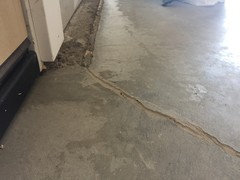
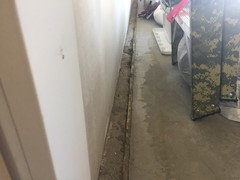
Garage foundation wall pic#1


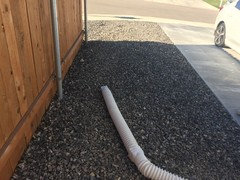
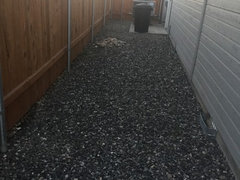
#2garage foundation wall on bad grade/bad drainage side.


Underneath driveway. It’s like a tunnel it goes deep.


Comments (25)

  • PRO
    8 years ago

    I can't speak to your actual foundation issue, since there's not enough information or photos to illustrate the actual problem.


    But, a major first step or two are:


    --Install gutters, downspouts and splash blocks to prevent roof drainage water from collecting along the perimeter of your house and saturating the soil adjacent to your foundations, and;


    --Grade the ground all around your house so that there is uniform and constant surface drainage AWAY from your house and foundations.


    These are two "easy" steps every homeowner can take.


    Do you have clayey, expansive soils?

  • 8 years ago

    I dont think the water seeping under the garage door tells you too much. The concrete doesnt have the slope going in the right direction in that one spot. If that was your only problem I think you would be ok.

    That deteriorated concrete curb in the garage beneath the sheet rock looks like a real problem. Maybe bad concrete? I dont know but something's wrong there.

    In terms of the boulders in the soil, I think whatever comes out of the ground when they dig for the foundation is going to be put back when they back fill. Around here they hold the boulders out - mostly i think because they have value as landscaping elements.

    That erosion under your concrete driveway could have been from settling. Or it could have been from water running up against the driveway and eroding the soil.

    Maybe post more pictures of the house, foundation, surrounding yard, etc. Basement walls too if you have a basement.

    I don't think anyone on here cab definitively diagnose your problem but more pictures might help.

    What does your builder say about any of this?

  • 8 years ago

    My builder has totally ignored me sorry guys I forgot to take photos please get with me if you can tomorrow I’ll have photos. i think not only is the grade off just based off visuals but the neighbors house is super close to mine and her grade is several feet above mine and slopped real nicely into my house annd my house has a lovely Path to guide it into the foundation. She has a retaining wall but it’s not dug in its not blocking any water. Yes it’s really lumpy hard heavy clay soil and I can definitely see where all the water has caused the soil to upheave In areas or have massive ankle breakers like pot holes in the dirt. It’s a mess it’s like it wasn’t even compacted. My builder, sadly, is a pos he has completely ignored me for any and every warranty related concern. Thinking about taking him to court just for that I did not sign the dotted line to be ignored about concerns.

  • 8 years ago

    You might want to explore what your contract and/or state law say about material defects in the home. That eroded foundation in the garage doesnt look right. But the grading issues are likely to be on you. Without pictures of the house and yard it's impossible to give any advice but I would start thinking about how the grade can be changed to keep the water away from your foundation. Part of that may include gutters on your house with the downspouts directed well away from the foundation. It may also include adding drainage between you and your neighbor to keep their water away from your house. If you have a strong back, a shovel and a wheelbarrow you may be able to do this all yourself. Where do you live? Do you have a basement and is it wet?

  • 8 years ago

    It is all about the grade.


    Rule: R401.3 Drainage. The grade shall fall a minimum of 6 inches within the first 10 feet . .. to move water away from the foundation. I always install drains on my own houses on every downspout ... to draining water 15' or more away from the foundation. Foundation walls are at minimum 6" above the soil. For myself I would not want less than 10". Tell wife to deal with a little exposed concrete foundation wall.


    So do not talk about a rocks, talk with your builder about finish grade.

  • 8 years ago

    I would mention one thing I’m still under warranty it doesn’t even expire till next month. i noticed these grading issues in August my Home would of just turned a year old then. Pretty sad to see this damage on such a new home.


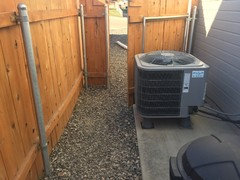
    The most severe damage is coming from where that slab and ac unit Is. if you’ll notice I also included a picture of the neighbors grade.

  • 8 years ago
    last modified: 8 years ago


    More photos. The damage spans down the entire garage foundation but the worst lines up with that slab.


    Look at that crack In the first pic It was already filled like that when I first moved in but I can almost swear it’s gotten larger and one side of it is raised


    doesn’t that seem like a tight area having such small distance between mine and the neighbors house to have a slab?


    The grade doesn’t appear to move water anywhere but towards my driveway and foundation which could explain the erosion underneath the driveway.

  • 8 years ago
    last modified: 8 years ago

    I’m all for putting a French drain system in but shouldnt the builder be responsible for the damage and shouldn’t the engineer be held liable for not ever putting a drain in? This is my first home purchase, I wouldn’t have never thought her grade could ruin my foundation. This is an engineered subdivision, it somehow passed multiple inspections am I really liable for the cost in damages and drain system that most likely needs put in? While still under warranty, it seems like extreme negligence for the builder, engineer, and city inspector to allow this to take place these homes were built at the same time.

    The damage is only happening on the garage slab. My home foundation is not being impacted I checked the crawl space no signs of moisture.


  • 8 years ago

    Man, I do not think anyone can answer this question.

    -We don't know if anything is really "ruined".

    -Nor I can tell if it was really caused by water or foundation settlement.

    -How big the crack is 1", 3/4", 3/8".

    -Where exactly it cracked?

    The Engineering:

    -what is in the slab? rebars, mesh spacing

    -Are there control joints? w/o em garage foundation can crack anywhere.

    -We do not have a clue about garage foundation design. Are there piers, size, where are they, how deep, was the soil properly compacted.

    =

    "it seems like extreme negligence for the builder, engineer, and city inspector to allow this to take place these homes were built at the same time. "

    Hahaha "extreme negligence" NO sorry. You seems to have a minor crack and a water management issue.

  • 8 years ago

    Where can I get this info? I have the blueprints right now what i know is with what I have in the pictures. I wouldn’t exactly call it minor. There is a hole underneath my driveway that spans at least 6 feet across via a tape measure.

  • 8 years ago
    last modified: 8 years ago

    In your #1 post the fourth picture shows the grade beam and a slab connecting to this grade beam. Some soil is missing under the slab & grade beam connection according to you - due to the erosion. Engineering term for this is: void developing under the grade beam = very common, I wish I paid attention to this in the engineering school I think this has something to do with the way moisture travels in the clay soils. [I am not a civil engineer, just had general class.]. This can and probably should be filled with the concrete or foam.

    =

    May be Virgil can tell you more on the subject.

    =

    The second subject is: water management.

    - Your housing appears to be densely packed.

    - You remove the grass and replaced with a gravel, that increased the problem.[the grass would have sucked up water vs compacted clay with no vegetation what you have]

    =

    Technically IF there is no 6" fall in 10' [that I believe you have], you can complain to the builder stating that lot finish grade was not done properly. Otherwise appeal to the goodness of the builder and ask for french drain.

  • 8 years ago
    last modified: 8 years ago

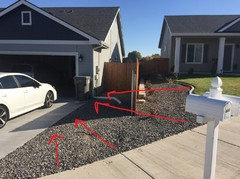
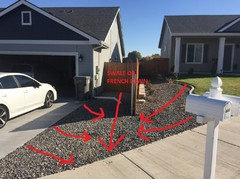
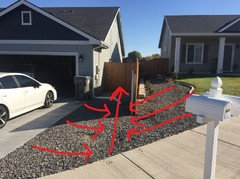
    I used to design grading plans as part of my career as a landscape architect. I agree that you will need someone to look at this in person. Clay soils are very water repellent... especially when clay soils are compacted you get a lot of runoff because the water is not able to infiltrate into the soil quickly. The six inches per ten feet is a pretty general rule around foundations. Typically the soil should be graded at a 2% MINIMUM SLOPE AWAY from the driveway, sidewalks, foundations etc. Slope is calculated rise/run. You most likely will need the temporarily pull the gravel out, install a french drain or create a swale between the fence and the driveway to direct the water away from the driveway and that side of the house. I can't tell is the grade at the street is higher than where the AC units are? But at barest minimum that grade should be a 2% slope AWAY from the driveway.

    At least around here a finished grading plan showing contours and where the water is directed to go is not often completed for the approval process for a builder building a home. There will often times be some blip in the specifications about the builder making sure there is positive drainage away from the foundation, hardscape etc. To me this isn't so much as a warranty issue as "did the builder fulfill the contract?" Find someone who is qualified to address this issue in person because there is only so much we can do without seeing it in person (architects, landscape architects, civil engineers). As houses are being built closer together than ever this is getting to be a real problem because it takes a lot more planning and thought than just sending out a guy in a bobcat to do the rough grading.

  • 8 years ago

    What Tamara said. I think what u want is shown by her middle picture. That wont be good for the sidewalk but ...

  • 8 years ago

    Typically we'd do something like the middle picture... french drain along the entire length of the house sloped 2% minimum. Then slightly before it reaches sidewalk we'd pipe it underneath the driveway (maintaining that slope) and have it daylight on the low side of the frontage of the property. Water droplets are no respector of property lines and I suspect that the OP has water from the houses uphill ending up at the driveway which is currently the low spot. This is easier said than done when the driveway has already been installed however.

  • 8 years ago
    last modified: 8 years ago

    Thanks everyone. I’ve decided to sell the house while I’m still under warranty. When i get an offer if the buyer hires an inspector any issues that arise that should be covered under warranty i will send it over to the no good builder. If it’s a couple thousand or less in repairs or something I may eat the cost. I don’t want to get into prolonged legal battles the home has already increased in value by about 30k in the 11 months I’ve owned it so hopefully I’ll walk away with a chunk of change in my pocket. I’m over it, I live in a rural area I honestly feel the builders and inspectors around here have no integrity. Two new houses were built across the street the grade looks awful, most the homes in this subdivision are new/built In 08 at the latest. They all are built pretty close together with grades similar to mine where the neighboring house have a grade much higher and slopes wonderfully into peoples homes. The city inspector out here seems clueless. I’m not an engineer so I didn’t notice this to be a problem when I was first interested in buying the home. After now experiencing it, grades may be one of the most important thing for me to focus on when buying a home. Yet my house passed city inspections, builders built it without a care in the world. I even hired an individual inspector to double check the home prior to the purchase. Either the folks out here have no idea what they are doing or they simply don’t care. I remember asking the city inspector when he came out here to look at it and I asked why is my neighbors grade so much higher then mine? He said “well son you are on a hill” bologna I found a google street view photo of my lot back in 2008 when this lot was empty and it was completely flat. These homes were built at the same time and i think they were just too lazy to do anything about that dirt and they just piled it up. Prior to my neighbor having landscape rock put in her grade looked like a clumped up mess. She can’t even access her side gate or even walk on that side of the house it’s literally just a giant sloping hill of rocky heavy clay you are practically sliding down hill trying to even walk on that side. Where I’m from this would never pass any sort of inspection. I’m sure she’s going to have issues down the road her self, honestly I hope everyone of these homes has issues. They may not see it yet but maybe the city inspector needs a reality check since he passes this type of Work as acceptable... my fence is even bowing out and screws breaking off the posts from the weight of her grade against it. Fence dug into the dirt all around the peremiter. What shotty work and inspections. I’m a new home owner and had to learn the hardway how awful this is. Yet contractors and inspectors don’t mention a word about it like it’s normal and acceptable. If I was an inspectoe (knowing what I know now) I would of suggested to the buyer a French drain be put in or problems may arise. That way I could of had the builder do it or walk away from the purchase but nope it wasn’t mentioned once. Lesson learned don’t trust city inspectors or any inspectors at least in rural areas like mine.

  • 8 years ago
    last modified: 8 years ago

    Just so you are prepared you will have to pay capital gains tax on the 30k or whatever is left after realtor fees as you haven't lived there for 2 years.

  • 8 years ago

    Of course I'm biased but I'd highly consider consulting a landscape architect the next time you are working on something like this. Everyone assumes we are "plant people" but I had one plant class in five years of college and extensive, extensive training on grading and stormwater management and am able to stamp grading plans. Find someone to consult with who is licensed and can stamp a grading plan and can give you some trained advise. Your not going to get that from a city inspector and builders have varying levels of experience. Some civil engineers do but not always. There are a lot more considerations into the engineering of developments than many people realize. There is sewer which must flow downhill and highly dictates the grades of the street. Streets cannot be engineered to be flat, there has to be slope so that water flows downhill and into the curb/gutter. So that's why flat land might have some slope to it after the fact. The finished floor elevation of each house (elevation of the main level of the house) are chosen for many reasons... walk out basement or no walk out basement, how steep do we want the front driveway, how high do we want the retaining wall etc? Retaining walls must be sized properly so they don't fail but most often than not homeowners will just put in whatever they want with different degrees of success. I see this as an issue that would be a few thousand to remedy (french drains are not rocket science... basically a perforated pipe in the ground) but not necessarily something that you'd come ahead by time you factor in realtor fees. I can definitely sense your frustration.

  • 8 years ago

    The builder's shoddy and your house is so poorly constructed you need to sell it, but your happy to take 30K in appreciation for 11 months and pass the problems on to the next buyer, all while complaining of poor builder integrity? Typically, warranty's don't pass from the original purchaser to the next, that's pretty standard among many things you buy. You may not be so quick to "profit and pass" your problems.

  • 8 years ago

    I don't think that's fair. It's not the sellers job to pass a perfect house on to the buyer. The defects are out in the open to be seen with the naked eye. If someone looks at those defects and decides to buy anyway, that's not the seller's problem. If the buyer doesnt hire a decent inspector to point the defects out, that's also not the sellers problem. I think the run off problem could be solved with a shovel, wheelbarrow and a few weekends of hard labor.

  • 8 years ago
    Good visual and advice from Tamara. You will have to disclose this problem to the future buyer or face legal repercussions yourself. Typically, your home sell price will be reduced the amount required to fix this problem or you will be required to fix it as part of the inspection process. You may find your home sits on the market longer than you think because of this problem. No matter if you stay or try to sell you are best served to have an expert assess and quote what is needed to fix.
  • 8 years ago

    I don't believe that you have to disclose defects that are visible to the naked eye. At least not in NY.

  • 8 years ago
    The issue is with the water seepage. Say the buyer sees it on a dry day and makes an offer and then moves in and sees the seepage after the rain. That would be an issue.
  • 8 years ago

    It depends on the state but in Iowa its the first question on the Sellers Property Condition Disclousre

    https://plb.iowa.gov/sites/files/plb/documents/Seller%20Property%20Condition%20Disclosure.pdf

    . Basement/Foundation: Any known water or other problems? Yes [ ] No [ ]


    To me its clear this would need to be disclosed. Besides you now have a public post on it. You can't argue you are not aware of the issue.