Software
Houzz Logo Print
mbohio

Is this a bad paver patio sanding job?

7 years ago
Seriously, I feel like I have the worst luck with hiring professionals for projects! I do tons of research and always go with reputable businesses, but I tend to have bad luck.


Anyway, we hired a company to power wash and resand our paver patio and they complated the job about 3 weeks ago (early April). We moved into this house about 2 years ago but the patio had been a bit neglected, so it really needed a refresher. Regarding sand, I specifically asked whether this company used polymeric or regular sand and the guy explained that everyone has a different preference, but that they prefer regular sand with a sealer, which serves the same purpose. So they did the job and here are my issues:

1) I actually saw the empty sand bags afterward and they used play sand. Like regular play sand from Home Depot that you would use for a sand box. Is this normal? Isn't there a specific type of sand that should be used for paver patio joint, even if polymeric is not used?

2) When they left, there was sand EVERYWHERE. I get that it's sand so it's messy and there will be residue. This felt excessive and just sloppy with piles of sand in corners, etc.

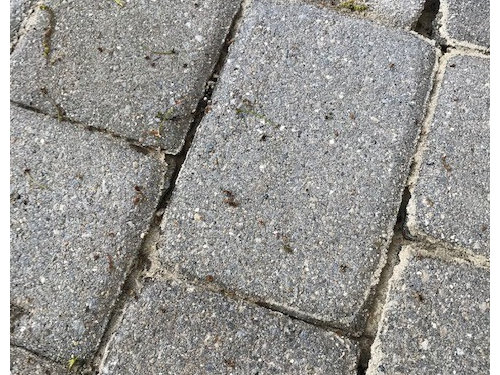
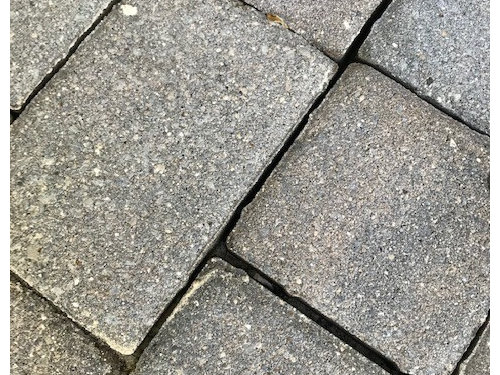
3) The joints were not hard when they were done. The sand in the joints was (and still is) soft and loose, nothing is firm at all. Within days, the sand was washing out from between the joints and within 2 weeks, there were joints that were completely washed out (see pics - there are a lot of spots across the patio that look like this). I also have tons of weeds coming up in my joints now.


So for those of you with experience with paver patios - what are your thoughts on the above? Am I being unreaosnable or was this a crappy job?


If it was a crappy job, what should I ask the company do to fix it? Power wash and sand again? What specific demands should I make?


Comments (10)

  • 7 years ago
    Mystic Pools - thanks so much. So what’s your recommendation for how to proceed? It’s only been 3 weeks since they did this job and I am not happy. It was NOT a cheap project. So what should I be asking them to do to fix it? Power wash again and resand? Just resand? What did they do wrong?
  • PRO
    7 years ago

    The job could not possibly be evaluated based on a few EXTREME CLOSE UP photos. A few weeks ago I installed some pavers near a very small outbuilding that doesn't have a gutter. Where the rain spills off the roof looks exactly like your pictures of sand washed out of the joints. But it's only a small area. Later, I'll add a gutter and toss some sand in those joints. No big deal. Since it was a small project, It didn't warrant hauling in a truck load of sand from the supplier. I used play sand from Home Depot, and it worked superbly.

    Polymeric sand is basically a weak mortar. Some people think it is the be-all, end-all. I would not care to use it except in special situations that are prone to washing. Gravity and normal sand does a good job in 99% of cases. Many people see polymeric as a weed preventer. But the effectiveness will diminish over time ... just like weeds grow in old paved areas as it deteriorates. I deal with weeds differently and have no trouble with them in non-polymeric pavered area in Florida where we have more or less an 11-month growing season and more than our share of weeds.

    IMO, you need a photo of every claim you make in order to make your case convincing. Saying they left "sand everywhere" would mean to some people that it looks like 1 block from an ocean -- with 2' drifts -- and to others, it would mean there was a tablespoon of sand by the back door.

  • 7 years ago

    In an installation such as this, I don't think the sand is meant to be there to fill the joints permanently. The sand is spread and a Wacker plate run over the pavers to vibrate the sand into the joints to stabilize the pavers. As your pictures show, the gap is minimal so sand will not help. Sweep the sand off and store for future use, in future cleanups don't use a pressure washer.

  • PRO
    7 years ago
    last modified: 7 years ago

    Yes, the sand is meant to be there permanently. But a portion may wash out if a stream of water falls directly straight down on it (as I described about in my situation where water runs off of a small, unguttered roof.) That's a good place where polymeric sand can be used. But polymeric is not at all necessary for the vast majority of paver situations. (When it comes to new products, one would barely believe the marketing effort put forth to convince people that "Now, you can NO LONGER LIVE WITHOUT IT!" The world is FULL of pavers on sand where no polymeric sand is used, and many of these places are centuries old. This method of paver installation has long stood the test of time.

    Here, polymeric was not used, so the sand is going to remain as soft sand forever. But it's captured between the edges of pavers so gravity will hold it well in place. Sometimes a little washes out and later, a little washes in. Overall, it is no problem. The OP has a lot of misconceptions that have morphed into fear and worries. But even where it looks like sand has washed out of a joint (the solid black line between pavers), if we could get a light and a camera down that crevice, we'd see that there is still sand in the lower portion separating the bricks and holding them in place. (That's why they're not touching and the black shadow line shows.) The only thing it would make sense to do is to put polymeric in only these places where sand looks completely gone (even though it is not.) If those places were caused by improper pressure washing, then that doesn't even make sense. There, just sweep in a little sand (from all the extra left behind in piles) and forget about it. (Pressure washing is OK to do but the operator has to blast the water sideways across the top -- like one would skip a stone on water.)

    This whole project started out based on a misconception -- that sand should be power washed out of paver joints in order that new sand could be installed. Let's not do that anymore! If we want to pressure wash the pavers, do it properly. A little sand MAY wash out inadvertently, but one bag of play sand from Home Depot, easily sprinkled about and quickly swept into the joints with a kitchen broom, would probably be enough to take care of all of it.

    I'm beginning to think that the pattern of "having bad luck with contractors" is based on starting out with misconceptions about the projects and a lack of understanding about materials.

  • 7 years ago

    The other issue that has not been addressed is that is obviously a paver patio with a few years under its belt andappears to have undergone some settling and displacement. Some of those gaps are much larger than others and could indicate settling as weil as an improper installation initially. Too large a gap between the pavers will allow the sand to dissipate or wash out far more easily than if the joints were tighter.

    So I would not necessarily consider this the sand applying contractor's fault at all but rather making the best of an inadequate situation. If you want a better, cleaner, tidier look, you need to take up and re-lay all the pavers properly and with a newly compacted and properly confined base.

  • 7 years ago

    Yardvaark - Thanks for your feedback. The reason I posted here is because I wanted to make sure I had correct expectations, before I jumped to the conclusion that the contractor did a poor job. The purpose of my post was to educated myself. The comments here have definitely helped clear up some of my understanding regarding how sand works and the purpose of sand. However, to be clear, my expectations on this project were set by the contractor himself (the company owner). He is the one that told me that I needed a pressure wash before re-sanding. I trusted him as the professional, so if that should not have been done, that it was his error. Also, I had read about polymeric vs regular sand, so I asked him which one he used. He explained that different people have different preferences, but that he prefers regular sand and that with sealer, the joints would be hard just like with polymeric. I am not saying the polymeric is better, I am just repeating what he told me. It sounds like his statement about the regular sand becoming hard was not accurate. While it's frustrating that he didn't explain it correctly, it is also good to hear that the regular sand is suppossed to remain loose sand because that's exactly what it has done on our patio (based on his explanation, I thought maybe the sealer wasimproperly applied).

  • 7 years ago

    gardengal48 - Thanks for this explanation. You are 100% correct that this is an older patio - if I had to guess, it's about 15 years old. And there is defintiely settling and uneveness among some of the pavers. I am definitely not expecting a perfect and tidy look and candidly, the patio looks 100 times better than it did before the job, so I'm not unhappy per se. However, the job was not cheap and we didn't have the best experience during the job (there was some poor communication and lack of professionalism), so I was a little worried that maybe we were taken advantage of. We had a VERY bad experience with a bathroom contractor about 2 years ago, so I'm a bit paranoid now :) For this job, the contractor explained some things before the job that I have now learned were not accurate, which is frustrating, but it was his explanation that set some inaccurate expectations. Now that I have a better understanding of proper materials and what to expect from a re-sanding job on an older patio, I think he did a fine job. Like I said, the patio does look much better, so it sounds like all is well. I might get some polymeric sand to fill in some of the spots that are washing out, but other than that, I will consider this adequate.

  • PRO
    7 years ago

    OK, you sound calmer now. :-) Don't get me wrong. I've had frustrations from time to time and it can be exasperating when you think you're getting screwed over. I agree the contractor was not accurate about some things he told you. I grasp the idea of adding sand, if some has washed out over time, and I grasp the idea of pressure washing ... but not the idea of removing and replacing sand, which seems pointless. And polymeric and sealed sand are not the same. Polymeric is basically weak mortar that you will apply dry and add water to after it's in place. (Be careful using it because, just like mortar it can make permanent stains.)

    There is always a danger whenever you call a contractor, that they will find some way to spend your money, even if it's not necessary. Still, most are good and intend to do a good job. That's why reputation means something. It's the same with auto mechanics ... and a broad host of people who offer services.

  • 7 years ago
    last modified: 7 years ago

    I'm sort of in the camp of no powerwashing and then re-polymeric sanding.

    Just as this video explains:

    https://www.youtube.com/watch?v=yk3hnUkMgtE

    In theory you have to remove all the old polymeric on the sides of every paver, down to the regular non-polymeric sand base, in order to not have new polymeric try to bond with old polymeric.

    By attempting this it's very likely you'll either have some of the old polymeric still in there or much worse powerwashing out some of the base sand which would create a lumpy patio.

    Directly blasting down with a powerwasher with an aggressive nozzle is a big no no. Maybe a surface attachment would be better or keeping a decent angle instead of pointing straight down.

    This is what most people do I think, they'll still go at it with a powerwasher on an angle and get a decent amount of the old polymeric out and then apply new polymeric and hope for the best bond. It'll usually last at least a couple years and I have definitely seen them leave hardened sand piles.

    I agree with the video and what your contractor did (tried) by using regular sand and a joint stabilizer epoxy which will bond better to the old polymeric instead of trying to blast all the old poly out.

    The problem just seems that your contractor didn't use enough product, watered it down or something. I would definitely be calling them based on pictures if a decent amount of patio looks like that are there's not downspout or gutter issues causing that. Maybe he didn't tamp the wider joints. Even polymeric would fill joints that wide though, it just doesn't last as long in wider joints is all.

    Neither joint stabilizer nor polymeric last very long though, maybe a few years, and joint stabilizer product can become expensive even if it might be a better method. On a small patio, It'll be about $250 more in materials per renovation to use joint stabilizer and plain sand instead of polymeric, and if I'm not mistaken polymeric would actually last a bit longer but there's the bonding issue of using new on top of old polymeric (plus potential of idiot with powerwasher blasting too deep if he knows to get a lot of the old out).

    I think this is something most people can do themselves even possibly with a regular garden hose pressure increasing attachment if that's enough to get some of the old poly out, and then just broom out some polymeric over the whole patio and tamp the wider joints with a homemade tamp of wood and carpet or rubber pad or something and add more sand after that until it's packed to the top, then leaf blower the excess sand off and mist wash the polymeric to activate it, or use joint stabilizer and sand instead of polymeric.

    but that's not to say you should fix this job yourself, if a decent amount looks like your pics, that's a pathetic fix and you should be calling them and make a small claims court claim if they refuse to fix it.

    EDIt, and yes you can also just use plain sand and no sealer but will need to do it every year probably as it washes out.