Software
Houzz Logo Print
edubya

Mold - Have you had it? What did you do?

12 years ago
Have you dealt with mold issues in your home? What happened and how did you resolve it?

Share your experience! (Photos encouraged)

Florida Department of Health - Hillsborough County · More Info

Comments (36)

  • 12 years ago
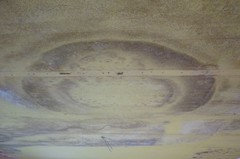
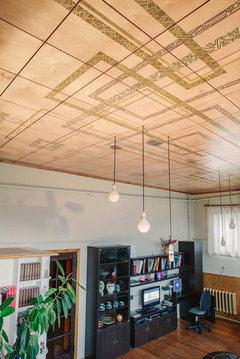
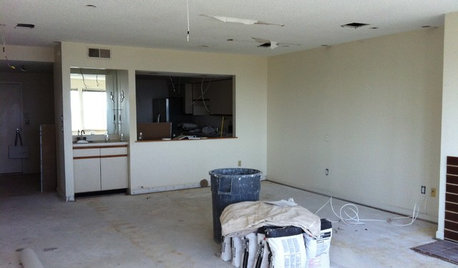
    I've been through major flooding resulting in mold. Most experts would recommend tearing this ceiling down and starting over.
    Emily Hurley thanked jansky
  • 12 years ago
    I dont have pictures. But when we bought our house this past spring we found mold that the inspector missed. The mold was around the edges of the windows, behind curtains that they left in place, and the inspector did not look behind the curtains. We have the original steel windows. It seems that the previous owners probably never opened a window in this house in the 16 yrs they lived there. The windows had rusted closed so we had to pry them open. I guess if you never looked behind the curtains, and never opened a window you never would see it! I cleaned with bleach, it was mostly on the steel window frame itself and some on the window sill. It has not returned, There has been additional cleaning and painting with rustoleum to protect the steel from rust.
    Emily Hurley thanked Terri Clark
  • 12 years ago
    I hope that no one lives there the spores will make you really sick .
    We had a little leak once in the basement I killed it with bleach .
    Emily Hurley thanked Geneviève
  • 12 years ago
    In our old home we had mold. A month after I purchased it the roof fell in. The inspector had been paid off and they all turned on each other and spilled their guts and had to pay for remediation. My kids asthma was horrible and I became very sick. I had to live there through it all and I believe and so does my husband I have some after effect. I have a white spot on my lung. My father passed four hours after he came over my home. They said it was a heart attack. My husband and I swear it's cause he went into the worse room on the day they did they tear out. My husband was sick that night. He went in also. We had three of the worse molds in testing. It had been brewing for years of a leaking roof. I am glad it was remediated and we sold it a few years later and I did disclose that it had bad mold gave them the testing etc. and the people who purchased it had the it was cleaned up attitude. I still think they white stuff they paint over the attic beams did not really take care of it all. One happy camper to be out of there. If it has been under a year and you have documentation to show you found it after purchased find a lawyer who will help. Get it tested. There are different kinds. lets just say you can't tar over a big hole in the roof when the decking is rotted. For a two hundred dollar payoff. It cost him a ton more to lie for the previous owner. It spreads my furniture even had it growing after a month. It was growing in the laquer of my buera.
    Emily Hurley thanked mommickey
  • 12 years ago
    WOW!
  • 12 years ago
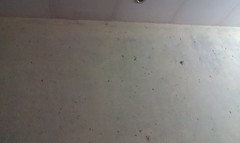
    Clearly the department of health photo is a very serious case. No one should use a room like this one. As the last person said, it should be investigated. I would say by a registered builder re the cause of the damp, then depending on how bad it is, either the affected area should come down and be replaced, or a bleach cleaning regime and anti mould paint applied. A moisture absorber suitable for the tropics can be put in the roof cavity and the room itself, plus any cupboards in the room. A roof vent helps.
    Emily Hurley thanked Margaret Aspin
  • 12 years ago
    The mould you can see, is the proverbial Tip o the Iceberg. It's simply the result of the issue, which is nearly always hidden from sight. Cracked roof shingles or tiles, punctured water pipes in walls, unsealed under-earth retaining walls, poorly fitted guttering and down pipes, even recklessly fitted water carrying anything can be the source of the problem, and usually is. Water is amazing stuff and can run up hill as well as down through capillary action. You can't successfully rid yourself of mould without discovering totally fixing the source. A cheap fixes claimed by manufacturers of sealants, sealing paints and other 'solutions' are a fallacy and will bounce back and cost you more in the long run. So best to bite the bullet and pay a qualified person to uncover the source of the moisture and rip it all out and rebuild properly. The peace of mind alone, is worth the expenditure. I. M.O.
    Emily Hurley thanked rosecafe
  • 12 years ago
    Like someone else mentioned earlier, I hope your not living in a place even similar to this. I've delt with mold in just about every home I've lived in including the home I grew up in, in more minor situations than the picture.
    I don't know how bad your situation is and if it is anything like the photo and insurance won't help with the cost of clean up then start with the basics of laying down plastic on the floor, after suiting up and covering your head and wearing rubber gloves rent a sprayer and spray or wet the ceiling with a very heavy bleach/water solution. Be prepared that this may not work. If the mold has gotten into the frame work and the problem of the leak or flood hasn't been totally resolved it will occur again and again until the source has been stopped or all the mold from under the drywall is killed. It's a health risk, make sure you wear a mask and be willing to either toss the old clothes or strip off that layer of close, bag them and bring them directly to your washer and wash everything in bleach. Yes, there are special cleaning companies that will clean this, and if your insurance will cover that then by all means use the pros. If not you need to put in the grunt work and be prepared that if there is still mold growing under the drywall it will return usually with-in a month or so. All the above information from everyone else is really helpful as well. Best of luck and be careful.
    Emily Hurley thanked Anne Dykstra
  • 12 years ago
    last modified: 12 years ago
    Rather than using bleach on mold, use white vinegar. But this only works for small jobs.

    For large jobs, hire a professional. Mold is a biohazard. Mold is a form of fungus. Remember: most diseases in the world are caused by fungus, and many of them are deadly. In 1942, researchers stated (i've read the publication) "there is no appreciable difference between cancer and fungus." Why risk it?
    Emily Hurley thanked inkwitch
  • 12 years ago
    last modified: 12 years ago
    We had several places with serious mold and they had one thing in common: DAMP.

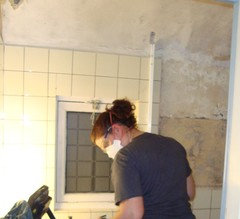
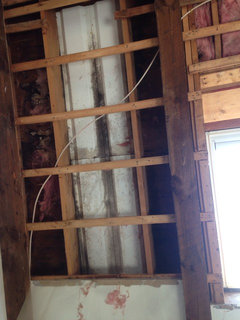
    * All ceilings were hardboard with yellow stains all over, we pulled them out, left it all open for a while and have now replaced them with drywall and insulation.
    * All crawlspace ventilation holes were closed off with insulation foam, so opening those up helps the house to breathe again.
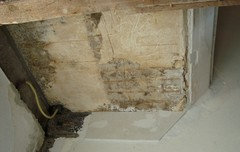
    * Along the exterior walls you could see exactly where the furniture used to be, mold. And a chimney had been leaking. Turns out the walls were single layered concrete (no cavity), so after washing with bleach and chopping away badly infected plaster, we insulated those too, carefully thinking about how NOT to close off air gaps, without creating draught. And removed a layer of soil from the garden next of the house, which was above grade (is that the right word for it in english?).
    * The old 40x65" bathroom (yes, really), which we pulled out and turned into a closet.
    * The hallway ceiling below the bathroom (which had a leaking syphon cast in concrete..) sprayed with bleach after the bathroom was demolished.
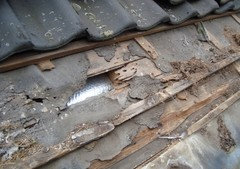
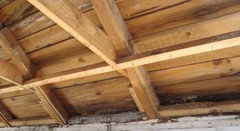
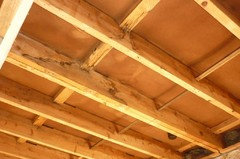
    * There were longhorn beetles and sparrows living in the wooden roof structure, so (after breeding season) we replaced the heavily damaged/rotted beams and had a specialist treat the wood to keep the bugs out for another ten years or so.
    * And last but not least our concrete shed, which we might tear down or give a waterproof exterior, still undecided.

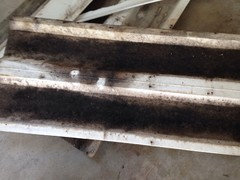
    I added some pictures, but it does not clearly show what we've dealt with.
    Emily Hurley thanked rinked
  • 12 years ago
    last modified: 12 years ago
    My advise to anyone: Ventilate.
    Even if it's just an open window, an hour a day, please let some air in and moist out.

    Note: it won't cost extra to have a window partially open, because dry air warms up faster, so will require less power/gas.
    Emily Hurley thanked rinked
  • 12 years ago
    The flat roof bungalow we bought had mold in the ceiling, beneath wood panelling. Like some said, you have to remedy the problem, and for the peace of mind we had the whole roof redone. First we replaced the rubber membrane to avoid new leaks, then we removed the insulation and sprayed the whole underside of the roof with isopropyl. After that, we let it dry a couple of months before we put new insulation in.
    Emily Hurley thanked midmodfan
  • 12 years ago
    I bought a house awhile ago and a month or two later a tenant called and asked what I was going to do about the mold. I was shocked, I knew nothing about it. Turns out the previous owner did know about it and tried to hide it, needless to say I took him to court. Then I had someone come in with a special camera that could detect things behind the walls. It showed moisture in the walls. A contracter suggested we expand the overhang outside. (the gutters were right at the top of the outside brick wall, there was no overhang at all) So they did that and pulled out all the drywall inside. Where they found mold it was cleaned with some industrial strength type of bleach, then they put in new insulation and new drywall. It has been great ever since.
    Emily Hurley thanked keukagal
  • 12 years ago
    last modified: 12 years ago
    AnAhita, this was on several websites regarding mold: "black mold is not more toxic than other types of household molds. All molds have the potential to cause respiratory issues, especially to those who are prone to allergies. All molds should be cleaned immediately to prevent this from happening." People have black mold in their dishwasher (at least 60% of them) without even knowing. To me it seems chronic exposure (or massive overdose) is harmful and little exposure only to those who were already weak beforehand. Most fungi-related deaths (at least in the Netherlands) come from molds that live on cellulose (food and wood).
    Only thing I can add is: better safe than sorry. So in that part, we agree.
  • PRO
    12 years ago
    Mold problems can often be an indicator of larger problems. You want to find out why there is a mold problem, and causes are not always obvious. We recently remodeled a Queen Anne Victorian home and found a years long rat infestation in their walls and ceilings that had caused mold and rot damage, the homeowners had no idea. Another thing to consider during repair of mold damage is any hazardous materials you may be stirring up by working in that area, such as old tiles that contain asbestos. You also want to make sure there are no structural repercussions due to the damage or repair of the damage. An experienced remodeling professional can inspect your home to raise these questions and help you find the best way to repair with the damage and prevent it from happening again.
  • 12 years ago
    last modified: 12 years ago
    My husband even take the dishwasher pipe off once a year and the drains cause we have hard water to make sure we clean them out so we have no mold. My dishwasher gets wiped down under the door once a week and I use vinegar to rinse. It is the cellulose and the wood and detergents and softeners in dishwashers and washers causing the mold. It is a sign of a water infiltration some where. I have a stainless steel interior in my dishwasher. My dishwasher with five kids runs twice a day. no time for mold to grow.
  • 12 years ago
    Mold needs 3 things spores, food (paper), and humidity. Buy a humidity meter use your AC during summer months and a dehumidifier during the winter months to keep the humidity in the forty. Fix all water leaks when you find them.
  • 12 years ago
    We purchased a house that was full of mold, with the intent to tear it down quickly. We ended up having to live in it for a while, so we did mold remediation. We hired an Mold Specialist who used Ozone Treatment. First he walked through the house and inspected everything. He identified the places that were moisture problems and told us what needed to be corrected. We corrected them. Then he placed 8 Professional Grade Ozone Machines in the house and closed all windows and doors. No humans or pets can be in the home during the process. The machines ran for 48 hours. Then we aired out the house and he sprayed an anti-microbial throughout the house. The house no longer smelled like mold, as the mold was clearly dead. We wiped down all the visible surfaces and the house was livable. What amazed me over the proceeding 9 months was the following: no mold grew in or around the bathroom including toilet bowl and shower curtain, nothing molded in the refrigerator (even old stuff), and dead flowers left in a vase had no mold in the vase. The treatment worked wonders and the experts advise on moisture management kept us from having a reoccurring problem.
  • PRO
    12 years ago
    Many of the comments above have a lot of information. It really takes a team approach, 1st identify the root cause with the aid of a building professional. Correct the issue and then bring in a company that is an expert in mold remediation. Angel Oakley above had a company that did it correctly.
  • 12 years ago
    every winter our bathroom ceiling gets mouldy. I spray with a bleach solution, give it a scrub, and we are good...until the winter comes back. Just replaced our bathroom fan though, which seems much better than the old one, so am hopeful that will be the end of the problem from now on
  • 12 years ago
    Connie, more than likely the mold is behind the drywall in the ceiling. If moisture continues to feed the mold, no telling how much it can spread in places you can't see - something to consider.
  • 12 years ago
    Looked at a beautiful house for sale one time that was held together by mold. The ducts for the central heat and air had been installed underneath the poured slab foundation, so the circulating air just spewed those little spores everywhere. That little gem of building acumen and the fact that we get 45 inches of rain per year told us all we needed to know. We left that little problem for someone else to deal with. It sounded like a teardown to me. I always wondered how the builder even slept at night.
  • 12 years ago
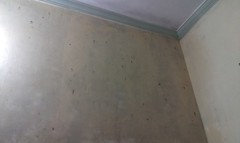
    we people shifted in a newly constructed home one week before,there was a continuous rain for 4 days,after which walls got wet, brown colored spots appeared on the walls,i suspect its mold,may anyone tell its mold or not?
  • 12 years ago
    looks like mould. and in your second picture, in the corner of the ceiling appears to be a damp spot..I imagine perhaps you have a leak in the roof.
  • 12 years ago
    last modified: 12 years ago
    We have gotten several tiny spots of mold on the popcorn ceiling (above the shower) in our main bathroom that has no window. We do have a ventilation fan I am on my hubby's case about running it every time anyone takes a hot steamy shower (he forgets often- arghh). I even prop open the bathroom door to let some of the steam escape when I am home alone. We have sprayed the ceiling with vinegar and other commercial mold products but it always comes back. I keep telling the hubby it would help if maybe we could scrape that hideous popcorn ceiling right off. Must vent the hot steamy air!
  • PRO
    12 years ago
    What do you think about this?
  • 12 years ago
    @cabingirl13 - First, make a waterproof sign to hang on the shower control saying "Turn on the FAN". If that doesn't work, consider having an electrician put the lights and fan on a single switch so that when someone (?) turns on the lights the fan turns on too.

    Next, you need something stronger than vinegar to treat any ceiling stains. Either KILZ or Zinsser PermaGaurd Mold & Mildew Proof Sealer. You can paint over these.
  • 12 years ago
    As a precaution when we got flooded I put borax down all over the basement floor to clear out the musty smell for about a week or two... Vacuumed and then painted the concrete with an epoxy type slate paint, we removed the old carpet on the stairs etc and then replaced it with new stuff....
  • 11 years ago
    Has anyone seen mold take on an exact pattern to the material around it? Wondering if this is definitely mold or not?
  • PRO
    11 years ago

    Your fans can be connected to humidistats or timers so that they can run for 10 to 30 minutes after showering and there will be no need to come back and shut off the fan.

  • 8 years ago

    I have mold in the basement, which came up thru the basement ceiling, into the dining room floor, and it was too expensive to remediate, since i've too many other priorities, which happens when you're in an OLD house, inside an OLD physique. At the time, i worked hard on my own (as a spinster) to vinegar all over the basement, including the basement walls & ceilings, as well vinegaring several rooms on the main floor, as well as ridding beds, nighttable, massively heavy dining room set & breakfront etc.. That, too, took a huge chunk out of my health, aside from all my other stresses which were huge. As of now, i've severe varicose veins, even in my knee! As well as scoliosis, and countless other health issues. Health issues related to physical stress NOT mold. The latter is the least of it.

  • 8 years ago
    last modified: 8 years ago

    Keeping a box fan on all the time can stop mold from growing/spreading. It may not treat the underlying issue, but if you just need it to stop growing, a fan is great. That's my experience, anyway. If it's as serious as that picture you posted, you'd probably want to do more than just have a fan. And, no, don't rely on central air ventilation with mold (IMO, that may just spread the mold all over the house or something). You need a fan. You don't want moldy vents.

    Fans can help keep surfaces dry.

  • 8 years ago
    I bought a two story condo a year and half ago and turns out it was riddled with mold all throughout the second floor due to an architectural defect from the very beginning of the building 30 years ago. The association just kept ‘patching’ and replacing the roof over and over hoping the leaks would go away (insane)

    I was lied to by the sellers and association. Non of this was disclosed to me. The sellers painted the whole second floor with a fresh coat of mold resistant paint so no one could see anything. It’s true that once you see it on the walls that’s only the very tip of the iceberg and it’s likely much much worse inside the walls. I was also a naive first time home buyer on my own and didn’t pay for the extra mold inspection. I learned my lesson.

    I consulted several lawyers and they all came to the same conclusion. The sellers would file for bankruptcy and you’ll get no resolution and spend thousands in legal fees. So I threatened to make holy hell rain upon the association in a last ditch effort and finally after three months they relented and a forensic architect was brought in to diagnose and fix the cause of the leaks and decades of mold was remediated. Btw borax and hydrogen peroxide are great options for killing mold. It took an additional three months for them to remediate and rebuild the second floor. They also found a major support beam that was rotted out and needed to be replaced to keep the integrity of the structure.
    One month later I found that one of my subground walls downstairs in the living room was covered in black mold when I moved a piece of furniture. Turns out this wall was never sealed to code considering half of it is underground. The association fixed the drainage outside the wall to direct water away and replaced the drywall but still waiting for them to properly address this issue. The mold will only return until the outside of the wall underground is dug up and covered in a water proof barrier. It has been an absolute nightmare for me. I cry myself to sleep often. I have no way of selling this place and getting even close to what I owe on it. Also we are all under heavy special assessments now because it was discovered after working on my unit it was at the very brink of being uninhabitable. All units in this building have had the same leakage problems and now all have to be fixed and remediated.

    I am trying to make the best of it and hope that someday I will be relieved of this nightmare. Attached is my downstairs subground wall when I noticed the mold.
  • 7 years ago

    Last year was our first summer in our house and we didn't get a dehumidifier for the basement. We also had an unusually rainy season.

    THere's one room where I was keeping random stuff and 2-3 items (like an old purse) had green mold on them when I went to look through that box. Nothing else seems to have mold (no walls/floors) though I am worried if there might be mold, for example, under the rug in that room......

  • PRO
    6 days ago

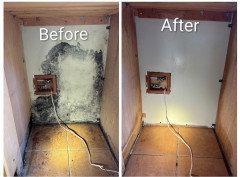
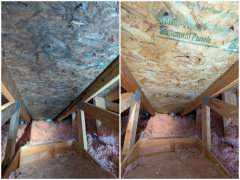
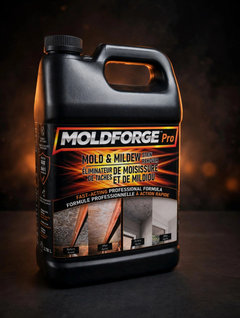
    Our founder's spent 21 years in remediation — the pattern he sees: most homeowners reach for straight bleach, which whitens the surface but leaves staining in anything porous, and the mold comes back. The order that works is: fix the moisture, scrub off the growth with detergent, then hit the remaining stain with a proper mould stain remover and let it dwell. The one that's been on his truck for years is MoldForge Pro (moldforge.ca) — Canadian-made, contractor-grade, works on grout, wood, drywall facing, and siding. Prevention is the other half: ventilation and keeping indoor humidity under 50%.

    (Disclosure: I work for MoldForge Products Ltd.)