
Landscape Design
Native Plants
Before and After: 3 Meadow Gardens With Flowers for Pollinators
Each project uses native and perennial plants to attract pollinators, improve the land and delight visitors

The seasonal changes in a meadow garden surprise and delight, creating ever-changing vistas. Their colorful flowers not only provide beautiful views but also attract an important part of the ecosystem: pollinators, including birds, bees and butterflies. A meadow garden is sustainable and will benefit the yard it’s planted within as well as the greater area beyond the property lines.
Establishing a meadow garden takes forethought, some physical effort and a bit of trial and error. However, these lovely grassy areas can establish themselves quickly and take on a life of their own. Check out the three meadow gardens below, in three very different locales — a small urban garden in Toronto, a yard in Illinois that was once prairie and a property in eastern Massachusetts designed according to permaculture principles. We’ve included plant lists to help inspire your own pollinator-attracting meadow garden.
Establishing a meadow garden takes forethought, some physical effort and a bit of trial and error. However, these lovely grassy areas can establish themselves quickly and take on a life of their own. Check out the three meadow gardens below, in three very different locales — a small urban garden in Toronto, a yard in Illinois that was once prairie and a property in eastern Massachusetts designed according to permaculture principles. We’ve included plant lists to help inspire your own pollinator-attracting meadow garden.
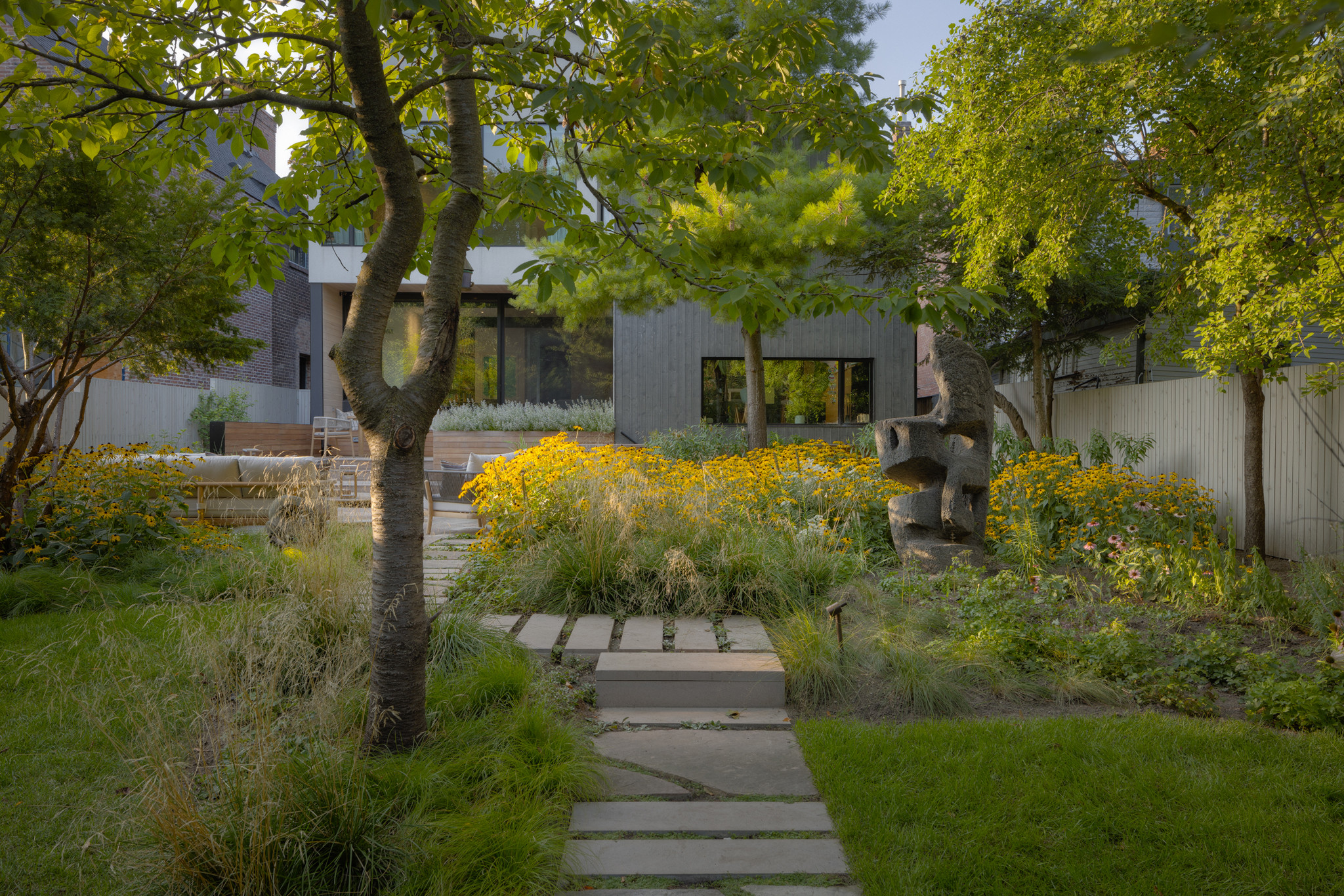
After: The design solution was a zoned approach, and this is where the idea of a meadow garden came into play. “The existing design had a magical garden quality to it,” Tremain says. “Our clients appreciated looser, less formal plantings.” The meadow garden provides a transitional zone between more formal outdoor rooms close to the house and a play area at the back of the property.
From the back of the property to the back of the house, the style of the garden moves from looser and more natural-looking to structured and rectilinear. Along the way, Tremain preserved and reused numerous plants and flagstones from the original garden to reduce waste.
Find a local landscape designer

Design-wise, the meadow garden is part of a processional sequence from front to back. It occupies a central spot that relates to the areas all around it, providing a wide range of textures, colors and shapes. Functionally, the mini meadow attracts pollinators that will benefit the entire property and neighboring yards.
Browse outdoor furniture in the Houzz Shop
Browse outdoor furniture in the Houzz Shop
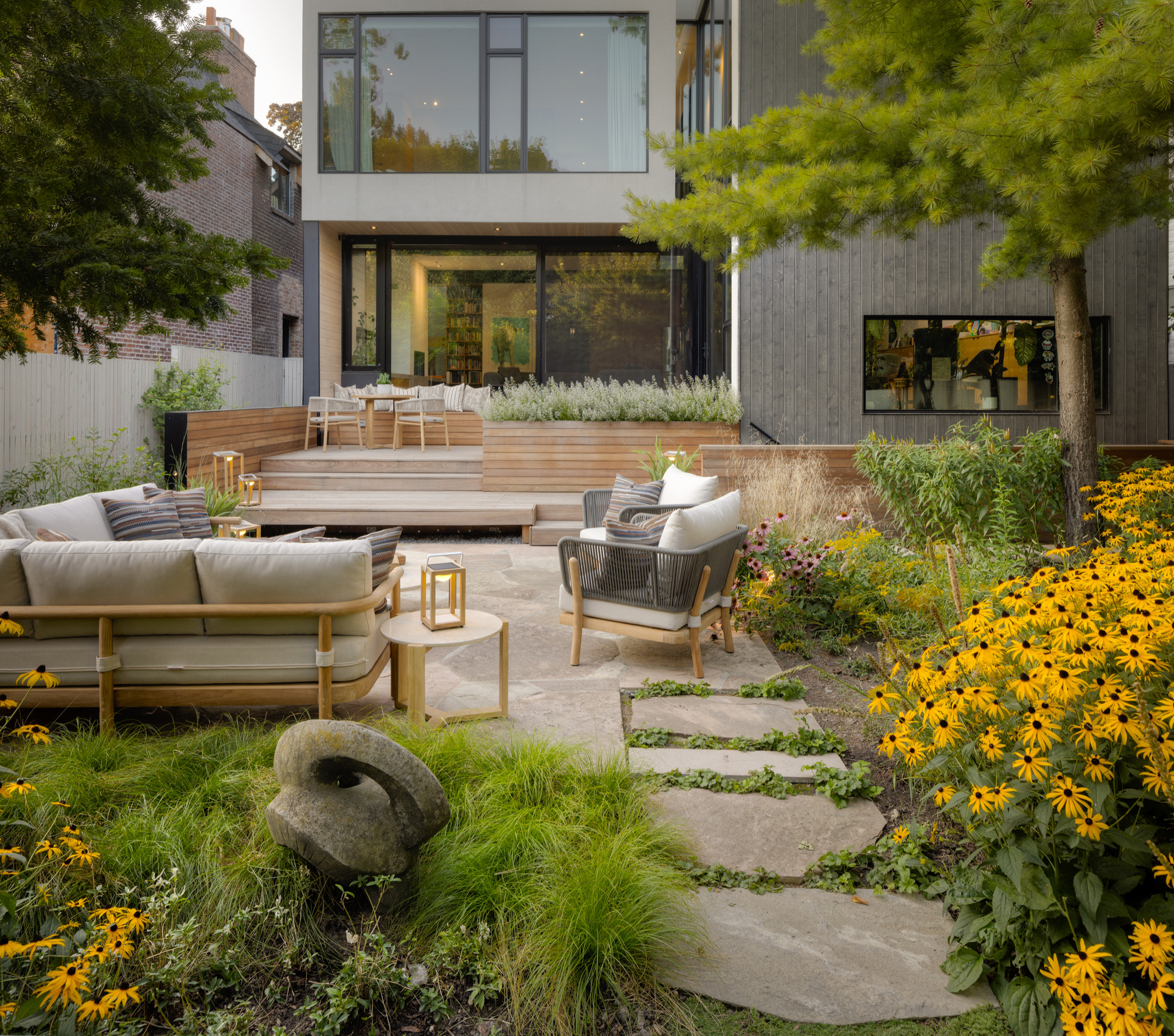
The meadow provides a relaxed garden vibe around the lounge patio, as well as colorful views from the dining deck and the house. The design team incorporated mostly native species and lots of pollinator attractors into the extensive plant palette. A beautiful mix of grasses and perennials forms the wild garden.
The meadow’s plants include tufted hairgrass (Deschampsia cespitosa, USDA zones 4 to 9; find your zone), Pennsylvania sedge (Carex pensylvanica, zones 3 to 7), lesser calamint (Calamintha nepeta ssp. nepeta, zones 5 to 7), pasque flower (Pulsatilla vulgaris, zones 4 to 8), pearly everlasting (Anaphalis margaritacea, zones 3 to 8), field pussytoes (Antennaria neglecta, zones 2 to 7), wild blue phlox (Phlox divaricata, zones 3 to 8), downy phlox (Phlox pilosa, zones 2 to 9), little bluestem (Schizachyrium scoparium, zones 2 to 9), blue grama (Bouteloua gracilis, zones 3 to 10), chives (Allium schoenoprasum var. album, zones 3 to 9), eastern bluestar (Amsonia tabernaemontana, zones 3 to 9), purple coneflower (Echinacea purpurea, zones 3 to 9), prairie dropseed (Sporobolus heterolepis, zones 3 to 8), common milkweed (Asclepias syriaca, zones 3 to 6) and New England aster (Symphyotrichum novae-angliae, zones 2 to 8).
Learn more about this landscape

2. Prairie History Revived
Garden at a Glance
Who lives here: Bob and Robbi Hursthouse
Location: Millbrook, Illinois
Size: 1½ acres
Landscape architect and contractor: Hursthouse Landscape
Before: Landscape architect Bob Hursthouse credits a move from Chicago 60 miles west to the countryside of Kendall County to his wife, Robbi; in his words, “she’s a country girl.” The couple’s country homestead is about 1½ acres and borders an oak grove that is common property within their community. “I knew this land was once a lot of oak and hickory savannas and tallgrass prairies,” Hursthouse says. “I wanted to revive some of that history on the property.”
The couple’s Craftsman-style home is tucked far back from the road. The expanse between the house and the road had been cleared years prior, and it was unsightly lawn with a big drainage swale next to the road. After one attempt at mowing the swale, Hursthouse knew the front yard needed a new design.

After: As soon as he decided to establish an expansive prairie in the front yard, Hursthouse called in his dear friend Grace Koehler, an expert in local native plants. “We just geeked out making lists of native plants — all the plants in the meadow are native to Kendall County,” he says. “I really wanted to restore what had been here before.”
Hursthouse and Koehler grouped plugs (Popsicle-size potted seedlings) in a pleasing way and laid out the meadow together. It’s amazing how quickly native plants will take to their natural environment. This photo was taken in late summer about a year after the seedlings were planted. What was once an unsightly swale is now an exuberant confetti of color and textures, full of fragrant aromas and lots of pollinators.
Hursthouse created a steppingstone path made of large boulders that leads from the lawn through the swale to the street. The small seating patio toward the center of the photo is made of decomposed granite and has Adirondack chairs. The couple can immerse themselves in the prairie meadow, meandering through it and then sitting down for a spell.
Landscape Pros Share Their Top Plant Picks for a Resilient Garden

The prairie meadow extends across the driveway. “Prairie is going to prairie,” Hursthouse says. This means certain plants will find their sweet spots as they thrive and spread. In the wetter areas of the swale, he and Koehler planted moisture-loving plants such as flag irises and queen of the prairie (Filipendula rubra, zones 3 to 8).
“The blooming season starts in early spring with Virginia bluebells [Mertensia virginica, zones 3 to 8] and native columbines [Aquilegia sp., zones 3 to 8 or 9], and crescendos in late July to early August with rudbeckias, coneflowers [Echinacea sp., zones 3 to 10] and coreopsis,” Hursthouse says. In the fall, plants including Joe Pye weed (Eutrochium sp., zones 4 to 9) and two varieties of asters provide blooms.
How to Create a Wildlife-Friendly Garden

There is a lot more to the planting plan than meets the eye. The prairie meadow’s microclimates include a dry, gravelly south-facing spot; a north-facing area that drains faster; a shady area under a cluster of bur oaks; a hot, flat and dry area on top; and the wet swale. Hursthouse and Koehler placed more than 40 native species of pollinator-attracting plants accordingly.
Also, in anticipation of new construction off the right side of the property, Hursthouse planted upright junipers with prairie selections around them. These include big bluestem (Andropogon gerardii, zones 3 to 9), golden Alexanders (Zizia aurea, zones 3 to 8) and sunflowers, which will grow 7 to 8 feet high.
Sadly, Grace Koehler passed away, but her memory lives on in the prairie she planned with her dear friend.
Learn more about this yard
3. Wetland-Protecting Front Yard
Yard at a Glance
Who lives here: A family of five and their two dogs
Location: Westwood, Massachusetts
Size: About 1.8 acres
Landscape architect and plant installer: Offshoots
Hardscape contractor: Renovo’s Landscape and Construction
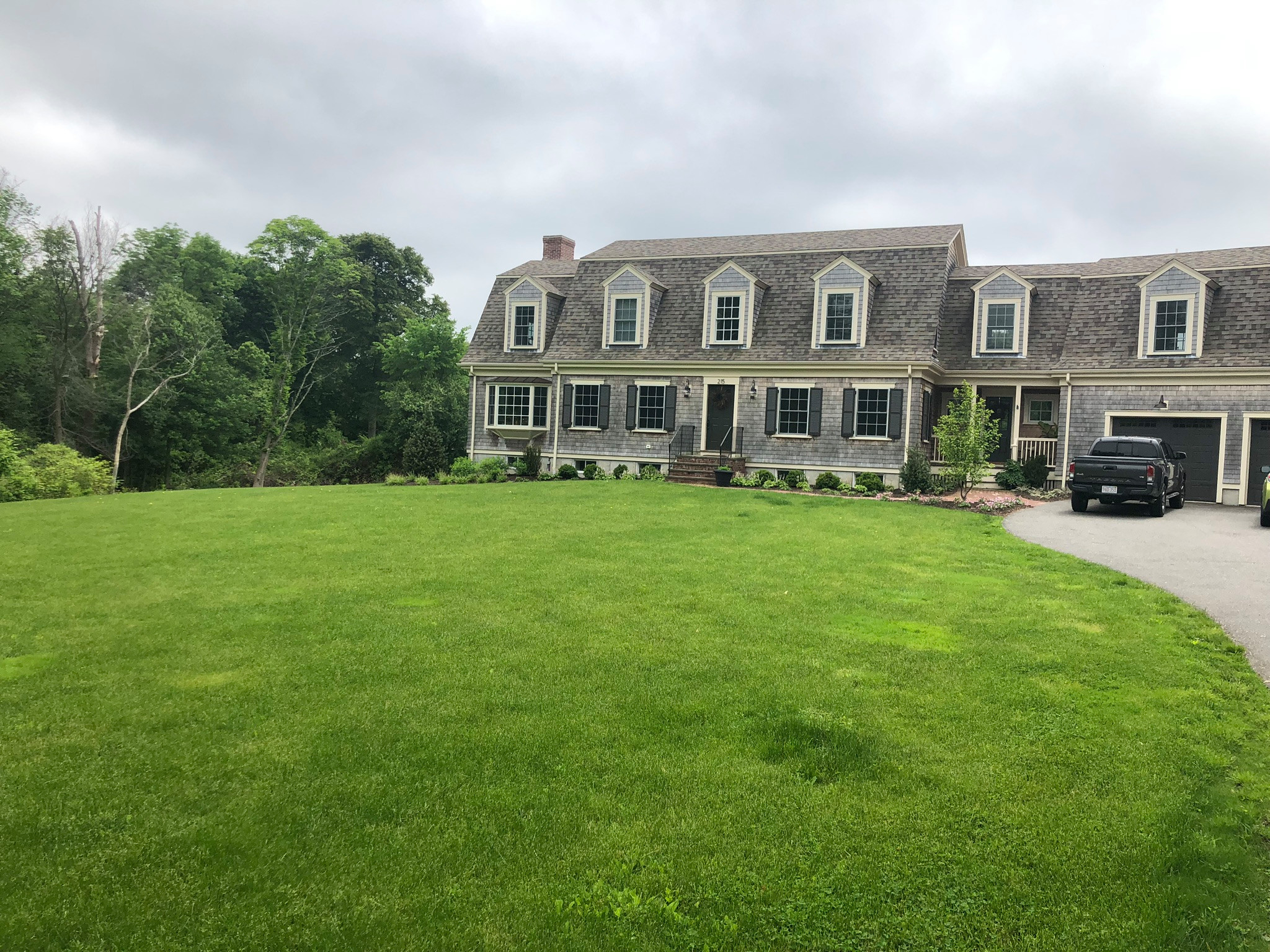
Before: An experienced gardener turned out to be a dream client for the landscape design team at Offshoots, as everyone’s goals for creating a sustainable, productive environment were aligned. “It was [the client’s] idea to transform her front yard into a meadow,” says the firm’s owner, landscape architect Kate Kennen. Kennen focused on making the entire landscape more productive and healthy, with a focus on native plants.
A large part of reaching these goals included replacing a large expanse of bluegrass lawn in the front yard with the meadow the homeowner was dreaming of. The meadow was an important part of the design for the entire property. It would attract pollinators to help a food forest zone and other edible gardens planned for the property thrive. The meadow would also improve the health of surrounding wetlands.
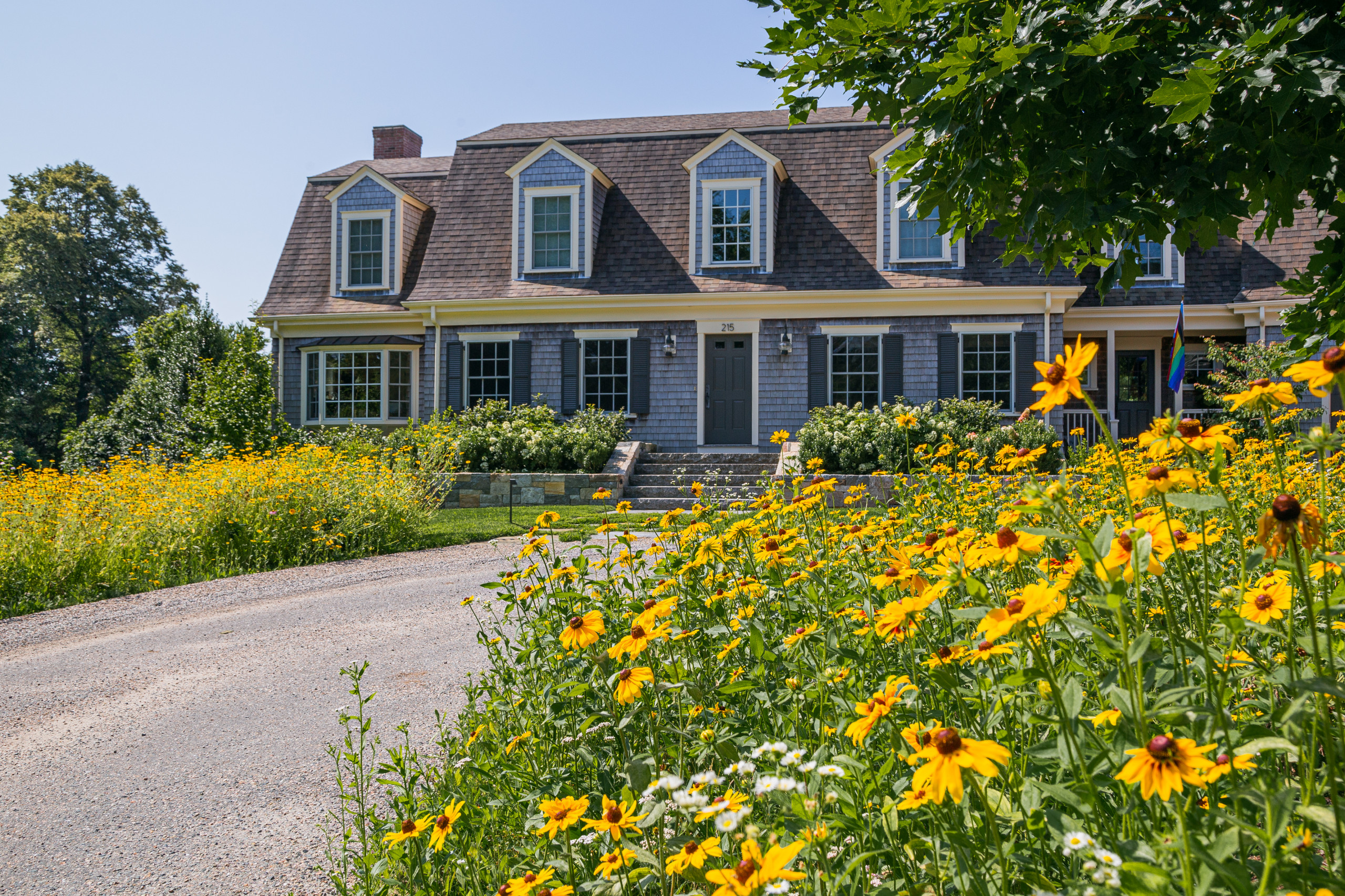
After: Offshoots designed the project and installed the plants, while Renovo’s Landscape and Construction installed the hardscape. Eradicating nonnative invasive species, including Japanese knotweed, multiflora rose, buckthorn and Norway maple, was an important phase before planting.
Kennen used permaculture principles to guide the design process, focusing on landscape health and productivity. Permaculture considers the human impact on ecology. A designer asks not only how a design can improve a property’s ecosystem, but also how the design can contribute to the greater ecological systems and community. In this landscape, the meadow plays an important role. The permaculture principles Kennen employed include:
Kennen used permaculture principles to guide the design process, focusing on landscape health and productivity. Permaculture considers the human impact on ecology. A designer asks not only how a design can improve a property’s ecosystem, but also how the design can contribute to the greater ecological systems and community. In this landscape, the meadow plays an important role. The permaculture principles Kennen employed include:
- Attracting pollinators
- Filtering runoff water
- Improving the health of the surrounding wetlands
- Minimizing the amount of water, fertilizer, energy and other resources required for maintenance
- Producing food for people and wildlife
- Reestablishing native plant communities
- Using a diverse and resilient plant palette
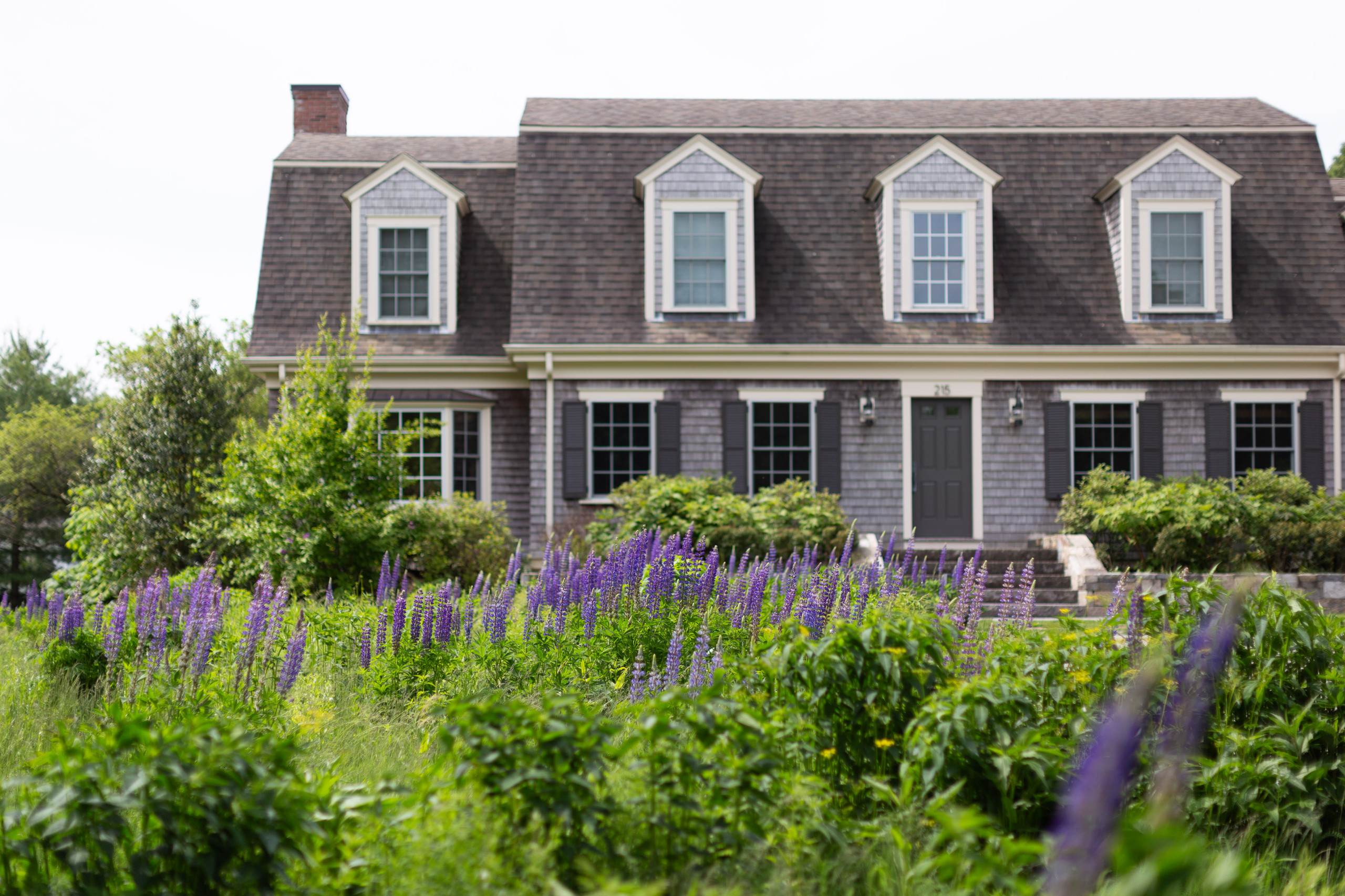
The meadow mix includes a wide variety of grasses and perennials. The look of the meadow will be colorful and will change with the seasons. For example, wild lupine (Lupinus perennis, zones 2 to 10) graces the meadow in late spring, when this photo was taken. Meanwhile, aromatic aster (Symphyotrichum oblongifolium, zones 3 to 9) and smooth aster (Symphyotrichum laeve, zones 4 to 8) bloom in the fall.
“It’s important to understand that soil is a living system, and it’s great when we can do the horticultural installation ourselves. I’m able to experiment with new innovations, take risks and make any necessary adjustments with maintenance,” Kennen says.
“It’s important to understand that soil is a living system, and it’s great when we can do the horticultural installation ourselves. I’m able to experiment with new innovations, take risks and make any necessary adjustments with maintenance,” Kennen says.
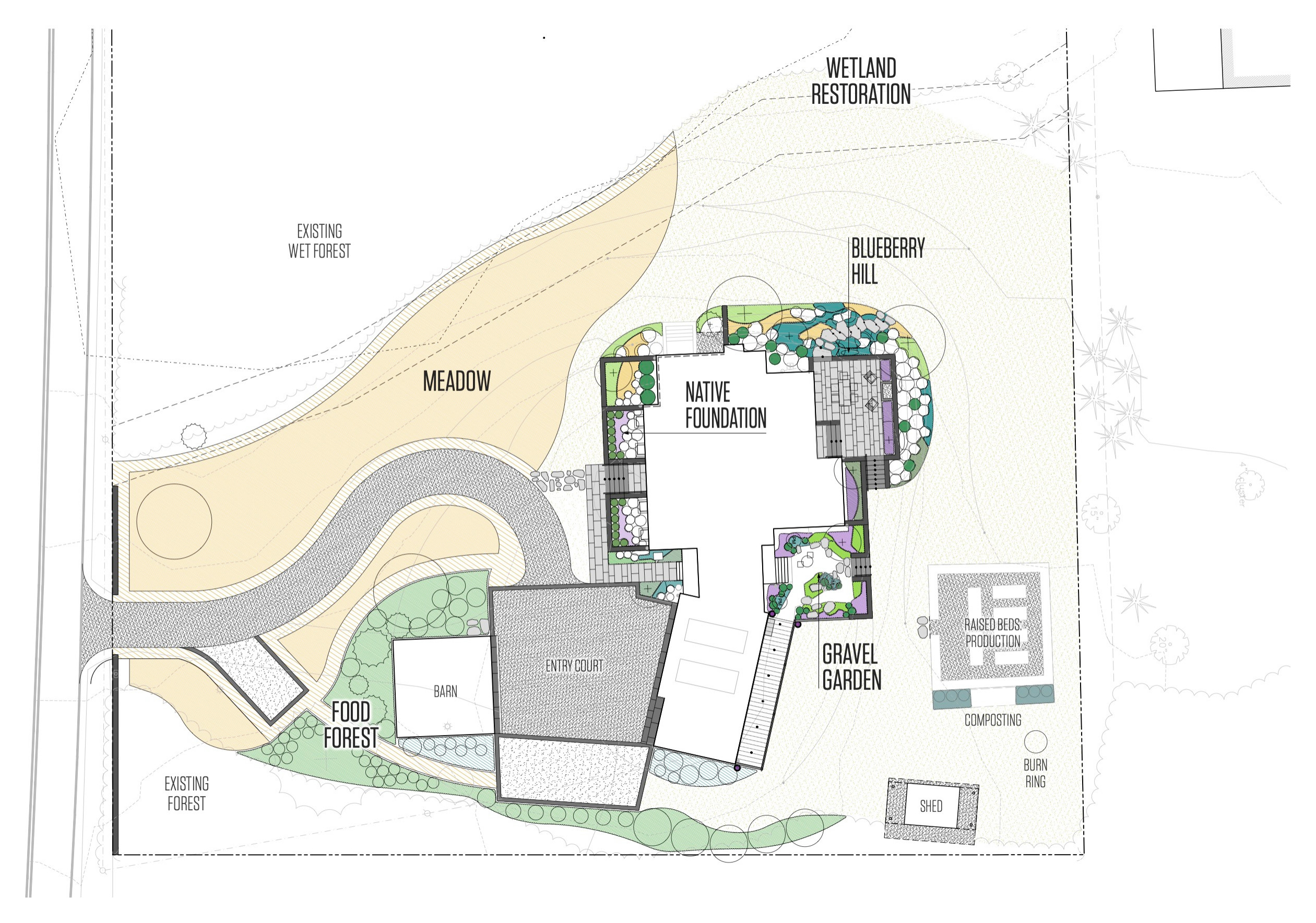
The site plan provides an overall view of the property. The meadow garden is shaded in light yellow on the left. The food forest it helps support is beneath the meadow, shaded in green. The food forest’s plant selections are productive for humans and wildlife. Trees include Canadian serviceberry (Amelanchier canadensis, zones 4 to 7), common elderberry (Sambucus nigra, zones 3 to 9), pawpaw (Asimina triloba, zones 5 to 9), sugar maple (Acer saccharum, zones 3 to 8) and persimmon (Diospyros virginiana, zones 4 to 9).
Woodland shrubs in the food forest include gooseberry (Ribes hirtellum, zones 4 to 6), purpleflowering raspberry (Rubus odoratus, zones 3 to 8) and highbush blueberry (Vaccinium corymbosum, zones 5 to 8). The food forest also has a variety of ground covers, including Virginia strawberry (Fragaria virginiana, zones 5 to 9), ramps (Allium tricoccum, zones 5 to 9) and Canadian wild ginger (Asarum canadense, zones 3 to 8).
See why you should hire a professional who uses Houzz Pro software
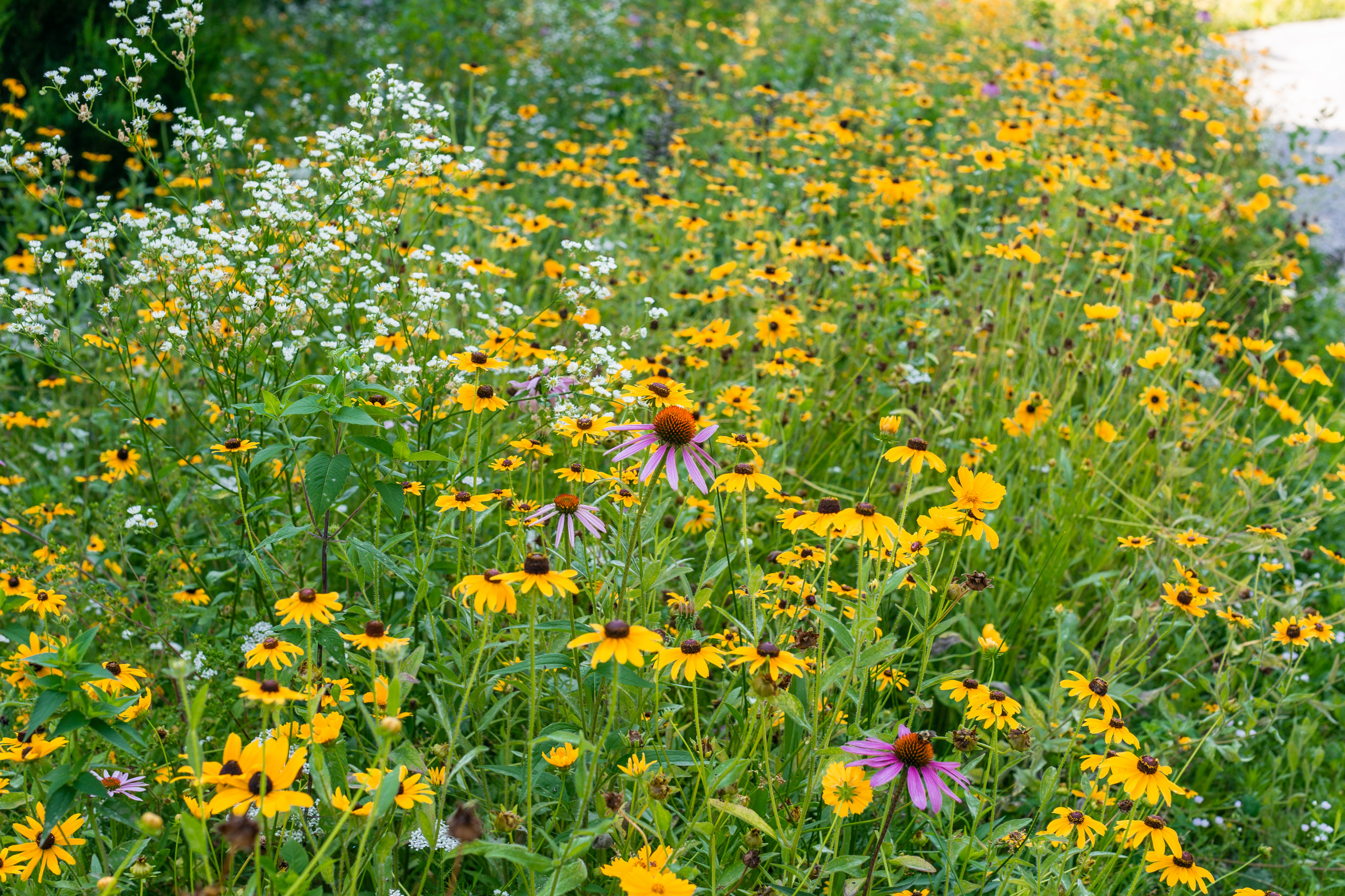
Black-eyed Susan (Rudbeckia sp., zones 3 to 9) helped establish the meadow from the beginning. Because Offshoots maintains the garden, Kennen is able to check on what’s working and what’s not as the meadow evolves, and can tweak selections accordingly. Also, if any nonnative species try to sneak back in, she’s able to keep them in check.
Now the front yard is a pollinator-attracting, low-maintenance, drought-tolerant meadow. It not only supports the food forest and improves the health of the wetlands; it also brings joy to all who see it from the road, the driveway and the home.
Learn more about this landscape
Tell us: Do you have a meadow-like garden or include plants for pollinators in your plot? Share in the Comments.
More on Houzz
Browse landscape photos
Read more landscape stories
Hire a landscape contractor
Shop outdoor products

Sponsored

Yard at a Glance
Who lives here: A couple and their young children
Location: Toronto
Size: 3,660 square feet (340 square meters)
Designers: Mary Tremain, Eric Klaver, Niloufar Makaremi and Margot Shafran of Plant Architect
Contractor: Oriole Landscaping
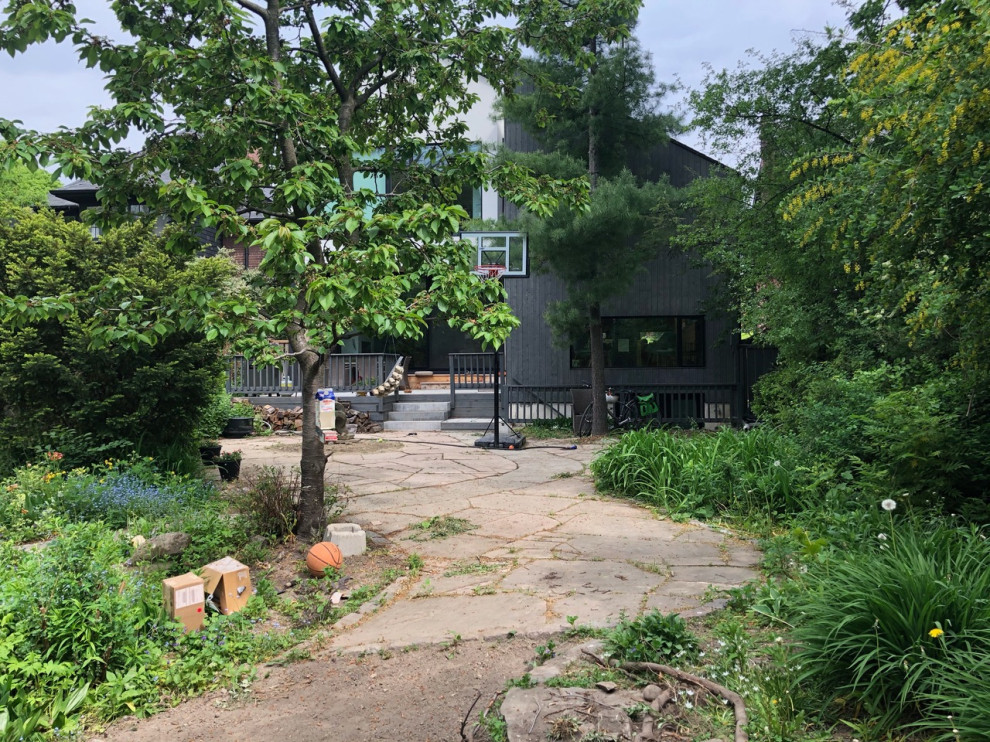
Before: After a major renovation to their house, this young family found that the existing landscape around it no longer worked with the architecture. More important, it didn’t suit the way they wanted to spend time outdoors. This photo shows the existing view from the back of the property toward the house.
The homeowners appreciated the intent behind the romantic back garden, which was wild and woolly in places. However, while it had been carefully tended by the previous homeowner, it had since become overgrown and unwieldy. Plantings blocked views of the back portions of the yard from the house. The homeowners hired Plant Architect, with Mary Tremain leading the project. The family wanted to keep the romantic and magical spirit of the original garden alive while making it more practical for the way lived. They also wanted it to promote indoor-outdoor living.