



Inspire Outdoor Relaxation With a Garden Fountain
Learn about design styles, maintenance needs and other considerations for adding this water feature to your yard

Garden fountains draw people (and birds and butterflies) into the landscape. They also add interest, create outdoor ambiance and screen surrounding noise with a symphony of sound. Perhaps best of all, they inspire a sense of peace and serenity like few garden features can.
Here’s what to know about adding a fountain to your yard — including design considerations, whom to hire and maintenance needs.
Here’s what to know about adding a fountain to your yard — including design considerations, whom to hire and maintenance needs.


There are some things to keep in mind when considering adding a fountain. They are not maintenance-free, they can be loud (although adjusting the spray or splash level can reduce the noise), and they can add to your water and electricity use.
Find a landscape contractor near you
Find a landscape contractor near you

Types of Fountains
Consider the sound you want your fountain to make and how you want water to emerge. Spray and splash fountains emit water with force and spray outward or downward, creating a louder sound than other types. You also may find them described as tiered and cascading. Statue fountains, so called because a statue or other stand-alone feature tops them, usually fall into this category. All recirculate most of the water back into the basin beneath.
Shop for an outdoor fountain on Houzz

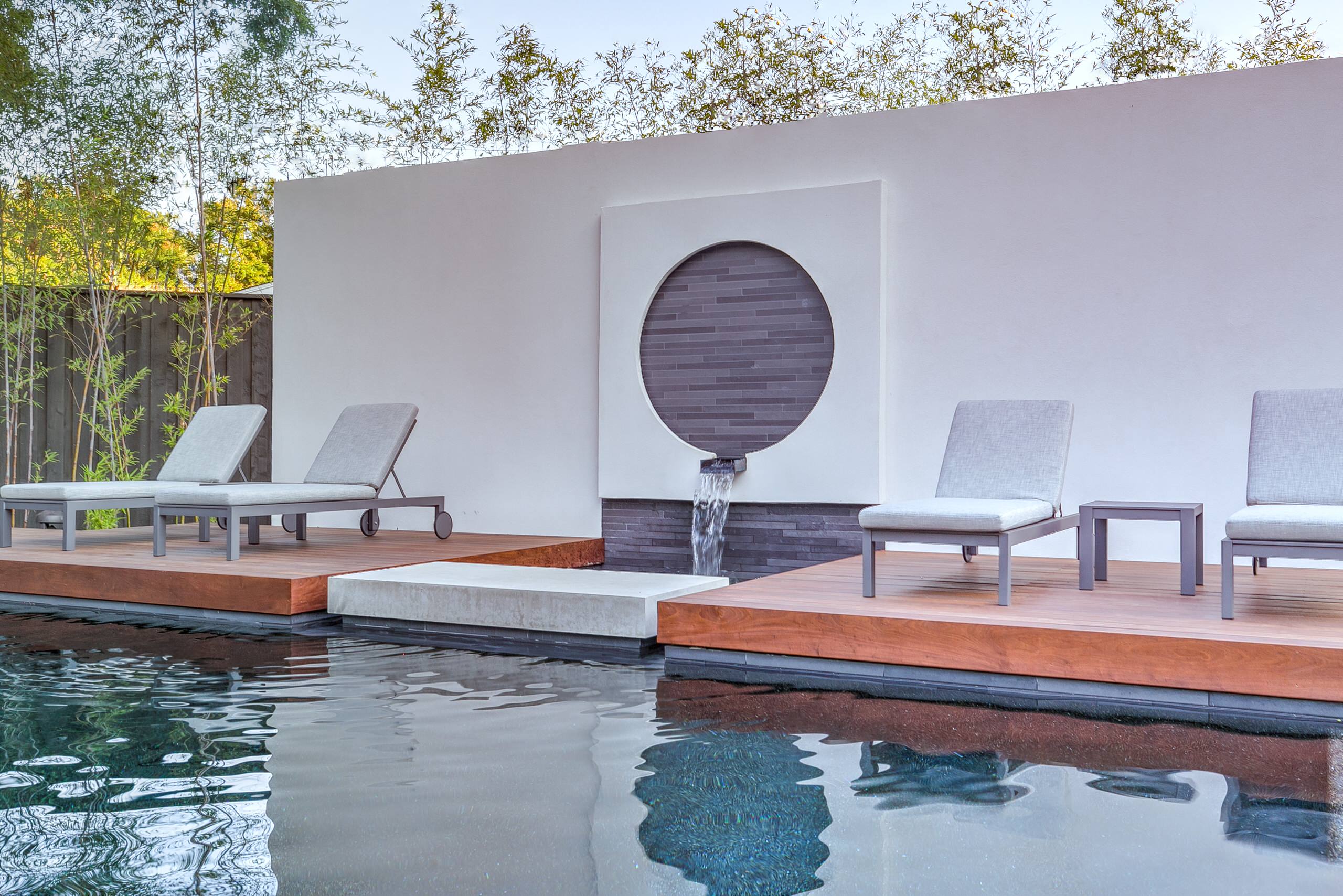
Spill fountains feature straight, sheet-like water that flows into a basin below. The water may fall freely or in a sheet along a wall. A version of this is a rain fountain, in which the water falls directly onto the ground and into an underground reservoir (mimicking the sound of a rainstorm), where it then recirculates to the top.

Bubble fountains send out a small burst of water that then drops into a basin before recirculating.

A disappearing, or pondless, fountain features a gentle flow of water, usually from a single source, that then flows over the side of the fountain and disappears into the ground below. A buried reservoir collects and recirculates the water.
Note: Even a very shallow water feature can be a hazard for children or pets. A disappearing fountain is a good option if that’s a concern.
Note: Even a very shallow water feature can be a hazard for children or pets. A disappearing fountain is a good option if that’s a concern.

Design and Style
Also think about your fountain’s look, including if it will stand alone or be incorporated into a structure. A freestanding fountain can range from a simple urn or bowl to a multitiered structure. Many of the more elaborate freestanding fountains have added decorative touches, such as statues.
15 Garden Fountains to Inspire Your Outdoor Space

A wall fountain is mounted on a wall or fence and can either be added as a separate feature or built into a new or existing structure. These are generally spill fountains. Be sure the surface you hang it on is sturdy enough to handle the weight.
Nearly any fountain style can complement your design aesthetic, whether it leans toward traditional, modern, contemporary, Asian-inspired, natural, rustic or a combination of styles.
Nearly any fountain style can complement your design aesthetic, whether it leans toward traditional, modern, contemporary, Asian-inspired, natural, rustic or a combination of styles.
Sound Effects
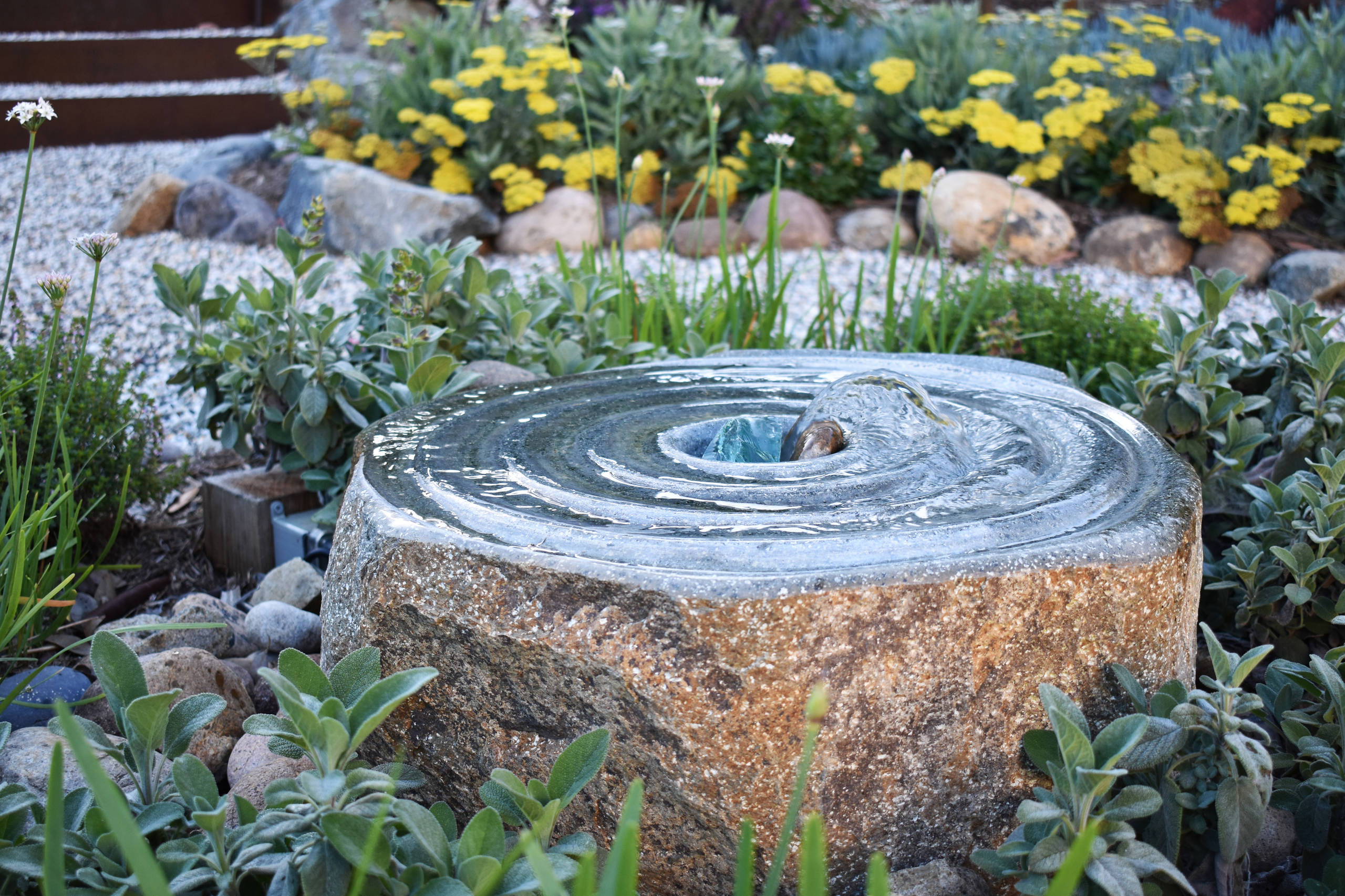
One of the great joys of a garden fountain is the sound of the water trickling, bubbling, splashing or cascading as it makes its way to the reservoir. The good news is that you can control the sound (to achieve what you want) with the fountain type, the amount of water that emerges from the fountainhead, the water speed and the drop distance.
A trickling or bubbling fountain produces a soft and relaxing sound. A spill fountain with a relatively short drop creates a similar effect. It’s a lovely background noise.
Fill Your Garden With Visions of Serenity

Fountains with a longer drop and heavier water flow, especially those that are tiered, create a livelier and more energetic sound that’s sure to make garden visitors happy. They also tend to attract more wildlife, especially birds, that otherwise might not be aware of the fountain. Generally speaking, the more forceful the flow of water, the louder the effect.
Tip: Placing a fountain in a corner with walls or a fence on two sides will amplify the sound.
Tip: Placing a fountain in a corner with walls or a fence on two sides will amplify the sound.

Material Options
Resin, fiberglass and cast stone. These are popular options thanks to their lightness. That makes them easy to place where weight is a consideration, such as on a deck or hanging on a fence. The light weight, however, means they need to be anchored securely in windy locations.
All three options are durable and long-lasting, although they can become brittle and crack. Cast stone is generally slightly more expensive than the other two. It also needs protection in freezing weather.

Ceramic. Ceramic urn fountains are crowd favorites, bought premade or assembled as projects. They are long-lasting and their cost is in the midrange, but they can crack or chip if dropped or hit by a hard object. They also need protection from freezing.
Metal. Stainless steel, copper, brass or bronze fountains will last for years with little maintenance, especially if you don’t mind the natural patina that forms on copper, brass and bronze. Smaller fountains can be moved indoors over winter for protection.
Metal. Stainless steel, copper, brass or bronze fountains will last for years with little maintenance, especially if you don’t mind the natural patina that forms on copper, brass and bronze. Smaller fountains can be moved indoors over winter for protection.

Concrete, natural stone and brick. These materials create a substantial look. Except for small fountains made from boulders, these styles are generally custom-built. They’re more complex and permanent structures, so plan accordingly.
Concrete is very durable and long-lasting but needs protection from freezing weather.
Granite and basalt are durable materials for fountains, requiring little or no maintenance. More porous stones, such as limestone and marble, require drainage and protection in winter to prevent moisture damage and cracking.

Repurposed garden accessory. You aren’t limited to what’s available commercially. Many objects can become fountains. Some favorites include bamboo bowls, metal saucers, birdbaths, half wine barrels, boulders, planters and troughs.

Water-Wise Options
Water loss is one of the drawbacks of a spray or splash fountain, especially in drought-prone areas. Direct sun and high winds also can increase evaporation.
Choosing a disappearing or pondless fountain will minimize water loss. You also can lower the spray or splash patterns or turn off the fountain at night. Another eco-friendly option: using a solar panel as a power source for a smaller fountain.
Have Your Garden Fountain and Be Water Wise Too

What You’ll Need for a Fountain
A fountain needs a submersible pump, water supply tubing, a fountainhead or emitter for spray, and a reservoir for the water. You also will need access to either a 120-volt or 240-volt power source, depending on the size of your fountain, unless you are using batteries or solar power. Most premade fountains come with everything you need. If you’re making your own, check online or hardware stores for parts.
Enhance your fountain with some accessories. LED lights can highlight it at night. You also can add varying water spray options and figurines, and find a remote control for the spray options or to turn the fountain on and off.

Whom to Hire
Setting up a small to medium-size fountain is manageable for most homeowners. Most come with complete kits and instructions that will guide you through the process. If you want to go the custom route, you can find parts online or in hardware and building supply stores.
You’ll want to work with a local water feature professional for a more elaborate fountain design. He or she can help you navigate building and landscaping requirements and supply the labor for construction, wiring and plumbing.
Work with a water feature professional

Costs
You can find small fountain kits for $50 or even less. A slighter larger fountain, whether bought as a kit or assembled on your own, more likely will run in the $100-to-$500 range. More elaborate installations, especially ones that involve hiring a pro for electrical, plumbing and construction work, can cost between $1,000 and $10,000. You can pay considerably higher, though, depending on the design and features.
Also, expect an increase in your water bill if you run your fountain full time. Your electric bill also may increase unless you are using solar power. These increases may be modest, but they could be much more if you have a large fountain. It’s often recommended to keep your fountain running, both for aesthetics and to prevent wear on the pump, but you can turn it off at night.
Permits and Regulations
Building permits generally are not required for smaller fountains. Larger projects with electrical, plumbing or construction work could need one. Landscape professionals should be able to guide you, or you can check with your local building department. Also check for any water restrictions or guidelines, especially in drought-prone regions.
Homeowners associations also may have regulations regarding water features, including size, placement and use.

Fountain Maintenance
Monitor the water level. Water fountains generally are not too labor-intensive but do require periodic maintenance. Keep an eye on the water level in the reservoir so the pump remains fully submerged, and refill the reservoir if necessary. At the same time, check for any cracks or leaks that will need repairing.
Clean the pump. Manufacturers and retailers recommend removing your pump and soaking it in vinegar and water every three months, then rinsing it clean before replacing it.

Remove leaves and algae. Regularly check for and remove leaves or other debris that has fallen into the fountain. Algae and limescale also can develop. Remove buildup with a cleaner recommended for fountains, especially if the fountain attracts wildlife. Clean the exterior and any aboveground basins with a gentle cleanser recommended for the material.
Check for mosquitoes. The continual water movement in a fountain helps keep mosquitoes at bay, preventing females from laying eggs and the larvae from getting air. If your fountain isn’t running full time, you can add Mosquito Dunks, also called Bti (Bacillus thuringiensis ssp. israelensis) dunks, to the water. These nontoxic pest controls affect only mosquito larvae and are safe for people, pets and wildlife.
Check for mosquitoes. The continual water movement in a fountain helps keep mosquitoes at bay, preventing females from laying eggs and the larvae from getting air. If your fountain isn’t running full time, you can add Mosquito Dunks, also called Bti (Bacillus thuringiensis ssp. israelensis) dunks, to the water. These nontoxic pest controls affect only mosquito larvae and are safe for people, pets and wildlife.

Winterize in freezing climates. You’ll need to winterize your fountain if you live where temperatures drop below freezing during winter. For smaller, moveable fountains, drain the water and store the components indoors to prevent damage from cold and storms.
If your fountain is permanently installed or too large to move, drain the water completely. Then clean and dry the fountain. Adding a cover will protect it from rain and snow. As an added precaution, you can place towels inside exterior basins to absorb any water that gets in, then replace them once they are damp to keep the interior from cracking due to moisture.
More on Houzz
Read more landscape design stories
Browse thousands of landscape photos
Find a landscape architect or designer
Shop for your outdoor space

Sponsored

A fountain in the landscape is a natural highlight or accent. The sight and sound of water draws in birds, butterflies and people.
When running, fountains can mask nearby noises such as traffic or neighbors. They keep water moving to prevent unwanted plant growth and insects, including mosquitoes. Fountains also add a sense of calm and serenity to a space.
Fountains can fit in nearly any yard. They can sit front and center in an entryway, be nestled into a garden nook, hang on a wall or anchor an outdoor seating area. They require a level base, access to a power source (unless they are battery- or solar-powered) and room for the water basin (or reservoir) and pump.