
See the Cream of the Crop From Quilt National ’17
The judges of the international art quilt competition reveal their 12 favorites — and why

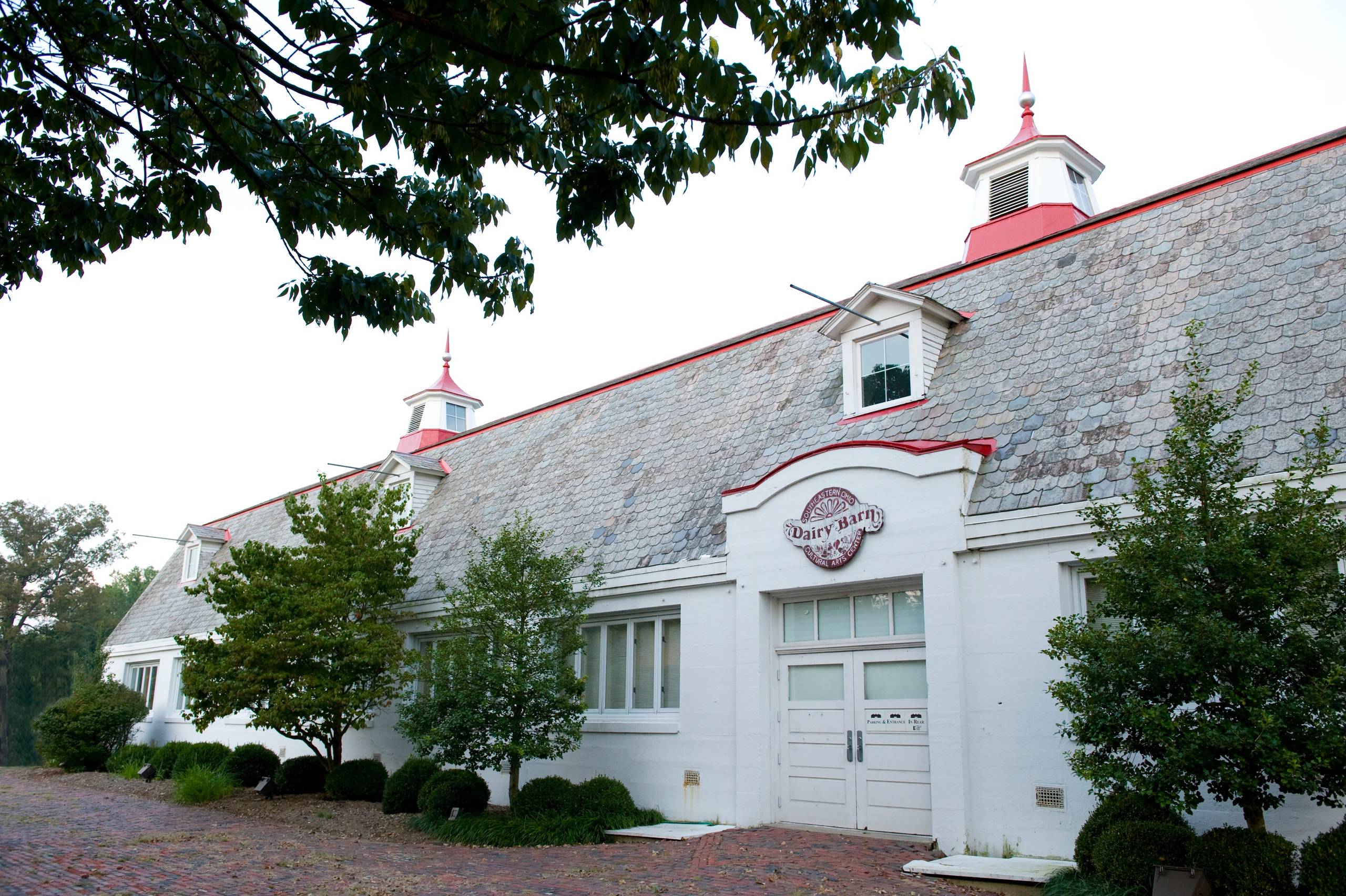
As if being selected for Quilt National ’17 wasn’t enough of an honor, a dozen works received special recognition at the prestigious international exhibition of contemporary art quilts, which opens May 27 at the Dairy Barn Arts Center in Athens, Ohio. Any one of these award winners could spark a passion for the fiber arts. It did for Marvin Fletcher, who bought a prize recipient from the fourth Quilt National, in 1985, as a 20th-anniversary gift for his wife, and one to three quilts every year since. See which quilts wowed the judges, then check out Fletcher’s thoughts on piecing together a beloved textile collection.
Photos by Gary Kirksey, Lawrence Hamel-Lambert and Sam Girton
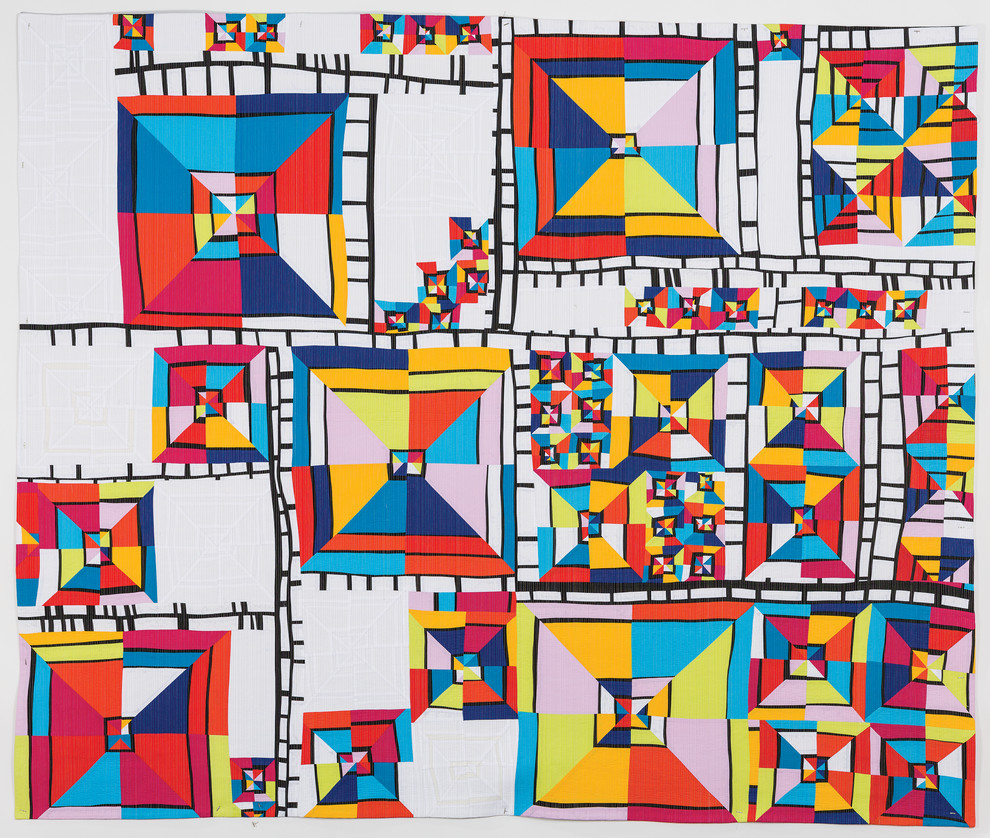
1. Best of Show
Line Study 17. By Margaret Black of Boswell, Pennsylvania. 90 by 75 inches. Kona cottons, thread, wool batting, cotton batting. Free-form cut and pieced, straight-line machine-quilted.
There was a remarkable degree of consensus among the jurors, especially when it came to the selection of Best of Show, Martin wrote, referring to the all-around award in which aesthetics, techniques, concept and craft are considered. “Line Study 17 is a master statement of technique, craft and innovative design. Black establishes a motif of a square fractured into eight sections, each shard cut by irregular concentric lines. She then repeats the square across the face of the quilt, deconstructing and reconstructing her own motif — breaking it down, changing its scale and even rendering it solely in white pieces. The resulting rhythms, patterns and interplay of forms are captivating.”
“Line Study 17 is part of my body of work that explores line and color,” Black notes. “I like my art to be energetic and joyful so that it delivers happiness to the viewer. I consider the final stitches and threads to be my paintbrush that adds surface design and texture to the piece.”
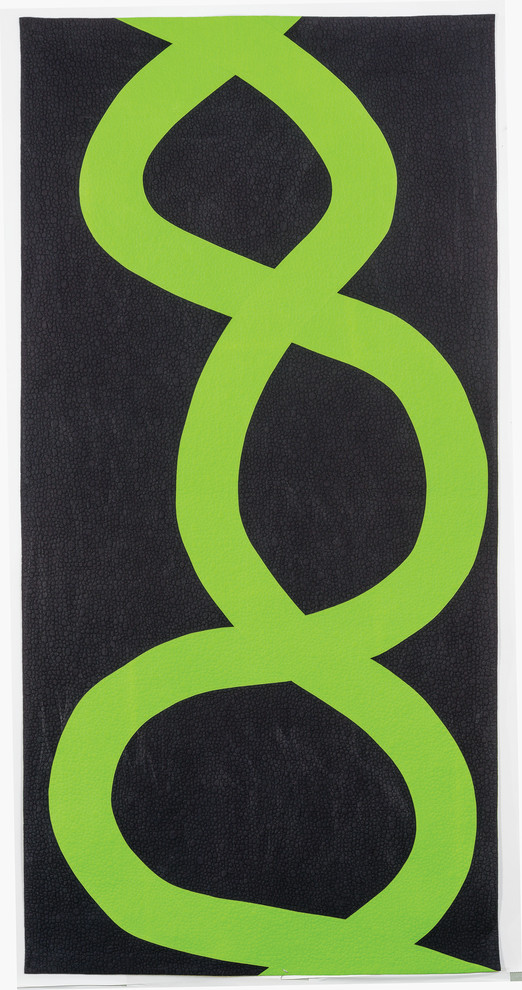
2. Quilts Japan Prize
Finding Connections #8. By Denise L. Roberts of Albright, West Virginia. 42 by 84½ inches. Hand-dyed cotton fabric, cotton batting, thread, commercial cotton fabric. Direct fabric cuts, machine-pieced and -quilted.
“After years of creating very complex work, I have a desire to explore spare compositions,” Roberts says. “This new figure resembles some kind of character to me, a being. As I create more of these characters in this new series, I think of them all hung together finding connections to each other as human beings do daily in their lives.”
“With no accompanying forms or patterns, precise color and design choice were paramount to executing this striking work,” Martin wrote.
Sponsored by Quilts Japan magazine, the prize is an expression of gratitude for the teaching and guidance that American quilters have given to Japanese quilters, and it entails a trip to teach in Japan.
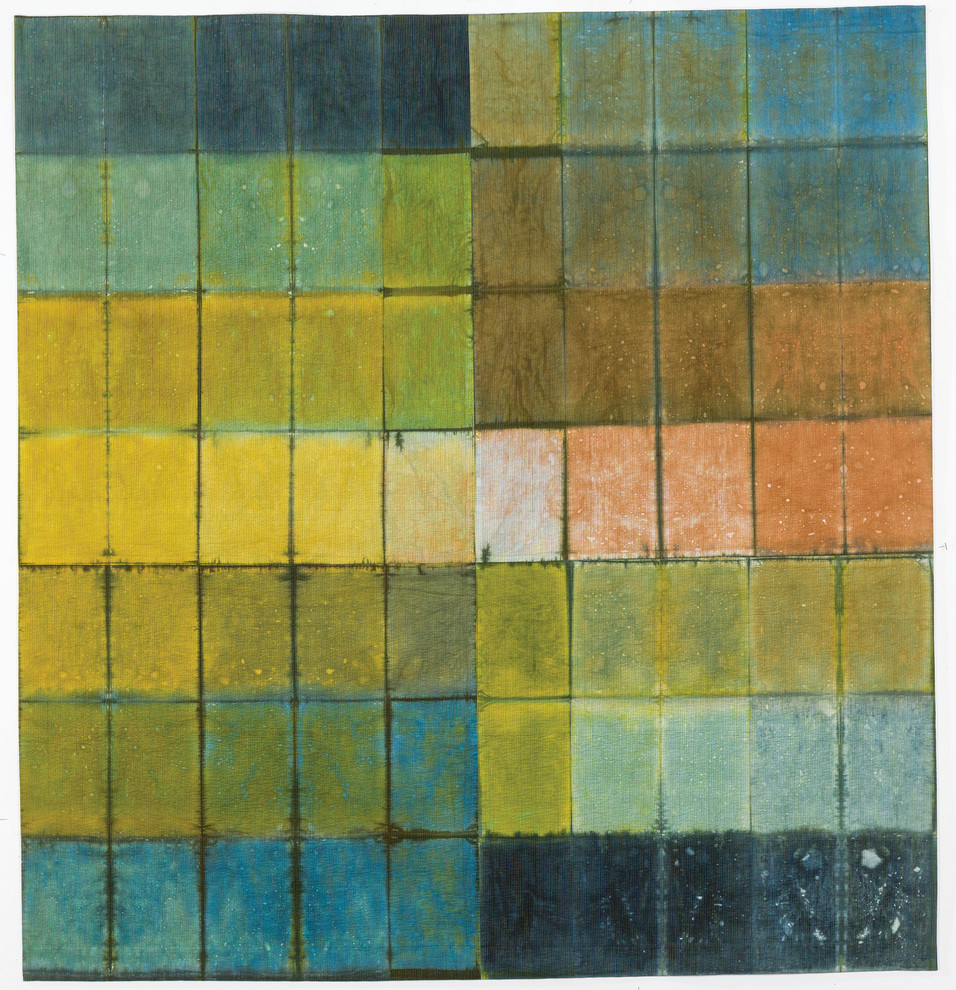
3. Award of Excellence
Shift 1. By Liz Axford of Clinton, Washington. 75 by 69 inches. Hand-dyed cotton broadcloth, cotton batting, cotton threads. Resist-dyed, machine-pieced and -quilted.
“The combination of repeated geometric forms and the possibility for infinite variation within that repetition is what first attracted me to quilt making as an art form,” Axford says. “Working with my hand-dyed fabrics affords me the opportunity to combine painterly effects with hard-edged geometry.”
“Shift 1 took the Award of Excellence for its masterful application of dyeing and color, creating the most atmospheric quilt in the show,” Martin wrote.
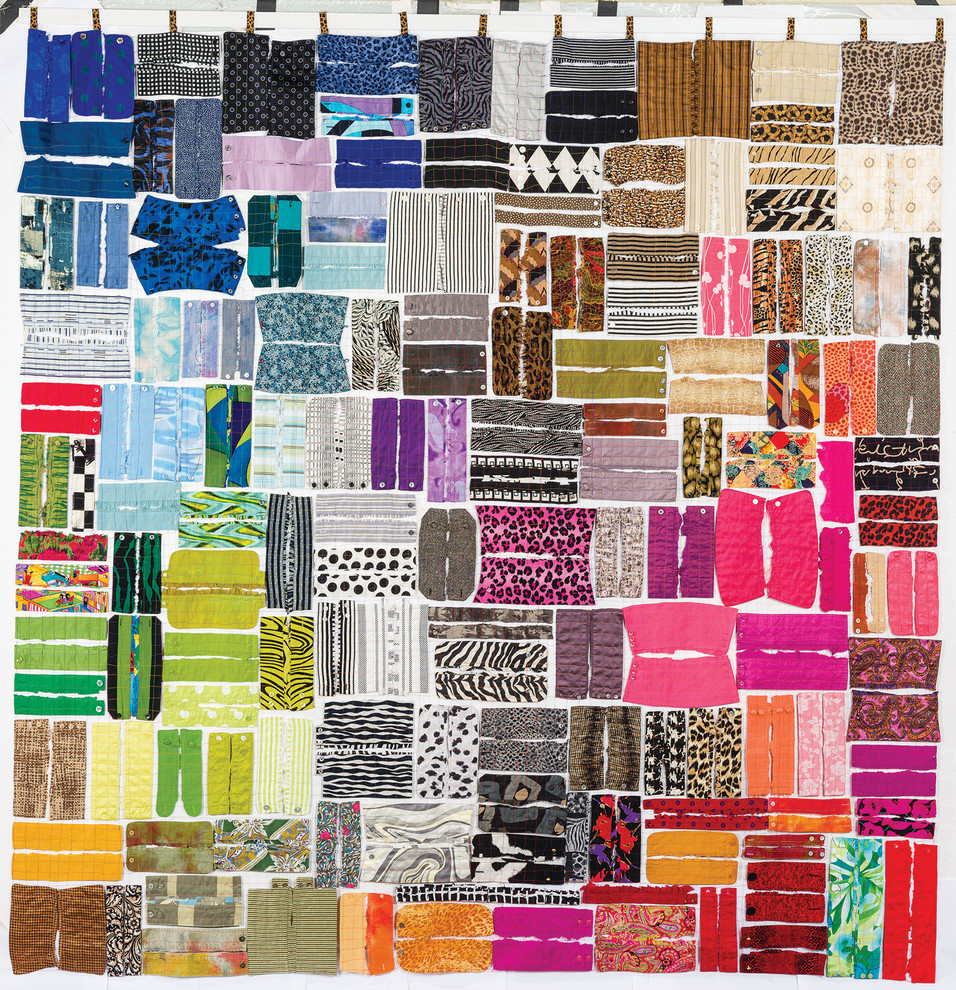
4. Innovative Use of the Medium Award
Body Parts 3: Cuffed. By
Sue Benner of Dallas. 90 by 89 inches. Cuffs (silk, polyester, interfacing, buttons), thread.
Machine-stitched and -quilted; some cuffs dyed.
“Body Parts 3: Cuffed transforms sleeve cuffs into a kaleidoscope of color and shape, elevating her source material into something new and wondrous,” Martin wrote of the quilt that took this prize, sponsored by Friends of Fiber Art International.
Benner has used collected and recycled women’s clothes in her studio work for more than 20 years.
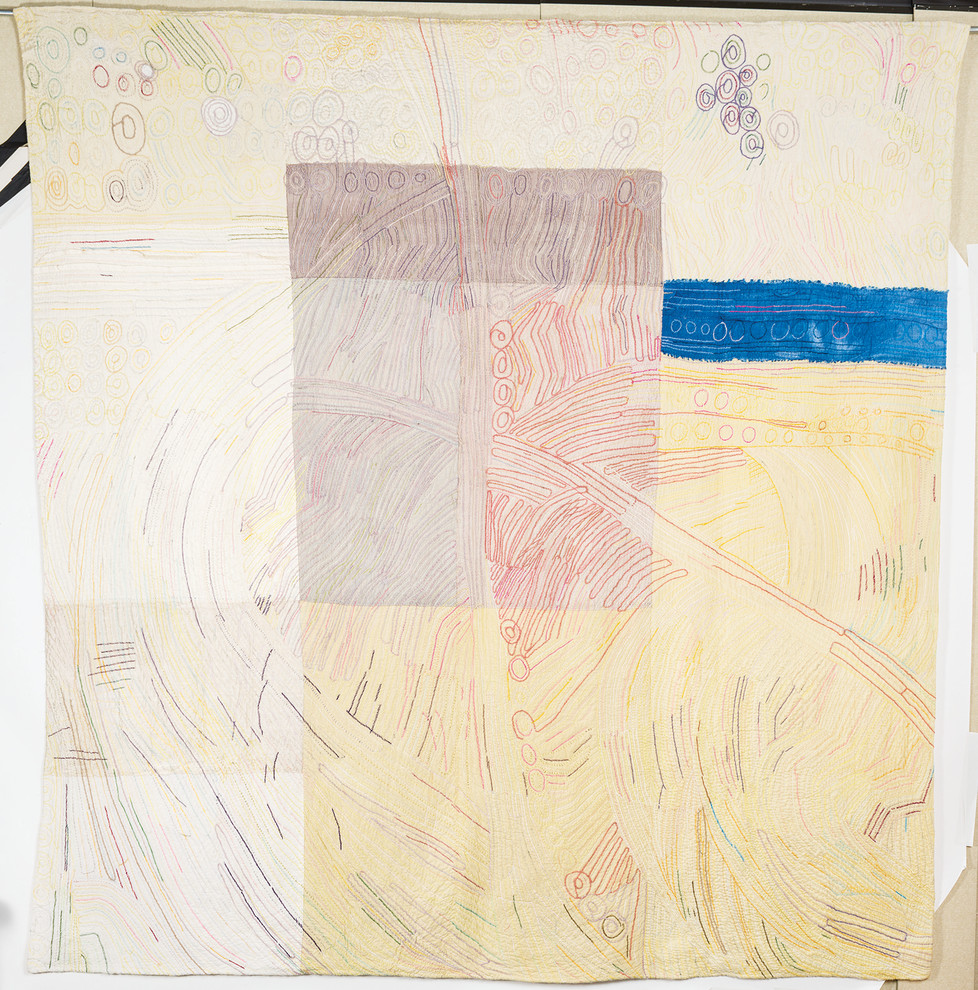
5. Lynn Goodwin Borgman Award for Surface Design
Soft Summer Gone. By Judith E. Martin of Sheguiandah, Ontario, Canada. 100 by 100 inches. Plant-dyed silk, silk floss, wool yarn, wool batting, silk chiffon backing. Dyed, layered, hand-pieced, -embroidered and -quilted.
“The skillful use of line and subtle, natural dyes made Martin’s piece our winner,” juror Martin wrote. Eligibility for the award requires that the face of the work be composed almost exclusively of fabric or fabric-like materials that the artist has altered through the use of various surface design techniques.
“Working slowly and in solitude with a hoop, it feels as if I have the land in my lap,” artist Martin says.
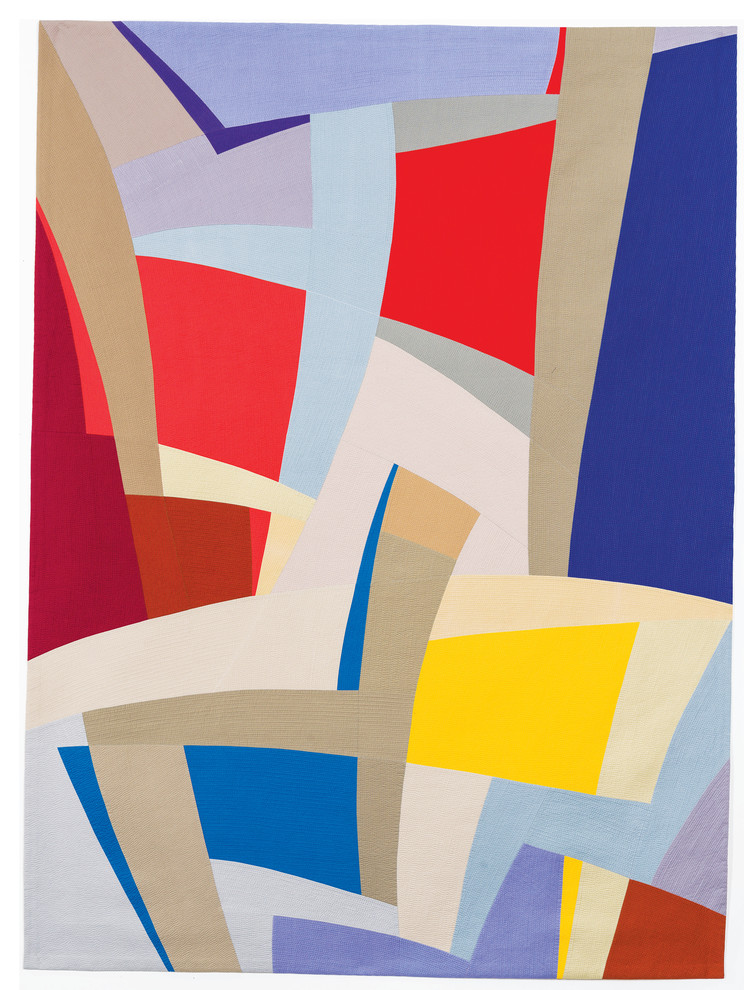
6. McCarthy Memorial Award
Squares #1: Red, Yellow, Blue. By Marina Kamenskaya of
Wauconda, Illinois. 68 by 50 inches. Cotton fabrics.
Machine-pieced and -quilted.
Kamenskaya took this award for her “exuberant statement of design in pieced forms,” Martin wrote.
“Every next work takes on from where the previous one has ended,” Kamenskaya says. “I have my own vision as an artist, but like any artist I cannot make anyone see what I see. I can only speak with my own voice and let it be heard. Art does not require explanation.”
7. Cathy Rasmussen Emerging Artist Memorial Award
Reflections Dusk #3. By Anna Brown of Bungwahl, New South Wales, Australia. 49 by 37 inches. Commercial cotton fabric, cotton thread, synthetic batting. Machine-pieced raw-edge appliqué, hand-quilted.
This award, funded by Studio Art Quilt Associates (SAQA) for a first-time Quilt National exhibitor, was quite competitive this year, considering that 35 of the 85 exhibitors were first-timers.
Brown finds her main source of inspiration in Australia’s bush and lakes. “I love creating contemporary art quilts while still incorporating some traditional techniques,” she says.
“We chose Reflections Dusk #3 … for its stunning use of color and gentle, repeating and shifting patterns, a remarkable translation of the lake by her home at dusk,” Martin wrote.
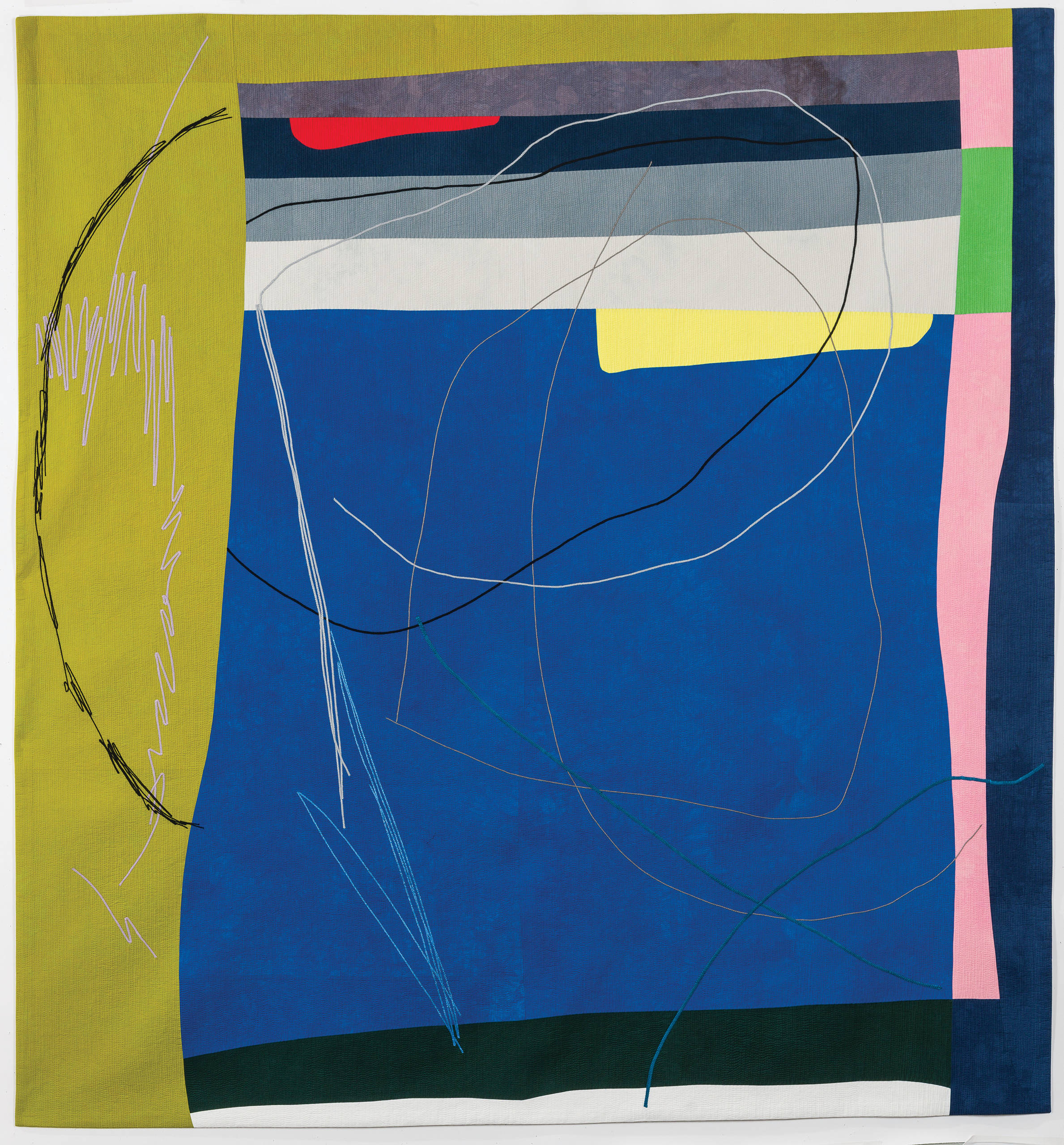
8. Jurors Award
… and the Skeptic. By Karen Schulz of Silver Spring, Maryland. 81 by 76 inches. Cotton fabric, cotton batting, thread, yarn. Hand-dyed, machine-pieced, free-motion machine-quilted, couching.
“This piece is the result of a sketch made after a five-hour visit to the Art Institute of Chicago,” Schulz says. “I was so taken with the sheer breadth of everything I had seen. I found myself asking the question, ‘What are you afraid of?’ The answer came back, ‘Look at what people have done. You can do anything.’ I decided then and there to embrace the whole of myself, the poet and the skeptic.”
“Schulz brings an amazing sense of spontaneity to form and line, achieving in pieced shapes and sewn marks the effortless stroke of a painter’s brush,” Martin wrote.
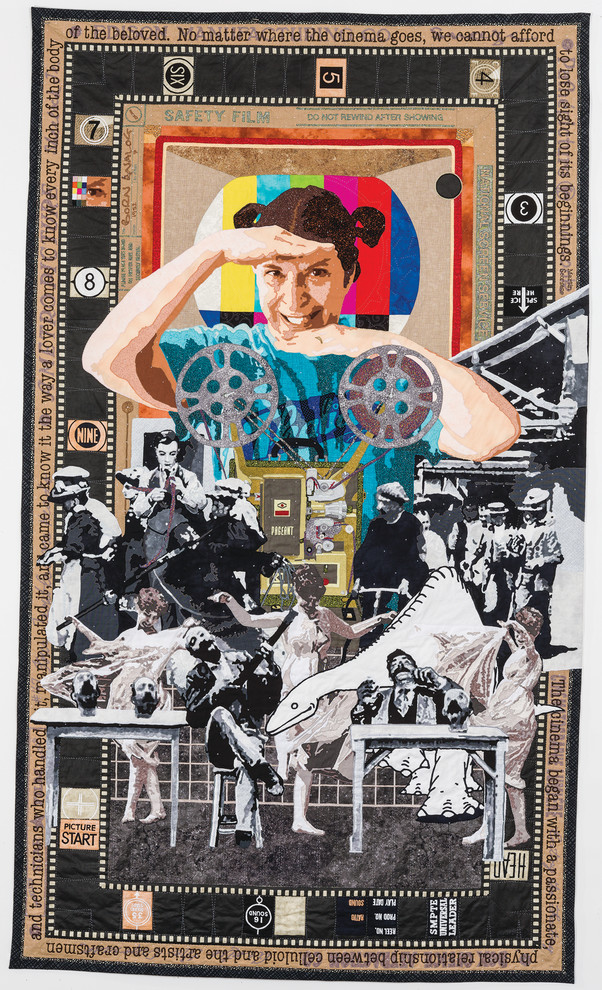
9. Jurors Award
Born Analog. By Robin Schwalb of New York. 80 by 47 inches. Silk-screened and commercially available cotton fabrics, thread. Fused, machine-appliquéd, hand-appliquéd, machine-pieced, hand-quilted.
“Schwalb effectively incorporates representational imagery from a variety of sources into a cohesive narrative whole, seamlessly blending vintage images with portraiture, text and a cartoon dinosaur,” Martin wrote.
“Gertie is a dinosaur because she was drawn that way by animator Winsor McKay,” Schwalb notes. “I’m a dinosaur because, in this increasingly digital and digitized age, I’m still licensed by the city of New York to run 35-millimeter motion picture film. Here I celebrate classic works of proto- and early cinema by Muybridge, the Lumière brothers, Georges Méliès, Edison, Buster Keaton and Robert Flaherty, as well as my own history as a film projectionist.”
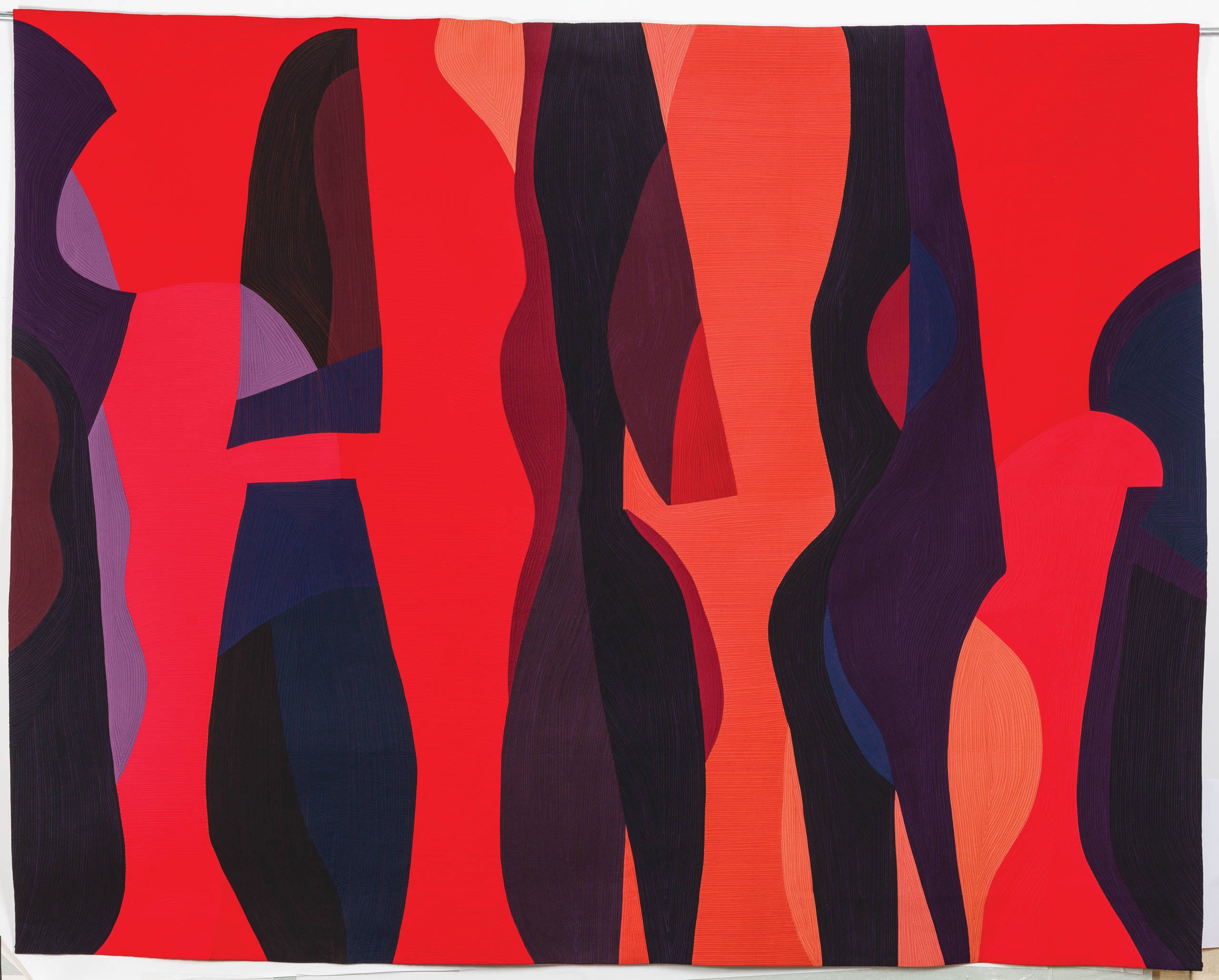
10. Jurors Award
Conversations on Meaning. By Gerri Spilka of Philadelphia. 82 by 100 inches. Commercial and hand-dyed cottons, cotton batting, wool batting, cotton thread. Improvisationally machine-pieced and -quilted denoted by artist, machine-quilted by Marina Baudoin.
Spilka’s piece reflects themes that appear frequently in her work: the interactions, relationships and ambiguities inherent among people, places and human-made and biological forces. “These are expressed through two-dimensional shapes, negative spaces, straight and curved lines, colors and subtle texture. This is not surprising, as I am trained in this order: as an artist, social scientist and architect and urban planner,” she notes.
“Spilka establishes stunning monumentality through her pieced blocks, a rhythmic dance of bold red figures that tower from top to bottom of the composition,” Martin wrote.
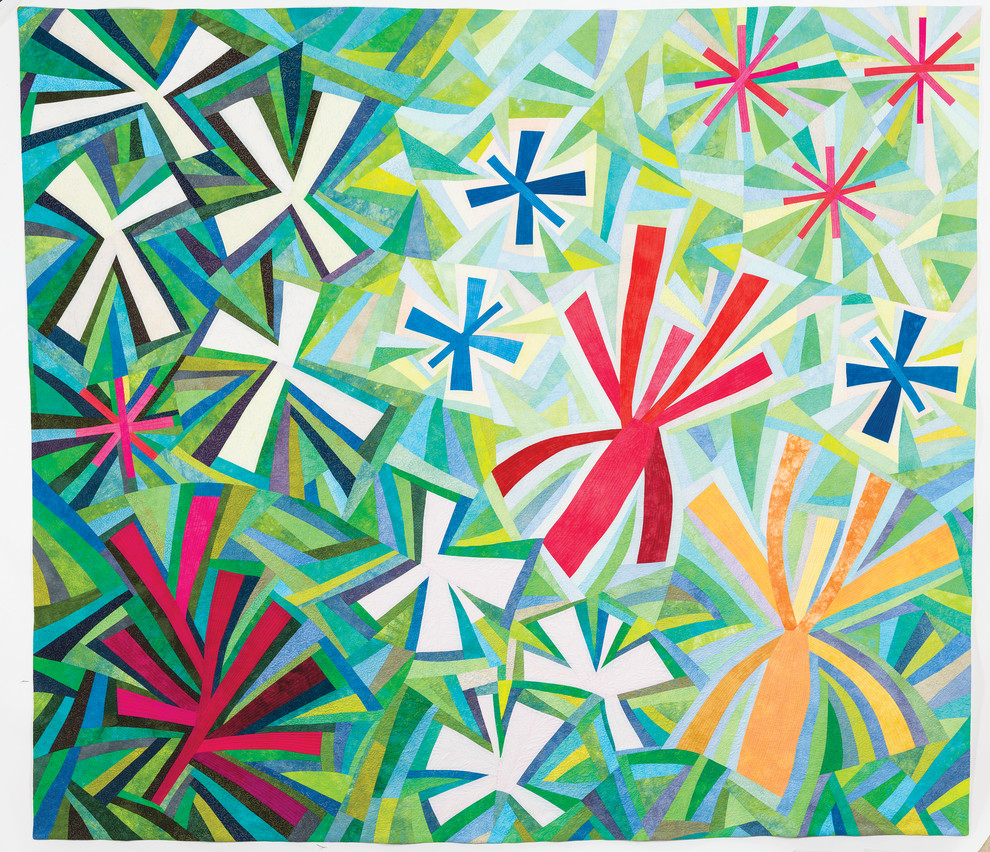
11. Heartland Award
Butterfly Garden. By Pamela Loewen of Williamston, Michigan. 82 by 92 inches. Hand-dyed cotton fabrics, wool batting. Free-form cut, machine-pieced and free-motion-quilted.
Open only to residents of Ohio or its neighboring states, this prize goes to a woman who finds much inspiration in the natural world. “Plants especially intrigue me with an almost infinite variety of configurations — branches, stems, leaves, flowers — each species has its unique forms,” Loewen says. “A garden is cultivated growth, nourished beauty. My garden series explores the themes of growth and beauty in a variety of contexts. Butterfly Garden, 13th in this series, explores growth in the midst of light and shadow.”
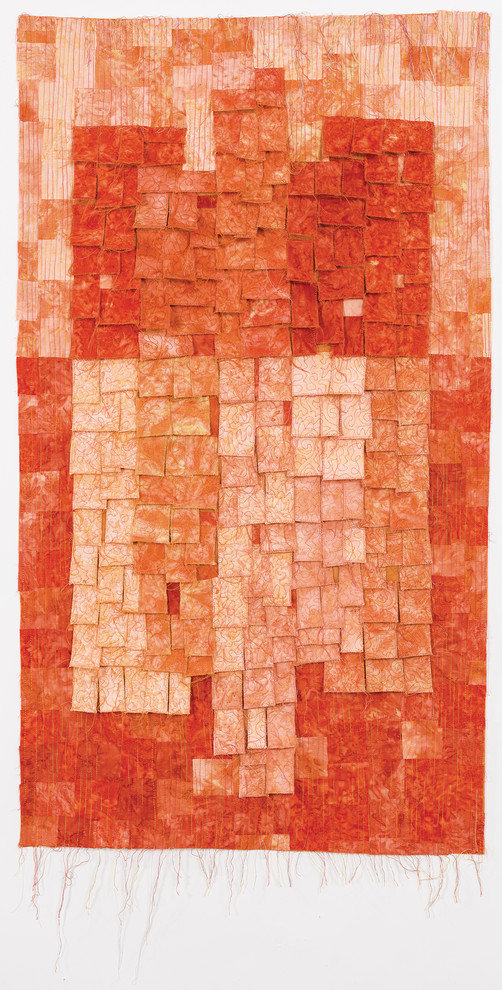
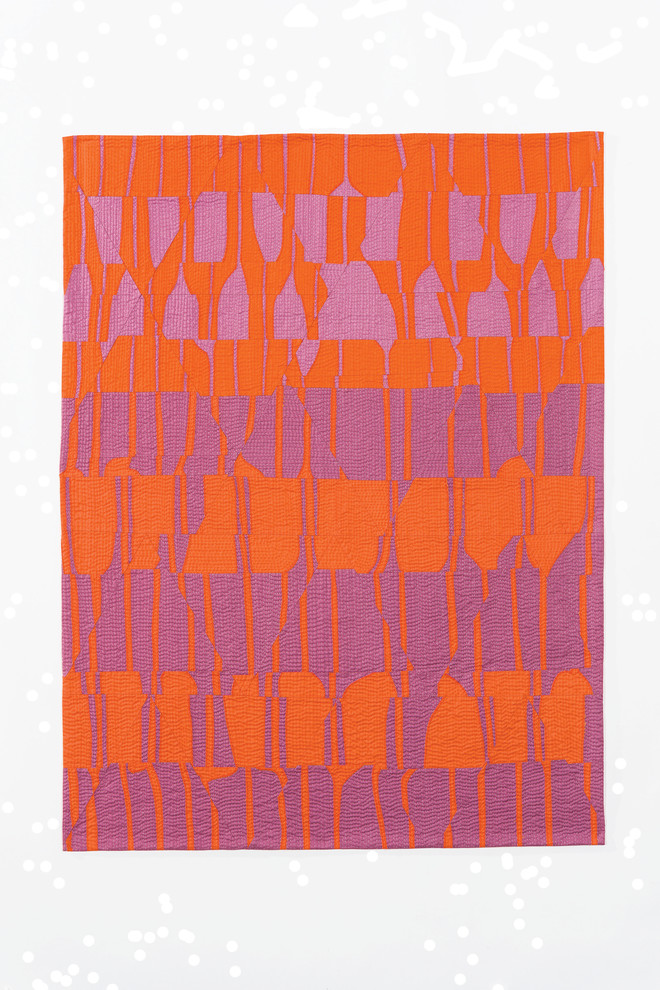
12. Hilary Morrow Fletcher ‘Persistence Pays’ Award
Orange Towers. By Eti David of Ramat HaSharon, Israel. 50 by 30 inches. Commercial cotton fabrics, polyester batting, various threads. Machine-pieced and -quilted, with three-dimensional pieces hanging from the quilt surface.
In this piece, David wanted to explore using just one fabric for an entire quilt. “I found that the batik-gradated fabric gave me the answer for my wish.”
Named in honor of Quilt National’s longtime director, the award is given to the first-time exhibitor who entered Quilt National the most times before being chosen for the show. This was David’s fourth try. Because Loewen, the Butterfly Garden artist, also made her show debut on her fourth attempt, she tied for the award with David.
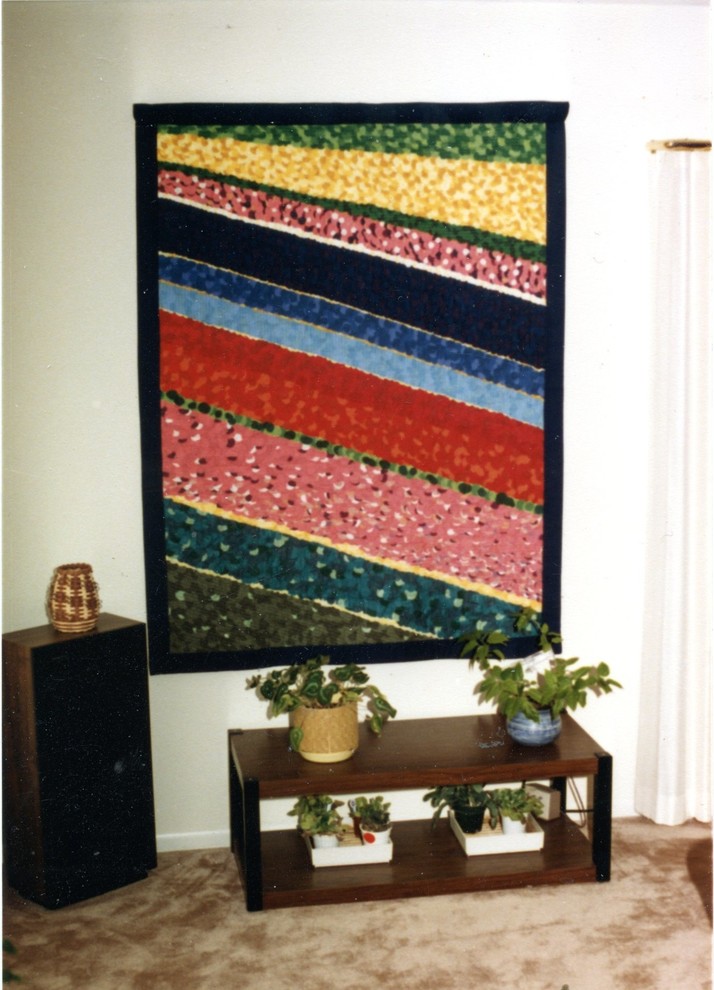
Photo from Marvin Fletcher
Thoughts From a Collector
Long before the awards were announced, Marvin Fletcher — avid quilt collector, longtime Quilt National volunteer, SAQA board member and retired history professor — took out purchase options on three of the artworks on display, including Line Study 17. He bought his first quilt, Innovative Use of the Medium Award winner Flower Seed Farm by Holley Junker, pictured in Fletcher’s home, as a gift for his wife, Hilary, in 1985. After having what she called an “epiphany” at the first Quilt National, she served as the exhibition’s project director from 1982 until her death in 2006. The Fletchers’ Marbaum Quilt Collection, named after their fathers’ original surnames, Marowitz and Feigenbaum, now numbers about 120 quilts and occasionally goes on tour.
Fletcher generally is drawn to color and design over technique. He isn’t restricted to any theme but has limits on size and price. With rare exceptions — Japanese quilter Noriko Endo is one — he doesn’t buy more than one work from an artist.
In the 1980s, the Fletchers worked with an architect to expand their house to showcase and store their quilts. They incorporated high ceilings and special lighting and kept the palette neutral.
Care Tips for Quilts
Fletcher, SAQA and the International Quilt Study Center & Museum at the University of Nebraska-Lincoln offer these care tips for art quilts:
Fabric: The Unsung Wall-Decorating Hero
10 Homes Where Art Takes Center Stage
World of Design: Artists and Artisans and Their Inspiring Studios
Thoughts From a Collector
Long before the awards were announced, Marvin Fletcher — avid quilt collector, longtime Quilt National volunteer, SAQA board member and retired history professor — took out purchase options on three of the artworks on display, including Line Study 17. He bought his first quilt, Innovative Use of the Medium Award winner Flower Seed Farm by Holley Junker, pictured in Fletcher’s home, as a gift for his wife, Hilary, in 1985. After having what she called an “epiphany” at the first Quilt National, she served as the exhibition’s project director from 1982 until her death in 2006. The Fletchers’ Marbaum Quilt Collection, named after their fathers’ original surnames, Marowitz and Feigenbaum, now numbers about 120 quilts and occasionally goes on tour.
Fletcher generally is drawn to color and design over technique. He isn’t restricted to any theme but has limits on size and price. With rare exceptions — Japanese quilter Noriko Endo is one — he doesn’t buy more than one work from an artist.
In the 1980s, the Fletchers worked with an architect to expand their house to showcase and store their quilts. They incorporated high ceilings and special lighting and kept the palette neutral.
Care Tips for Quilts
Fletcher, SAQA and the International Quilt Study Center & Museum at the University of Nebraska-Lincoln offer these care tips for art quilts:
- Display quilts so they are protected from cumulative and irreversible damage caused by light, especially sunlight and fluorescent light.
- Rotate quilts on display after 12 to 18 months. “It’s good for the quilts to rest and gives me a renewed appreciation for their artistry,” Fletcher says.
- Store quilts, ideally flat or rolled, in a clean, climate-controlled area; avoid attics and basements.
- Choose archival storage containers, or line other containers — including cedar chests — with acid-free tissue or washed unbleached cotton muslin.
- Inspect the storage area regularly for insect damage (primarily from clothes moths and carpet beetles) and fabric breakdown.
- Gently vacuum dusty quilts by putting a piece of tulle over the vacuum nozzle and setting the suction to the lowest setting.
Fabric: The Unsung Wall-Decorating Hero
10 Homes Where Art Takes Center Stage
World of Design: Artists and Artisans and Their Inspiring Studios


Quilt National ’17 jurors Nancy Crow, Petra Fallaux and Art Martin whittled down 747 entries — from 383 artists in 42 states and 19 foreign countries — to 85 exhibitors for the biennial show. The exhibitors represent 28 states and nine foreign countries.
“The pool of submissions this year was stunning, and reviewing it, while initially daunting, revealed numerous patterns of shared aesthetic and conceptual explorations,” Martin, associate curator and collections manager at Michigan’s Muskegon Museum of Art, said in a statement. “From this blend, we singled out those artworks in the group that were visually arresting, that effectively merged the physicality of the quilting with the picture plane, and that best represented the different tracks of visual inspirations.”
About the Exhibit
Quilt National began in 1979 to showcase innovative quilts that are made of pieced, layered, stitched and stuffed fabric just like traditional bed coverings but are intended to be displayed on a wall as art. The Dairy Barn will celebrate the 20th Quilt National with special events all summer throughout southeastern Ohio, executive director Jane Forrest Redfern says. After the full exhibit ends Sept. 4, it will be divided into three collections that will tour the country through December 2019. So far, stops include St. Charles, Missouri (Oct. 6-Dec. 1), and Columbus, Ohio (Jan. 25-April 14, 2018). The deadline to enter Quilt National ’19 will be in late August 2018.