
Small Backyard for Entertaining With More to Discover
A London designer uses lush plantings, layered views and hidden features to turn a compact yard into an inviting retreat

This house in northeast London sits between the busy city and the ancient woodland of Epping Forest. When the owners set out to redesign the neglected backyard, they hoped the new space would reflect this setting. “They wanted it to be good for entertaining but have an element of wildness,” landscape designer Georgia Lindsay says.
To achieve that balance, Lindsay employed the design approach of conceal and reveal, hiding elements from immediate view to expand the sense of space and create a yard to explore and enjoy. She used lush plantings and a mix of stone, metal and wood to create a leafy retreat that feels connected to its natural surroundings.
To achieve that balance, Lindsay employed the design approach of conceal and reveal, hiding elements from immediate view to expand the sense of space and create a yard to explore and enjoy. She used lush plantings and a mix of stone, metal and wood to create a leafy retreat that feels connected to its natural surroundings.
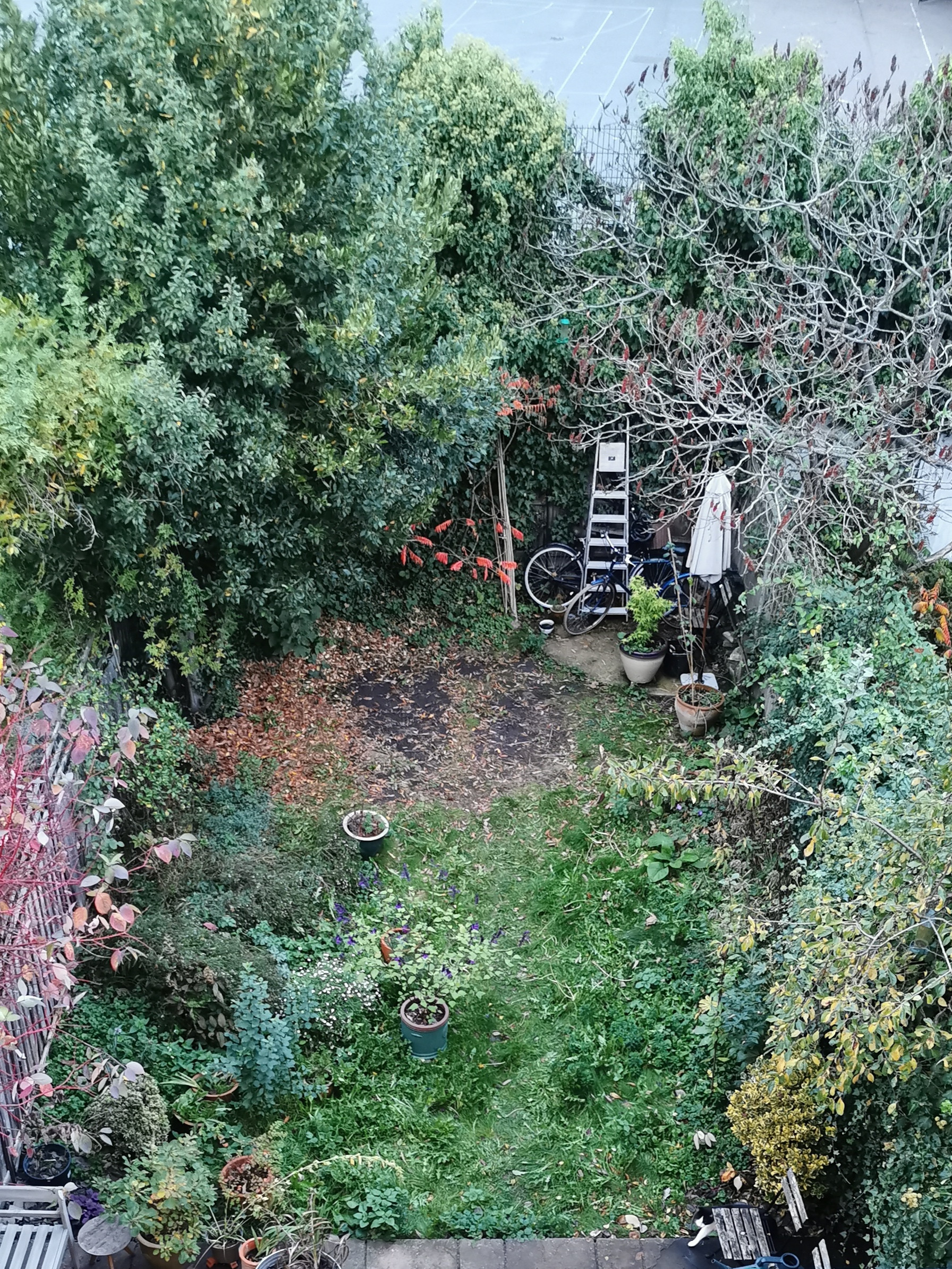
Before: The long, narrow yard was overgrown and lacked structure. It also had a low-quality patio, just visible at the bottom of the photo.
“The owners are actually keen gardeners and had lots of things in pots, but they also had a scrubby lawn and the space was overgrown and full of weeds,” Lindsay says.
One of the homeowners had collected photos showing how the light falls in the yard to help guide plant choices. “The plants were really important to her,” Lindsay says.
“The owners are actually keen gardeners and had lots of things in pots, but they also had a scrubby lawn and the space was overgrown and full of weeds,” Lindsay says.
One of the homeowners had collected photos showing how the light falls in the yard to help guide plant choices. “The plants were really important to her,” Lindsay says.
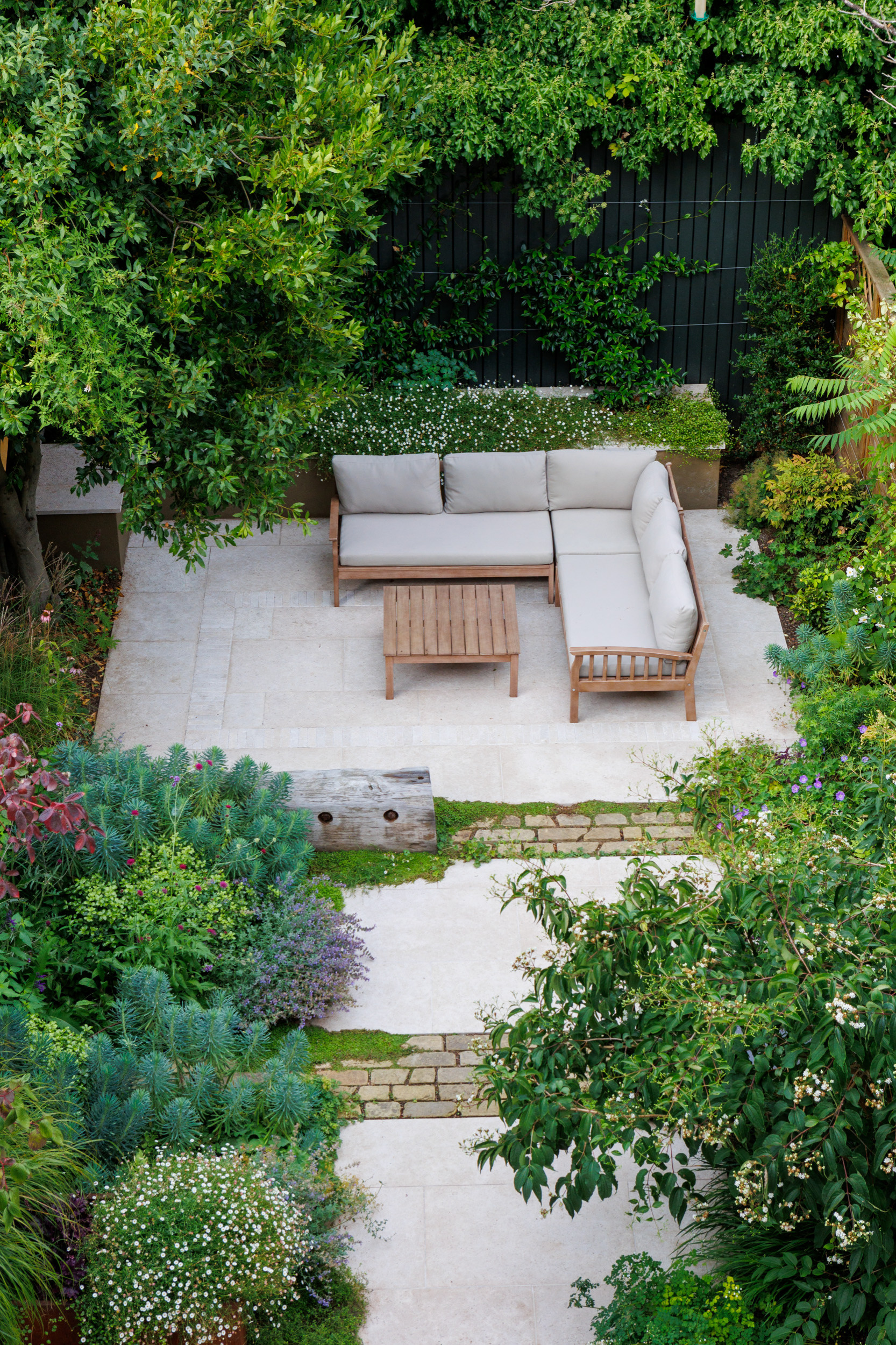
After: Lindsay designed elements — including a reclaimed wood bench, Cor-Ten troughs and planting layers — to run horizontally across the yard, making the space appear larger by concealing views. The seating area shown here is at the far end of the yard.
“There’s this layering where you have ‘piers’ coming out from the side, so you have a sense of the [yard] revealing itself as you walk down it,” she says. “I trained as a theater designer originally, and I look at garden design like that — the conceal-and-reveal element and using those side flats that you would in theater to give a sense of more perspective.”
15 Ways to Bring Indoor Comfort to an Outdoor Living Room
“There’s this layering where you have ‘piers’ coming out from the side, so you have a sense of the [yard] revealing itself as you walk down it,” she says. “I trained as a theater designer originally, and I look at garden design like that — the conceal-and-reveal element and using those side flats that you would in theater to give a sense of more perspective.”
15 Ways to Bring Indoor Comfort to an Outdoor Living Room
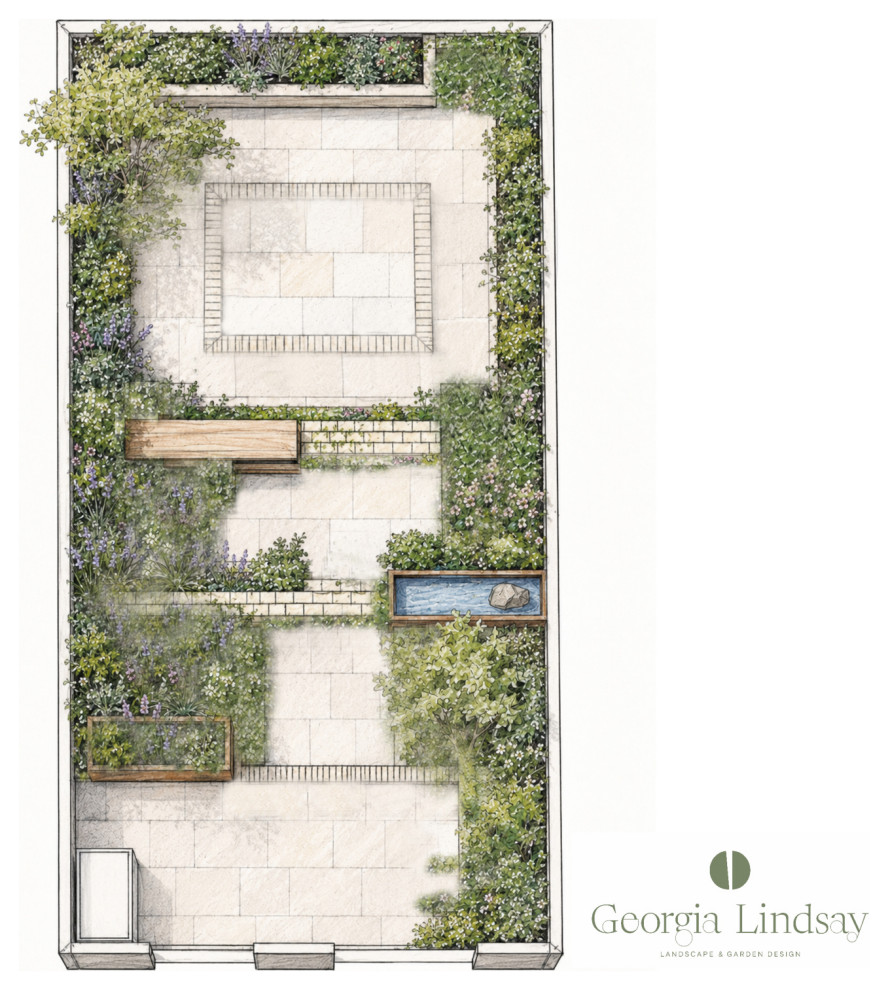
The site plan more clearly shows the side flats running horizontally across the yard. The paved area at the bottom of the drawing is next to the house, while the patio at the top is where the seating area is.
See why you should hire a professional who uses Houzz Pro software
See why you should hire a professional who uses Houzz Pro software
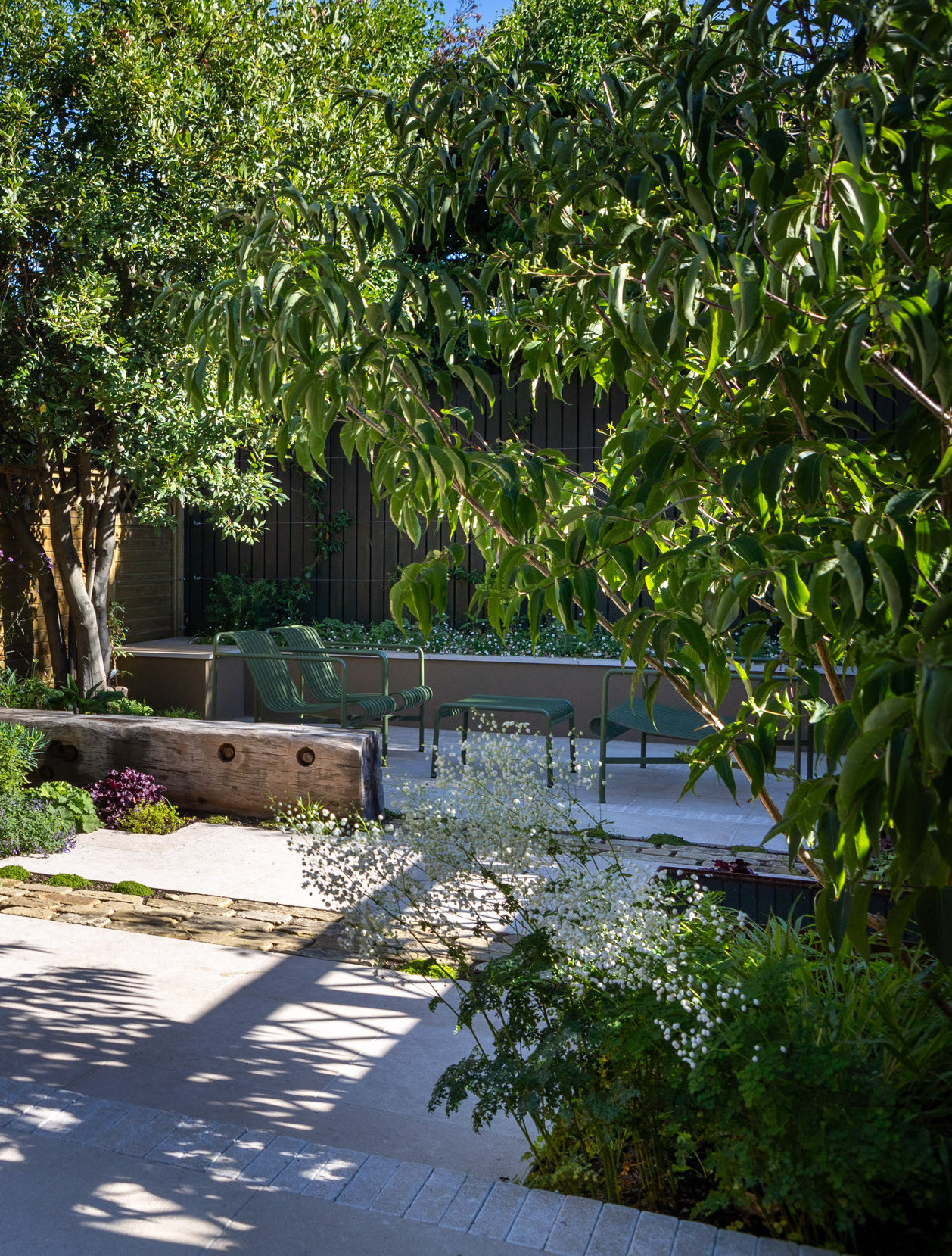
Key to the conceal-and-reveal design are two trees, including a new one seen here on the right (looking toward the back of the yard) that hides a water feature. “It was important to have a tree as part of the design so you don’t reveal everything in one go. It helps obscure the view when you’re in the house to give a sense of mystery,” Lindsay says.
The tree is a multistem seven-son flower (Heptacodium miconioides, USDA zones 5 to 9; find your zone). “It’s a wonderful tree with beautiful cinnamon bark that’s quite flaky. It really shines in the light. It has white flowers succeeded by red bracts that look like flowers, which prolongs the interest,” Lindsay.
The sweet bay (Laurus nobilis, zones 8 to 10), back left, was already established but had become huge and overgrown, so Lindsay pruned it back. “It’s lovely that we were able to keep it,” she says.
The tree is a multistem seven-son flower (Heptacodium miconioides, USDA zones 5 to 9; find your zone). “It’s a wonderful tree with beautiful cinnamon bark that’s quite flaky. It really shines in the light. It has white flowers succeeded by red bracts that look like flowers, which prolongs the interest,” Lindsay.
The sweet bay (Laurus nobilis, zones 8 to 10), back left, was already established but had become huge and overgrown, so Lindsay pruned it back. “It’s lovely that we were able to keep it,” she says.
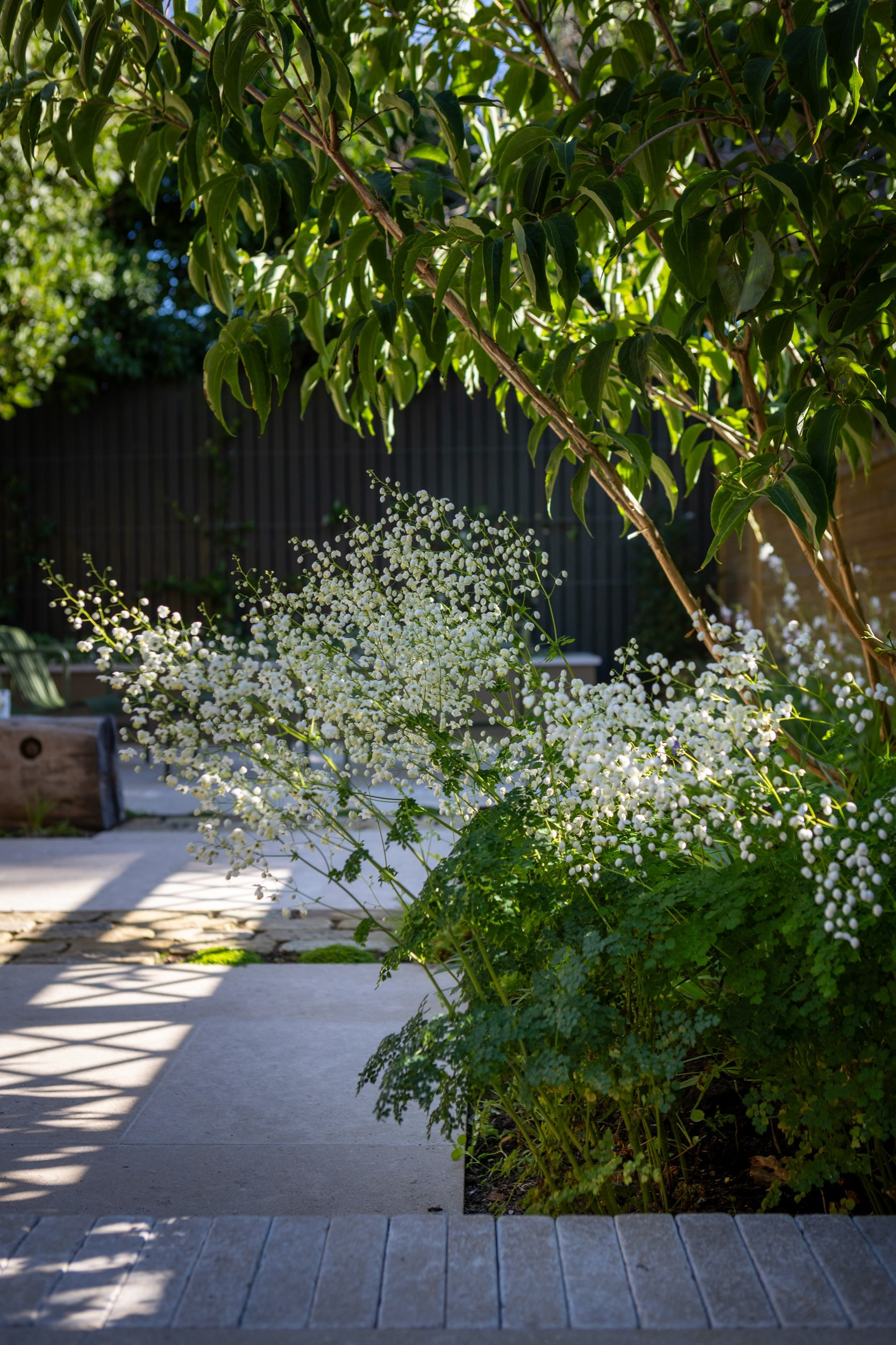
‘Splendide White’ meadow rue (Thalictrum ‘Splendide White’, zones 4 to 8) under the seven-son flower tree further obscures the back of the yard from the house. “It’s a real beauty and great in dappled light, such as under trees. It really lifts shadier areas,” Lindsay says.
Lindsay used limestone for the hardscape. “The owners wanted a space that’s as natural as possible, so there’s no porcelain,” she says.
The paving emphasizes the yard’s horizontal lines. For instance, the cobbles emerging from beneath the bench on the left and the water feature behind the meadow rue on the right cut across the yard in similar proportions. “The paving connects in a linear way across the [yard]. It helps you slow down and appreciate things because there’s a change in texture,” Lindsay says.
Lindsay used limestone for the hardscape. “The owners wanted a space that’s as natural as possible, so there’s no porcelain,” she says.
The paving emphasizes the yard’s horizontal lines. For instance, the cobbles emerging from beneath the bench on the left and the water feature behind the meadow rue on the right cut across the yard in similar proportions. “The paving connects in a linear way across the [yard]. It helps you slow down and appreciate things because there’s a change in texture,” Lindsay says.
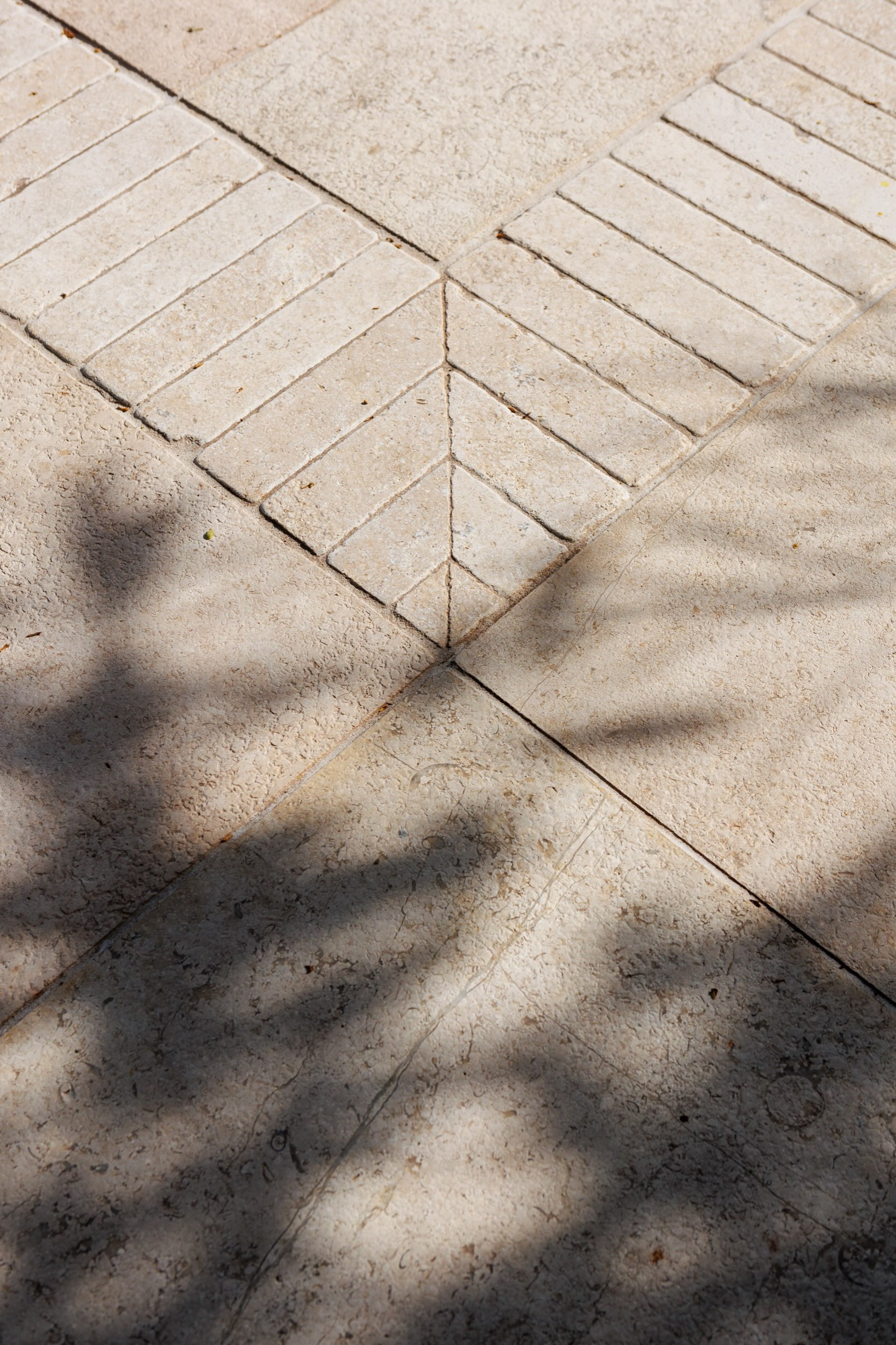
At the back of the yard, Lindsay laid a rectangle of limestone bricks within the paving to subtly define the seating area. “In a small [yard], you need to create different zones, but it’s quite subtle — just a change of texture to frame the space,” she says.
Paving: Zahra Beige limestone, Allgreen
Pros Share Their Top Low-Maintenance Paving and Hardscape Picks
Paving: Zahra Beige limestone, Allgreen
Pros Share Their Top Low-Maintenance Paving and Hardscape Picks
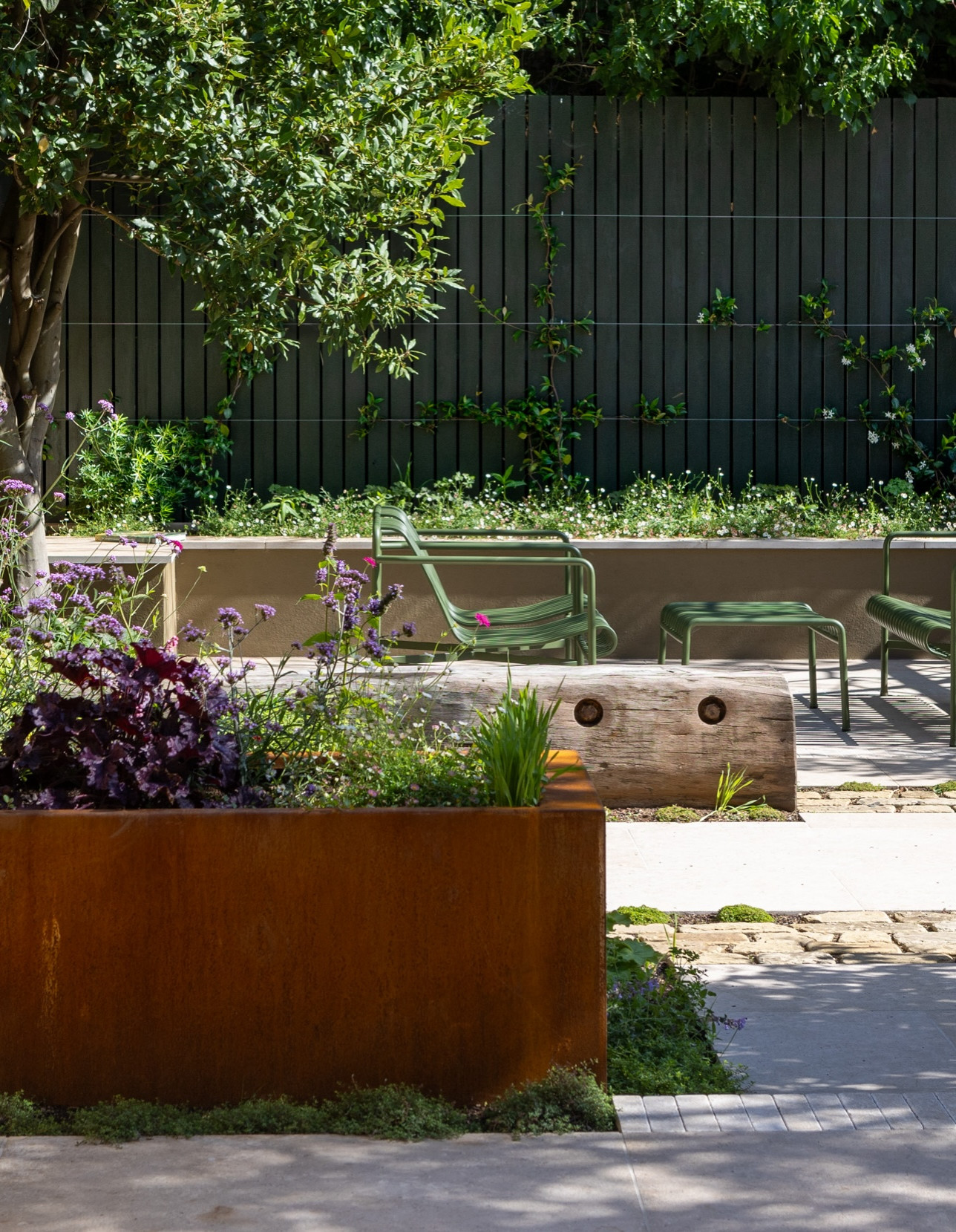
The couple initially had metal patio furniture, pictured, but swapped them for the sectional sofa shown in the aerial photo seen previously. They wanted to be able to lie down comfortably and read a book.
They also asked for plenty of extra seating. “They have a large extended family and sometimes have a lot of people over, so they wanted places where people could perch,” Lindsay says. The raised bed at the back has a 16-inch (40-centimeter) ledge where guests can sit. It continues around to the left to form a small seat where someone could add a throw pillow and lean back against the fence.
A wood bench behind the Cor-Ten planter can accommodate several guests. Lindsay wanted something that didn’t necessarily look like a bench, and this chunk of durable Brazilian greenheart hardwood is full of character, history and natural texture. “It came from a reclamation yard that specializes in tropical hardwoods salvaged from the marine industries — old ships and piers,” she says.
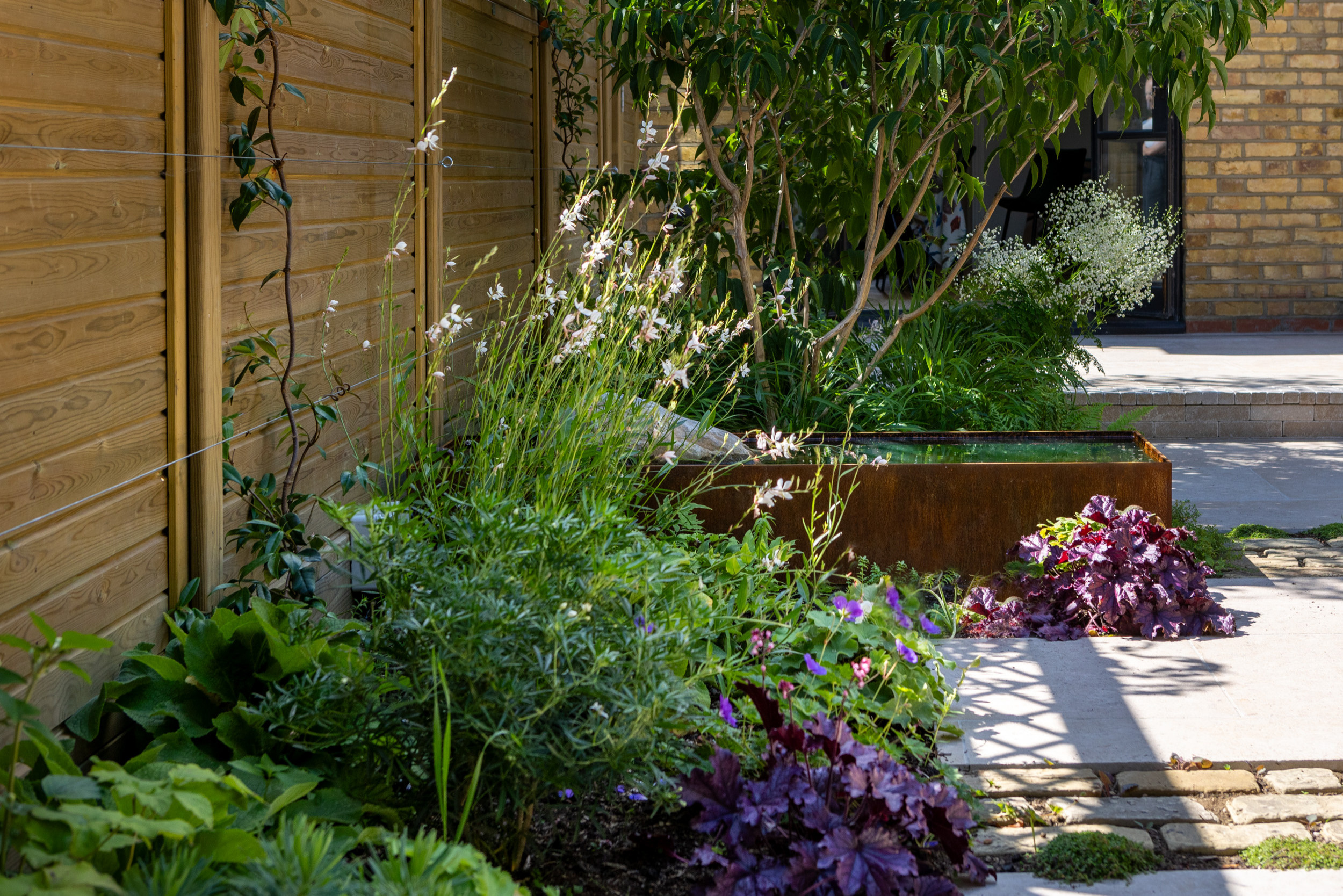
The Cor-Ten steel planter echoes the bench protruding into the yard. It’s planted with a colorful mix of perennials, including coral bells (Heuchera sp.), Latin Amerian fleabane (Erigeron karvinskianus, zones 6 to 9) and ‘Lollipop’ verbena (Verbena bonariensis ‘Lollipop’, zones 7 to 11). Creeping thyme (Thymus serpyllum, zones 4 to 8) grows around the base.
Bench: Ashwells Reclaimed Tropical Timber
They also asked for plenty of extra seating. “They have a large extended family and sometimes have a lot of people over, so they wanted places where people could perch,” Lindsay says. The raised bed at the back has a 16-inch (40-centimeter) ledge where guests can sit. It continues around to the left to form a small seat where someone could add a throw pillow and lean back against the fence.
A wood bench behind the Cor-Ten planter can accommodate several guests. Lindsay wanted something that didn’t necessarily look like a bench, and this chunk of durable Brazilian greenheart hardwood is full of character, history and natural texture. “It came from a reclamation yard that specializes in tropical hardwoods salvaged from the marine industries — old ships and piers,” she says.
The Cor-Ten steel planter echoes the bench protruding into the yard. It’s planted with a colorful mix of perennials, including coral bells (Heuchera sp.), Latin Amerian fleabane (Erigeron karvinskianus, zones 6 to 9) and ‘Lollipop’ verbena (Verbena bonariensis ‘Lollipop’, zones 7 to 11). Creeping thyme (Thymus serpyllum, zones 4 to 8) grows around the base.
Bench: Ashwells Reclaimed Tropical Timber
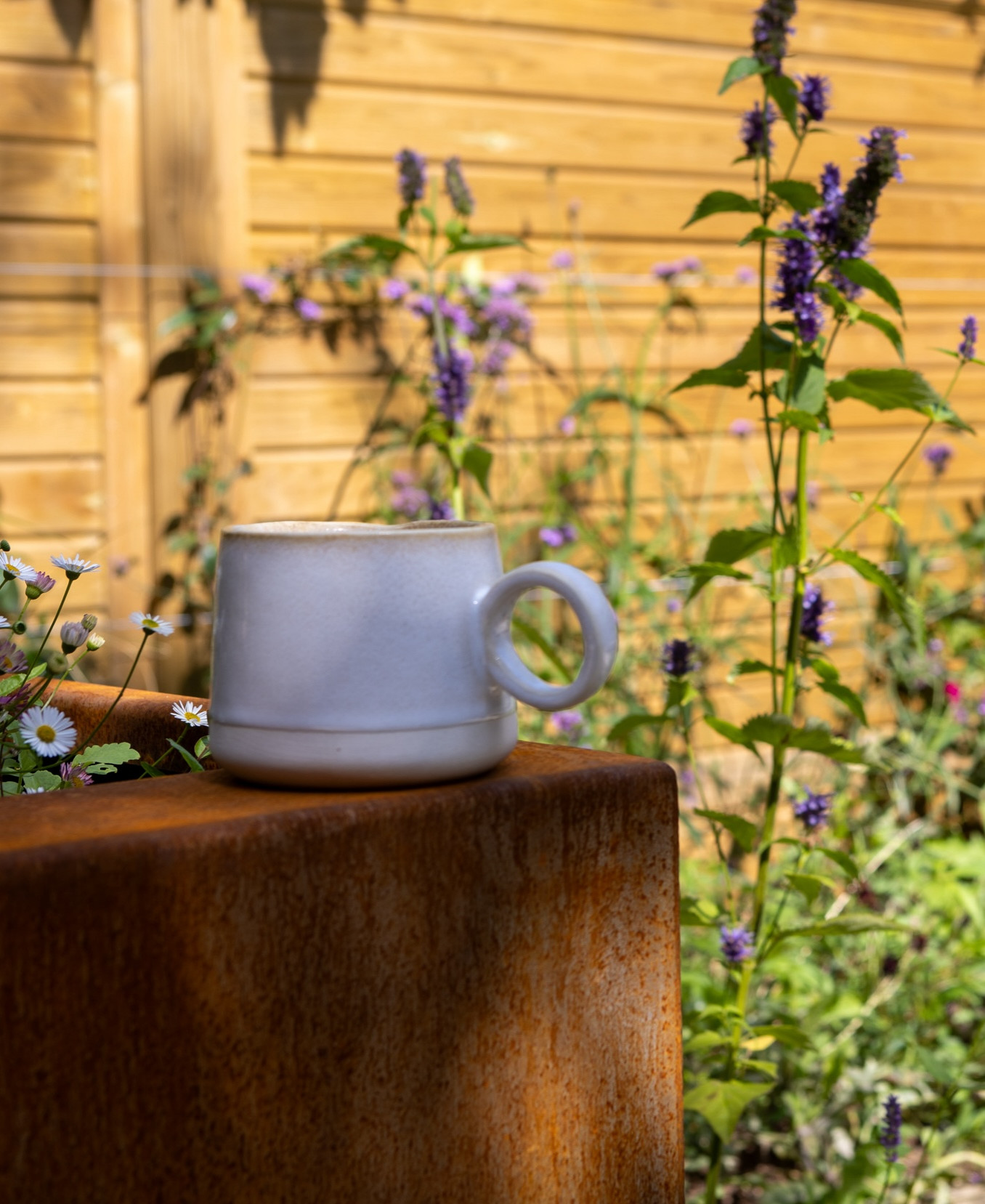
One of the joys of a custom space is that it can be tailored to the client’s lifestyle. In this case, the owner requested a spot where she could easily set down a mug. “Because she’s such a gardener, she says she sometimes just pops out for 20 minutes with a drink to do a bit of pruning, so the planter was designed with a [4-inch] 10-cm edge where she could rest her cup of tea,” Lindsay says.
How to Design Your Yard for More Meaning and Connection
How to Design Your Yard for More Meaning and Connection
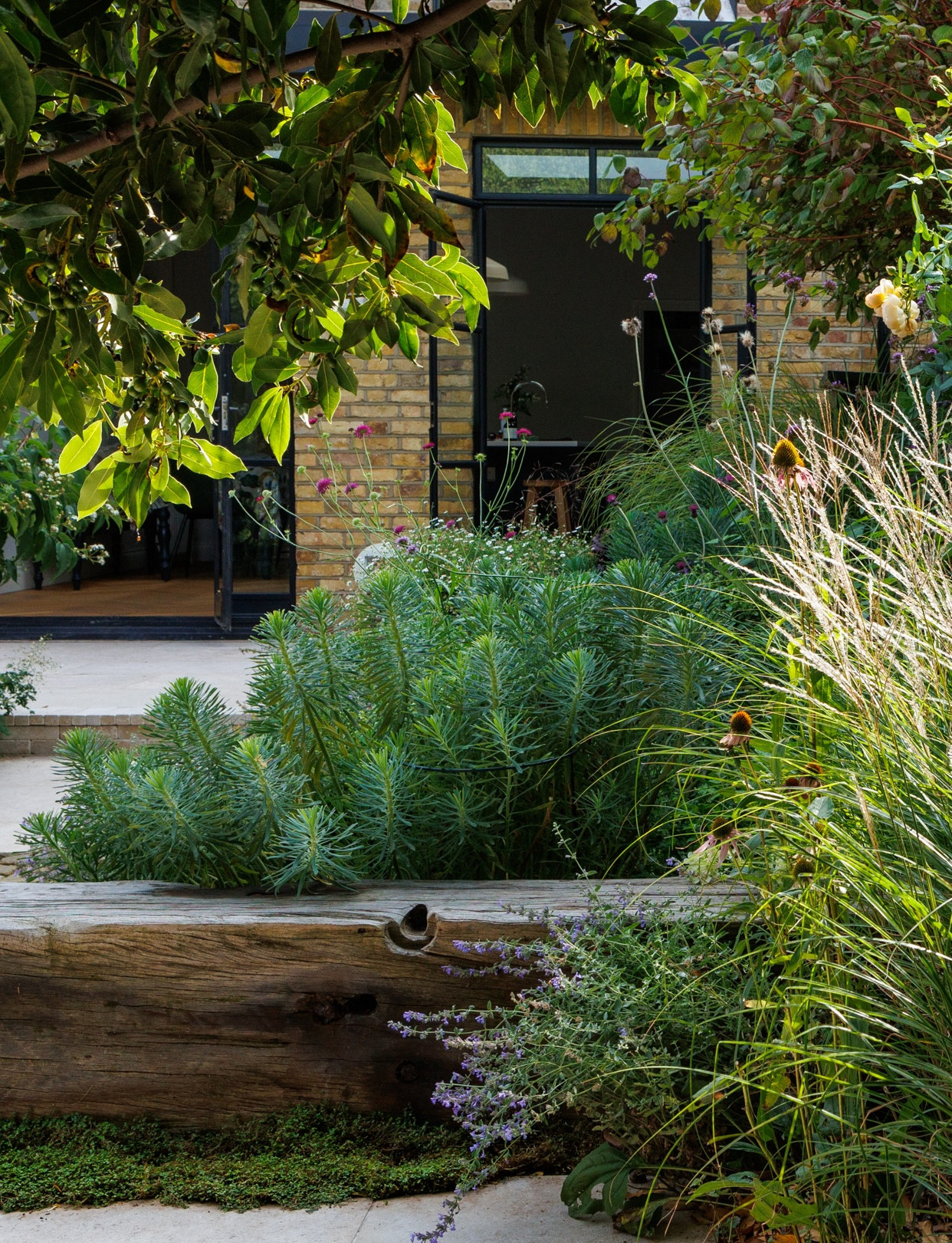
The side of the yard with the greenheart bench gets more sun, so Lindsay created a deeper bed and packed it with plants that flower in succession. Here, rich pink knautia (Knautia macedonica, zones 5 to 9) dance above evergreen spurge (Euphorbia characias ssp. wulfenii, zones 6 to 8). There’s a lovely ‘Wollerton Old Hall’ rose (Rosa ‘Wollerton Old Hall’, zones 5 to 11) seen on the right that looks almost like a peony in a soft apricot.
On this side of the bench, purple coneflower (Echinacea purpurea, zones 3 to 9) and ‘Walker’s low’ catmint (Nepeta x faassenii ‘Walker’s Low’, zones 4 to 8) bring pretty color.
On this side of the bench, purple coneflower (Echinacea purpurea, zones 3 to 9) and ‘Walker’s low’ catmint (Nepeta x faassenii ‘Walker’s Low’, zones 4 to 8) bring pretty color.
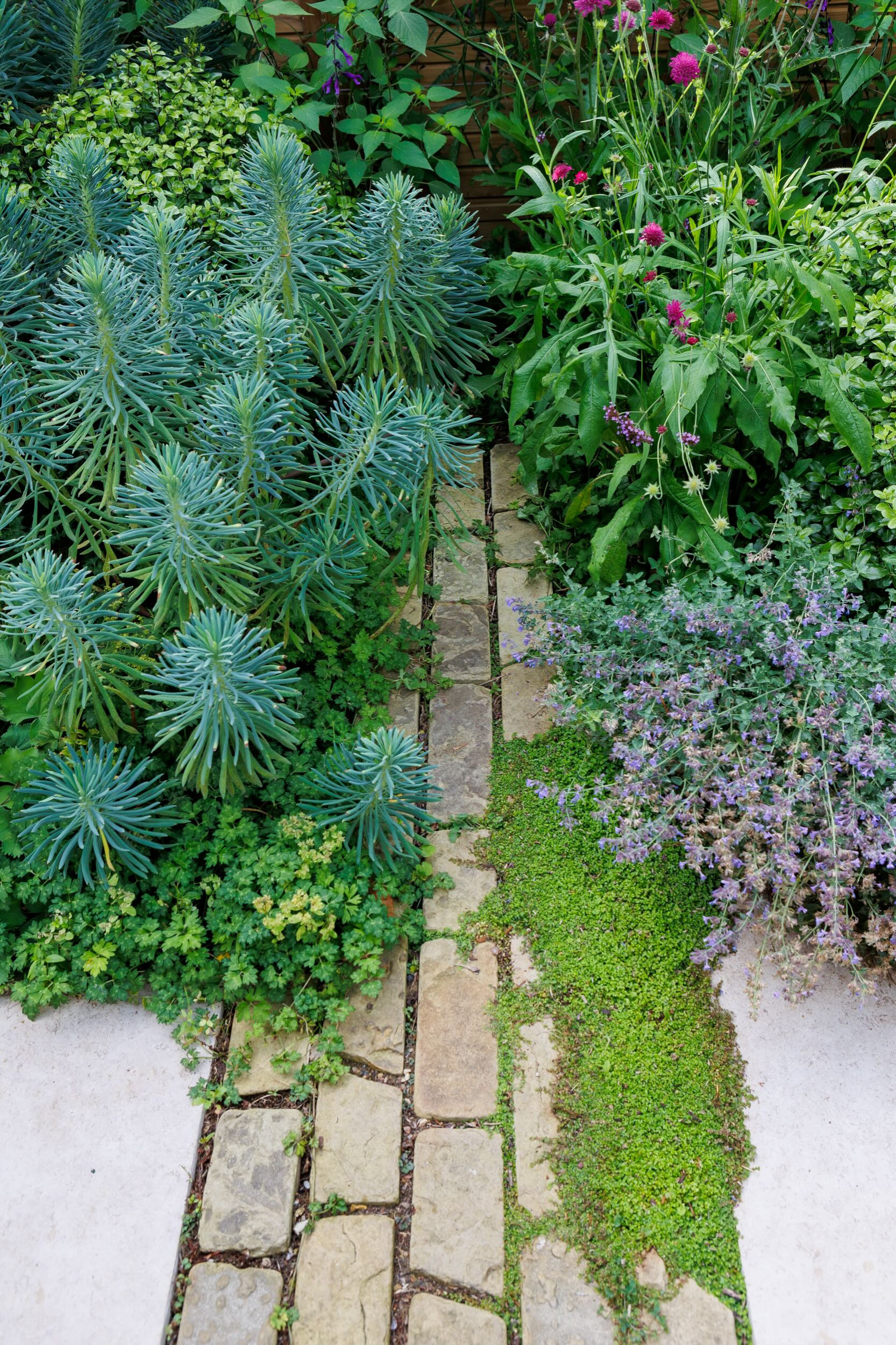
In the deeper bed, paving runs into the planting to provide easy access without trampling plants.
Baby’s tears (Soleirolia soleirolii, zones 9 to 11) spread along the cobbles. “When we laid the cobbles, the owner wanted wide gaps so there would be good drainage and the plants would self-seed,” Lindsay says. “She’s let it go quite wild and really enjoys the greenery.”
Baby’s tears (Soleirolia soleirolii, zones 9 to 11) spread along the cobbles. “When we laid the cobbles, the owner wanted wide gaps so there would be good drainage and the plants would self-seed,” Lindsay says. “She’s let it go quite wild and really enjoys the greenery.”
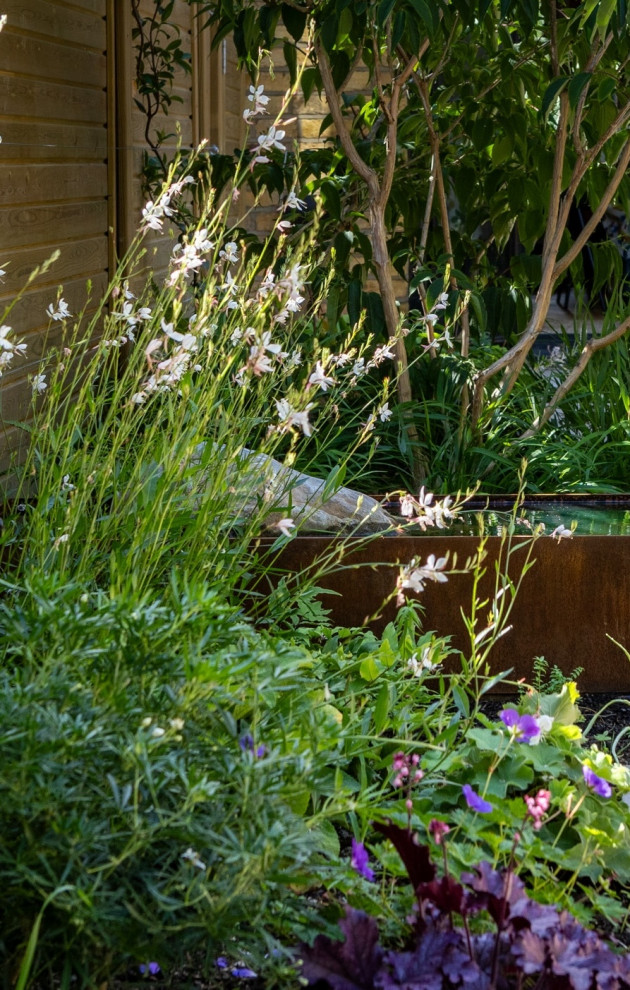
A Cor-Ten water feature sits on the other side of the space, staggered between the Cor-Ten planter and wood bench. When viewed from the house, the water feature is just glimpsed behind the tree, creating a nice moment for anyone walking down the yard (see the site plan for a clearer view). A pump gently ripples the surface and oxygenates the water to keep it clean. The boulder adds a natural feel and provides a spot for wildlife to perch and drink.
White ‘Whirling Butterflies’ gaura (Oenothera lindheimeri ‘Whirling Butterflies’, zones 5 to 9) adds soft texture and movement.
Drip irrigation runs through the beds. “It’s very focused on the plants so you have no wastage. It saves on water and time and can save so many plants,” Lindsay says.
Cor-Ten steel plant and water troughs: Arthur Francis Sculpture
Yes, You Can Create a Wildlife Haven in a Small Yard
White ‘Whirling Butterflies’ gaura (Oenothera lindheimeri ‘Whirling Butterflies’, zones 5 to 9) adds soft texture and movement.
Drip irrigation runs through the beds. “It’s very focused on the plants so you have no wastage. It saves on water and time and can save so many plants,” Lindsay says.
Cor-Ten steel plant and water troughs: Arthur Francis Sculpture
Yes, You Can Create a Wildlife Haven in a Small Yard
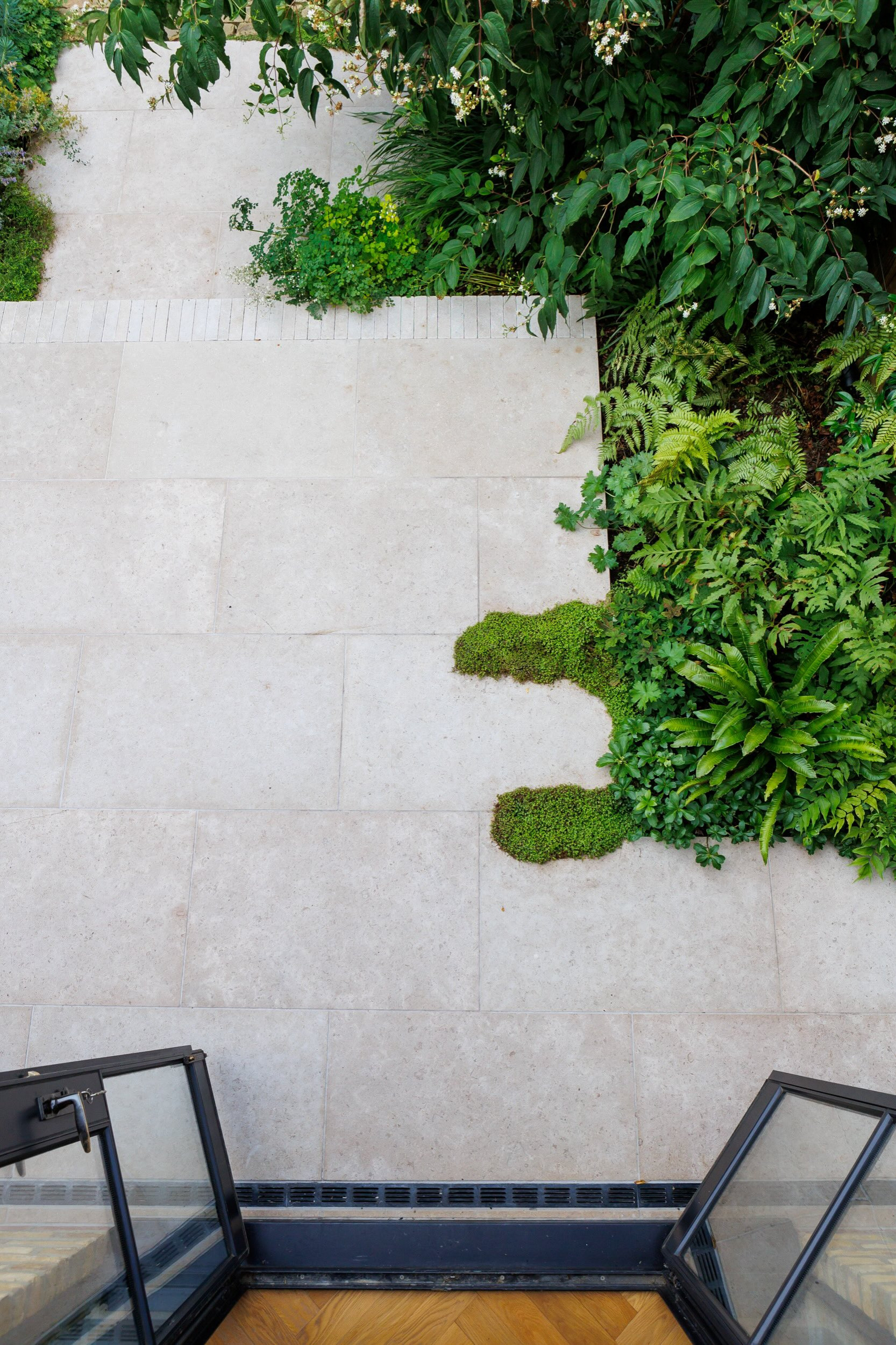
Lindsay designed the area next to the house with outdoor dining in mind, as there’s a table just inside the double doors. “It can be brought out through the patio doors. When you’re eating inside with the doors open, you feel the [yard] is coming to you anyway,” she says.
Ferns, baby’s tears and Japanese pachysandra grow in the shady bed right by the house.
Ferns, baby’s tears and Japanese pachysandra grow in the shady bed right by the house.
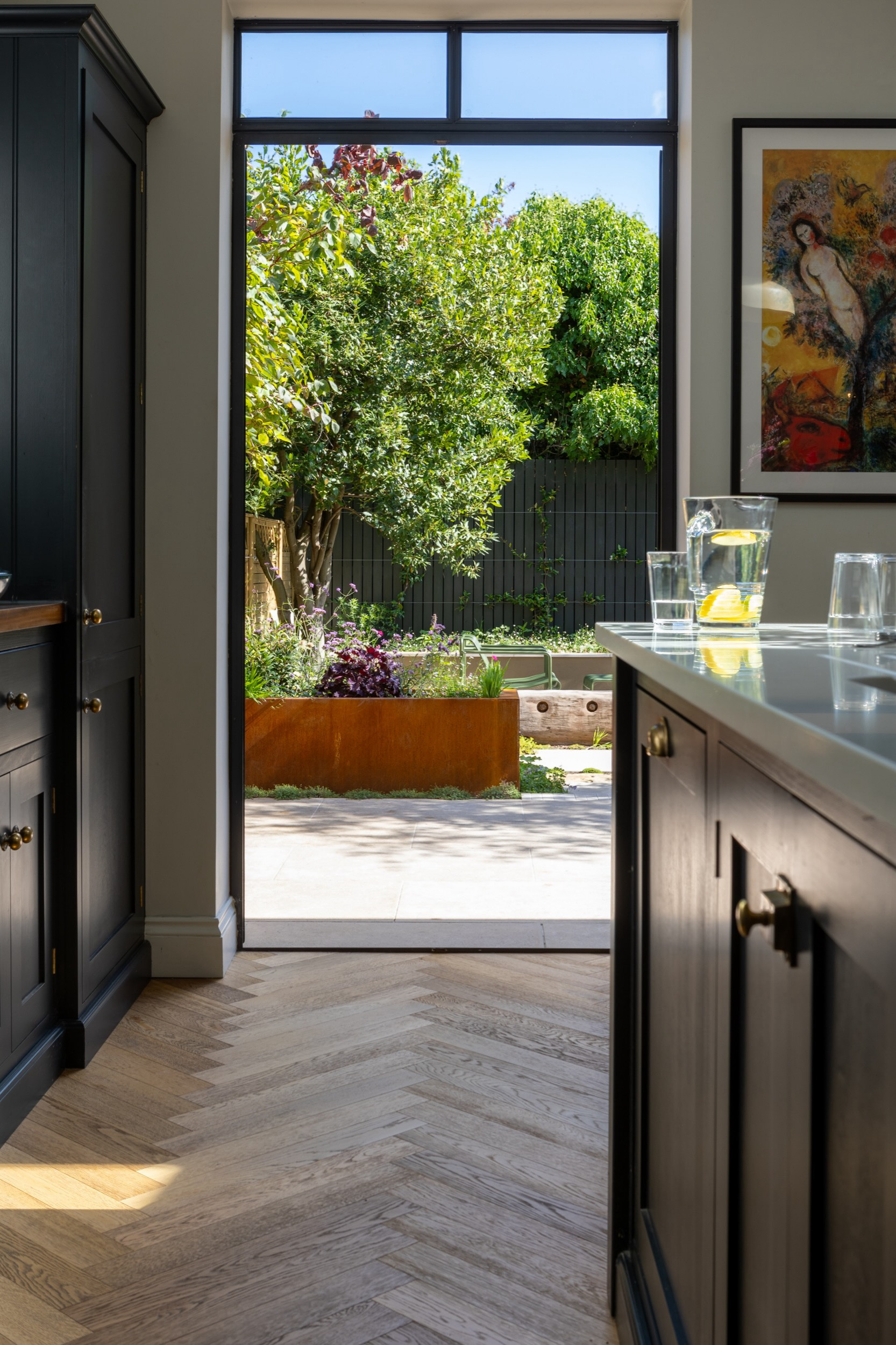
The owners have a great relationship with their neighbors, so when the new fences went up, they didn’t want the side panels to be too high. They asked that the trellis at the top be quite airy so they could have conversations through it. “The diamond shape of the trellis keeps it open and it also looks more traditional than contemporary,” Lindsay says. The section by the existing bay tree on the left has been shaped to accommodate a low branch.
The back fence is higher to screen a school playground and is painted very dark green, a softer option than black in a more traditional yard. The color also echoes the color of the kitchen cabinets.
Lindsay planted star jasmine (Trachelospermum jasminoides, zones 8 to 10) to grow up the fence. “We wanted that to connect with the ivy behind and make it feel as if that back fence was almost being enveloped and the boundary blurred,” she says.
Fence paint: Obsidian, Little Greene
The back fence is higher to screen a school playground and is painted very dark green, a softer option than black in a more traditional yard. The color also echoes the color of the kitchen cabinets.
Lindsay planted star jasmine (Trachelospermum jasminoides, zones 8 to 10) to grow up the fence. “We wanted that to connect with the ivy behind and make it feel as if that back fence was almost being enveloped and the boundary blurred,” she says.
Fence paint: Obsidian, Little Greene
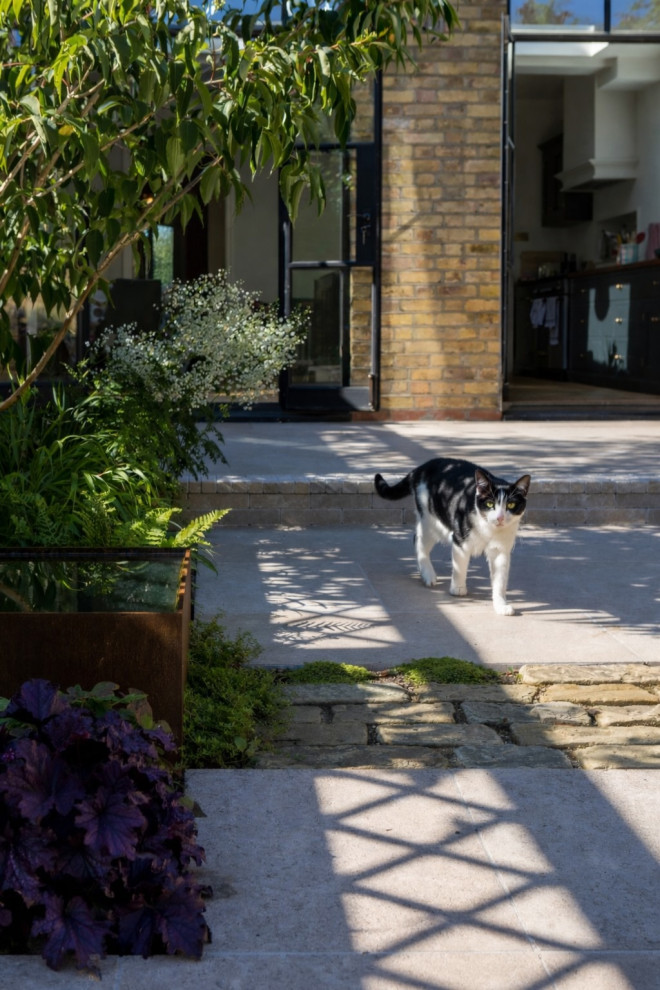
The owners — and their cats — love their remodeled yard and spend lots of time in it. “What’s lovely is there’s scope for tweaks and changes. There are little pockets they can still fill, and there are always going to be edits they can enjoy doing themselves,” Lindsay says.
More on Houzz
Read more landscape stories
Browse outdoor photos for ideas
Find home design and building professionals
More on Houzz
Read more landscape stories
Browse outdoor photos for ideas
Find home design and building professionals

Sponsored

Yard at a Glance
Who lives here: A couple
Location: Northeast London
Size: About 743 square feet (69 square meters)
Landscape designer: Georgia Lindsay Garden Design
Landscape contractor: Nordland Landscapes
The owners wanted a usable yard that also connected to nature and encouraged wildlife. “They didn’t want a space that was going to go out of fashion or was just for entertaining — it had to have something meaningful about it,” Lindsay says. “As it’s so compact, it was a fine balance between letting the plants shine and having a space that functioned well.”
Find a landscape designer on Houzz