
Search results for "Market revolution" in Home Design Ideas

 Heritage Restorations CT
Originally built about 1850 in the historic Mohawk Valley of New York State, the Reese Brothers Barn is an unusual example of the transformation that took place in American agriculture during the Industrial Revolution of the mid-nineteenth century. Before this period of time, American farmers grew varied and diverse crops. But with the advent of the Industrial Revolution and its accompanying mass marketing, farmers began to specialize in the crops they raised. The architecture of their barns also became specialized, which led to larger barns like this one, with innovative farming to allow for larger clear spans.
The timbers were hewn by hand with the broad axe and adze from massive virgin hemlock trees. They were then joined together using the ancient method of mortise and tenon joinery. Its unique and innovative truss system allowed for forty-foot-long spans under which the Reese brothers could store enormous amounts of loose hay.
In 2000 the barn was carefully dismantled and restored at the 10XXX Ranch to its original condition by Joe and Connie Mitchell. It represents one of the finest examples of 19th century American architecture, now preserved for future generations to appreciate and enjoy.
Featured on The Wall Street Journal
 Juxtaposed Interiors
Kat Alves-Photographer
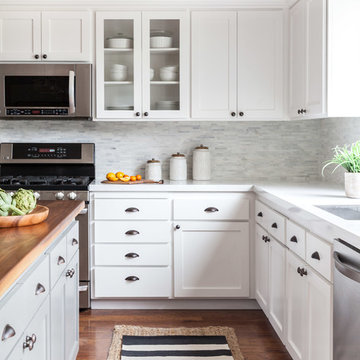
Eat-in kitchen - mid-sized farmhouse u-shaped medium tone wood floor eat-in kitchen idea in Sacramento with an undermount sink, shaker cabinets, gray cabinets, quartzite countertops, gray backsplash, stone tile backsplash, stainless steel appliances and an island
Eat-in kitchen - mid-sized farmhouse u-shaped medium tone wood floor eat-in kitchen idea in Sacramento with an undermount sink, shaker cabinets, gray cabinets, quartzite countertops, gray backsplash, stone tile backsplash, stainless steel appliances and an island

 SS
SSTop Real Estate App Development Companies Delivering Smart PropTech Solutions
The real estate industry is experiencing a revolution in technology as there have been developments in the form of mobile applications, which have now become essential tools and prove to be an integral part for buyers and sellers as well as agents and developers in this industry. The application of technology in the form of virtual tours and property recommendations through artificial intelligence and other such technology has brought about a new way of doing real estate business. It has been found out through statistics that the PropTech industry will experience considerable growth in the next decade due to the increased use of smartphones, cloud computing, and artificial intelligence.
Why Real Estate Apps Are Transforming the PropTech Industry
The introduction of digital platforms has revolutionized the way people search for, assess, and buy properties. Modern real estate software ensures easy access to property listings, neighborhood information, mortgage calculators, virtual tours, and direct contact with real estate agents, thus cutting out many of the obstacles that were part of the purchasing process. Real Estate App Development allows companies to manage properties efficiently, automatically generate leads, effectively handle customers, and make informed decisions. The inclusion of artificial intelligence and digital transactions makes the experience of using these apps even more efficient.
List of Top Real Estate App Development Companies in the Global Market
1. Suffescom Solutions
Suffescom Solutions is a mobile app development company specializing in Real Estate App Development for startups, real estate agencies, property management firms, and enterprises. The company develops scalable, feature-rich applications that simplify property discovery, virtual tours, lead management, and secure digital transactions. By integrating advanced technologies such as AI, AR/VR, cloud computing, and location intelligence, Suffescom Solutions helps businesses build intuitive PropTech platforms that enhance customer engagement and operational efficiency. The company also focuses on customization, security, and post-launch support to ensure long-term business success.
Key Features
Custom real estate application development
AI-powered property recommendations
Property listing management
Interactive map integration
Virtual property tours
CRM integration
Secure payment gateway
Multi-platform development
Cloud-native architecture
Maintenance and support
2. RisingMax
RisingMax develops innovative digital solutions for businesses seeking advanced PropTech platforms. Its expertise in Real Estate App Development enables companies to launch scalable property applications equipped with intelligent search capabilities, real-time property updates, and secure communication tools. RisingMax combines modern UI/UX practices with cloud technologies to deliver applications that improve customer engagement and simplify property management.
Key Features
Cross-platform app development
AI-enabled property search
Property management dashboard
Cloud deployment
Push notifications
Digital payment integration
Analytics and reporting
API integration
Secure authentication
Ongoing technical support
3. Ascendix Technologies
Ascendix Technologies is known for developing enterprise-grade PropTech software for commercial and residential real estate businesses. The company focuses on building customized applications that streamline property management, brokerage operations, customer engagement, and business workflows. Its expertise includes CRM development, cloud solutions, and data analytics, enabling businesses to manage property portfolios more efficiently.
Key Features
Enterprise real estate solutions
CRM integration
Commercial property management
Cloud infrastructure
Advanced analytics
Workflow automation
Custom software development
Secure data management
API connectivity
Long-term support
4. WillowTree
WillowTree develops premium mobile applications across various industries, including real estate and digital commerce. The company creates user-centric property applications that emphasize intuitive navigation, personalized property recommendations, and engaging digital experiences. Its development approach combines robust engineering with modern design principles to build scalable PropTech platforms for growing businesses.
Key Features
Mobile-first development
Personalized user experience
Property search optimization
Cloud-native architecture
Interactive UI/UX
Analytics integration
Secure user authentication
Multi-device compatibility
Third-party integrations
Continuous optimization
5. Unico Connect
Unico Connect specializes in delivering customized digital products for startups and enterprises, including Real Estate App Development solutions. The company builds scalable applications that simplify property listings, communication, lead management, and customer engagement while integrating cloud technologies for improved business performance.
Key Features
Custom property applications
Cloud-based infrastructure
Real-time messaging
Lead management system
Property listing platform
API integration
Digital documentation
Performance analytics
Secure payment integration
Ongoing maintenance
6. Trango Tech
Trango Tech develops intelligent mobile solutions that help real estate businesses digitize property management and customer interactions. Its applications support advanced search functionality, location-based services, secure transactions, and AI-powered recommendations. The company focuses on scalable software architecture that supports long-term business growth and operational efficiency.
Key Features
Property marketplace development
AI-powered recommendations
Interactive map integration
GPS-enabled search
Digital document management
User analytics
Cross-platform applications
Secure backend systems
CRM connectivity
Cloud deployment
7. MindInventory
MindInventory is a software development company delivering digital transformation solutions across multiple industries, including real estate. Its Real Estate App Development services include modern property applications that combine intuitive interfaces with advanced technologies such as AI, IoT, and cloud computing. The company focuses on creating engaging user experiences while ensuring scalability, security, and seamless business operations.
Key Features
AI-enabled property applications
Cloud-native development
Property management tools
Interactive dashboards
IoT integration
User engagement features
Third-party API integration
Business intelligence reporting
Secure infrastructure
Continuous technical support
Essential Features Every Modern Real Estate App Should Include
Successful Real Estate App Development requires more than attractive property listings. Modern applications must provide seamless experiences for buyers, sellers, agents, and property managers while simplifying transactions and communication.
• User Registration and Profile Management
Allow buyers, sellers, agents, and administrators to create personalized accounts with secure authentication and profile customization.
• Advanced Property Search
Provide powerful filters based on location, property type, price range, amenities, size, and availability to improve property discovery.
• Interactive Maps
Integrate GPS-enabled maps that display nearby schools, hospitals, transportation hubs, restaurants, and neighborhood information.
• High-Quality Property Listings
Support multiple images, HD videos, floor plans, property specifications, and detailed descriptions for each listing.
• Virtual Tours
Enable immersive 360-degree property walkthroughs using AR/VR technology to improve buyer confidence before physical visits.
• AI-Powered Property Recommendations
Use artificial intelligence to recommend properties based on user preferences, browsing behavior, and previous searches.
• Real-Time Chat and Messaging
Facilitate instant communication between buyers, sellers, and agents for faster inquiry resolution.
• Mortgage Calculator
Help users estimate monthly payments, loan eligibility, and financing options directly within the application.
• Appointment Scheduling
Allow users to schedule property visits, virtual meetings, or consultations with agents through integrated calendars.
• Secure Digital Payments
Support booking fees, deposits, subscription payments, and service charges through encrypted payment gateways.
• Document Management
Store contracts, agreements, ownership documents, inspection reports, and legal paperwork securely within the application.
• Push Notifications
Notify users about new listings, price changes, scheduled visits, document approvals, and promotional offers.
• Admin Dashboard
Provide centralized control over users, listings, transactions, content moderation, analytics, and platform management.
• Analytics and Reporting
Offer detailed insights into customer behavior, listing performance, lead generation, conversions, and revenue growth.
• Strong Security
Implement encrypted communications, secure authentication, role-based access control, data privacy measures, and regulatory compliance.
Emerging Trends Shaping the Future of Real Estate App Development
The future of Real Estate App Development is being driven by intelligent technologies that improve decision-making, customer experiences, and operational efficiency throughout the property lifecycle.
Artificial intelligence is transforming property discovery by delivering personalized recommendations, predictive pricing models, and automated customer support. Machine learning algorithms analyze user preferences and market trends to recommend relevant properties while helping businesses generate qualified leads more effectively.
Augmented reality (AR) and virtual reality (VR) are becoming essential components of digital property experiences. Virtual property tours allow buyers to explore homes remotely, reducing travel time and accelerating purchasing decisions.
Another significant trend is IoT integration within smart properties. Connected devices enable users to monitor energy consumption, security systems, lighting, and climate control directly through mobile applications, enhancing property value and user convenience.
Finally, sustainability is becoming an important focus. Modern real estate platforms increasingly highlight green-certified buildings, energy-efficient homes, and environmentally friendly construction projects to meet changing buyer preferences.
Conclusion
The rapid evolution of the PropTech sector has made Real Estate App Development an essential investment for businesses aiming to deliver seamless, technology-driven property experiences. From AI-powered property recommendations and immersive virtual tours to secure digital transactions and cloud-based management systems, modern applications are transforming every stage of the real estate journey. Selecting an experienced development company with expertise in emerging technologies, scalable architecture, and user-centric design is crucial for building a competitive digital platform. As customer expectations continue to evolve, organizations that invest in innovative real estate applications will be better positioned to improve operational efficiency, strengthen customer relationships, and achieve long-term growth in the digital property marketplace.
FAQs
1. What is Real Estate App Development?
Real Estate App Development involves building mobile or web applications that help users buy, sell, rent, and manage properties through digital platforms.
2. How much does Real Estate App Development cost?
Development costs vary based on features, platforms, integrations, UI/UX complexity, and technology requirements, ranging from basic to enterprise-grade solutions.
3. Which features are essential in a real estate app?
Core features include property listings, advanced search, virtual tours, GPS maps, messaging, appointment scheduling, payment integration, and analytics dashboards.
4. Why should businesses invest in Real Estate App Development?
It enhances customer engagement, streamlines property management, increases lead generation, supports digital transactions, and helps businesses stay competitive in the evolving PropTech market.
Find the right local pro for your project

 Studio Revolution
Designed by: Studio Revolution Photography by: Thomas Kuoh
Bedroom - southwestern master dark wood floor bedroom idea in San Francisco with white walls
Bedroom - southwestern master dark wood floor bedroom idea in San Francisco with white walls

 Curbio Home Improvement
While kitchens and bathrooms are focal points for buyers, they won’t ignore the rest of the home — and neither should you. The work-from-home revolution has changed what buyers are looking for in a home purchase, and the result is an increased focus on flex spaces and living spaces.
Living spaces can include areas both small and grand. They can also have a multitude of purposes, but regardless of how they are used, they should be up-to-date and modern before the house goes on the market.
Flex spaces are rooms that serve multiple purposes. That means the square footage is set up in such a way that it can be adapted to changing needs, interests, and lifestyles without extensive modifications. A flex space could be turned into a home office, game room, exercise room, and more. To highlight the versatility of these areas, it is important to update flex spaces before selling.

 Electronic Design & Consulting, Inc.
This article is posted here with the consent of the author. The views and opinions expressed in this article are those of the author and do not necessarily reflect the official policy, position, view, or opinion of Crestron Electronics, Inc., or of any of its employees. Crestron Electronics is not responsible for, and does not verify the accuracy of, any of the information contained in this article.
By Jeff Singer
The “smart” revolution began several years ago with smartphones (a.k.a phones) and has extended in recent years to thermostats, doorbells, alarm systems, and kitchen appliances. Smart devices are so ubiquitous that the term “smart” is overused to the point that it is almost meaningless. Companies are eager to jump on the bandwagon and claim their products are “smart,” and consumers proudly claim they have a smart home because they have lighting control. Misconceptions about smart homes are prevalent and create confusion in the marketplace. This can have deleterious effects on businesses and underserve consumers. Here are seven of the most popular misconceptions about smart homes:
1. Apps are smart
Apps are convenient and easy to use. Yes, it seems there’s an app for everything. People expect to be able to download an app and do just about anything. App developers and many companies do not disavow consumers of this myth. On the contrary, they promote this idea with carefully worded descriptions. The promise of having the world at your fingertips for $1.99 is very enticing. Although it sounds too good to be true, it is also too good to pass up for many people. This leads to undervaluing home control and disappointment when the apps don’t work, which undermines confidence in our industry. The fact is that apps are not smart. They do not control anything. They must connect to and communicate with a control system or cloud service that processes, prioritizes, and executes commands. That’s the real magic and what most people do not understand.
2. Smart devices work together
With so many smart appliances and devices on the market today, it’s understandable that the average consumer might think that they actually communicate and work together. This is simply not the case. Smart devices are not that smart. They are designed and manufactured by different, often competing, companies. There are no national or industry standards governing these products. Even if they all operate using Wi-Fi® communications, that doesn’t mean they work together. Some companies promote a home control platform, which unites different devices from different companies – in theory. The platform is yet another third-party software totally dependent on other companies developing APIs and writing control modules for their hardware to run on that piece of software. The devices are not independently compatible. Also, when updates are made to either the hardware or the software, functionality may be affected for some period. That’s a nice way of saying the device or system won’t work and there’s no way of knowing for how long.
3. It’s a DIY project
Which brings us to the next myth, which is that the average person can do it themselves. Unless you are a skilled professional, I would not advise taking on a smart home project. You want to make a light turn on and off with your Alexa® or Google Assistant™ virtual assistant software, go for it. A smart home takes much more planning and expertise. I have no problem changing a light bulb or hanging a light fixture in my dining room; however, I am not going to rewire my house. I may change the flush valve in my toilet, but I’m not going to replace the pipes in my house. You get it. Integrating devices and systems, establishing different zones, creating scenes, designing the UI with a balance between control, feedback, and simplicity – all takes experience and skill.
4. Need a programmer to make changes
Early adopters may have experienced the pain of trying to make a simple change or update to their home control system. Years ago, if the cable provider changed the channel line-up, the homeowner would have to call the dealer or programmer to make an appointment for them to come out to the house to reprogram the system. The system wouldn’t work as expected until it was updated, which often took several days and beaucoup bucks. Not anymore. Technology has evolved so now it’s easy for system owners to change favorite channels, create scenes, rename buttons, update images, and more. While a professional is needed for the initial installation and setup, the system is easy to manage once it’s up and running. This makes life so much easier for both dealer and customer.
5. Tech becomes obsolete quickly
Similar to updating the UI, updating firmware or hardware used to be a stressful process. A smart home should be intelligent enough to update itself. Apps don’t become obsolete. Updates are constantly pushed out from the cloud, making them better all the time. The same is true for a good smart home system. New features, functions, and device support gets added in the background consistently, so the system you installed (or purchased) yesterday gets better over time. Swapping out decorative elements, such as keypads, dimmers, and touch screens is also seamless. When a new device is added, all the settings are pulled down from the cloud and it just works. No system interruptions. No sunk costs. No imposing house calls. No surprise bills.
6. Lighting control saves energy and money
Lighting control is one of the most popular smart systems, but it takes more than just one system to make a home smart. On the surface, it makes sense that if you dim the lights ten percent, then you save ten percent of energy costs. If the shades are raised during the day to take advantage of sunlight so the lights don’t need to be on (or at least not 100%), but that causes the room temperature to rise a few degrees, which triggers the air conditioner to run longer and more often, was energy usage (or cost) reduced? A smart home integrates all the various systems and technology to optimize comfort, convenience, safety, and sometimes energy.
7. Home technology is easy to hack
Security is at the forefront of people’s minds these days. Personal identities are stolen; email accounts hacked; private photos publicized; and more. A smart home must outsmart those who don’t respect privacy. Crestron control systems adhere to the strictest security standards. The same Crestron control system that goes into a home is also installed in secure government and military facilities, global banking institutions, hospitals, and other mission critical applications. When installed correctly by a trained professional, a Crestron smart home is the gold standard for security, comfort, and convenience.
 Curbio Home Improvement
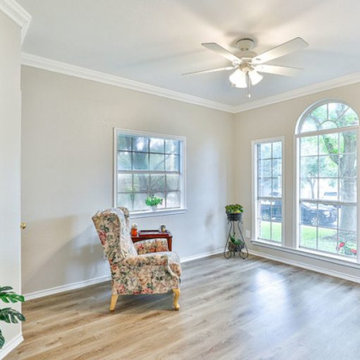
While kitchens and bathrooms are focal points for buyers, they won’t ignore the rest of the home — and neither should you. The work-from-home revolution has changed what buyers are looking for in a home purchase, and the result is an increased focus on flex spaces and living spaces.
Living spaces can include areas both small and grand. They can also have a multitude of purposes, but regardless of how they are used, they should be up-to-date and modern before the house goes on the market.
Flex spaces are rooms that serve multiple purposes. That means the square footage is set up in such a way that it can be adapted to changing needs, interests, and lifestyles without extensive modifications. A flex space could be turned into a home office, game room, exercise room, and more. To highlight the versatility of these areas, it is important to update flex spaces before selling.
 Curbio Home Improvement
While kitchens and bathrooms are focal points for buyers, they won’t ignore the rest of the home — and neither should you. The work-from-home revolution has changed what buyers are looking for in a home purchase, and the result is an increased focus on flex spaces and living spaces.
Living spaces can include areas both small and grand. They can also have a multitude of purposes, but regardless of how they are used, they should be up-to-date and modern before the house goes on the market.
Flex spaces are rooms that serve multiple purposes. That means the square footage is set up in such a way that it can be adapted to changing needs, interests, and lifestyles without extensive modifications. A flex space could be turned into a home office, game room, exercise room, and more. To highlight the versatility of these areas, it is important to update flex spaces before selling.
 Curbio Home Improvement
While kitchens and bathrooms are focal points for buyers, they won’t ignore the rest of the home — and neither should you. The work-from-home revolution has changed what buyers are looking for in a home purchase, and the result is an increased focus on flex spaces and living spaces.
Living spaces can include areas both small and grand. They can also have a multitude of purposes, but regardless of how they are used, they should be up-to-date and modern before the house goes on the market.
Flex spaces are rooms that serve multiple purposes. That means the square footage is set up in such a way that it can be adapted to changing needs, interests, and lifestyles without extensive modifications. A flex space could be turned into a home office, game room, exercise room, and more. To highlight the versatility of these areas, it is important to update flex spaces before selling.
 Curbio Home Improvement
While kitchens and bathrooms are focal points for buyers, they won’t ignore the rest of the home — and neither should you. The work-from-home revolution has changed what buyers are looking for in a home purchase, and the result is an increased focus on flex spaces and living spaces.
Living spaces can include areas both small and grand. They can also have a multitude of purposes, but regardless of how they are used, they should be up-to-date and modern before the house goes on the market.
Flex spaces are rooms that serve multiple purposes. That means the square footage is set up in such a way that it can be adapted to changing needs, interests, and lifestyles without extensive modifications. A flex space could be turned into a home office, game room, exercise room, and more. To highlight the versatility of these areas, it is important to update flex spaces before selling.
 Curbio Home Improvement
While kitchens and bathrooms are focal points for buyers, they won’t ignore the rest of the home — and neither should you. The work-from-home revolution has changed what buyers are looking for in a home purchase, and the result is an increased focus on flex spaces and living spaces.
Living spaces can include areas both small and grand. They can also have a multitude of purposes, but regardless of how they are used, they should be up-to-date and modern before the house goes on the market.
Flex spaces are rooms that serve multiple purposes. That means the square footage is set up in such a way that it can be adapted to changing needs, interests, and lifestyles without extensive modifications. A flex space could be turned into a home office, game room, exercise room, and more. To highlight the versatility of these areas, it is important to update flex spaces before selling.

 Peggy Smith
Wakefield, England was a wealthy market town in the Industrial Revolution. The elegance and affluence of its goods and people inspired this bright, but poised collection. Its stunning golds and silvers are surrounded by geometric structure, creating a style that is traditional and fashionable.
 Curbio Home Improvement
While kitchens and bathrooms are focal points for buyers, they won’t ignore the rest of the home — and neither should you. The work-from-home revolution has changed what buyers are looking for in a home purchase, and the result is an increased focus on flex spaces and living spaces.
Living spaces can include areas both small and grand. They can also have a multitude of purposes, but regardless of how they are used, they should be up-to-date and modern before the house goes on the market.
Flex spaces are rooms that serve multiple purposes. That means the square footage is set up in such a way that it can be adapted to changing needs, interests, and lifestyles without extensive modifications. A flex space could be turned into a home office, game room, exercise room, and more. To highlight the versatility of these areas, it is important to update flex spaces before selling.
 Curbio Home Improvement
While kitchens and bathrooms are focal points for buyers, they won’t ignore the rest of the home — and neither should you. The work-from-home revolution has changed what buyers are looking for in a home purchase, and the result is an increased focus on flex spaces and living spaces.
Living spaces can include areas both small and grand. They can also have a multitude of purposes, but regardless of how they are used, they should be up-to-date and modern before the house goes on the market.
Flex spaces are rooms that serve multiple purposes. That means the square footage is set up in such a way that it can be adapted to changing needs, interests, and lifestyles without extensive modifications. A flex space could be turned into a home office, game room, exercise room, and more. To highlight the versatility of these areas, it is important to update flex spaces before selling.
 Curbio Home Improvement
While kitchens and bathrooms are focal points for buyers, they won’t ignore the rest of the home — and neither should you. The work-from-home revolution has changed what buyers are looking for in a home purchase, and the result is an increased focus on flex spaces and living spaces.
Living spaces can include areas both small and grand. They can also have a multitude of purposes, but regardless of how they are used, they should be up-to-date and modern before the house goes on the market.
Flex spaces are rooms that serve multiple purposes. That means the square footage is set up in such a way that it can be adapted to changing needs, interests, and lifestyles without extensive modifications. A flex space could be turned into a home office, game room, exercise room, and more. To highlight the versatility of these areas, it is important to update flex spaces before selling.
 Curbio Home Improvement
While kitchens and bathrooms are focal points for buyers, they won’t ignore the rest of the home — and neither should you. The work-from-home revolution has changed what buyers are looking for in a home purchase, and the result is an increased focus on flex spaces and living spaces.
Living spaces can include areas both small and grand. They can also have a multitude of purposes, but regardless of how they are used, they should be up-to-date and modern before the house goes on the market.
Flex spaces are rooms that serve multiple purposes. That means the square footage is set up in such a way that it can be adapted to changing needs, interests, and lifestyles without extensive modifications. A flex space could be turned into a home office, game room, exercise room, and more. To highlight the versatility of these areas, it is important to update flex spaces before selling.
 Curbio Home Improvement
While kitchens and bathrooms are focal points for buyers, they won’t ignore the rest of the home — and neither should you. The work-from-home revolution has changed what buyers are looking for in a home purchase, and the result is an increased focus on flex spaces and living spaces.
Living spaces can include areas both small and grand. They can also have a multitude of purposes, but regardless of how they are used, they should be up-to-date and modern before the house goes on the market.
Flex spaces are rooms that serve multiple purposes. That means the square footage is set up in such a way that it can be adapted to changing needs, interests, and lifestyles without extensive modifications. A flex space could be turned into a home office, game room, exercise room, and more. To highlight the versatility of these areas, it is important to update flex spaces before selling.
 Curbio Home Improvement
While kitchens and bathrooms are focal points for buyers, they won’t ignore the rest of the home — and neither should you. The work-from-home revolution has changed what buyers are looking for in a home purchase, and the result is an increased focus on flex spaces and living spaces.
Living spaces can include areas both small and grand. They can also have a multitude of purposes, but regardless of how they are used, they should be up-to-date and modern before the house goes on the market.
Flex spaces are rooms that serve multiple purposes. That means the square footage is set up in such a way that it can be adapted to changing needs, interests, and lifestyles without extensive modifications. A flex space could be turned into a home office, game room, exercise room, and more. To highlight the versatility of these areas, it is important to update flex spaces before selling.
 Curbio Home Improvement
While kitchens and bathrooms are focal points for buyers, they won’t ignore the rest of the home — and neither should you. The work-from-home revolution has changed what buyers are looking for in a home purchase, and the result is an increased focus on flex spaces and living spaces.
Living spaces can include areas both small and grand. They can also have a multitude of purposes, but regardless of how they are used, they should be up-to-date and modern before the house goes on the market.
Flex spaces are rooms that serve multiple purposes. That means the square footage is set up in such a way that it can be adapted to changing needs, interests, and lifestyles without extensive modifications. A flex space could be turned into a home office, game room, exercise room, and more. To highlight the versatility of these areas, it is important to update flex spaces before selling.
 Curbio Home Improvement
While kitchens and bathrooms are focal points for buyers, they won’t ignore the rest of the home — and neither should you. The work-from-home revolution has changed what buyers are looking for in a home purchase, and the result is an increased focus on flex spaces and living spaces.
Living spaces can include areas both small and grand. They can also have a multitude of purposes, but regardless of how they are used, they should be up-to-date and modern before the house goes on the market.
Flex spaces are rooms that serve multiple purposes. That means the square footage is set up in such a way that it can be adapted to changing needs, interests, and lifestyles without extensive modifications. A flex space could be turned into a home office, game room, exercise room, and more. To highlight the versatility of these areas, it is important to update flex spaces before selling.
1