
Search results for "Extensive catalogue" in Home Design Ideas

 Kaja Gam Design, Inc. & KGHome
Wendy Mitchell owner
Exterior paint, roof and chimney - This beautiful and quaint English style cottage or bungalow is part of a 1920's neighborhood of unusual small houses many from the Sears Catalog. Phase one of an extensive whole house renovation.
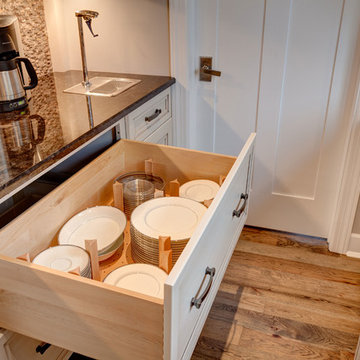
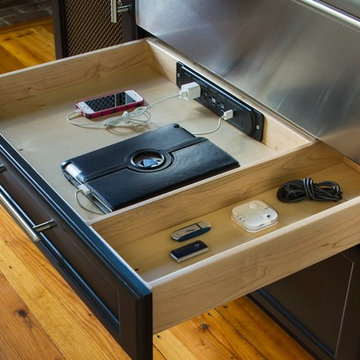
 The Aldrich Group, LLC
Convenient drawer for recharging electronics
Jeff Herr Photography
Home design - large cottage home design idea in Atlanta
Home design - large cottage home design idea in Atlanta
Find the right local pro for your project
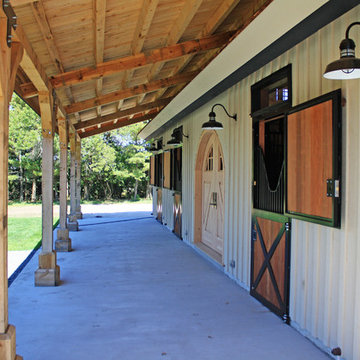
 Sand Creek Post & Beam
Sand Creek Post & Beam Traditional Wood Barns and Barn Homes
Learn more & request a free catalog: www.sandcreekpostandbeam.com
Shed - farmhouse shed idea in Other
Shed - farmhouse shed idea in Other
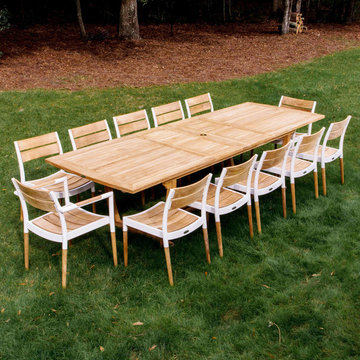
 Westminster Teak
The elegant and classic Grand Veranda Bloom 13 pc Dining Set is designed with timeless quality in mind. Including our largest outdoor table, the Grand Veranda, and our Bloom dining chairs, this set will become the center of any family gathering from holiday meals to evening parties. The contrast of powder coated aluminum and teak wood in the chairs provides a refreshing twist to the traditional style of the table.
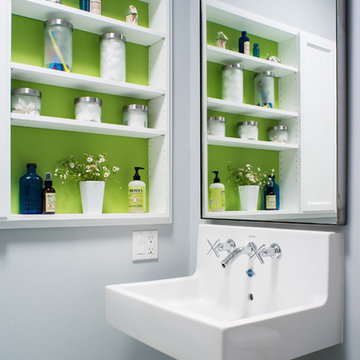
 Christie Hausmann Design
Example of a small transitional ceramic tile powder room design in San Francisco with a wall-mount sink and white cabinets
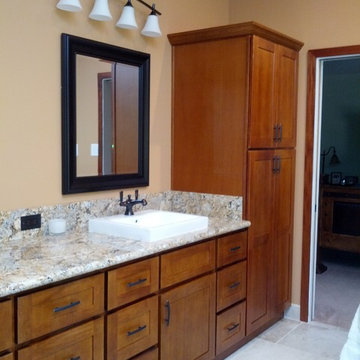

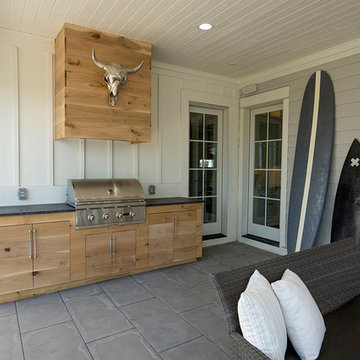

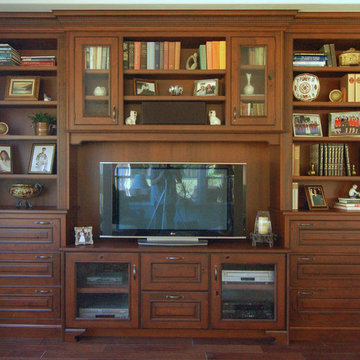
 San Luis Kitchen Co.
This client brought me a catalog featuring entertainment furniture and asked if we could do something similar with built-in cabinetry customized to their needs. I replied in the positive and asked what their specific needs were -- what electronic components did they want, what would be stored here, did they want any open shelves for display or books, etc? Using primarily inset style cabinetry we created a built-in wall unit that includes storage drawers (for both their video library and for the grandkids toys and games), open shelves and display cabinets. Centrally we have the TV, video and audio equipment (infrared remotes necessitated the glass doors), and additional storage -- we used frame-less construction cabinets here to gain usable space inside the base unit.
Wood-Mode Fine Custom Cabinetry, Galleria Raised
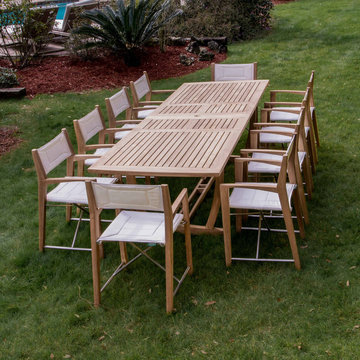 Westminster Teak
The Odyssey Extension 11 piece Dining Set combines the generous proportions of the Veranda Extension Grand Table with the sleek nautical style of the Odyssey Folding Chairs. The Odyssey Chairs' high-performance Sunbrella Natte fabric cradles the body for maximum comfort while 316L Marine Grade Stainless Steel frames allow the chairs to fold completely for storage, to easily accommodate any size party at the table.
The Odyssey Extension 11 piece Dining Set features:
-10 Odyssey Folding Chairs, 1 Veranda Extension Table (86.25"/82"/118" L x 39.25" W x 29.25" H)
-Table includes a double butterfly leaf extension system that allows seating for 6-12
-Accommodates our optional 1.95" diameter umbrella in both collapsed and extended positions
-Chairs fold for easy storage.
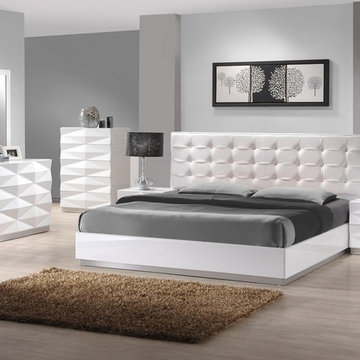
 Massiano
Verona Bedroom by J&M Furniture offers a fresh aim and outlook of the modern bedroom. With case goods featuring unique 3D surfaces, this white lacquered finish set will enhance the look of bedrooms of different sizes and colors. The leatherette headboard provides elegance as well as a classic look to the bedroom set. Whether choosing the entire set, its individual platform bed, or any of the case goods, you can rest assured that this quality furniture is meant to last. Our case goods are equipped with full extension glides.
Set Includes: 1 Bed, 1 Nightstand, 1 Dresser, 1 Mirror
Queen Bed: 73W x 84D x 43H
King Bed: 96W x 84D x 43H
Full Bed: 63W x 79D x 43H
Night Stand: 21W x 16D x 19H
6 Drawer Dresser: 55W x 18D x 31H
Mirror: 34W x 1 D x 39H
5 Drawer Chest: 30W x 19D x 44H
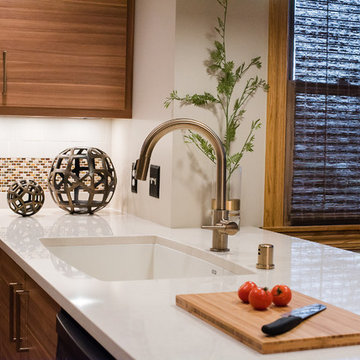
 Crystal Kitchen + Bath
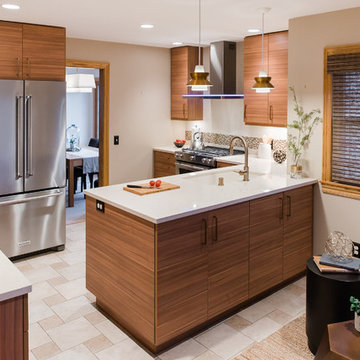
When Lisa told me she loved midcentury modern design, we instantly connected! I love bringing homes up-to-date while keeping a sense of midcentury style. This kitchen needed an improved layout and, by simply moving the refrigerator, we achieved a more open space with added storage, including a banquette for sipping morning coffee. Warm wood tones are true to the style. The cabinetry, paired with creamy Cambria countertops and gold hardware, creates a warm and inviting space.
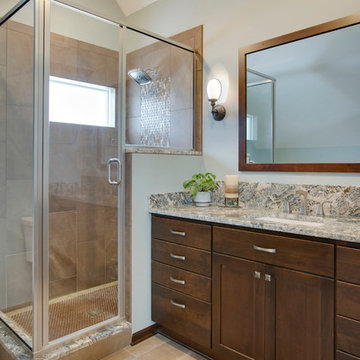

 Crystal Kitchen + Bath
When Lisa told me she loved midcentury modern design, we instantly connected! I love bringing homes up-to-date while keeping a sense of midcentury style. This kitchen needed an improved layout and, by simply moving the refrigerator, we achieved a more open space with added storage, including a banquette for sipping morning coffee. Warm wood tones are true to the style. The cabinetry, paired with creamy Cambria countertops and gold hardware, creates a warm and inviting space.

 Almesedoors
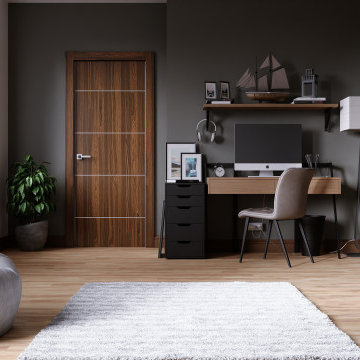
THE DOOR NAME ORIGIN - "ALLUMINIO ELIVIA VERTICAL WOOD GRAIN 4HS"
Of all the interior door models in the Elivia collection, this one is perhaps the most unapologetically elegant. Why? Hmm … That which is self-evident can be the most difficult to explain. Is it because it is built using the latest breakthroughs in interior door making technology? Look at the finish: the process of applying it utilizes something called “stretching” by professionals, which is to say that instead of simply slapping the finish on top of the interior door’s surface, our company fuses (for lack of a better word) the materials (on molecular level, no less), the result being that the finished product is more warp-resistant, scratch-resistant, and fade-proof than any interior door put together in the past. This is especially important in climates known for their high humidity levels. Yes, but this has more to do with engineering than aesthetics, right? Okay, so, is this interior door super-elegant because ... Show more!
FINISH: WALNUT
When it comes to interior door finishes, walnut may not be king per se, since “different folk have different views,” as the poet said, and it behooves a proper collection of finishes to be thoroughly democratic; but, but … you could view walnut as an important majority leader descended from royalty – like, say, Louis Napoleon back when he was still an elected official and not, as he eventually came to style himself, Napoleon III.
Strictly speaking, a walnut is the seed of a drupaceous nut, and not a true nut in the botanical sense. It is native to Persia (walnut oil is a staple in Iranian cuisine to this day) and North America, even though approximately one half of the world’s production today is done in China.
That said, one of its more historically curious uses would be the production of ink and dyes. Those are made, or used to be made, at least, from the husk surrounding the nut. The ink could be used to produce drawings – or darken paper to make it look older. It has (as it turned out by the by) excellent archival properties. It was used liberally by many capable and honest artists in the past.
A keen observer of the human condition, a Florentine named Leonardo da Vinci never left his house (which featured some pretty interesting interior doors, but that’s a story for another day) … never left it without a vial – and a sketch book.
As he took leisurely strolls around the streets and piazzas, he observed folks – socializing, arguing, fighting, striking bargains, and gossiping. Let us mention in passing – and this is merely an opinion, mind you – that his sketches seem to be a great deal livelier than his portraits, which for the most part adhere to the epoch’s somewhat mawkish standards and the algebraic, rather than harmonious, approach to depicting humans. The perpetual beguiling mystery of Mona Lisa’s smile is undoubtedly magnificent, but it is the Tuscan polymath’s quick yet amazingly insightful drawings that give us an idea – oftentimes a very comprehensive one – of what everyday life was truly like in Florence in the Sixteenth Century. An old man gloating at someone’s misfortune, two passionate merchants arguing over the price of some highly important delivery, a young woman lamenting the lack of decent men whom a reasonable person could view as husband material, and on and on – it’s all there in Leonardo’s sketches characterized by masterful lines and elegant shading despite the obvious – and necessary – impetuosity of each sketch. So precious and brilliant are those casual masterpieces that, had the scientifically inclined fellow eliminated the need for outdoor sketching by inventing photography, it would have been an historian’s immeasurable gain, certainly, but also an art lover’s great loss.
The idea behind our Walnut Finish is to invoke in the interior door owner a feeling of timeless historicity. Some things change, but others are forever. Stability is an important quality in an interior door, is it not?
Rembrandt van Rijn, who also used walnut ink extensively, was a studio artist, with only a few outdoor paintings in his legacy. Truth be told, he was a better draftsman than Leonardo, at least as far as technique goes (don’t let this get around). Well. He lived a century later and had the benefit of all the development art had undergone since the great Italian master. Just like these interior doors – your interior doors – are a huge improvement on anything that was available only twenty years ago, never mind a hundred years ago.
The “oscillation” of Rembrandt’s line, the delightful shift from the descriptive to the aesthetic stroke, makes his production in that category quite unique. Upon reaching artistic maturity, the stubborn Dutch master began to shun the unbroken contour line, which caused a lot of trouble for his drawings a century later, when dealers and collectors who wished to “update” his sketches to fit the current fashion had the audacity to “complete” Rembrandt’s pen-and-inks. Fortunately, some of the sketches escaped this sorry fate and have been preserved in their original glorious state to this day. Rembrandt’s mastery is yet another thing this interior door finish might remind you of each time you look at your doors.
 Crystal Kitchen + Bath
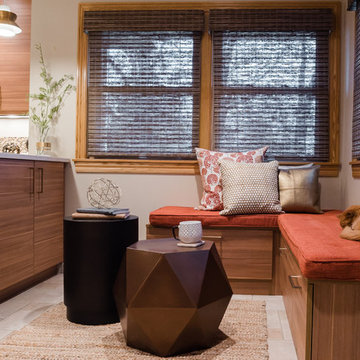
When Lisa told me she loved midcentury modern design, we instantly connected! I love bringing homes up-to-date while keeping a sense of midcentury style. This kitchen needed an improved layout and, by simply moving the refrigerator, we achieved a more open space with added storage, including a banquette for sipping morning coffee. Warm wood tones are true to the style. The cabinetry, paired with creamy Cambria countertops and gold hardware, creates a warm and inviting space.
 Marie Burgos Design
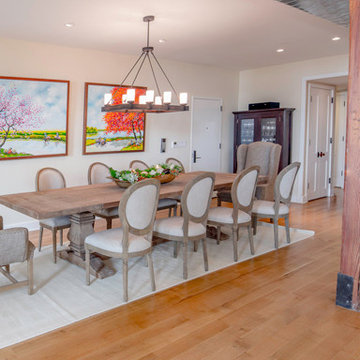
The dining room showcases a handcrafted salvaged wood trestle table which was created out of reclaimed pine timbers from 100-year-old buildings in Europe. The table is surrounded by elegant vintage french round upholstered side chairs, and at the head and foot of the table are Belfort wingback chairs in a textured linen weave. Hanging above and providing a delightful glow is an Arturo 8-light rectangular chandelier with a rustic wood frame and riveted metal strapping. On the wall is a color art piece by a Vietnamese artist.
Photography by Francis Augustine
 Crystal Kitchen + Bath
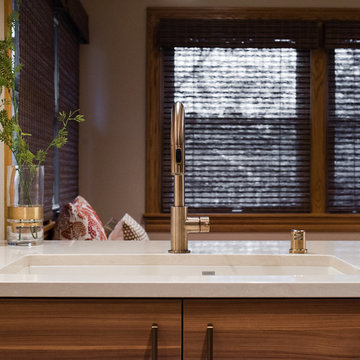
When Lisa told me she loved midcentury modern design, we instantly connected! I love bringing homes up-to-date while keeping a sense of midcentury style. This kitchen needed an improved layout and, by simply moving the refrigerator, we achieved a more open space with added storage, including a banquette for sipping morning coffee. Warm wood tones are true to the style. The cabinetry, paired with creamy Cambria countertops and gold hardware, creates a warm and inviting space.

 Crystal Kitchen + Bath
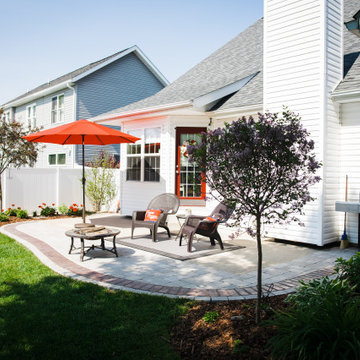
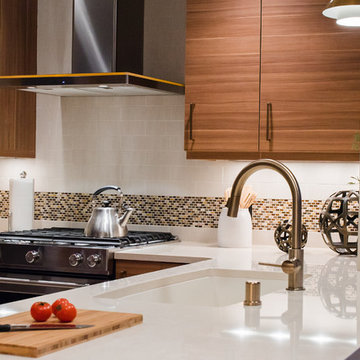
When Lisa told me she loved midcentury modern design, we instantly connected! I love bringing homes up-to-date while keeping a sense of midcentury style. This kitchen needed an improved layout and, by simply moving the refrigerator, we achieved a more open space with added storage, including a banquette for sipping morning coffee. Warm wood tones are true to the style. The cabinetry, paired with creamy Cambria countertops and gold hardware, creates a warm and inviting space.
 Crystal Kitchen + Bath
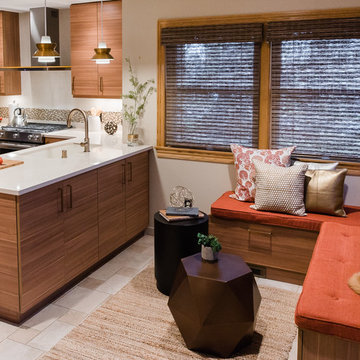
When Lisa told me she loved midcentury modern design, we instantly connected! I love bringing homes up-to-date while keeping a sense of midcentury style. This kitchen needed an improved layout and, by simply moving the refrigerator, we achieved a more open space with added storage, including a banquette for sipping morning coffee. Warm wood tones are true to the style. The cabinetry, paired with creamy Cambria countertops and gold hardware, creates a warm and inviting space.
 Newport Collaborative Architects
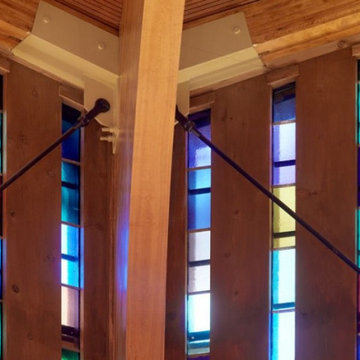
NCA restored the church designed by Pietro Belluschi in 1960. The project reinforced the structure, refurbished the 60′ spire, improved energy efficiency, and added chandeliers without altering Belluschi’s aesthetic. Extensive water damage warranted that all 136 of the 28′ clerestory frames be replaced with old growth timber. To ensure the original glass pattern was not lost, 2,960 pieces were labeled, cataloged, removed, cleaned, and reassembled. The restoration project earned a 2009 AIA RI Award for Historic Preservation, a 2013 AIA CT Award for Historic Preservation, a 2014 Faith & Form Honor Award for Religious Architecture Restoration and a 2016 AIA New England Honor Award for Preservation.
1