Software
Houzz Logo Print
brendan_of_bonsai

I really like moss

20 years ago

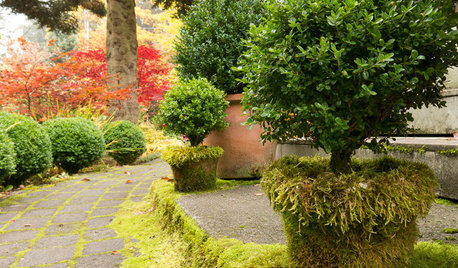
Moss under trees is something that I really love, in the anchorage zoo they have spruice trees with rolling mounds of moss beneath them and somtimes I go just to stare at the spaces between the cages/habitats, anyways I live in Colorado, which isn't exactly the most humid state, and so if I do a bonsai I am going to keep it in some sort of a small green house to keep the humidity up, what species would be suitable for this? I know it could be done with most Ficus and Fukien tee but I want a tree that looks like it belongs with the moss, any sugestions?

Comments (19)

  • 20 years ago
    last modified: 11 years ago

    Hi, I understand your loving moss - I do too, but you're asking for lots of trouble if you're planning to grow it in a greenhouse environment. Moss on bonsai (in pictures) is usually just laid on well to look good for the photo shoot, but then removed afterward, unless it's growing on a particular tree (e.g. English oak) that acquires it naturally by being outside in cool, misty locations. It does not belong (either naturally or esthetically) on ficus. You will have all kinds of trouble with it because you'll end up watering too often to keep the moss alive, and will kill the tree, or the tree won't get enough water because the moss is 'intercepting' it. In a greenhouse (indoors where air circulation is bad and conditions warm) you could end up cultivating all kinds of bugs and mold and mildew along with the moss too. Sometimes we have to accept not being able to grow something special because it's just wrong for our environments, and you might have that problem. If you do have some protected-from-wind place outdoors in a shady place, and put some rocks down there and water well every day, you might get moss naturally, but should leave it there and not try to bring it indoors.

  • 20 years ago
    last modified: 11 years ago

    Hello,
    Lucy you are right as far as northern type mosses are concerned. There is a species of Diacrinum which is used in terrariums and can grow in a greenhouse.
    As far as a bonsai for a greenhouse I would check out any tropical type tree that can handle temps down into the low 60s or high 50s and that is found in damp to wet areas such as a mangrove! This would be a very interesting bonsai!
    Click to see the tropical moss
    If you do go for a tropical type bonsai be sure to image it all!!!

  • 20 years ago
    last modified: 11 years ago

    TM - it's not that I'm concerned about cultivating the moss (whatever type it is), but that the tree will be adversely affected by trying to grow it right on the soil. I guess a few small pieces are ok, but not a mat covering everything. It rots trunks, for starters, and everything else I said.

  • 20 years ago
    last modified: 11 years ago

    I was thinking a matt that the major roots come up out of. Is there maybe a species of cypress that could handle it? Cultivating the Moss would be no problem, I would probably use some local species that could handle being dried out inbetween waterings, getting the moss is no problem, its what species of tree to get thats difficult.

  • 20 years ago
    last modified: 11 years ago

    Swamp Cypress-occurs in Florida etc.

    Moss does not rot a tree as there are many mosses that grow on trees. What your problem is is that the soil mix breaks down and this rots the roots of the tree. With a nice carpet of moss it is hard to recognize the problem until it is too late. Best resolution is to weigh the plant newly potted thoroughly watered and drained. As the soil mix breaks down it will become heavier. This is one way I have of checking my cymbidiums for bad soil mix though i do not use a scale! to protect the bonsai you may wish to grow it in osmunda root as this is a very durable and I think that most plants would do well in it plus some mosses grow on it. I know as I am growing mosses on osmunda!. Another way of resolving the moss-rots-my-plant syndrone is to let the soil mix dry between waterings though you risk some drought damage to the plant. So it really is just a matter of adjusting culture to suit the objectives you have in mind realizing the concerns that you must keep an eye on.

  • 20 years ago
    last modified: 11 years ago

    Please stick to orchids... bonsai are not the same and you can't blithely decide to let the soil dry out to grow the moss!

  • 20 years ago
    last modified: 11 years ago

    Are you talking to me or to terrestrial man? either way I think it could have been done in a more polite manner. And the worste you can really do by choosing the wrong soil is to kill a plant, or someone else can kill a plant following your advice.

    Anyways, a Bald Cyrpress could work, I was thinking about a monterey cypress, but it gets too hot in the summer in Durango.

  • 20 years ago
    last modified: 11 years ago

    brendan
    think lucy was talking to me.
    but maybe I did not elaborate effectively.
    So let me try this:
    I currently have an oak tree, Quercus chrysolepis-Canyon Live Oak, which I bought to bonsai but the plant that came is simply not up to snuff for what I had in mind. it is growing in a 3 gallon plastic pot and it has moss growing on the surface and up the stem of the tree. I do not water this tree all that much because i use a soil mix that tends to retain water so I would not have to water it so often. The moss is on its own. If I happen to spray it to keep it green then it gets wetted. But then it may get very dry before I even will water the tree!
    I know what Lucy is talking about because I have done the same in the past with a bonsai-grow the moss and not the tree! Most of the bonsai plants that I have grown need a very friable soil (one that is gritty and yet have some moisture retentive qualities). The water should drain out while watering if not it should be replaced. Many mosses grow best when the soil is kept moist though I definitely am trying to master a local California species that grows on concrete and will green up in winter and dies back in summer.
    So anyhow I grew the moss forgot the tree and the tree died on me! In looking at it I pulled it up and the base of the tree was all rotted!!!!! OOOOppppsss! The soil was being kept too moist for the moss and not dry enough for the tree! So lesson A in Grow the tree!!!!

    I hope you realize that there are alternatives to real moss. The stuff called Irish Moss or Scotch Moss are not mosses but are vacular plants that are moss like in appearance and these may be used as ground covers on a bonsai quite effectively. There are also others as well.
    Use Google Image and inquiry as to bonsai.

    And as far as orchid culture and bonsai culture are concerned: I do both and have found that in reality they are not all that dissimilar. And this is the great part about growing plants!

    Best wishes.

    PS: the only bonsai type subject I have growing is some small shrubby plant (I forgot the name) sitting on a bonsai plate. It looks great. I spray it daily as it can dry out fast. I even stuck some Polytrichum (a moss) in the soil but it is having a hard time surviving the bouts with dryness! If you would like to see let me know and I will image it and stick it on my website. cheers.

  • 20 years ago
    last modified: 11 years ago

    Here goes my "for what its worth". I use a lot of moss on my bonsai but know almost nothing about it. I just pick a moss from conditions similar to the ones I will provide to the bonsai in question. Moss from near a creek for a willow or moss from the crack in a sidewalk for a tree that I will water less. If that moss doesn't work I go get more. It looks good and works for me. z

  • 20 years ago
    last modified: 11 years ago

    I like the Buffalo Springfield too!!!
    Click here to learn more!

  • 20 years ago
    last modified: 11 years ago

    Did I miss something? did you maybe post in the wrong thread Terrestrial man?

  • 20 years ago
    last modified: 11 years ago

    Hello brendan!
    No I couldn't help myself when I say the phrase
    "for what its worth" posted by zburkett!
    Maybe I am aging myself but that was one of my favorite
    songs back in the late 60s! So I decided to see if there was a webpage for the Buffalo Springfield who originally brought out this great song of rebellion! Sure enough!
    Yo. If you check you will find the album named the same!

    I didn't check to see if they had any sound bits but if so take a listen. It really is a song of youth! Ah!!! I kinda of feel like Neil Young's "Time Fades Away" golly am I waxing poetic or drooling on my laptop!

    check out Neil's site!

  • 20 years ago
    last modified: 11 years ago

    Brendan,

    Another option, depending on the tree grown, pot style and your growing conditions, is to try some of the moss-like plants out there: Soleirolia soleirolii or baby's tears, cymbalaria murialis, or for dryer growers, some of the tiny, mat-forming sedums and other succulents.

    Also, the genus name for tropical club mosses is selaginella.

    Hope this gets some ideas started!

    Jim (another Buffalo Springfield fan)

  • 20 years ago
    last modified: 11 years ago

    I thought about Vascular plants, but the big problem with them is that the majority either have pretty well defined shapes or grow to big to really fit a bonsai without endless "lawnmowing" I did find the coolest Multiple tree planting I have ever seen a picture of when I went surfing for bonsai with moss the other day, in order to avoid hotlinking I'll just link below.

    Here is a link that might be useful: Slant slab

  • 20 years ago
    last modified: 11 years ago

    THANK YOU BRENDAN!
    What a fantastic sight!!!!
    Now when I look at my little plant on a plate I will only sigh!!!!!!
    Wo!!!! Think I better stick to mosses!!!!

    But back to the thread. The cypress and the mosses that are so extraordinarily displayed are cool growers not tropical. Being in Colorado is a plus except for your weather extremes in temps. You will need a place to protect from freezing and a place to protect from drying out!
    to compensate for summer dryness I would check out the misting systems used for reptiles! Some of these are very affordable and very adaptable for your purpose of maintaining humidity. to grow the mosses what you need is to provide cool water sprayed onto the moss. The bonsai in that great link may be one the result of laying down a stem and cutting off all the side branches except on one plane (my guess) and then the branch is layed down into the crevice of that hollowed out log. Moss is added on top! I do not know the plant but it may even root into the covering moss??? This would give the effect while you could protect the main area of roots from excessive watering. Again I would need to know the plant to really get much more detailed in guesstimating on what is going on.
    However, until you give it a shot you will never know. It might be fun to try a few bonsai with different species of moss just to find the one that responds best for your needs.!!??
    As for trees that do well with moss my favorite has to be Coast Redwood, Sequoia sempervirens. These majestic trees occur in forest that just drips with water and moss is on the trees and the soil is moist! If you wish to give it a shot I would find a large plant that you can hack down to a smaller height and down pot. These plants are really tough.
    I have started new plants just from the tips of branches that I stuck into a plastic wash tub filled with sand and covered by water. It was a fluke just to see if it worked and I have three plants to prove it!!!

  • 20 years ago
    last modified: 11 years ago

    Its Zone 6B, So redwoods to my knowledge are out of the question, same with Monteray Cypress, I might be able to do it with a black spruice, or a white birch, because they can handle some wetness and some dry heat, but I don't know if I could get a black spruice into a shape that would fit with moss (the way conifers go in bonsai just doesn't look like spruice), more thought is needed.

  • 20 years ago
    last modified: 11 years ago

    Moss on trees....watering moss.....moss and ferns....moss and bonsai...

    Whether a moss will grow on a given tree depends on the moss and depends on the tree. Some mosses are very selective on what they will grow on. Grimmia, the moss that grows on rocks, I doubt will ever grow on a tree. Brachythecium the common branched spreading moss will often grow on anything. Next is whether the tree will allow the moss to grow. Some tropical trees I believe can discourage growth. George Schenk in his book Moss Gardening said to transplant moss from like surfaces to like surfaces. If a moss is growing on a tree it will probably transplant to growing on another tree.

    Watering moss oftentimes implies drenching the moss and thus flooding the substrate. On a cool morning with the dew on the ground look at some moss. That may be all the moisture the moss needs for that day and the next. I mist use hand misters or pump sprayers when I get the inclination to "water" the moss. Yet if you want to water the tree and not the moss just pour water in a few areas, or pull aside the moss and then later replace it, or immerse the pot in a saucer of water. In theory you could grow tropical moss on the soil surface in a planter with cactus. Aesthetically pleasing- no! But easily done. Misting daily for filmy moss with no drenching of the soil would work. Generally a slight misting for many common mosses every two to three days with no other moisture would suffice for most common mosses. Last summer I kept several species on grit or dirt in clay saucers on my enclosed back porch in south facing window. If I wanted good growth I misted daily but generally misting every two to three days was all I did. Fertilizing every two to three weeks one quarter strength acid fertilizer was given. I cannot use my municipal supply water so I use distilled or rain water. Works great.

    Moss and ferns are related and very compatible. If you choose to grow the filmy ferns and need a high humidity green house there are many filmy mosses that will do well there. Yet some arid mosses like Grimmia cannot tolerate extended periods of high humidity and that is understandable. Schenk mentions this and gives several examples in his book including the Royal Botanic Garden in Edinburgh.

    Moss and bonsai.

    Chapter eleven in Moss Gardening is titled "Bonsai Mosses". Schenk gives several species he recommends. What he doesn't do and what drives me is to answer the twin questions; A, how do you identify them and B, where can you find them. His bonsai pictures with moss are great but it is very difficult to identify a moss from a picture. Just as even the best seamstress would be hard pressed to identify different fabrics from pictures. I have said it before and I mention it again; some of the best and easiest bonsai mosses to acquire are the sidewalk mosses; Bryum caespiticium the deep green sidewalk moss and the other Bryum argenteum the silver sidewalk moss. Sunday my wife and I went to a large horticultural greenhouse operation. The owner and I have talked before. He said he gets requests for moss but can't fill them I said "Quit killing the moss you already have and it will grow wherever you want". He uses an algacide in his water. I went outside and returned with B. caespiticium and another Bryum I found on the west side of his greenhouse. I then led him to a common pathway inside his greenhouse at the edge of which was growing a 1/16" upright, very thick green moss that had a nap softer than velvet. I do not know the type of moss but I told him that he obviously is able to grow it. Look around in the environment that is compatible with the plants you want moss to grow with. Look carefully! Last Friday May 4th I spent the day in the field with my bryologist friend. Literally at the end of the day we went into untilled fields looking for moss growing among last year's corn or bean stubble. What we found was amazing. I am leaving next week for a six day bryology seminar. After that I will start posting pictures with more information.

    Rick

  • 20 years ago
    last modified: 11 years ago

    Hello Rick!
    How was your recent trek? Snag anything exciting?
    Recommend you set up your own website and then link the images from it. That way you have all the control!!!
    I will be scrapping off some of my local sidewalk moss and seeing if I can cultivate it??? it is amazing what they can grow on!!

  • 20 years ago
    last modified: 11 years ago

    terrestrial man

    Trip was great. . I collected a nice thallose liverwort at the edge of a stream bed. I hope to grow it. The place I collected had an undercut bank that the next big rain will probably cause to capsize. So much erosion along little stream beds in the midwest.

    I have been waiting for a sunny day to take pictures and we have had none for almost two weeks. I will take your advice on web site development. Spring is the best time for collecting.

    Rick

Sponsored
The Steele Group
Average rating: 5 out of 5 stars1 Review
Industry Leading General Contractors in Franklin County, Ohio