Software
Houzz Logo Print
chueh_gw

Why pansies from seeds grow leggier?

17 years ago

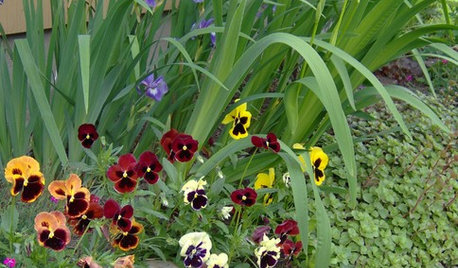
I have pansy plants bought at a store as well as grown from seeds by myself at the same flower bed. I notice that those bought at the store look very compact, whereas those from seeds I sowed grow leggy. The leaves stay pretty close together, yet the stems of flowers are tall. Why is it? Thanks

Comments (14)

  • 17 years ago

    in the greenhouse they have perfect light.. perfect humidity .. perfect watering. and perfect fertilization ....

    in the house.. you probably have

    insufficient light...

    insufficient humidity ...

    imperfect watering ...

    maybe you got the fert'ing right ...

    probably the biggest issue.. when things get leggy .. is lack of proper intensity of light... aka.. lack of sunshine ...

    we can mess with indoor lighting.. but we rarely get it right.. or intense enough ...

    ken

  • 17 years ago

    The pansies are outdoor in full sun, where no tree or building shadow cast over them. I don't understand why they still get leggy. I guess that I should move to Miami, LOL.

  • 17 years ago

    Big commercial growers usually treat annuals with a growth hormone or other treatment which helps keep them bushier.

  • 17 years ago

    It's not perfect this & that.

    If you take an average of the ratio of NPK that a huge % of plants use, you'll find that they use it in a ratio of approximately 10:1.5:7. Since fertilizer formulas report phosphorus as P2O5, not actual phosphorus (P), and potassium is reported as K2O, not actual potassium (K), to convert P2O5 to actual P supplied, multiply the P2O5 value by 0.43, and to convert K2O to actual K supplied, multiply the K2O value by 0.83.

    I said all that, so I could say that .... after the math is done, plants use nutrients in something extremely close to a 3:1:2, NPK ratio. After THAT is said, then I get to tell you that bedding plants are usually fertilized at a 2:1:2 ratio, instead of the 3:1:2 ratio they would be happiest with.

    What does this mean to the plant and to you? Well, the plant is being starved for N at the 2:1:2 ratio, so vegetative growth slows, but growth of reproductive organs (blooms) continues. The result is a short, sturdy, bushy plant that often 'already' has buds and/or blooms on it.

    Additionally, greenhouse operations usually use N in nitrate form as a 'finishing fertilizer'. This form of N also tends to shorten internodes and make the plant sturdier and more compact. I bet YOU are getting your N from ammoniacal forms or urea, which tends to make plants stretch out.

    Al

  • 17 years ago

    That's a hard act to follow, Al...

    I was going to suggest that the greenhouse growers may also be nipping theirs early to create bushiness. Maybe it's more complicated than that.
    I know that the 'care' provided by the greenhouse grower vs what I give them (not so good in the pinching back dept) is significantly different. I need to be more diligent about it at home.
    I've found this to be true with Petunias. The GH has nipped them all nice & tidy, and I bring them home and not realize that they have been used to a regular nipping to keep them bushy & tidy, and I let them go, and they sprawl all over the place getting leggy & unkempt.

  • 17 years ago

    No, you're right. Pinching is an effective and oft used strategy, but it's usually done chemically via a growth regulator application.

    Al

  • 17 years ago

    Oh! a chemical peel vs. a face lift. Gotcha!

  • 17 years ago

    That's so interesting! I also found that that greenhouse plants have more of pure and unmixed look of colors of flowers. The ones grown by me are more of mixtures of colors on one single flower itself and the entire plant. One plant can have flowers ranging from cream white to pink. Very interesting. Greenhouse flowers look more consistent in color and intensity.

  • 17 years ago

    Growing temps, humidity and light levels play a part in bloom and in some cases foliage color, but so does pH. We're all familiar with Hydrangea (even though not an annual) so I'll include that in what I say.

    Three different pigments - chlorophyll, flavonoids, and carotenoids - mixed in different proportions, give color to plant blooms. By mixing and matching the three pigments, an endless variety of colors can be created. E.g. most reds are the result of mixing orange carotenoids with magenta flavonoids. Cellular pH (not to be confused with soil pH) has a profound effect on plant color.

    Even most experienced gardeners think that lowering soil pH produces blue blooms in hydrangea. Technically, it is only a part of the equation. Lowering soil pH makes aluminum ions more readily available for plant uptake. The aluminum is then available to bond with pigment compounds (anthocyanin, the colored component of flavonoids) changing the way color is reflected. Our perception is blooms changing from pink to blue.

    The anthocyanidin group is what makes apples, autumn leaves, roses, strawberries, and cranberries red. They make blueberries, cornflowers, and violets blue. They also make some grapes, blackberries, and red cabbage purple. One of the things that changes the color of anthocyanins is the level of acid or alkali (the pH) in the cell surrounding the pigment. As cellular pH increases, the pigment changes structure and reflects different wavelengths of light. The anthocyanin reflects the bright pink portion of the spectrum in acidic cell environments, reddish-purple in neutral and green in more alkaline cells.

    Since actual nutrient availability and possible nutrient "lock-up" or overload due to soil pH can also have an impact on cellular pH, it's easy to see how the fact that greenhouse operations are able to maintain relatively tight control over near perfect soil and nutrient solution pHs affects the brightness or intensity ..... perhaps consistency, too, of bloom colors.

    Al

  • 17 years ago

    Wow... that's why we have people constantly STUDYING and doing research on those things to have a better control of what people want to produce. I had never realized how much it is involved to get a plant the way people want. Amazing!

  • PRO
    17 years ago

    Seed grown plants are variable. Store bought plants are clones of plants that have been bread to specific standards (colors, compact growth, etc).

  • 17 years ago

    Sorry, Clematis- Pansies are one of the few seed-produced crops we still grow. We just have access to newer varieties and types than home gardeners. We control height by using DIF- a simple technique of lowering the greenhouse temperature 5-10 degrees at daybreak for 3-4 hours. Plants make new cells at night and expand them when exposed to light. A plant does 90% of its growth for the day in the first 3-4 hours of light. The cooler temps slow the cellular elongation. We can also initiate earlier blooms on small plants by applying a specific growth regulator or by providing additional artificial day length by lighting. Right Al?;)

  • 17 years ago

    I've found that the cooler and brighter the environment is the less leggy seedlings become.

Sponsored
NME Builders LLC
Average rating: 5 out of 5 stars2 Reviews
Remodeling Company in New Albany, Ohio