Software
Houzz Logo Print
jollyrd

design for winter color

16 years ago

ok, I posted this in Winter Garden section thinking it would be the appropriate section. But I thought to broaden the circle and ask you too. Thank you

http://forums.gardenweb.com/forums/load/winter/msg0118224830942.html?1

Comments (26)

  • 16 years ago

    Sorry, what is the question?

  • 16 years ago

    There's a book called "Fallscaping" by Ondra and Cohen. I attended a talk by Cohen this summer; she's pretty awesome, and her book's on my shelf. It has some good recommendations for "off-season" interest.

    If you're in Richmond, are you near Dirty Hands Garden Center? Not sure if they're open this time of year (I'm way north of you), but those are some darn knowledgeable folks. May be worth a visit.

  • 16 years ago

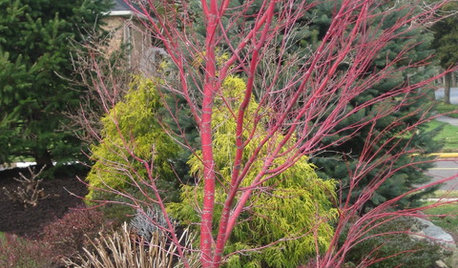
    Winter flame (redtwig dogwood) in front of a evergreen vines covering the wall and gold/yellow conifers in front of the wall.

  • 16 years ago

    Emerald Gaiety euonymus (white and green with deep pink appearing in winter) in front of Shishigashira camellia; Harbour Dwarf nandina nearby. Hellebores (late winter/very early spring) . Evergreen (in my zone) ferns. Several broadleaf evergreens, including variegated pittosporum--cuttings are great for winter flower arrangements when combined with red berries, pink camellias or a few red blooms from the store. (Can you tell I have areas of shade?).

    2 approaches I've used: (1) sporadic winter green and color from plants interspersed in the garden,as in the fun of a camellia blooming intermittently between cold snaps, or the ferns that are part of the garden background and make spots of green when other stuff is dead; and 2)devoting a couple of areas to groupings (vignettes) that all do their thing at about the same time in winter.

    When I can, I try to put these where I drive up or look out a window so I see it frequently to help with my winter SAD! In warm weather, I still love to have stuff right up front, of course (so many plants--so little room!) but I am much more likely to be "out" in the garden and getting the good from interesting things in the far corners, whereas in the coldest parts of winter I tend to hole up.

  • 16 years ago

    Great, I have something to work with
    I never heard about Dirty Hands Garden Center - they are a bit out of my way, but I will try and go there once.

    I might have confused some of you- I am not trying to plant in front of the wall - that would be literally on the driveway. I am trying to plant in the earth that the wall is holding, about 4-6 feet deep before the lawn and the existing trees line starts

    Thank you all!

  • 16 years ago

    I'd look for a copy of Dan Hinkley's Winter Ornamentals, available through various online sources or perhaps at your local library. Although part of a "gardening in Cascadia" series that is directed at the maritime Pacific Northwest, much of the information is equally applicable to other areas of the country and certainly to the Richmond area. An excellent discussion of a wide range of plants that offer winter interest.

    If you are not familiar with the author, Dan Hinkley is a world reknown plantsman and plant explorer and was the founder of the original Heronswood Nursery here in WA state. He is responsible for the introduction of many great garden plants and is much in demand as a speaker and plant educator around the world.

  • 16 years ago

    What have you seen at your local garden centers that interests you? Sure, you might want to order something more exotic, but the garden centers allow you to see what's actually doing what when and with what else.

  • 16 years ago

    I don't understand your site explanation, but planting on top of a wall will only emphasis it and the driveway. I don't know if you want a curb appeal type of approach, but typically the driveway should be subordinate to the more desirable focal point of the house and front door.

    If these planting will serve a purpose of traffic control to prevent wayward pedestrians from falling over the wall then they would be useful.

    Just some thoughts, and good luck!

  • 16 years ago

    I am not dealing with any traffic, pedestrians, or stray animals issues - we are way deep in the country on a private road.

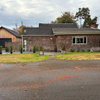
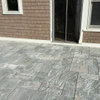
    The retaining wall had to be put in because the house is up on the hill, the access road is lower, so there is a certain amount of incline from the road to the house. It is rather small wall - it starts at the road with being 4-5 bricks high and only one brick high close to the house - sort of tapered? the immediate grounds around the house is at least 3/4 acre, total land is much larger, so I am not afraid of over-planting.

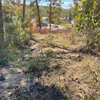
    Here is look (spring 2008) from crape myrtle on to the road
    {{gwi:7210}}

    {{gwi:7212}}

    {{gwi:7214}}

    On one hand, I would like to block out the view of the garden - so that you dont see it immediately as you arrive at the driveway. Hence - I need shrubs on that side of the driveway. Also, I want the entrance area to be as pleasing as the rest of the property would be. Right now -after the tulips and after the crape myrtle blooms, there is nothing to look at but grey bricks and brown leaves. But I know I have birds all around - I had "red head" wood pecker come in this morning - so pretty to see him on the snowed branches!

    Local nurseries -- sometimes I feel they sell (or stock) all the same stuff that I see at houses all over the area, so looking for something different by asking questions here does not necessarily mean I am going too exotic. I like to do homework online - getting images and information about plants, and laying the plan and then go shopping - local or online. I just never liked to "be like everyone else" - if I chose to plant a hosta, it will be a unique hosta - not the one I see at 50 houses in the area.

    I like the beautyberry; Hellebores ; Heucherella ; red twig dogwood - as long as it stays as a shrub and not full grown tree; Sambucus Black Lace Elderberry

  • 16 years ago

    Man, those blocks be ugly.

  • 16 years ago

    Yes, I'd take out the wall and just have a more flowing and soft contour instead.

  • 16 years ago

    Oh there is no dirt in front of the wall.... I took a quick look at the photo from the other forum and thought the gravel was mulch! At any rate, the picture definetly helps explain the situation.

    The wall is so highly textured that it is almost distracting from the house and beautiful surroundings, so some plantings would definely help to tone it down and bring it into harmony with the surroundings. Probably easier to do with spring and summer plantings than plants for winter interest.

  • 16 years ago

    Billowing plants can disguise a multitude of sins and no doubt these blocks are less prominent in the season but as a design project "hide those blocks" is a non starter. A one time guru of mine E.A Bowles once said "show me your garden in February" meaning that it is not enough for it to look great at one time and crap at another (may he forgive me for my updated interpretation).

  • 16 years ago

    If the blocks can't be hidden, can their appearance be altered and made subtler? Can the landscape design experts here advise the OP about ways of resurfacing them or improving their appearance that would be cheaper than replacing the wall entirely?

  • 16 years ago

    Sure! The blocks can simply be removed. As stated, the change in grade/slope is not significant enough that it requires a block wall - contouring the slope and planting it to maintain stability/avoid erosion will achieve exactly the same result without the distraction of the unsightly blocks.

    Resurfacing the wall would be equally if not more expensive than replacing it and budget constraints are typically why these blocks are chosen in the first place.

  • 16 years ago

    Maybe I can re-phrase my earlier comments to be more specific.

    I was not suggesting you should not be "exotic". I was asking for information as to what types of plant forms and colors appeal to you. That can include the reverse--some combination or shrub you loathe. That would be a good starting point; e.g., re the hosta comment--the point for me would be not only to have "something different" but to achieve a certain goal that requires going outside the box to get a color or leaf form or slug resistance. But it might be for you--you might love hollies, but are just determined to own something not available locally. That's fine, but need a starting point. If you go to actual nurseries that keep a large stock over winter, you'll see a fair variety of things that at least get you started. Like berries? Like purple? Hate forsythia? Like broad leaves or conifers or combinations? Like dramatic color or appreciate subtle color variations?

    And then hostas aren't for winter color, so again, even though I know it was only an example of your tastes, I was admittedly trying to steer you toward using some local examples in WINTER gardens--including focusing you on what about the "stuff I see at houses all over the area"--what exactly does not appeal to you about that?

    Sometimes a discussion can help you "see" what it is exactly--it might not be the shrub species but the pruning style (some things look so different if left natural or pruned properly or used in different location). Or it might be everything is "all green". Or whatever.

    You can (and did) get some suggestions of just random things that other folks like or have. And now with your added photos there's some good focus on the "bones" and design elements that may carry more weight in overall effect than the actual plants you use. But it's also fine to make a list of plant forms or colors or characteristics that you really love, because hey, it's cool to drive up to a gorgeous blooming whatever or walk by your cheery holly berries at Christmas. That would be part of your "wants" or goals list and eventually fit into the design.

    So, I'm gigging you a bit on your comment on how all the local stuff is so tiresome, because I think there's a homework-type of step in really knowing the locally available species and what they do, how they grow, that helps you get more out of these discussions, including being a basis for researching other options on the 'net or in plant books.

    Anyway, at this point it is a useful tactic to step back to the fundamentals of how your garden bed relates, or not, to the house and drive and see whether modest adjustments in some of that will help you down the road in achieving your goals and then the plants and shrubs fit into that.

  • 16 years ago

    what is so ugly about the blocks? we tried to give the wall a soft curve for more soft look and it looks nice in "real view" . I like the fact that they are grey -any plant will stand our and have sharp colors next to it.

    Ok, I Like purples, deep green, red and yellow. And I want to have some color / interest in winter. A red twig dogwood shrub and some winter berry shrub shounds like a start to me.

  • 16 years ago

    Probably a lot of people are more accustomed to working with or like real stone or stone veneer, instead of more common big box store blocks. It is a personal preference really. I myself don't really like retaining walls in generally no matter what they are made of... I'm a contour person, but that's not important.

    You don't need to cover up the wall, but I do think the strong pattern (almost reminds me of a checkerboard) provided by the wall is very geometric in nature and maybe more fitting to another style of landscaping than what I percieve as a more naturalistic setting/style.

    At any rate once the plants are in who will be looking at the wall?

  • 16 years ago

    I will be looking at it from the house/front porch, and every time I come home, or when someone comes to visit us. The wall is facing our own woods, so I guess some deer might look at it from afar - they wont come close b/c of the dogs

    Thank you all, I will try to post follow up when there is any progress made

  • 16 years ago

    I don't like the blocks karin and you do that's all. no need for the snipe, I criticize the blocks you criticize the bloke.

  • 16 years ago

    That might beg the questions, what is the crowning jewel in this display? And is the whole greater than the sum of the parts or the other way around?

  • 16 years ago

    Okay, I will accept the fact that the wall stays. Reading Rochelle Greayer's blog, Studio G, this morning I realized that she has come up with the perfect name for man made concrete products used in landscaping..."Ikea type gardens".
    Love that description!

    Part of me mourns a missed opportunity in this landscape; laying back the slope, planting rocks, creating a rock garden with low evergreen perennials such as heaths/heathers, Bergenia, early spring crocus and snow drops. So many possibilities which blend into plantings placed above. But, that is not to be.

    Planning for this garden area should begin at the edge of the woods softening the abrupt transition from tall to short. It should be deciduous and bushy. My suggestion would be three or four Cornus kousa chinensis which remain branched to the ground, extending out toward the pine tree trunks. These would soften that rear area even in winter. Beneath these in shaded areas for winter interest plant Sarcococca hookeriana humilis ( the fragrance will waft through your entire yard) and Helleborus orientalis.

    From that point on toward the wall if you live in Zone 7 there are many evergreen specimen plants that grow to about 4'-5' (or can be pruned) to consider. Pieris japonica, Chamaecyparis obtusa 'Nana Gracilis", Azaleas if there is semi-shaded spots, Ilex crenata 'Helleri', Leucothoe axillaris, Mahonia aquifolium, Dwarf Nandina are some examples. I might try baby sitting a few Daphne odoras in hopes that they would grow happily in that situation. It appears to have good drainage and they may adapt. Along the wall, tight to the edge consider Santolina virens which will splay out a bit over the wall, remain low. An underused plant with an informal appearance which has many uses.

  • 16 years ago

    wonderful, thank you, I really love a number of suggested plants. You guys are so helpful, - once you get over the "ugly-ness" and the fact that I am sticking to my rocks/blocks. Sorry, replacing them is not in my budget or to do list. LOL

  • 16 years ago

    Zone 7 has winter?! Not that I thought it was the tropics. Guess it could get pretty blah because there would very rarely if ever be any snow to brighten stuff up.

  • 16 years ago

    Long Island, NY is zone 7 - I bet they have winter.