Software
Houzz Logo Print
zephyrgal_gw

what to do with slope?

12 years ago
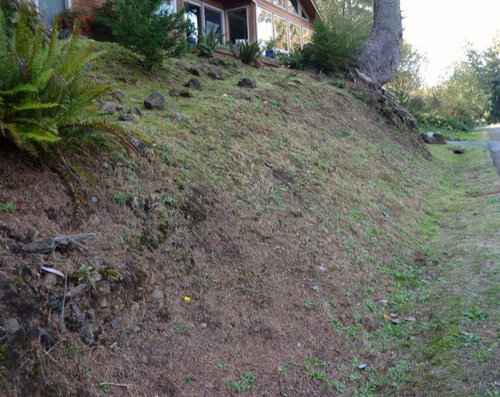
Thinking of planting native shrubs, salal, redtwig dogwood, or? The slope is rather steep and rocky yet irrigation is available. Facing East and surrounded by mature Sitka Spruces. Currently, a grounds crew weed eats during the summer. Located in NW Oregon. Any ideas? Thanks in advance.

Comments (24)

  • PRO
    12 years ago

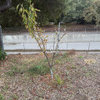
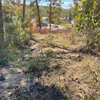
    Can you submit a picture of the slope showing the house as a backdrop?

  • 12 years ago

    OK Yardvaark, perhaps this will help.

  • 12 years ago

    whats the base soil type ...

    and is that huge trunk.. the sitka you speak of???

    regardless of what you plant.. how will watering be addressed ...

    seems like there are some preliminaries to address... before we get to plant selection ....

    is there any concern of failure of the substrate??? .... i cant think of the right terms ... i blame the headcold... any chance that tree will fall over ... and damage the house???

    ken

  • 12 years ago

    Ken, the soil very rocky, clay based but drains well, no summer watering yet available from hose. Yes, the huge trunk is a Sitka but was topped to keep it from falling over, don't think it will harm the house, although, if it ever did come down it would most likely be from erosion. I'm still leaning on interspersing with natives. Without a huge expense and some engineering and depending on materials used, I think using natives would be the most economical.

  • 12 years ago

    I would use natives there as you are already thinking zephyrgal. Fern, vinca, oregon grape, salal, lambs ear, clover, fescue, even consider a rhody or two.

  • PRO
    12 years ago

    "is there any concern of failure of the substrate??? .... i cant think of the right terms..." "craps out" ... if you want to get technical.

    "I think using natives would be the most economical." A 1 gallon plant is a 1 gallon plant. It's not likely that natives would be any cheaper than any readily available landscape plant. Plants that spread sideways -- vining -- will require fewer, be cheaper. Something low growing would be nice.

  • 12 years ago

    Okay, (thinking ahead) so thanks to the 'mountain goat' method of planting a hillside we now have clusters of native plants or vine type growth, some tall enough to be subjected to the forces of gravity, interspersed with unwanted grass and weedy growth which no one wants to pull by hand....let's just call it a mess. In time it will be controlled just as it is now, with a weed eater. Also, this slope has taken years to stabilize, but still appears somewhat fragile. Solution with limited dollars expended would be appreciated.

    Tough question! My inclination is to do nothing. Or, to figure out a planting that can handle close weed eating treatments as needed for easy maintenance and appearance in your climate. The tough violet plant, a low weed in many yards, could be used in this situation. Bounces back from severe trimming after it blooms. Seed tossed out on top of slope would fill in after a few years. The generous folks here on GW would be a good source of violet seeds.

  • 12 years ago

    Thanks everyone for their ideas. As a seasoned gardener, I'm familiar with plant habits and selections. Nandina's idea's of leaving the slope alone and introducing violets is a good one and coincidentally violets have already been scattered with more to come. Granted planting too many varieties would look busy and cluttered not to mention the difficulty in getting the plants in the ground in the first place. Not a fun project. Thanks again to all whom have responded.

  • 12 years ago

    i have some slopes... but not that steep ... IMHO ... watering with a hose will not be an option ... you need to think of some engineered drip irrigation lines ... could do it all for not more than a hundred bucks ...

    is a retaining wall out of the question???? .. obviously.. a heavy expense ... and not necessarily the whole height ... maybe just half ...

    another budget buster... i would think about being done with the sitka ... topped trees have a limited life anyway ... i was worried more about it falling AWAY from the house.. and taking the slope and foundation with it ... but that is all speculation .... i would just cut it to a stump ... kill the stump [are those new trees near it coming from it??] .. and spend the decades watching it rot away ... what i call.. a free show of ma nature ...

    if you did the 1/3 wall ... you would have a flatter spot.. 2/3 down the slope.. where you could plant smaller shrubs.. to hide the slope.. without actually planting on the slope ...

    i had another idea.. but the headcold made it wisp away ... like smoke on water.. lol ...

    trying to help you think.. outside the box ...

    ken

  • 12 years ago

    Thanks Ken, in spite of your headcold. We have thought of a retaining wall however the expense may be out of budget. We're aware that topped trees have a limited life span and not always a favored practice but viewed from indoors it looks as though the tree has never been topped. Sort of a personal visual perspective. You may recall from past posts in the Conifer forum that this particular spruce produced a witches broom which I sent cuttings to Edwin and others that requested. Unfortunately it was not the season for grafting yet some tried and some failed. I'm still waiting word from Edwin whether the scions he shared have taken hold. It is nice and much appreciated to receive ideas and suggestions from you and others.

  • 12 years ago

    If that sitka's been topped, I agree with Ken and get rid of it. The shape of the trunk shows that there was some ground movement after it started growing.

    Another plant you might want to look into is kinnickinnick. It's native and low growing.

  • 12 years ago

    I see opportunities rather than problems, but certainly you'll want to use plants that require little pruning and will suppress weeds with dense growth. Various Arctostaphylos cultivars such as A. uva-ursi, densiflora, etc, perhaps mixed with ferns such as Woodwardia fimbriata and Polystichum munitum. Taller accents such as Mahonia lomariifolia, Ribes sanguineum, Nandina domestica compacta. Flowering perennials such as Bergenia, Darmera peltatum, Anemone hybrida 'Honorine Jobert', Iris confusa 'Chengdu'.

  • 12 years ago

    the reason i focus on the giant.. is that you dont want to dump a load of money on a wall ... then have to near destroy it... to remove the other ...

    my point being.. if a wall ever comes into focus ... then think long and hard.. about the tree removal FIRST.. eh??

    you didnt answer what the little conifers are near its trunk??? i am not familiar with sitka ... are they one of the exceptions to the rule that most conifers dont rebud low down???? .. too lazy to look it up myself ...

    ken

  • 12 years ago

    Ken, huckleberries and ferns are at the base of the sitka spruce and in the second photo, to the left, is a cryptomeria. Yes, indeed, if ever a retaining wall was to be built then the tree will need to be addressed.

  • 12 years ago

    one last question... being a flatland MI boy ... do you have a spectacular view out those windows???? .. i hear you have some mountains out WA way ?????

    ken

  • 12 years ago

    Ken, I look out my windows and see the Nehalem River and beyond that, the coast range. Behind us, as the crow flies, is the Pacific Ocean. At the end of our road is viewpoint and from there I see the river and bay and the ocean. Across the bay is the little town of Wheeler where I have planted my gardens that I've posted in the Conifer forum in times past. Any more questions?

  • 11 years ago

    I would say ground cover juniper with an optional dry stack rock wall, using free local rocks, which I see some in your picture to put together. Wouldn't have to be high, just enough to add some hard scape and separate the bottom section.

    Outside of a retainer wall, it's my opinion that this is the best option for aesthetics, maintenance (juniper is dense enough to shade weeds), and erosion control. I know you know your conifers, so you could pick from the wide assortment of horizontal juniper, or if sunlights an issue, you could substitute with Microbiota decussata.

    Not sure what that green upright conifer is at the top of the hill, maybe it's something unique. If not, I think you could really make this picture pop by adding a yellow conifer there. Skylands or Firefly if you were concerned Skylands would get too big... Then maybe adding a weeping maple like red dragon...

  • 11 years ago

    SC77, nice rendition and illustration. The conifer in question is a Cyrptomeria and there is already a weeping Japanes maple next to it. I have thought of evergreen groundcovers and I do like Microbiota decussata's. It is a very steep slope. So far I have intergrated ferns, salals, Japanese forest grass and a few ground hugging perennials. There's more to be done, it will just take time, materials and labor. Thanks for your suggestions.

  • 11 years ago

    You might lilke investigating a great hillside ground cover called Rubus calycinoides.

    Here is a link that might be useful: http://www.google.com/search?client=safari&rls=en&q=rubus+calycinoides+'emerald+carpet'&ie=UTF-8&oe=UTF-8

  • 11 years ago

    Thanks devient. I am familar with Rubus, never thought it was attractive, however, it would work for my conditions. I appreciate your suggestion as well as everyone who has contributed thus far. I have checked out your website and respect and admire your designs and knowledge. The GW forums are a great resource for information and sharing of ideas.

  • 11 years ago

    zephyrgal,
    thanks for your kind comment.
    I suppose it all comes down to the eye of the beholder.
    I used rubus calycinoides when I need a tough, evergreen, deer toleran, textural green wide spreading groundcover.
    I like the crinkly dark green leaves and how it contrasts well with tall spiky plants and lighter green colored plants.

    I just used it as a bank cover along with yellow japanese forest grass and red tinged berberis .
    Attached is another garden where I paired it with lysmachia, black mondo , some stipa and olives. ( disregard the lights on a stick )

  • 11 years ago

    Weeding the Rubus can get old quickly as it is covered in hooked prickles.

  • 11 years ago

    Ack! I wouldn't want that! Thanks for update, bboy.

  • 11 years ago

    Good point to consider .
    I have never found this to be a problem or have had maintenance gardeners or homeowners complain or expressed concern. The only response over the years has been appreciation for the efficient groundcover capabilities , fairly low water use, deer tolerance and low maintenance abilities.
    It's considered a workhorse of a groundcover in our area but I understand that different folks will have different likes and dislikes.
    In the link below another fellow landscape designer from Marin , Davis Dalbok of Living Green, used it successfully on a modestly steep hillside .

    Here is a link that might be useful: core ten zen garden. Living Green