

'Every Generation Makes Its Own Mark'
The above headline to a NY Times article today set me to thinking. What 'mark' did 20th century landscape designers contribute to the multi-faceted endeavor we call Landscape Architecture? What new ideas were developed? Or, was the century just a recyling of the 'old' passed down through the generations?
Comments (25)
 18 years agolast modified: 11 years ago
Nandina,
It is wonderful to see you posing such a thoughtful question. I can only claim to have worthwhile remembrance of the last half of the past century one that I have mixed emotions about. However, I would say that 20th century landscape designers took positive steps in the right direction. No doubt, the Internet has exponentially accelerated this progression.
Rather than saying that the century was just a "recycling of the 'old' passed down through the generations"  a case which might be made for the first half of the century  it would be more accurate to say the second half of the century began to objectively examine, filter, modify, embrace and in some cases, reject the old. Thankfully, we have finally begun to see the fallacy of attempting to recreate a British paradigm in regions where the climate and horticultural conditions are not even remotely similar.
In truth, I lament having never acquired a sufficiently robust command of garden design history that a formal education in this area of study would have availed. I suspect that my perspective encompasses only a small sphere. However, I am delighted by the progression I have seen take place during my lifetime. Rather than aspiring to be something and someplace we are not, we have begun to celebrate both who and where we are.
IronBelly
Related Professionals
Joplin Landscape Architects & Landscape Designers · Lawrenceburg Landscape Architects & Landscape Designers · Davenport Landscape Architects & Landscape Designers · Boston Landscape Architects & Landscape Designers · Chico Landscape Architects & Landscape Designers · Bozeman Landscape Architects & Landscape Designers · Cheyenne Landscape Architects & Landscape Designers · Huntsville Landscape Contractors · Joplin Landscape Contractors · Fayetteville Landscape Contractors · Houston Landscape Contractors · Bismarck Landscape Contractors · Forrest City Decks, Patios & Outdoor Enclosures · Oshkosh Decks, Patios & Outdoor Enclosures · Sacramento Decks, Patios & Outdoor Enclosures- 18 years agolast modified: 11 years ago
Regional approach to landscape design has always existed, and the feeling that a British garden paradigm has been the prevailing trend is not borne out either this century or the last one. The thing is, regionalism doesn't translate across the country, and I think few people are aware how much diversity of landscape design exists, both in the USA and the rest of the world. We all tend to get stuck in our own little worlds and comfort zones.
I'd like to think that an attempt to incorporate more sustainable and ecological design principles is a growing change in landscape design, yet I would be hesitant to see this become too heavily linked with a natives only approach in planting choices. My particular bias reflects my own interest in landscape design as art, and a diverse plant palette from around the world is part of what makes it interesting for me as a designer. My own vision of landscape design wants to incorporate international influences and shape them into something that also becomes regional in the context they are incorporated here at home. I don't think it is any different than the influence of Japanese and Chinese garden design upon the European garden traditions which evolved from the Italians to the French to the English. Garden styles correspond to cultural attitudes toward nature and cities, and how we see ourselves in relation to nature. I would like to think that the efforts to preserve habitats in their wild state in close proximity to urban areas is an ongoing trend that can be expanded, while urban landscape design can be allowed to continue to express man's desires to create more diversity of species, which seems to be a recurring desire since times past. Humans seem driven to cross pollinate the world and create it in their own image, and it would be painful to me if I couldn't contribute along this vein. My personal take on landscape design at this point in time is that there is a very real divergence of opinion on whether this should continue. I find it fascinating to see the new regional landscapes that result as part of this introduction of new species into the landscapes, while also recognizing the need to preserve intact the native habitats which surround our cities. Will this be perceived as schizophrenic thinking in the future, or does it represent a balanced view of what is and what can be?
I feel a great sense of wonderment that I can grow plants in my own garden that have become extinct in the wild, such as the sublimely beautiful Deppea splendens of Chiapas, Mexico, and realize this will not replace that lost wild habitat, but may have future value to someone else if I am helping to continue the gene pool of this plant, much as Gingko trees preserved in temple gardens of China are our only living link with a species extinct in the wild for centuries.
- 18 years agolast modified: 11 years ago
In my area there has been nothing that has so changed the suburban landscape more than the use of decorative mulch.
Rather than the developing environment of yesterday, we now see a decorative surface treatment of our outdoor spaces. I suppose it fits in a buy it, use it, throw it away sort of philosophy. It is the instant garden, created in the same way that a garden show display is done.
Such landscapes have a neat finished look as soon as the last contractors' truck pulls away. But to me, it has the look of a woman with way too much makeup. And like makeup the mulch will need to be reapplied on a regular basis. The lawn will never get its roots into the wasteland soil and will need a sprinkler system and precision application of chemicals to sustain it. Dead plants are replaced as needed.
Sometimes this surface treatment is touted as low maintenance. But I have seen them after only a couple of years where the "makeup" was not reapplied and they have become an ugly mess.
Perhaps it's the nomadic life style so common today that drives the landscape fashion. What matters is today, for soon we will be off to a new home.
I drive by the impressive new homes with the neat little plants that bob like flotsam on a sea of mulch and shake my head. It's good that I am not a landscape designer, for I do not have it in me to follow the fashion.
- 18 years agolast modified: 11 years ago
Im sure that your question will generate a myriad of responses more educated than mine as Im just a mere gardener, Nandina. While it doesnt truly fit the parameters of your query and probably states the obvious, one facet that I find somewhat intriguing, be it good or bad, is the impact of the internet and plethora of information available.
Thanks for providing some interesting reading, Nandina.
Cathy in SWPA
- 18 years agolast modified: 11 years ago
The twentieth century saw the landscape architecture evolution go from gardening and estate planning (you know what I mean) to main stream site design at all scales.
We also had to deal with the automobile as a bigger and bigger issue within it.
More and more has become incorporated into the industry. The diversity of what falls within it grows daily while specialized fields within it does too. Examples could be wetlands mitigation & restoration or the use of landscape design as part of the treatment of people with psychologic disorders (alzheimers, hospice, and criminal)have become huge fields.
Education programs, certifications, licensing, and regulation went from nothing to quite a lot.
There is no doubt that landscape architecture went from infancy to maturity over the course of the 20th century.
 18 years agolast modified: 11 years ago
When I think of a generational impact, I think in a somewhat smaller time frame than an entire century. I don't feel I am qualified to speak to the entire 20th century but like David, I am very gratified by the movement towards sustainable design and ecologically sensitive approaches to landscaping. Hopefully this is a practice that will develop and continue throughout the 21st century as well, as population growth and continued rampant development puts increasing demands on our environment and we need to be continually vigilant that we tread as lightly as possible.
nandina
Original Author18 years agolast modified: 11 years agoSince posting this question random thoughts have come to mind. Let's see if I can make sense out of them.
No one pays homage to a creative group of designers employed during the Depression to design WPA projects; state and federal parks plus many of our outstanding arboretums. They were challenged to design using what was on site in their designs. When you visit such areas take time to study pathways, walls, land grading, landscaping, use of native tree and plants. Much inspirational design to be discovered.
There are times when I wonder if the designer is the tail of the dog? Do we only adapt to changing land use over which we have little control? During the 1950's we did our best with ticky-tacky houses jammed together on tiny lots, but were our efforts really creative? Now we struggle with McMansions on small lots. How are we doing?
Laag has pointed out that deaing with cars has become a major problem as commercialism spread across the country creating acres of blacktop, drainage problems and token interest in landscaping. Slowly developers and zoning boards are beginning to think about ecology and better land use. It will continue to be a long, tough fight to convince them that the welfare of the planet is just as important as the dollar.
LA's did plan some outstanding designs in the 20th century around the changing world, most of them prompted by creative architects. And hand in hand with the business new landscaping products have been developed which greatly influence design today. The 20th century ended with the need for architects and LA's to return to and rebuild the mistakes, to rehabilitate the inner ugly core of America making it lush and eco friendly. Those of us during the last half of the century fought, trying to preserve and enhance what was there. We lost. Hopefully you youngsters will pick up the challenge.
- 18 years agolast modified: 11 years ago
I am not sure that every generation makes just one mark that is carved in stone, if the last hundred years proved anything at all it was how quickly things change. To talk of a 'British Paradigm' as if garden design in Britain suddenly came to a halt is missing the point by a wide margin. Surely changes in landscape design occur more frequently than once every hundred years! We had two world wars during the 20th century, there were attempts to destroy the landscape including the people on it. I guess 'the mark' is, retrospectively, survival on a broader level than previously realised, meaning man cannot live on a burned earth.
- 18 years agolast modified: 11 years ago
No one pays homage to a creative group of designers employed during the Depression to design WPA projects; state and federal parks plus many of our outstanding arboretums. Interestingwhat came to mind to me was the Coit Tower WPA project that employed twenty five artists and numerous assistants to paint fresco murals on the interior first floor of the tower. Can you imagine the difficulty of so many artists compromising their vision and individual talents for the financial benefit of the many? In the end the project (to my untrained eye) appears to be deceptively cohesive. I would assume that the WPA projects that employed landscape architects experienced similar challenges I wonder if the end results of their projects were as cohesive?
{{gwi:54453}}
{{gwi:54454}}
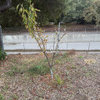
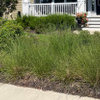
{{gwi:54455}}Laag has pointed out that dealing with cars has become a major problem as commercialism spread across the country creating acres of blacktop, drainage problems and token interest in landscaping. This issue seems to be increasing rapidly as we are adding bicycle/recreational paths long roadways, a two lane country road now visually becomes a three lane road and I dont believe anyone has found a solution to the hell strip in between. kt
- 18 years agolast modified: 11 years ago
I think one significant change is the enormous increase in available plant materials we have to work with. Everytime I am called out to a home built in the 60's or 70's for a landscape renewal/redesign project, I wonder if there really were only 10 types of trees and 5 shrubs available back then since very single yard has the exact same plants.
I know it's more of a nursery thing than a landscape thing but the hybridization, for good or ill, of plants and selecting out of plants for certain traits has had a tremendous impact. At the beginning of the previous century- most Americans who owned land had 1 acre or more. Huge Austrian Pines or Oaks or whatever were fine because there was space for them. That's all changed and I think there was a real crunch in the middle part of the century because the way land was used changed but the palate of plants changed very little. Other materials such as exotic rock, new (and sometimes bizzare) mulches and the advent of effective irrigation products have also made more elaborate landscapes available- again for good or ill.
Now there are many hybrids or cultivars that are more readily adapted to today's smaller parcels of land.
I concur that the move towards more sustainable design is the most important factor.
- 18 years agolast modified: 11 years ago
I find that more people are blocking themselves off from the street, despite all the talk about 'Curb appeal'. Privacy seems to be more of an issue than it once was. The streets aren't as friendly as they were.
- 18 years agolast modified: 11 years ago
At least in areas of the USA with water availability issues, I don't think that large lawns are sustainable, particularly if it takes real money to keep them alive. I speak from a west coast perspective where over 6 months of the year there is no measurable rainfall, but even in the northeast, regular rainfall to sustain lawns without irrigation can't be reliably counted upon anymore. Beyond the water issues and lawns, they tend to require too much maintenance over the long term in most parts of the country. If the average homeowner can be persuaded that lawns don't need to be perfect monocultures nor remain spotlessly green, then perhaps a less intensive lawn still makes sense in parts of the country that receive enough warm season rainfall to sustain them. Anywhere else, and especially in all parts of California/Arizona/Nevada in particular, I personally think lawns as they have become the default ground cover have a very limited future, and won't miss them at all...
- 18 years agolast modified: 11 years ago
It should be pointed out that the natural growth in areas of between 12-24" of annual rainfall is grassland. Grass really dos not have to be maintained in a golf course condition. In areas of higher rainfall grasses are displaced by trees and shrubs.
The environmental bloggers have villified grass. The funny thing is that at the same time, grassed swales are the latest and greatest thing in removing excess nutrients from surface water. I think we will find negative effects if we all run away from using grass. In nature it takes more water to sustain shrubs than grass. I find it curious that so many believe that any other ground cover uses less water and is better for the environment than grass.
The reason that it is villified is that it absorbs an incredible amount of nutrients, particularly nitrogen, which makes some obsessive folks dump rediculous amounts of nitrogen on it (and around it) sometimes resulting it "N" getting into surface water and feeding algae blooms. However, when there is excessive nutrients in runoff, it can be diverted to grassed areas where the grass removes it before it finds its way into lakes, ponds, & streams. The hunger for "N' can be harnessed to reduce it just as easilly as it can be over fed to add to a problem. I also believe that it is a scapegoat for the real problem which is septic systems.
Not all people over fertilize their lawns. I believe that most do not. This raises the question to me of whether mass reductions in lawns will result in less nutrients being absorbed. I also see grass stabilize soil surfaces resulting in less movement of sediments to suface water (that is how phosphates enter surface water).
I also wonder if it is more practical to have grassed areas near ponds and coastal ponds that have problems with excess nutrients. If the nutrients are coming into the ponds by the migration of nutrients in groundwater from septic systems, it seems to me that it would be a good practice to have irrigation wells watering turf grass to remove the nitrogen before it gets to the ponds.
In at least one community here on Cape Cod, the conservation commission does everything it can to keep people from having grass anywhere in its jurisdiction. It is understandable that they would want to ban the introduction of additional nitrogen to the groundwater or surface runoff. But it seems to me that they have a resource that could be put to work.
I think that the next generation of landscape design will be heavily influenced by the environmental movement. I do think there will be a lot of mistakes to go with the positives as well as there is with any rapid movement. That is especially likely in today's world of repetition being passed off as research.
- 18 years agolast modified: 11 years ago
I am not disagreeing with Laag's take on sustaining lawns in his local conditions, but I think he glosses over the extent that most homeowners feel compelled to expend resources on keeping their lawns green and weed free. An awful lot of chemicals get applied to lawns to kill grubs and weeds, that also wind up in the local water supply. It may also be a matter of semantics, but the rainfall levels he cites are necessary over the entire year to keep grass evergreen and growing, and do not reflect what is needed to keep grass alive and growing in the southwest, or parts of the midwest and southeast. It takes much more water than naturally available to keep grass green in much of the USA, and most people who have lawns are unwilling to accept a brown lawn in summer, or use species that might go summer dormant under low/natural rainfall amounts. In these parts of the country, there are definitely other plants besides turf grasses that can remain presentable at height of summer and use less water. Even the trend towards using supposedly low water use Dwarf Tall Fescues is a bogus ploy to continue planting lawns here in California, in my opinion. They still need too much water to make sense as the predominant plant cover in our local climate.
While much of wild California can also be considered natural grasslands, and survive on even lower rainfall amounts that Laag cites, they can not be maintained as mown, evergreen surfaces without huge amounts of additional irrigation. Even the really drought tolerant species that can serve as mown lawns, such as Buffalo Grass, will go winter dormant here in California, and don't satisfy the urge to have a year round green landscape.
If we are talking about lawns as a ground cover that is to be maintained without irrigation, will be mowed, and is expected to remain evergreen during the warm months, there are few parts of the country outside of the far north and wetter northeastern USA that will sustain lawns as the American public prefers to grow them. In my opinion, in these parts of the country, and especially here in the arid west, lawns just don't make sense as a sustainable garden practice. I predict they will continue to lose popularity as the default plant choice in areas where water is in short supply, and cities are usurping agricultural water supplies here in the west so that cities will not have to ration water. So far, the water continues to be available for urban users to use as they prefer, but since over 70% of urban residential water use is used to irrigate gardens, the cost is going to get so prohibitive that people will vote with their wallets, and lawns will disappear over time.
Perhaps there will be a trend towards using winter dormant Buffalo Grass and similar for people who must have lawns here in the arid west, but even the subtropical lawn grasses such as Bermuda grass or St. Augustine grass require regular summer irrigation to keep them alive here. I highly doubt that the vast American public will agree to keeping lawns in their future if it costs them over $300 a month to irrigate them, and few will be willing to have a summer dormant lawn that greens up again in winter, which would be the default condition here in California without irrigation.
I also predict that ground cover alternatives similar to lawn will continue to become more popular here in the arid west, with homeowners converting to mowable Carex species such as C. pansa and similar, which can get by with less than half of what a Tall Fescue lawn uses to stay green. I have often tried to interest garden design clients in using very drought adapted turf species such as Kikuyu grass, Pennisetum clandestinum here locally, but few are willing to accept the aggressively spreading nature and coarse wirey texture of this grass. Not even when I explain that this is a grass that in my local coastal northern California conditions can remain green all summer with absolutely no summer irrigation, when it has clay loam soils and receives some regular summer fog which moderates the summer temperatures as well as significantly reducing evapostranspiration. I have also had great success planting lawn meadows using Carex tumulicola, which only needs mowing once a month, and can remain green with just once every 2 month irrigation in summer here in coastal conditions.
At least here in California, I think that fescue lawns are a dying breed, and will be replaced with something else as the cost of water continues to climb, and possible mandatory limits on landscape irrigation are imposed across the state. I don't see this as environmentalists running amok, but just plain common sense, and dealing with the local conditions as they are, rather than applying some design sensibility inherited from regions where grass actually grows and survives without irrigation.
- 18 years agolast modified: 11 years ago
I don't disagree with the above post except that there is an assumption that I am talking about keeping lawns green. I'm not. Up here they go dormant for the winter AND they go dormant during the heat and dry of the summer - unless you keep them watered all summer.
I will point out that most of my preceding post was about the way people have a preconceived notion that grass SHALL be watered and SHALL be fetilized. My neighborhood does not have a majority of people watering and fertilizing. Myself included (that will change in the spring). Other neighborhoods are all irrigated and crawling with lawn services.
The people who get on conservation commissions and other regulatory bodies make the same assumption. The see grass on a plan and to them it means that it WILL be over fertilized and have every chemical dumped on it. All grass is bad.
Another thing that they do which also is nonsense is that if you proposed sod, it means even more excess water and fert. If you seed a lawn on a slope to a pond in my area in late October, you can put all the seed in the world down and it won't grow. The soil will remain unstable all winter. Sediment will move into the pond. Or you can lay sod, not water or fertilize it, no soil will erode, and it will root in. Which makes sense?
I certainly don't advocate grassing deserts. But in climates where grass grows and goes dormant under stress,it is nonsense that it is inherently worse than planting perennials, herbs, shrubs, and non-grass ground covers.
- 18 years agolast modified: 11 years ago
Thanks for the clarification, Laag. My only rebuttal is that I am not necessarily talking about grassing deserts, we are not a desert here in the San Francisco Bay Area, nor even in the Los Angeles basin. We average anywhere between 18 to 30 inches of annual rains here in the SF Bay Area, and most of Los Angeles also gets at least 18 inches of annual rain in a good year. Now last year on the otherhand, Los Angeles basin got less than 3 inches, yet the natural community of plants are able to survive on this, and is still essentially green or evergreen in appearance,(especially on north or east facing hillsides), if you consider the hillside chaparral shrubs and Live Oaks as the predominant shrubs and trees. However, we both get next to no rainfall for up to 6 months of the year. Grass doesn't just go dormant under stress here, it outright dies. There is obviously a huge difference in growing conditions between the arid west and back east, and I stand by my opinion that lawns make very little sense as the default landscape on our coast, even in much rainier Seattle.
One model does not fit all when taking about turf grass across the USA, yet a green lawn is still the preferred model for the typical American front yard. I wouldn't miss it all that much if it became much rarer to see...
- 18 years agolast modified: 11 years ago
As a child of the 50's and 60's I was fortunate to live next door to my grandparents. They had a nice big lawn to play on, a huge garden I helped weed, and fruit trees that I climbed to get fruit when I was hungry. I don't think they ever watered the lawn. Grandma had stacks of rose and plant magazines that I wish I had now. Her roses, peonies, and other flowers were awesome. I made necklaces out of her chrysanthemums, earrings from fuchsias and she never complained about me picking them. My dad took their garbage to the dump twice a year because they had little waste. They preserved their own food and unfortunatly I had to experience that they had a butcher in to kill Blacky, Licorice, and Lady, black angus pets or so I thought. That was bad and cutting off chickens heads on the chopping block was too. I still eat meat and love to garden. Their five acres of growing land is gone. I have have some land, grow plants, but I have a lot more garbage than they had.
- 18 years agolast modified: 11 years ago
Muddydogs really makes the big picture here. It is all a reaction to lifestyle. Some of it necessity, some of it practical, and some of it is "keep up with the Jonse's (or at least impress the Jonse's). The latter being the most variable from person to person, but seemingly more and more are focused on that.
Our necessities have changed as we use our own land less and less to supplement our table and other needs. It has become more practical to do things differently with mass production and availability of things and less time available to devote to these things.
As go the Jonse's, we follow whether willfully or kicking and screaming.
I'd love to have a chicken coop, but it is not allowed under my zoning and I probably don't have the time for them either. Hi, Mr. Jonse.
nandina
Original Author18 years agolast modified: 11 years agoPicking up on a few thoughts expressed above...
Bindersbee makes reference to rehab work on older properties and wonders if the plant selection in the first part of the 20th century was limited. He notes the use of the 'same-old' plants in those situations. Here I would point out that those 'same-olds' were new to our shores, the result of plant hunter Ernest H. Wilson's four trips to China under the auspices of the Arnold Arboretum. Before his death in a car accident in 1930 he introduced more than 1000 new plants. In my growing up years I can remember my Dad picking up a potted plant and reminding me that Wilson had discovered it in China. Take the time to read THE NEW EXPLORERS AND THEIR DISCOVERIES by Bobby J. Ward. You will have have a greater appreciation of Kousa dogwood, Loniceras, paperbark maple, Abelias, barberries.
The changing times of the last decade of the 20th century has forced designers to rethink many aspects of the horticultural world. We are all familiar with the causes behind these changes. Slowly hybridizers and nurseries are meeting new challenges as available land shrinks and water becomes a precious commodity. The above discussion about lawns is interesting and illustrates how designers in each part of the country must adapt to the changing situation. The most difficult part will be educating the public to accept designs which use less water and to live with imperfect lawns. Many are not willing to weed and maintain endless gardens. Much easier to mow a lawn and trim a few bushes, hire a lawn service to spray on the chemicals and call the yard landscaped. Plus, at the moment we deal with various zoning laws which discourage 'natural' plantings.
My concern in this new century is the rapid rise of insect and disease problems which have been imported into this country recently. Laag, perhaps you would detail the problems your area is experiencing affecting many plant varieties.
And, Bahia...could you update us on the spread of Sudden Oak Disease in your area which threatens all our oaks plus many ornamentals across the country. It has been found in the Carolinas, traveling on the host Camellia shrubs. Tony, you are in the British Isles often where SOD is prevalent. What is the situation there? The mid 21st century may see the demise of many valuable landscape plants and trees.- 18 years agolast modified: 11 years ago
Sudden Oak Disease doesn't seem as bad a problem as the media made it out to be. I am not saying that certain localized areas aren't affected, but it does not seem to be spreading and killing oak trees throughout the region. I have lots of native Quercus agrifolia all around me, and none appear to be affected to date. The various diseases and insect pests attacking our remnant closed cone pine species such as Monterey Pines is a more pervasive problem throughout the state, and has greatly endangered the remnant native populations in Monterey County, but again, I think it will be found that there is enough genetic variation to survive the impacts.
The bigger impacts of new disease and insect pests has been on the movement of plants out of impacted areas. Wholesale nurseries are subject to all sorts of new inspections and restrictions on shipping plants out of the area. The latest new invasive pest it the Apple Moth, which again seems much ado about very little, as other countries such as New Zealand have this throughout the country and seem to live with it just fine.
I hear that Florida is now worried about a new mite which is capable of wiping out some varieties of palms, and is now widespread in the Caribbean, and originates from Africa, and Lethal Yellowing never really went away, but is becoming active again. Here in California, we have our palm diseases as well, and Pink Rot is something to watch for with the Canary Island Date Palm in particular, and is easily spread from palm to palm when cleaning the trunks of these palms, if the chainsaw is not cleaned/disinfected between use.
Then we also have the glassywinged sharpshooter a leaf hopper, or whatever the name of this new pest is, that has the wine industry in particular in a tizzy, and has already wiped out some vineyards in southern California, and is desperately being fought to keep it out of northern California, and the Napa Valley in particular. This has been ongoing for several years now, and has caused it to be much more difficult to get plants shipped to the SF Bay Area from southern California, in fact, some nurseries refuse to deal with northern California shipping at all anymore.
So there will always be some new pest to deal with, just as their are always new human diseases or old diseases that develop resistance to our existing medicines. It is no different for plants. It is a strong possibility that climate change will accelerate the rate of change, and will cause more spread of diseases and insects, as well as wiping out habitat for plants and animals in the process. Perhaps the most endangered species will be those that have no land bridge to move upon as the climate changes/heats up. It sounds like high elevation cloudforest species in the tropics are particularly at risk. Let's see if the USA can get it together to work with the rest of the world's economies to limit our damage to the environment due to unbridled growth and continued use of oil and coal for power. I remain optimistic that it is possible, but will certainly require changes in lifestyles and some sacrifices. It would be a good start if we approached the energy use levels of northern Europe, and conserved energy to the same degree with more fuel efficient cars and better insulated houses, less sprawl, etc. I feel on a personal level I am at the very least not contributing to population growth, as I chose not to have kids...
- 18 years agolast modified: 11 years ago
Anne (nandina)it is possible that turf could be a sod but there is no way a sod could be grass. On second thoughts there is every way that a 'grass' could be a sod too. Britishisms aside do you think that a view of earth from space played any part in the question you are asking?
- 18 years agolast modified: 11 years ago
Our biggest problems are still the old ones. American Chestnuts grow from old stumps to about 4-5" and die from the blight from over 100 years ago. American Elms (as ell as some others) are constantly under seige from Dutch Elm - again very old problem. Gypsy moths do more damage than other pests, although nothing like they did 25-30 years ago.
Our newest are the wooly aldegid and winter moth.
The aldegid has done a job on hemlocks. Most are dead or declining.
Winter moths are around now even though it is cold this time of year. The catepillars come out early in spring, defoliate locally, but are gone in time for the trees to refoliate and do alright through the rest f the season from what I have seen. The gypsy moths just keep on going all summer and really hurt the trees when their populations are really high.
This spring will be the re-appearance of the 17 year cicada. Scientists are worried bout whether they will be around in high numbers like in '91 and previous events. I understand that we have the largest of the last two populations of these interesting critters in New England. It should be interesting and very noisy. These guys are native, I believe. The entire population lives 17 years in the ground and emerge all at once to mate (don't get in their way).
nandina
Original Author18 years agolast modified: 11 years agoInk, every day I check http://spaceweather.com as astronomy has always been one of my interests. Hopefully it is cloudless in your area this evening allowing you to see the brilliant northern lights display overhead. Maybe you will find the answer to all your 'color' questions viewing space from earth.
Thanks Bahia and Laag for your insect reports. Designers really have to stay informed on insect and disease problems when making plant choices. Not every problem can be treated organically and one by one horticultural chemicals are being pulled from the market. Now foreign invaders threaten some of our natives. Interesting...





laag