Software
Houzz Logo Print
rweissman_gw

Crazy ph Reading - Very Confused

14 years ago

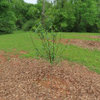
Yesterday I took advantage of the beautiful mild weather and I plated an new apple tree. My soil had a ph of 6.0, so I dug a nice big plating hole and mixed the native soil with a bag of soil from my local garden center (ph 6.8) and some composted manure (ph 6.5). I adjusted the mix until the ph was 6.4, threw some triple phosphate into the mix with a little bit of pelletized lime and filled in around the tree. Then I top-dressed it with a little urea and a bowl of cedar chip mulch and watered everything in well. Before I left, I took another ph reading and it came in at 4.5! What is going on here?

Could the fact that it was still extremely wet have thrown off my reading (doesn't make sense) or could I have somehow drastically misjudged the amount of urea I used (I used less than a small handful and I read on this site that urea doesn't have that strong an effect on ph)? Can anyone explain this? I'm trying to decide if I need to re-do everything again this weekend. Thanks.

Rob

Comments (7)

  • 14 years ago

    Rob:

    The actual pH couldn't have changed that much with the ingredients you added. Urea doesn't change pH all that much. I never add fertilizer to the soil placed around a newly planted tree. The reason, possible salt burn. But the fertilizers you added aren't real salty so if you watered really well you should be OK.

  • 14 years ago

    rweissman, you're much better off NOT amending your hole. The latest thinking regarding tree planting is to not amend the hole. You're better off digging a hole the same depth as the pot (or plant a little higher if you have clay soil), and about twice as wide, to loosen up the soil. Plant, water in to remove air pockets, then create a nice large well at the drip line or slightly beyond. Then, fill with compost. Wait to fertilize for about a month or so, to allow the feeder roots to get established. Then fertilize appropriately. Trying to adjust your pH can be an exercise in futility, as you would have to dig a really HUGE hole and then adjust the pH. And then chase it forever.

    Patty S.

    Here is a link that might be useful: US Forest Service Arbor Day: How to Plant a Bare Root Tree

  • 14 years ago

    Thanks fruitnut and Patty.

  • 14 years ago

    rweissman, There is a bit of detail as to how you went about collecting a sample to measure the pH and the type of pH meter you used that would be helpful. If you are using an inexpensive pH meter with a long metal probe that you stick in the ground and does not allow you to routinely calibrate it, then a very likely explanation is that your meter gave you an inaccurate number. It is unclear how much urea and cedar chip mulch you used. Pine, fir & cedar chips and barks tend to be fairly acidic. Also, while urea is not acid, its breakdown product NH4+ (ammonium) is very acidic. Watering the urea would start that process and the cedar chips might acidify the water too. From your description, I would be surprised if either the urea or the cedar chips had enough time to start lower the pH.

    Good luck with your garden!

  • 14 years ago

    Hoosier, amending a soils pH is an integral part of fruit tree management and either lime or sulfur are amendments endorsed by most current recs to be incorporated during the planting because it insures nutrients such as calcium (in originally acid soils) or iron will be available in deeper soil when the top layer dries out during periods of drought. It is incorporation of organic matter into small planting holes and adding N. at the time of installation that is not generally recommended. Cornell also suggests the incorporation of phosphorus at planting time if soil tests call for it.

    http://cmg.colostate.edu/gardennotes/633.pdf

    Here's another guideline for planting trees I find interesting, although it's not specifically about fruit trees. It actually calls for the addition of organic matter as well, but only on the surface layer and extending well beyond the root ball.

    Rweisman, as far as the pH issue is concenrned, I too would like to know how you took the readings and with what equipment. In the future you can use your cooperative extension for specific guidelines on preparing your soil and avoid this anxiety.

  • 14 years ago

    If you used one of those cheap pH meters, they are very sensitive to how much water there is in the soil. Also you need to regularly clean off the probe. There can also be short-term effects from the various ingredients because the initial watering releases acids on the surface, etc. I would re-check the pH after cleaning the probe thoroughly, and if its still low flush with water for an hour or so.

    Like Patty states you are over thinking this whole thing - next time dig, plop, and mulch the top heavily. Do make sure to dig the hole big enough for all the roots to spread out as much as they want.

    Scott

  • 14 years ago

    I was using a probe pH meter, but I don't know that I would call it cheap. It's an Accurate 8 and it ran me about $60 or $70 last year. I saw it recommended here and until now it has been pretty good.

    It may have trouble with wet soil though since I took a reading this morning, after a day and a half of drying, and the pH level is now 6.0. (Except for one spot that inexplicably reads 3.0.)

    It also would have been dirty when I took the 4.5 reading, since I had been using it to try to get the mix to the right pH earlier.

    I'll give it a little more time to recover from the drenching I gave it and check it again tomorrow. If it's still significantly low I'll try thoroughly flushing it out.

    Thanks for all your advice!