Software
Houzz Logo Print
threecats1house

Pear tree HELP please!

19 years ago

Hello, I have a Shinko Pear tree. It is 4 years old and 6 feet tall. It has never flowered once and it does not appear to be putting on a single flower again this year.

I looked up the flowering time for Shinko in Texas and the test group for Shinko was in FULL bloom from March 7th at the earliest - March 27th at the latest. It is now March 22nd and not a single sign of a bloom. The information said it should bloom in the 3rd and 4th year. Why does my tree never bloom?

It has no bugs, the leaves have not come out yet but there are leaf buds. There is no blight. I thought the flowers came out before the leaves but I never get a single flower! Any ideas what is going on? Thank you!

Comments (20)

  • 19 years ago

    Have you heard the phrase, "plant pears for your heirs"? Depending on what kind of rootstock it is on, it can take quite a few years for pears to fruit. I have 40 pear trees planted in 2003 and I got exactly one pear last year in their 4th year. This year I am expecting things to be a bit better, maybe 1/3 of the trees fruiting.

    Scott

  • 19 years ago

    Hi Scott, I hadn't heard that disheartening saying. I guess I'm too anxious but not as anxious as you must be. Hope that one pear was delicious!

    I guess I wouldn't mind so much if the tree would flower even if no pears stayed on it. Oh well, I guess there isn't a magical potion of say ....Windex and Soy Sauce (ha) that I can apply to MAKE it flower ~ thank you for your thoughts and good luck with your pear orchard this year!

  • 19 years ago

    Yes, that pear was truly delicious. It had dropped and by the time I found it the ants had eaten half of it but it was by far the best asian pear I had ever tasted in my life!!

    I did have a few flowers on other trees that did not set, but very few -- I think only three of the forty even flowered last year.

    Scott

  • 19 years ago

    Scott,

    On what rootstock do you have your asian pears and what form were the plants in when you planted them? How have you pruned and trained them?

    I grafted several branches of Hosui onto my sister's established and fruiting European pear and I'm wondering what I should be doing next with them.

    The new grafts have been extremely vigorous. I think some of them may have grown 6 feet since last spring. My sister claims she hasn't fertilized the tree or lawn around it.

    They look like long whips. I'm wondering if I should prune them down to induce branching. Or perhaps I should bend them down from vertical?

  • 19 years ago

    threecats-
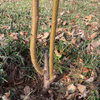
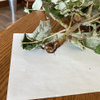
    I'll tell you my experience in the Pacific NW for what it's worth. Early last spring I bought an espaliered Asian pear, 2 species combo (Shinseiki-Chojuro). It flowered and bore fruit that same year. I got about a dozen fruits of each species and they were great. This year I have vigorous budding, and the beginnings of flowering so I expect even more production. I'm not writing this to brag...the tree did all the work. But I just wanted to say that not all pears take forever. One thing I thought of that nobody else mentioned, is the Shinko self-fertile, or does it need a pollenizer? Here is what my tree looks like as of today:

    {{gwi:70001}}

    {{gwi:70002}}

  • 19 years ago

    Kudzu, your tree may be grafted to quince which is much earlier fruiting. Pears on quince are uncommon in the US since they are not hardy in the colder areas. Most of my pears are on OH513. I have a few on OH333 and those are the ones that flowered last year -- it is more precocious than 513 and seedling rootstocks but not as precocious as quince. I think most of the commercial pears sold are still on seedling rootstocks which are all in the "plant pears for your heirs" category, up to ten years before they fruit. Quince is actually a very good rootstock, I wish I had grafted my pears on quince in retrospect. Since it is not compatible with many varieties of pear however you have to do some research before grafting pears on it.

    Murky, my pears are in a hedgerow of closely-planted trees 3' apart. For your sisters Hosui I would prune them back but its hard to say how much without seeing the tree -- anywhere from to 1' to 3'.

    Scott

  • 19 years ago

    Hi Kudzu9, This Asian variety is Shinko and is supposed to be self pollinating to a point, about 15% of the flowers are supposed to make pears by self pollination. If I were to want more than that I'd need another Asian variety to cross pollinate. Or so that is what the info I have read on it says. I'd need flowers in order to know for sure. No flowers, no chance of fruit!

    Yours looks fantastic! I think mine may even be bigger than that and NO flowers ever! Thank you so much for those photos because now I will be able to tell what the blooms look like. I love the shape of your tree ~ it is "gawjus"! You are so lucky to have blooms!

    I am pretty sure mine is the correct variety because I took a leaf last year to a nursery and compared it to another Shinko. The people there had no clue when it would flower so I read up on it myself. Just thought it would have done something by now.

    After reading Scott's last post about 3 out of 40 putting on blooms last year, I am not going to freak out anymore. His new orchard is a good indicator that maybe only 7.5% of Asian pears will bloom within the first 3-4 years. Is that right or close? 3 out of 40 = 7.5%? I'm not a math expert but I'm looking forward to my first flower before I die of old age and I am 49 now! Susan

  • 19 years ago

    Scott - we have pears on quince here in BC that does fine - the thing about cold must be urban legend

    Bill

  • 19 years ago

    Susan:

    I think Scott hit it on the button on the influence of rootstock to precocity of pears. However, Asian pears have begun to fruit for me much, much earlier than European pears on similar rootstocks. Try a little heading-back pruning on the longer branches this summer in late August. That may induce a few fruiting spurs to form.

    I would expect an Asian pear to begin blooming in about year 5, even on a full-size rootstock. In contrast, some of my European pears have reached 10 years before they began really blooming. Once an Asian pear tree starts to bloom, it's Katie Bar the Door, since they normally bloom and set fruit very heavily when mature. Your Shinko might be fine even without a pollinator if it is only 15% self-fertile, since Asian pear tree with cross pollination set so heavily that at least 95% of the pears must be removed to permit the remainder to grow up properly and to prevent branch brekage.

    Don Yellman, Great Falls, VA

  • 19 years ago

    Bill, I believe quince is hardy to zone 6 or so, that is what I meant by colder. The big nurseries in the east sell to people in zones 5 and lower so I guess they don't want to mess with quince. What I don't understand though is why the big west coast nurseries don't use more quince rootstock. I guess the incompatibility aspect just makes it too much of a hassle - ? Maybe the fact that the most common pear, Bartlett, is incompatible is also a factor. Probably at some point half the pear trees sold were Bartletts.

    Scott

  • 19 years ago

    Hi Don (jellyman), I'm glad you brought up pruning. The lower branches are quite stumpy and thick but the top is getting long and whippy. I'll try cutting back some of the thinner branches as you suggest late this summer. I'm already bloomless, I don't think it can hurt much.

    I chose this variety because it is the most tolerant against blight but it isn't entirely resistant so I have been concerned about doing much to it while it appears healthy. We have a terrible wind problem here since I am very close to the water by the Gulf of Mexico (south of Houston). I may never get a pear because the wind may blow any blooms away.

    I do love my tree and I will of course wait until it is ready to do something. Thank you for your comments and I'll look forward to next year with my fingers crossed!

  • 19 years ago

    I planted a 20th century pear 3 years ago and a housi last year. This spring, I'm getting blossoms for the first time, and on both trees. I don't know the root stock, but got both from the same grower. The 20th century is only about 5 feet tall, and has hard grown at all. The housi was a stick about 5 feet tall last year when planted. It went straight up another 10 feet in the one season I've had it. The blossoms came out on one of the 3 or 4 side branches that developed. I don't want a 25 foot tall pear tree, so I'm thinking of topping thing at 6' after I know if any fruit sets.

    The 20th century is on the left, housi on the right.
    {{gwi:70003}}

  • 19 years ago

    Your Trees:

    If the right tree looks anything like the left one, I suggest you begin spreading the branches on both soon. There was some discussion of the best ways to do that in the past few days -- don't know if you caught it. Once they get over 10 feet tall they are awfully hard to deal with, and all Asian pears need to be accessible for thinning, since they way, way overset.

    Don Yellman, Great Falls, VA

  • 18 years ago

    Looks like I'm reviving a nearly year old thread here...

    I just bought from The Home Depot, on a whim actually, two Asian Pear rootstocks. One is a 20th century and the other is a Shinseki. They are about 3 - 4' tall, and around 1/2- 3/4" diameter. For 15 bucks each, and recently married to a Taiwanese gal who loves these (ane me too now!), I figured, what the heck! I live in a canyon just south of San Jose, CA, and have a decent amount of land...

    I have a few questions for which I seek assistance:

    1. With the previous talk about types of rootstock, how does one know? The two that I have are still bagged waiting for next weekend's hole digging, and I don't see anywhere on the label or paperwork that states such informaiton. I'd like to know...

    2. After I plant them next weekend, should I not prune them at all until next Spring (1 year)? I thought I read that somewhere, but I'm not sure. Long soaks after planting, but to refrain from any snipping until a year...

    3. These are sold as semi-dwarfs, and I'm not sure what that means and if that is desirable, for me at least. I read that that these can get up to 20 - 40' tall, but everything I find on the web makes no mention of dwarf or semi-dwarf. If this means smaller yields, well, I don't mind returning these for a refund. I have room for larger trees... and have long ladders, if need be.

    After doing some reading, it appears that the Shinko is for the most part immunce to fire blight; which does make it somewhat appealing in that regard. Maybe I was to rash in pulling-the-trigger on these two guys...

    I appreciate any help you can provide this novice! Thank you.

  • 18 years ago

    None of the big box stores let you know what rootstock you have here in California, nor do any retail nurseries I know of. I think some mail order nurseries might give you that info.

  • 18 years ago

    Thanks Californian. I might try calling the phone number referenced on the label... I am going to order a Shinko also. Thanks again.

  • 18 years ago

    My Shinko pear tree bloomed in the second year. The Hosui which was planted at the same time hasn't bloomed. Both trees grew about 6 or 7 foot in the first year and that is after I cut about a foot or two of the top. I may have to cut more since I don't want the trees to grow too high. I was surprised by the fast growth and development of the pear trees.

  • 18 years ago

    I had the same experience as sshuang: my Shinko grew about 6' in its first year and is blooming in this, its second year. It was grafted onto Callery, if I recall (from Hidden Springs nursery). I hope it does not end up the size of the ornamental pears lining my street!

  • 18 years ago

    Shinko is listed as needing about 450 chill hours. Near the gulf south of Houston, you probably get very little winter chill. I wonder if that could be part of the problem?

  • 6 years ago

    This post is 12 years old. Start a new post with photos of your tree and its geographical location.