Software
Houzz Logo Print
caroli_gw

Soft brown scale

12 years ago

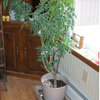
Rather large ficus benjamina tree with out break of brown scale.

I have drenched the soil with a systemic solution and have been picking the adults off by hand. Should I try the mouthwash and water solution to help until the weather warms enough to allow me to take this tree outside and spray with systemic spray. I sprayed the tree before I brought it into the house in mid-Nov. with insecticidal soap. I have decided that the lite infestation is now grown to medium.....confined mainly to the top.

Would de-leafing the tree by pruning back all branches give me a better chance of removing the scale with the spray? -or- will it matter since I know I need to do repeated spray treatments to successfully break the scale cycle. This is a really bad time of year to deal with this problem and I do not have any experience with scale. I have read on this site and other helpful sites that most people feel that scale is only managable at best and the cure rate is low.

Since this tree is in my downstairs office and away from my healthy upstairs plants I need to know if the threat of spreading this to my other tree and orcids upstairs is high or low. I do not water without sterlizing may watercan between plants.

Any info. including chunking out this tree if it poses a hazard to the other plants would be appreciated.

Caroli

Comments (8)

  • 12 years ago

    Scale does pose a hazard to other plants and will infect other plants if close enough (the plants).

    I lost all my outdoor plants one year due to a cactus that had developed scale. I'd never seen it before so I wasn't aware what it was at first... I actually didn't notice the scale until I saw it on my hydrangea. I took a leaf to a nearby nursery and it was identified as scale. Looking around and considering the cactus was the newest purchased plant, I discovered the cactus had introduced it.

    I believe there are products you can add to the soil that are systemic. I do know hopefulauthor (She is on this forum, her name is Toni) has mentioned spraying with fish emulsion to remove scale, I cannot attest to its effectiveness though as I've never done it myself (not to second guess Toni, I just can't tell you from my experience).

    Depending on the severity of the scale, I'd just chunk it (Once it reaches a certain point, it can be difficult to get rid of). That all depends on how attached you are to your ficus and the risk of spreading to others, IMO.

    Planto

  • 12 years ago

    If your ficus will fit in a large dry cleaner bag,it will help in keeping the bugs from spreading while treating the infestation(as well as trap some humidity that your tree will appreciate).

    Something to consider! :)

  • 12 years ago

    Hi, Cindy. I'm glad to see you posted your question here on the forum. I couldn't reply to your inquiry because of how you have your settings on your member profile page. So sorry. If you want others to be able to reply to you, you need to change your settings so other members can reply to you and see your email addy, or include your addy when you ask for info from other members.

    The infestation is more noticeable at the top because the plant is apically dominant, so most of the nutrients and carbohydrates will be concentrated primarily at the top of the plant and at branch tips, and it follows, that is also where you'll find most of the pests concentrating.

    Insecticidal soap will kill crawlers, but crawlers are born live under the protection of the female and attach soon after they strike out in search of a feeding/attachment site. At that point, treatments which act topically are greatly reduced in effectiveness.

    Neem applications at 2 week intervals, all-season horticultural oil, and systemics designated as effective against scale are probably your best weapons. You can help to keep populations in check with the Q-tip/alcohol spritz regimen, but you'll probably never eradicate the offending population w/o using something designated as appropriate for combating scale. Fortunately some treatments eradicate effectively, used as directed, so if you can keep them in check until early summer you'll be in good shape.

    Don't cut back hard in your zone until well into June, and don't defoliate until early July, and only if the plant is in excellent health. Partially defoliating the strongest parts of the tree can be a very effective tool for ensuring the weaker branches get their fair share of energy, which prevents the tree from shedding them and helps to keep the tree looking sharp.

    Al


  • 12 years ago

    Think I'll relate an experience from last year if I may...

    My staghorn fern was run rife with those horrible monsters and I tried this and that but never tried a systemic(which from what I hear again and again is the best way to deal with them once and for all). All winter long I fought those things but they never seemed too phased by my efforts. The good news is that once it warmed up enough to get my stag out of doors the problem was quickly eradicated by the native wildlife. Never saw what was predating them,but whatever it was it did one heck of a job. Now that it's back inside,my stag is scale free to this day(knocks wood)and all without any treatments...just nature. :)

  • 12 years ago

    Yes - I wish I would have mentioned what you did about the predators, because it's in keeping with what I've seen whenever I've moved plants with pests outdoors. Sometimes, because the bio-compounds plants produce that act as deterrents to insects and disease are a byproduct of the plants metabolism, just getting the plant in better light and moving air found outdoors (which results in a more robust metabolic rate) is a big shot in the arm. The afore shouldn't be taken as me discounting the value of predators usually missing almost entirely indoors, it's an important part of how our plants' world works.

    Al

  • 12 years ago

    Hello Al,
    Thanks for the info. I finally got the settings on my profile changed ...something wrong that had to be re-set by G-Web.
    Now we can email....I hope.

    I was able to get my ficus tree outside over the weekend (58 on Sunday) and gave it a very heavy spray of Bayer systemic. I know that 2-3 sprays every 7 days is considered best for breaking any life cycles ....but is scale considered the same? I know they hide the young under the adult. Do you think this approach will work? At this time of year it will be a challenge to get the temps needed to do the spraying cycle. Do you think that I can keep the infestation in check until warmer temps return without spraying on a regular basis?

    Also, how likely am I to transmit this to the other houseplants in the upstairs of my home. I am very careful not to make contact with the plant or take any items that I have used on it upstairs without first cleaning them.

    Is this sort of a loosing battle? Is it best to let it go?
    What type of pest looks like flakes of dandruff but is on the top and bottom of the ficus leaf.
    I can scrap it off and it almost seems like wax drops.....never seen this before . Is it from the scale?


    Cindy

  • 12 years ago

    Cindy, you need to read and follow the directions on the label. They are there not only for the efficacy of the chemical but for your safety. Systemics can be dangerous to handle and some should never be used for indoor plants.

    Mixing rates, application intervals, and important safety precautions are all on the label.

  • 12 years ago

    Rhizo,
    I agree on being careful with systemics. That's why I like the Bayer that I use. It comes with good instructions and is listed as safe for houseplants. They have to be sprayed outdoors and the info. states that the plant should be completely dry before moving back indoors. That's why it is hard to use it at this time of year. Not only do you need a window for spraying but drying time as well. This product produces a very faint odor that is only detected if you get extremely close to the plant.

Sponsored
NME Builders LLC
Average rating: 5 out of 5 stars2 Reviews
Remodeling Company in New Albany, Ohio