Software
Houzz Logo Print
ymaddox

fertilizing

19 years ago

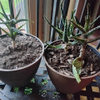
i fertilized all my new house plants for the first time the other day with shultz's 10-15-10 using about 40 drops per gallon of water. Is this sufficient and how often should i do this? I did not do my succulents, is it correct you should not fertilize succulents? I am waiting for everything to take off like gang busters :)...i saw a couple gold croton pics on here and mine has some growing to do...well alot of growing to do :).

Comments (10)

  • 19 years ago

    You should follow the instructions on the product label for the correct solution. Or you can make is weaker than they suggest. I absolutely fertilize my succulents; they need it after a winter's rest.

  • 19 years ago

    I agree you should follow container directions. Actually, I use half the recommended dossage they advise on fertilizer packaging..
    Succulents definatly need to be fertilized. I give mine food once a month during growing seasons. Toni

  • 19 years ago

    There is actually specific food you can buy for succulents. I have one that Schultz's makes. It has lower numbers I believe. You can also use the "beer fertilzer"..just do a search on this site for it.

    Gabi

  • 19 years ago

    Fertilizer is a cleverly marketed, but highly over-rated product. Most potting mixes have ample nutrients to supply a plant for several years. Houseplants use nutrients in very minute quantities so a little goes a long way. You cannot force plants to use more nutrients than they can use. In fact, excess nutrients can damage tender roots. Excess nutrients in potted plants is a much more common problem than a shortage of nutrients.

    So don't expect any miraculous improvement is your plants. Achieving optimal light is the key to obtaining optimal growth. Fertilizer is not a substitute for good light and watering practices.

    Contact me directly if you want more specifics on fertilizing indoor plants.

    Will Creed

  • 19 years ago

    I disagree with the premise that there are ample nutrients in container soils to support a plant for several years. I don't know if you're talking about soils that have a slow release fertilizer added, or you feel you can depend on nutrients locked in the existing organic matter, but in either case, your hypothesis is incorrect.

    The unnatural composition, limited volume, and porosity of container soils combine to make them extremely poor at holding nutrients. In an appropriate container soil, one that drains freely at every watering, there is no reason you cannot apply a full recommended strength solution of fertilizer every two to three weeks for most containerized plants, as long as they are actively growing.

    In order for plants to maintain their systems and grow, nutrients, air, and water must be in the soils in appropriate/adequate amounts. This requires timely replenishment of nutrients at considered intervals to maintain any semblance of good vitality.

    BTW - nutrient usage is in direct correlation with photo-period and/or light intensity. It will do no good to increase light levels and expect a plant to grow if the plant cannot assimilate needed nutrients. A plant must be growing or it is in decline.

    To expect a plant to go three years in a container without supplemental fertilization is an invitation for trouble. Even if the plant lives through the stress (probably strain), it will serve as standing invitation to insect infestation and attack by other pathogens, brought on by the stress.

    Al

  • 19 years ago

    I fertilize almost all of my plants, succulents included. The only ones I don't fertilize are the carnivorous plants, because they'll die. Now I tend to use a weak orchid fertilizer diluted to 1/2 the reccomended strength, which is about 1/4 teaspoon per gallon of water. I fertilize every 2 to 3 weeks, except for in the winter, and make sure to, at least once every month or two flush the pot with water to wash out any salts that have built up. Furthermore, because I'm a bit neurotic I have a fertilizer to encourage vegetative growth, and a separate fertilizer for blooming. Which one I use depends on the plant and season. Personally I think it is a better bet to fertilize "weakly weekly", because a plant with a minor deficiency in something is far better off than a plant that is getting burned because of too much fertilizer. However, a potted plant that never gets fertilized is doomed in the long run. As far as growing like a gang-buster, light, not fertilizer, will make it happen. Fertilizer will help, but gangbusting growth can happen without fertilizer to an extent, it will not happen no matter how much fertilizer there is, wthout sufficient light. If you don't have enough natural light, perhaps you could supplement with a compact fluorescent. Best of luck.

  • 19 years ago

    Hi YMaddox,

    As to your original post, Croton need a LOT of light to keep their color & grow well. Absent this light, they may grow but not well or fast & they'lll lose their color, reverting mostly or all green.

  • 19 years ago

    thanks so much for all your helpful advice. I guess when i was referring to growing like gangbusters it was not only the fertilizer i was referring to but that plants are coming into a growing period...i know what i am thinking just dont always convey it verbally or on paper :). The reason i said this is i can see some of my plants starting to fill in nicely over say the last month or so...new little shoots everywhere, very exciting. I am not a inside gardener by any means of the word, i caught a sell on quite a few plants at walmart during late winter and figured i would try my hand at it one more time and so far so good (fingers crossed and with the good lords help :)). I have only kicked off a polka dot plant and a aralia?, i believe that is the name, although it don't much matter now as it kicked the bucket and i replaced it with a janet craig compacta...i think that is going to be hardier for me. Quite alot of fun, but i have now realized i have a ton of houseplants and it is time to start my outside beds ,flower and vegetable, very soon. I can see keeping myself very busy for quite sometime now :). I have weeded all my existing outside beds and since it was unseasonably warm my hosta's, campunula, buttercups, and bleeding heart shot up nicely. Then we had that big freeze and grrrrrrrr. Everything will most probably pull through but it is aggravating for something to be doing so well and then look so pitiful. anyway thanks again for all the advice, i appreciate everyones time and kindness.

  • 19 years ago

    Don't feel bad about the aralia- they are finicky little buggers. The Janet Craig compacta is quite easy as long as you let it get dry on top between waterings (it also likes medium to low light).

  • 19 years ago

    I've been musing at the thought that "... light is the key to obtaining optimal growth", or that "light will make it (optimal growth) happen".

    While it is true that optimum photo-exposure is necessary when optimizing growth is the objective, it's certainly not the "key". The key lies in providing optimal levels of water, air, light, and nutrients, and we really cannot order these things in sequential importance. They are equally important.

    Plants grow from food that they make themselves. Plants cannot make food at optimal levels without there being 17 essential nutrients available to them at all times. 3 come from the air, and two are virtually never deficient in container soils. This leaves us responsible for making 12 nutrients available for plant uptake at all times - enter the need for a nutrient supplementation program.

    Growth is measured in biomass - essentially, the weight of the plant. You can provide all the light a plant will tolerate, but if any of the nutrients are unavailable and not at optimum levels, it is impossible to optimize growth. The same holds true for the balance of water and air in soils. Lack of water obviously causes a plant to wilt and die eventually. Too much water in soils inhibits root function and causes nutrient deficiencies, even when adequate levels of nutrients exist in soils.

    Saying that light is the key to optimal growth is like saying high octane gasoline is the key to making a car go fast. While it may well improve speed capabilities, the car must be in good repair, have an engine that performs as it was designed to, and a transmission that will function as it was designed to.

    When exposed to optimum light, plants with nutrient deficiencies do not necessarily grow (increase in biomass). You'll find that if the deficiency is in a nutrient that is mobile in the plant, nutrients will be "pulled" from older growth and mobilized to the newer growth. If an immobile deficiency is to blame, new growth will be nonexistent, diminished, or deformed.

    So - I'll go along with the fact that light is "a" key player in insuring best overall plant vitality, I can't buy that it is "the" key.

    End of musings. ;o)

    Al


Sponsored
Kuhns Contracting, Inc.
Average rating: 5 out of 5 stars26 Reviews
Central Ohio's Trusted Home Remodeler Specializing in Kitchens & Baths