Software
Houzz Logo Print
boby_huffard

Drastic pruning?

18 years ago

I have a large (4 feet) Schefflera and a huge (at least 5 feet) Monstera that I haul outside each summer and back inside in the winter. This year they both lost some leaves during that early June heat wave. Because of this, and because of their unwieldy size, I wondered how far I could cut them back.

Boby

Comments (15)

  • 18 years ago
    last modified: 11 years ago

    You're in a bit of a pickle. Before the summer solstice (this week) is the best time to prune hard - usually - but if your plants were recently defoliated, the new leaves will be strong energy sinks (a drain of o/a energy) for the plant until leaves are about 75% mature. After that, they will be net producers of energy instead of net users, so it would prolly REALLY set the plant back to essentially defoliate or partially defoliate it again so soon.

    I would wait until mid-Jul & then cut them back as hard as you want. The scheff can even be cut back to a short stump if you prefer, and it will bounce right back (full sun - unless it's variegated). Others may chime in on how tolerant the monstera is to a hard prune, but I suspect it tolerates it very well when it's growing robustly.

    Al

  • 18 years ago
    last modified: 11 years ago

    Hi bobyoe and Al...I had a neighbor in Tucson in the 70's who had a patio filled with Monstera. Healthy, huge plants that were growing in the ground. They were sheltered from the mid-day sun. Came home one day and they were all gone.....so I thought. Went over to take a look and he had cut them back to stumps. They came back just fine. I have a Sheff that I cut back to a stump and it grew back better than it was before.

  • 18 years ago
    last modified: 11 years ago

    I may have misidentified the big plant. I'm thinking it is a split leaf philodendron instead. Does the same information apply in this case? Great news on the Scheff! I can just "start over" with it!

    Thanks,
    Boby

  • 18 years ago
    last modified: 11 years ago

    Split-leaf philodendron is Monstera deliciosa, no?

  • 18 years ago
    last modified: 11 years ago

    I think these often get confused.....
    Philodendron Selloum
    http://www.thegardenhelper.com/pixpg/graphics/selloum.jpg

    and

    Monstera deliciosa
    http://www.aspca.org/toxicplants/images/IMG01439.jpg

    They both have a "split-leaf" but look completely different. I think cutting either one back to a stump would do it no harm. JMHO anyway!

  • 18 years ago
    last modified: 11 years ago

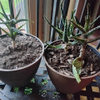
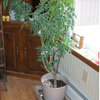
    {{gwi:88981}}

    I'm thinking it's definitely the philodendron. This picture is from a couple years ago. It's bigger now.

  • 18 years ago
    last modified: 11 years ago

    Yup...and a fine looking plant I must say!

  • 18 years ago
    last modified: 11 years ago

    My Xanadu was looking ratty, I just let it rest a bit before feeding it. The leaves are coming back, the best time to defoliate a big plant like that would be winter.

    Remove all the brown leaves then let it rest a bit before feeding it about mid July. It should grow new leaves, but since it is a tree type philo, it defoilates and does not grow leaves back in the same places. You'd have to damage the growth point to induce branching. I wouldn't want to do that though, the idea of a selloum branching and bushy is a bit off to me.

  • 18 years ago
    last modified: 11 years ago

    Please don't take it wrong. Mentha - I'm not being overly critical about what you said, but I'd like to reflect a little on how we can use defoliation and cutting back hard as a tool for managing our houseplants.

    First, I'll take a second to make the case that this would best be done midway between the big spring growth push and summer solstice. To defoliate before that means the plant will essentially rely on little sun, and what meager energy reserves it has left to push the new flush of growth. This will severely tax the plant and its recovery will be much longer than necessary. It we wait too long, (well into July) the plant will be reluctant to produce foliage. Plants, except winter growers, begin to store energy after day length begins decreasing instead of increasing. IOW, plants have just made the transition from wanting to make leaves and extend stems, to wanting to lay down layers of cells rich in carbohydrates in the roots and cambium. The plant is growing fatter now and is beginning to forget about adding foliage.

    Defoliation, partial defoliation, and cutting back hard all stimulate lots of branching in your plants. We use partial defoliation to stimulate branching in specific parts of the plant, or to slow growth in certain areas. Complete defoliation affects the entire plant, as does chopping back the trunk. (what a genius - right?) ;o)

    Most of the auxin in plants, which is the growth hormone that suppresses branching, is produced in the apex (tip) of the branch, but auxin is also a byproduct photosynthesis and is produced in leaves. When you remove either leaves or the apices (tips) of the branches, you get the same effect - a reduction in the hormone that suppresses lateral growth, which causes new leaves and branches to occur (the hormone reduction does this). The difference between the two, is that when you cut back hard and remove the apex, the branch can no longer extend - EVER. Another branch behind the pruning cut can take over and become the new apex, but the branch you cut back is done extending.

    This is how we do 'directional pruning'. If you want the branch to grow up, down, right, left, cut it back to a bud or leaf axil that faces the way you want the branch to grow. When the new branch emerges, it will be predisposed to grow in that direction.

    I just described how you can take a branch and cut it back so you can direct the direction of its growth, but you can also do this with the trunks of your vines & plants that get woody. Actually, you can do it with almost all dicots. If you have a schefflera or Ficus or philo that is too tall & gangly. CUT IT BACK. ;o) If you have a branch that is showing it wants to grow more toward the vertical, don't be afraid to cut the plant back to just above that branch. You can easily maintain the height of your plants by regularly cutting them back and training an emerging branch to vertical as the new leader.

    We should all learn these techniques and put another tool in our box. The reason for my saying that, is because most of the plants we grow tend to be apically dominant. That means that, as a survival strategy (in the wild) they are genetically programmed to concentrate growth at the tips of branches and top of the plant. If we don't learn to work with the plant to correct that tendency, we can end up with some plants that are less than attractive.

    I hope that you, Bobyoe, and others, find the comments useful.

    Al

  • 18 years ago
    last modified: 11 years ago

    First off, I've never fed this sucker! We have a love-hate relationship. It takes up SOOOO much space! It's hard to drag in and out in spring/fall. One year I had it on our upper level of the sunspace and I decided to let it die a natural death and didn't water it all winter. Of course it didn't die, but DID send those aerial roots a-searching! I had to cut one off that was working its way between the floorboards. SO I gave in and watered it. I think it's a bit like Audrey. I went outside to see how many yellow leaves I have. It really just got sunburned. I thought I had it in a shady enough spot, but obviously didn't. There is one totally dead leaf ready to fall off and two partially burned ones. Also two healthy ones emerging. Maybe I'll leave it alone. My husband likes its cockeyed growth pattern. And my cat likes to sleep on the woody stem in the winter. He thinks he's in the jungle.

    But the Schefflera is definitely getting trimmed! It is very gangly.

    Thanks for all the great information everyone!
    Boby

  • 18 years ago
    last modified: 11 years ago

    Al, thanks for the botany lesson. I've noticed that when I remove several ancient bottom leaves off of, say a selloum, I get a huge flush of new leaves. Now I know why. I knew about auxins in branch tips, but I didn't know they were in leaves as well.

  • 18 years ago
    last modified: 11 years ago

    Oh - upthread ... when I said "What a genius - right?" It was because the statement I made prior was so very obvious - not because I thought it was smart. I was pointing out my keen grasp of the absolutely obvious. ;o)

    Good luck w/the burn-out, Sheila. :-(

    Al

  • 18 years ago
    last modified: 11 years ago

    A bit off topic, but I just have to get this out: I signed up for a botany course last semester, and dropped out after the first day when I realized it was just going to be bio 204 all over again, except vaguely more focused on plants, a little. Maybe. Reading posts here -- such as tapla's -- and actually growing plants myself and just reading about plant-related stuff online from wikipedia and Plantfiles and whatever else, I think I probably learned more than I would've in that class.

    I'm not trying to sound arrogant or anything, but the couple of science-related classes I've taken have this really hands-off feel to them. Even the hands-on lab classes (which mostly amounted to busy work). You'd learn what auxin is and what it's supposed to do and what apical dominance is, but there was nothing in the syllabus that led me to believe we'd learn any practical/real-world aplication for this stuff. Or anything about actual plants and not just scientific models of generi-plants.

    I'm not saying that real-world experience and research is inherently better than classroom learning. I'm just saying that the quality of the curriculum in that one particular class was sort of suspect.

  • 18 years ago
    last modified: 11 years ago

    Just to get back to the philodendron/monstera so I can show off (sorry! It's late.) Down here lots of folks grow that large-leaved philodendron in the yard, and even when it freezes back (very seldom!) it gets really large the next summer. More bushy than ever too of course. I've seen 'em where they take up most the front yard, tho' that's just driving by and it's probably a clump with off-sets. Since I've been here and seen those, the thought of growing one in the house kinda spooks me--tho' lots of our houseplants are capable of turning into very large plants in their native lands. For the record, and this is under the heading of 'too much information', the philodendron sold and known by most of us as P. selloum is really P. bipinatifidum (sp?) They were mis-identified when they first were introduced in this country, if I understand correctly. There is a P. selloum too, but I don't know how available it is. The names in this group of plants is really a mess. I hate to order three 'different' plants and get three plants of the same thing.

  • 18 years ago
    last modified: 11 years ago

    Thanks Al,
    I should have said late winter, or early spring, when the plant is just about to push out it's new growth. I forget that here in CA spring begins in February ;)
    I must admit in my experience, when you remove bottom leaves, there is a flux of new growth, not from the bottom, but the top. I should have more clear on that.

Sponsored
Peabody Landscape Group
Average rating: 3.5 out of 5 stars8 Reviews
Columbus' Reliable Landscape Design & Contracting