Software
Houzz Logo Print
amccour

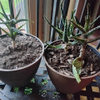
Sunburnt norfolk island pine.

18 years ago

I put this out in full sun recently because it wasn't growing that fast and the growth it was getting was really uneven. By full sun, I guess I mean full morning sun, and mostly shaded in the afternoon. Anyway, the tops of the needles on the top-most layers of branches are now bleached and sunburnt looking. They're not crispy and the undersides are still green, but I don't want this getting any worse so I moved it back to the porch.

Anyway, what should I do about the lighting? It seems like it needs more light than it's getting on the porch, but as soon as it gets in more direct sunlight, it bleaches. It's on the east side of the house, and there IS a weeping cherry I could set it by, which might give it some shade.

Or would the bleaching be temporary, until it got used to the higher light levels?

Comments (16)

  • 18 years ago

    I guess it's not been my experience that they're that terribly fast growers to begin with, so my first thought is to wonder a little more about what makes you think it needs more light in the first place (as in, how fast is it growing? What do you mean that the growth is uneven?).

    I haven't really seen it so much with Norfolks (Araucaria heterophylla), but the bunya-bunya trees (A. bidwillii) at work definitely produce very yellowed, bleached-looking new growth when they're very hot. I don't know where you live or what your weather has been like, but is it possible that your plant might just have gotten very very hot, and that the amount of light is a red herring?

    What I would do if it were my plant is just leave it on the porch, at least unless I hear interesting details about the growth (is a picture possible?) that make me think no, it really is reaching for more light, or something like that. Though all-day shade might be workable too.

  • 18 years ago

    "What do you mean that the growth is uneven?"

    I probably should've said more balanced, overhead light instead of just more light in general. The plant did fine with somewhat reduced indoor light from last Novermberish till about May, which is when I put it out, and I'm not exactly trying to get it to become huge, because these really can get huge and I don't have an infinite amount of space for it.

    When I say uneven growth, I mean that the smaller branches coming off of the main, trunk-attached branches are about half as long on one side as they are on the other. I'm almost positive this is new growth, mostly because the growing tips look new, there's not that stupid spray-on glitter stuff on the protruding lengths of branch, and I definitely remember the branch lengths being a lot more even when I got it.

    It's not the new growth that's coming out yellowing, either. It's definitely needles that've been there for awhile.

  • 18 years ago

    Hmm. I'd really thought someone else might jump in here.

    Really don't know what to tell you on this one. I guess I think it's possible that the yellowing might reverse, though I'd be surprised if it did while it was still in high light and heat: I don't think it's something the plant would grow out of while it was still hot. I'd still be hesitant about putting it in any actual sun. As far as the asymmetrical growth, I don't know what to tell you about that one either; I looked at my own, and at the ones at work, to see if any of them looked like what you described, and didn't find anything. My thinking is that if the branch is still growing, just rotating the plant might get it to fill in whatever parts are still short. They don't seem to grow uniformly, necessarily, so it's possible that the branches in question just aren't done yet.

    But I'm kind of making stabs in the dark here, too. Anybody else?

  • 18 years ago

    I moved this back onto the porch shortly after making my original post and it looked a bit better, and I moved it back inside while I was in Chicago for a few days and it looks a lot better. I'm a bit confused as logic seems to indicate that a tropical conifer would be much happier somewhere warm, humid, and sunny than inside the house, which isn't really any of those.

    I do wonder if the light and humidity requirements are overstated, though. When I had it in my dorm for most of the year, it wasn't really getting that much light and didn't seem to suffer for it, and the couple months I've had it inside here, the relative lack of humidity hasn't seemed to hurt it any. I get SOME brown splotches on the needles but you really, really have to look hard to see them and I'm not entirely convinced they aren't the results of that stupid spray-on glitter stuff.

  • 18 years ago

    amccour,
    When I put my Norfolk Island Pine in a southeast facing window after spending a year in a dark rental house the tips of some of the branches facing the window became brown and crunchy. ( Luckily I noticed this and moved it further away from the window.) Only about 1/16" Â 1/8" of the tips were this way and I noticed that those branches stopped growing. There were even some branches with only a few brown needles on the tips and these ones stopped growing as well. So I guess if the tips become brown they stop growing. Check out the side of your tree and see if the tips or even a few needles are brown and crunchy. If this is the case with your tree donÂt worry. It will look uneven for awhile but once it starts to grow taller and new branches begin forming you wont notice it as much.

    I think that since your tree was in a dark dorm room for awhile you will have to get your tree acclimatized to the sun gradually. What I would suggest is keep your tree indoors in a north facing window for about a week and then move it to an east facing window or a widow that gets a few hours of sun a day. Make sure the tree is around at least a foot away from the window. If you put it in a western facing window make sure you have it further away than one foot from the window since the sun will be hotter there. After awhile you will be able to move your tree back onto the porch and maybe even a shady place outside.

    Sarah

  • 18 years ago

    I can add a little something to this now: we got a good deal on some Norfolk Island pines a week or two ago, so somebody bought a box, and although they were green when they came out of the box, after a couple weeks in the very hot greenhouse, even shaded by a large Ficus benjamina, they've turned sickly yellow like what you describe. I suspect it's the heat more than the light, mostly because they can't be getting that much light in that spot.

    Our older plants are in a different spot, close to a door, so they stay slightly cooler. Though now that I think about it, the other spot is also darker.

    My plant at home gets some direct sun from a south window, but everything is arranged so that there's also pretty steady cool air moving through it, as the air conditioning vent is (inconveniently, most of the time) located so it's pointing right at the window. All of our windows have this problem. Anyway. The point is that that plant, though in full sun pretty regularly, is not yellowing.

  • 18 years ago

    See, I also got yellowing when I moved it out on the porch back in May. When we were still getting nighttime temperatures down into the high forties. This wasn't bad yellowing at all, but I still moved it back inside, and it seemed to improve. It's possible the cold was doing this, though.

    Anyway, the other thing, when I had the plant on the porch, in fairly indirect light/shade, it was still getting just as hot, but there wasn't any yellowing.

    Also, I figure heat-related yellowing would affect the tops and bottoms of the needles evenly, and on mine, only the tops were yellowed.

    Could it be a combination of changing temperature and lighting conditions?

    I actually tried to do as much research as I could before I bought the thing, except I couldn't find that much info on them, which seemed odd given their relative prevalence. Then again, I'm sure most people probably throw theirs out a week after Christmas, which probably has something to do with it.

  • 18 years ago

    amccour,

    From what you have just written it still appears to me that your tree wasnÂt acclimatized to receiving so much sun so the needles that were receiving the full intensity of the sun bleached out.

    On a side note, if you have time you may want to take your tree outside and try hosing the glittery stuff off of it. Since these trees do tend to get thrown out after Christmas the growers are only concerned with the cosmetic looks of the tree and not its long term health. (I read somewhere that some growers spray green paint on their trees before shipping them out to make them look healthier.)

    You also stated that you werenÂt able to find much info on how to care for your tree so I have attached a link from BachmanÂs Nursery on how to care for Norfolk Pines. I hope this will be helpful to you.

    Good luck!
    Sarah

    Here is a link that might be useful: Norfolk Island Pine Care

  • 18 years ago

    Putting a houseplant outside even in partial sun can certainly cause sunburn. Even in a plant that has been suffering from low light levels indoors. Slowly moving from shade to more sun is the key. Many should never get direct sun though. Just moving from house to porch will increase the light.

  • 18 years ago

    Yeah, I thought I was increasing the shade gradually. I moved it from my house to the middle-section of the porch, then to the edge section, and then to a more shaded area off the porch. I think the problem is that the shaded area wasn't nearly as shaded as I'd assumed.

    The rapidity of the burn was what surprised me, I guess. I've had other plants get sunbleached/burnt, but it's not usually that quick.

    Anyway, a fair amount of the normal green colloration actually came back (and the worse needles are now just an unhappy, dullish color instead of yellow-brown) so maybe it wasn't as bad as I'd thought.

    Araucaria are weird.

  • 18 years ago

    They really, really are. I agree.

  • 18 years ago

    Sunburn can happen very fast but often doesn't show up right away although it can. I see people putting houseplants out on their lawns in the sun or driving down the road with them in the back of a pick up truck and I just cringe knowing they are going to be severely damaged or killed by this treatment.

  • 18 years ago

    The effects of sunburn in plants are immediate and irreversible. Sunburn is caused by photo-oxidation. High light intensity levels can cause chlorophyll molecules to rise to a more excited state than normal. If light levels are high enough, the energy that is released as electrons in molecules return to their normal energy state may be sufficient to form oxygen radicals from O2 (exactly the same radicals found in H2O2 [hydrogen peroxide]). These O2- radicals are extremely reactive particles that readily destroy chlorophyll molecules.

    Chlorophyll is natures sunscreen for plants, and the degree of light the plant is exposed to generally determines the level of chlorophyll present in living tissues. When we move a plant into bright light, it may not have enough chlorophyll to prevent sunburn because an increase in chlorophyll lags light exposure. The key is in manipulating the increase in sun exposure to allow an increase in chlorophyll while still keeping exposure within the protective limitations of existing chlorophyll levels.

    Al

  • 18 years ago

    I agree with Mr Subjunctive, in that Norfolk Pines do not grow fast. I find they grow in random bursts. I would suggest if you can put it by a window facing east that has filtered light (curtains). Also, trim off the dead areas.

    Sarah

  • 18 years ago

    Since moving it back inside it's growing at a fairly quick rate. Not exactly fast but enough that you can actually see where the new growth is, and it's putting out some new branches which is nice since some of the lower ones are dying (a couple from when the soil got too dry and stopped holding moisture without me noticing, and some other that I suspected have been dead for quite awhile and are just now showing it. The latter are browning from the tips, and they never looked like they had active growing tips anyway, and they always felt really dry and odd).

    I'm wondering if the move indoors might've triggered something. It's a bit cooler and the light's a little lower, so I'm wondering if these plants get growth spurts in the fall or something.

  • 18 years ago

    Something else I've wondered about. Is pruning the main trunk really that bad? I've got a multiple tree pot and one of the trees definitely lost its original leader and it looks fine to me.

    I'm just under the impression, now, that never, ever pruning isn't necessarily the best option, at least if you end up with a tree that's too large to work inside a home, or a tree that's lost all of its lower branches.