Software
Houzz Logo Print
kellascat

Peach scab, need another spray?

16 years ago

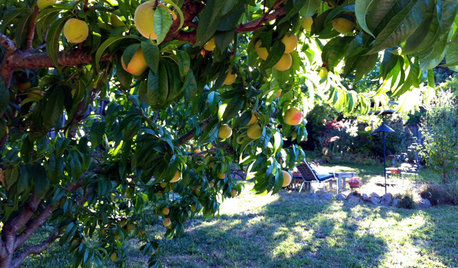
I think I've done well with spraying this year, my peaches are looking good with a month to go. However, tonight I saw the tell-tale early signs of peach scab on just a few peaches. The rest look good. My question is, should I hit it with another spray of Captan? Or is a little scab inevitable? Last spray was on July 1, and it's had three sprays of captan since petal fall.

Also, should I remove any infected fruit I find now to prevent it from spreading?

Comments (17)

  • 16 years ago

    Kellascat:

    At this stage of the season, peach scab is either there or it is not. Peach scab is another of those cases of prevention, not cure. Spraying at this stage would neither slow the disease, nor keep it from spreading.

    I have had a hell of a time with peach scab for many years, and have tried just about every fungicide. The key is to get a fungicide on early, just after shuck split, and repeat the process every few days. If you can get peaches through the first month without infection, peach scab can be reduced or nearly eliminated.

    I have never found Captan to be very effective, but have used Topsin and Daconil. Scottsmith up in Maryland reports good results with plain old sulfur, and I will be trying that next season. He is in a climate similar to mine.

    If you have visible scab on just a few peaches, you have done very well indeed. My earliest peach (Contender) which ripened in early July was nearly scab free, but I see some on the later varieties like Reliance and a white peach called Sugar Giant. Every year I swear I will do better.

    Don Yellman, Great Falls, VA

  • 16 years ago

    I'm very surprised Don didn't mention Orbit which he usually gives credit for brown rot control of his stone fruit. I've used a similar compound called Indar for years that here in my Z6 NY has worked very well at eliminating scab with bi-weekly sprays starting in early July and ending usually a month before any given variety ripens. Not just at my site but many others I manage. If you don't mind a little scab and just want sound fruit you can often get away with as little as a single spray.

    If you are not a commercial grower you can purchase Monterey Fungus Fighter which has the same active ingredient.

    I don't know what miracles Don is hoping for with sulfur but it must be on the plant before every rain and reapplied after. It's mostly used by organic growers at this point and on the east requires many applications. Scott puts a higher endorsement on something called Saf-t-oil which has worked very well for brown rot control in the west.

    For relatively cheap scab control chlorothalanil is usually the fungicide of choice and available over the counter in big box stores. Read the ingredients (I think I misspelled it).

    NY has had very little rain this year so you could have peaches without scab even without spray- some sites, some varieties. You can reduce scab and brown rot by summer pruning to keep the sun on fruit.

  • 16 years ago

    Thanks for the advice, guys. I am very happy with the low amount of scab I've seen, compared to years before. I sprayed lime-sulfur last fall, clorothalanil in the spring, and three sprays of captan since petal fall. AND we've had a dry summer. So that's worked for me this year.

    I won't worry about the few spots I do see.

  • 16 years ago

    Let me clarify on how sulphur has been working for me. I did only one sulphur spray a few weeks after shuck split. More precisely, looking at my log I did it on 5/24, which was probably a bit later than I should have. I had Surround in the tank as well, and this sulphur stayed on a long time (I could still smell it) since the Surround kept it glued to the fruits. It didn't completely cure my scab, but the fruits that I sprayed were mostly free and the fruits I missed due to being hidden under the canopy are somewhat scabby. The apricots I was too late on since I sprayed them the same time as the peaches, and they got the usual bad scab.

    In terms of the timing, I got the idea of sulphur from a U Florida document which suggest spraying 4-6 weeks after bloom. I didn't log when my bloom time happened but I think I sprayed more like 6-8 weeks after bloom, and I may have done better had I sprayed earlier.

    Below is a table of fungicide efficacy. As you can see, they rate Bravo the only ++++ for peach scab; Benalate, Captan, sulpur, and Topsin-M get +++, and the rest are worse. Hman, Orbit gets a - which doesn't necessarily mean bad, it could be there is no data. Anyway, overall sulphur looks like it is not a bad option even for non-organic growers and I think adding a little Surround to keep the stuff hanging on longer may not be a bad idea, either. At this point I have only one year under my belt.

    Scott

    Here is a link that might be useful: fungicide efficacy tables

  • 16 years ago

    Yeah, I've seen other tables recently that only gave Indar moderate ratings for brown rot. It's actually the only fungicide I've used for this purpose and it's worked amazingly well when I've used a fraction of the applications the label calls for. For me, scab and brown rot go together arm in arm- hard to control one without controlling the other.

    Because I have gotten excellent control with Indar I'm reluctant to try another fungicide but I just ordered a jug of Pristine for nearly $500. Figured it might be time to mix things up and the price of Indar just doubled anyway. I'll be using the Pristine for summer fungus on apples as much as for stone fruit.

    I read an article recently about mixing Surround and sulfur and it's supposed to really increase the efficacy of sulfur so I guess you're right on the latest research Scott.

  • 16 years ago

    Scott, I consider the table you have here highly inaccurate. Where is it from? Myclobutanyl has consistently failed at controlling brown rot in he east except in the blossum blight stage according to Cornell and how on earth can sulfur have such a high rating when it must be reapplied after every rain? I don't believe it is based on real world conditions- can't be. I've never even experienced blossum blight in the northeast.

  • 16 years ago

    It is from Rutgers. Its the only chart I could find comparing peach scab fungicides in a Google search.

    Scott

  • 16 years ago

    I think it must be based on laboratory conditions and not field trials. I would not use it for guidance as it contradicts information that I've been getting from Cornell and other reliable sources for years.

  • 16 years ago

    I doubt they are that dumb, using lab results was discredited a long time ago. Probably they didn't take into account many studies. Its interesting to read the individual studies and see how different some of them can be; you can't control the weather and that is such a big variable. Its like medical studies, there are too many variables so you have to collect data from as many studies as you can to finally see the correlations.

    Scott

  • 16 years ago

    Scott, that makes sense but doesn't really explain away the mystery of it. I don't even understand how they could get these results in any trial and if they did, why they wouldn't present it with some caveats as it is presumably intended to help commercial peach growers choose fungicides in NJ conditions.

    Imagine if a commercial grower switched from Indar to sulfur as a result of reading this table!

    http://www.attra.org/attra-pub/peach.html. Here's something you might want to read about organic brown rot control if you haven't already.

  • 16 years ago

    Those attra reports were great when they came out but they were never updated. They were my initial starting point but I haven't looked at them in a long time. I am surprised they are still pretty good as far as timeliness of information. Or maybe they did get updated, the website design looks different than it used to.

    Scott

  • 16 years ago

    BTW, this is what Cornell had to say about sulfur in the 2010 guidelines- "Sulfur is effective against powdery mildew of apple when used at 2 to 3 lb AI/100 gal. It is also somewhat effective against cherry mildew. Sulfur is used on stone fruits to control brown rot, but is not as effective as captan or the newer brown rot fungicides."

  • 16 years ago

    I think sulphur is even less effective for brown rot than they give it credit for. I prefer the Saf-T-Side oil and Serenade combo. Maybe when combined with Surround sulphur approaches this, but I don't like to spray Surround later in the season since washing Surround off of peach fuzz is no fun. My last Surround spray was about a month ago.

    Scott

  • 16 years ago

    Scott, do you know if commercial organic stone fruit production getting any kind of footing anywhere in the east?

  • 16 years ago

    I have yet to see any at farmers markets around here, and the Whole Foods which is now trumpeting loudly how many miles away various local things were grown is not selling any local organic stone fruits. If there were any I am sure they would want them since that would be a double premium. I've heard of a few scattered growers from random sources so there are a few out there, just none around me.

    Scott

  • 16 years ago

    The reason I ask is that it is commercial production that ultimately brings about the most reliable information about the efficacy of different pest control measures even though home growers usually don't need as much protection. Organic growers here rely a lot on information derived from west coast conditions because that's where the commercial growers are.

    When I go to farmers markets (not often as I grow my own vegies in season) any organic fruit is usually very sub-standard- nothing like what you grow, I'm sure.

  • 16 years ago

    Uh, some of my fruit looks pretty bad as well I confess. I didn't pay much attention to the scab on the peaches or the sooty blotch and flyspeck on the apples until recently, and I had quite a few years of half or more fruits with worms in them. Every year things look better but I still am well off the commercial grade on many things. So far this year I had scab on my apricots and some peaches rotted; the plums and my Shekar Pareh apricot came in about perfect and it makes me appreciate them all the more.

    After you wrote your previous note I looked around to see what kind of organic fruit growing was further north of me and I came across an online book on organic apple growing in NY (pdf here). The guy that "wrote the book" also runs a small commercial orchard and I went to his website and found that even the guy from Cornell that "wrote the book" is not organic! See the link below for his explanation why he is not organic.

    Scott

    Here is a link that might be useful: link