Software
Houzz Logo Print

Hi,

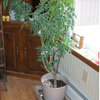
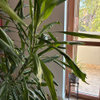
I rescued a pothos from a neighbor who deserted it. She is a beautiful grandmother of a plant, or once was. She has 25 long stems, each eight to fourteen feet long. Most of her leaves have dropped off, she has gone unwatered for a long time, and she is probably root bound.

I am guessing it's best not to repot her right away due to shock. Here are my questions for you wise growers:

1)Can I save the long leafless limbs? Will a long leafless limb regrow leaves or should I cut it back?

2) What is the best way to orient the limb so it makes the least strain on the plant as a whole? (And what are other ways to take strain off the plant while she is recovering.)

3) Is each of those limbs technically a different plant, each from a separate cutting?

4) If she is going to lose the limbs, or some of them, is there any way to put them to good use? (E.g. Can you make cuttings without leaves? Is there any advantage to giving a cutting with one leaf, several nodes, say ten to 12 of them?)

Please help, she is a gorgeous old beauty waiting to emerge.

I welcome any and all tips.

Comments (6)

  • 19 years ago
    last modified: 11 years ago

    Someone once gave me a plant in the same condition. The bare stems will not sprout leaves so cut them off. Use the leafy tips to root and start new plants. Leave at least 2 nodes on the bottom of the plant and repot it in fresh soil. To stimulate root growth I would also cut off 1/3 of the old roots. In a few weeks the bottom parts should start to sprout.

  • 19 years ago
    last modified: 11 years ago

    I'm sorry to be discouraging, but I don't hold much hope for this. Pothos stems when bare, will not produce new leaves or other growth. I'd suggest if you're desperate to save it (no guarantees), cut the whole thing apart. Those endles bare vines do nothing but sap energy from the rest of the plant.

    I'd cut it all up, saving only healthy looking growth w/ at least 2 prs. of leaves & a couple of inches of stem on each cutting.

    Then you can root them either in water or mix, but you'll have to cut it back severely, take off everything that's bare. Then give it time to try & recover.

  • 19 years ago
    last modified: 11 years ago

    Well, Babyg, I'm not one of the "wise growers," but have been over this ground with another grandmother, "Phyllis." (Her previous owner christened her, thinking she was a philodendron.)

    If the vines are still Green, you may be able to propagate a number of new plants from them. When plants like this are stressed, their last efforts go toward survival.

    1)Can I save the long leafless limbs? Will a long leafless limb regrow leaves or should I cut it back?

    Cut the limbs a couple of nodes from the main plant and put immediately into water for now. If they already have been cut and you would like to try to retrieve them, make a fresh cut (about 3 inches up from the original cut) and immediately stand them in a glass of room temp water. Be sure that you are putting the "down" ends of the vines in the water (This sounds like a "Duh," but it can be confusing.)

    Your instincts about avoiding the stress of repotting are good ones, but after so long a time of neglect by the former owner, the old soil is probably "used up" and full of accumulated salts. As Greenhouser suggested, a trimming of dead roots and repotting in a loose, fresh soil should jump start regrowth. Avoid fertilizer and, after initial thorough watering, water only when surface is completely dry. Pothos should never stand in water.

    "3) Is each of those limbs technically a different plant, each from a separate cutting?"

    They may or may not be distinct plants, but attempting to divide the main plant and its very entwined roots would be very stressful. You can make that decision when Grandma smiles up at you in her new clothes. :)

    "4) If she is going to lose the limbs, or some of them, is there any way to put them to good use? (E.g. Can you make cuttings without leaves? Is there any advantage to giving a cutting with one leaf, several nodes, say ten to 12 of them?)"

    With or without leaves, this can be done, and success depends a lot on the plant and how much life is left in the vine. You can try to start them in water or in soil--or you can set up your own experiment and try both. Whatever you choose to do, put each cutting immediately in water, until your soil is ready (if you are going to use soil). You may want to treat leafy cuttings separately from the bare ones. Keep careful track of which end of each cutting should go up and which end goes down into the water (or soil).

    Judging by how long the interval is between nodes, make your cuttings with four to five nodes each. Active chlorophyll in a slightly longer green stem should be helpful. The bottom part, which will go into the soil (or water) will benefit from the support of two rooted nodes. Once you have a stable growing plant, you can always trim off any excess from the top of the cutting.

    Place water cuttings out of direct sunlight, in fairly low light, but where you can monitor them. Change water every three days or so by overflowing with cool room temp water and gently pouring excess to the right level (keeping two nodes under water). When the first roots branch, prepare a loose, light soil and gently plant two or three cuttings per small pot.

    Alternatively, you can prepare soil and stick three, or so, unrooted cuttings in each pot. Soil needs to be barely moist, but not wet (and not standing in water), until you see signs of green growth; then you can back off of water, gradually.

    Maintain both the cuttings and the recovering Grandma plant in medium to low indirect light, as above, and avoid fertilizer until recovery is complete and several leaves are established.

    Along the way, if a cutting loses its green with no sign of roots or leaf budding, it's not going to grow and you can throw it away. On the other hand, some of them may grow into new little Pothos. Please let us know how it goes.

    SC

  • 19 years ago
    last modified: 11 years ago

    would it be possible to serpentine layer the long vines?

    Here is a link that might be useful:

  • 19 years ago
    last modified: 11 years ago

    BabyG,

    Last year my mother gave me a pothos in similar straits. After I got it home (traveled in the car trunk from west MI to eastern WV at Christmas -- these are hardy plants!) I lopped off most of the vines close to the roots. On some of the vines I left nodes, some got lopped off at nearly dirt-level 'cause it was sometimes difficult to unravel which vine went where.

    The cut vines got shortened again to make a decent length for rooting and I stuck them in water. I left a couple of the long nearly-leafless vines on the plant so that it would still have a few leaves *somewhere*.

    Figuring that its soil was probably useless, I went ahead and repotted the "remainder" hoping that the healthier soil would offset the shock of travel, surgery, and repotting. Well, the plant apparently appreciated my efforts: it sprouted new leaves everywhere (even from the vines that were cut nearly to the soil) and, after it spent the summer on my porch, looked full and healthy. Just this week I decided to give it a haircut and trimmed off several "runaway" vines that were more than six feet long. (Yes, I split up the vines into cuttings and they're all rooting now, too. Maybe I can make planters as Christmas gifts. lol)

    Anyway, good luck with your plant. Pothos plants seem nearly indestructible so I'm sure that you'll be able to bring her back to her full glory.

    Lorree

  • 6 years ago

    I disagree with the idea bare stems cannot produce new growth. I tried rooting a few sections as an experiment. The wait was long, but tiny leaflets began to sprout. Once I returned them to soil, they gradually began reproducing and increasing in size.