Software
Houzz Logo Print
jajm4

Frost protection

17 years ago

We had an ice storm here that took out our utilities for an entire week. The house temperature dropped to 35 degrees in the coldest room, and 38 in the warmest. My peace lily was the first to shrivel up and turn black, and my aloe and sanseveria seem completely unaffected. Everything else is somewhere in between.

What I'm wondering is, if anyone has advice for protecting from a repeat disaster.

Most of the plants were on the dry side, as I was planning to water them the day the pump stopped working. I didn't know if it was better to leave them dry or if I should have hauled water in order to keep them moist.

I tried to move as many as I could to the warmest parts of the house, but doing that meant less available light, since everything was crowding into a small space and there weren't as many windows there.

Since the outage lasted a full week, I'm not really sure there's anything I could have done that would have saved them, but I'm looking for ideas for the future, just in case.

I am hoping some of them will recover. I noticed that the large arrowheads (in 14 inch pots) died on the outside, but when I cut off the dead leaves, the interior foliage looks like it might be okay. And maybe the peace lily will recover if the roots aren't totally killed off. It has one green leaf on it, which I'm observing closely.

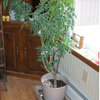
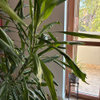
I'm also wondering if I should cut off the browned parts of various leaves, like all my dracaenas which have partially damaged leaves, or if I should leave them alone as pruning might make things worse in terms of stress?

My velvet philodendron looks pale and limp, and its leaves are falling off. I also thought maybe if I cut it back, the stems might resprout leaves, or maybe if I cut the stems off they'd regrow form the roots.

Or maybe I'm kidding myself. I'm heartbroken, I admit.

Has anyone else been through something like this? How did you handle it?

Comments (6)

  • 17 years ago
    last modified: 11 years ago

    You point out a few dilemmas that might be faced--hopefully in the far future--if at all.
    I think its fair to say that a plant that has sufficient water at its roots stands a better chance of survival than one that is --let's say too far gone dry.
    At least the roots have something to depend on when the temperature falls below normal.

    The brown leaves have gone that distance...they've been damaged and the better the plant is rid of that damage, the better the plant has a chance to recover.

    Cold room.....or one that is slightly warmer but with less light.
    At this stage the amount of light is not what one could say is what the plant is dependent on. So I'd say give it the best temperature you can and let it survive the best way it can without so much light. Besides, when it comes down to it, you can always increase the light somewhat---without going the artificial way--by raising the plant, putting it closer to walls that reflect more light or do something that will protect it somewhat from the loss of temeprature.
    Most plants appreciate lower temps...albeit, not sub-zero.

    Do you have a fireplace--perhaps a gas fireplace. Did you know even when the power goes off, your fireplace will still work---albeit without the fan.
    Just turn the fireplace on as normal and let the radiant heat warm the room.

    Even when things look bleak, plants have an inner strength before they give up the ghost entirely. Anything we can do to prolong their life I think is appreciated by the plant.

  • 17 years ago
    last modified: 11 years ago

    I'd be heartbroken, too. I'm sorry. You might be able to get some replacement plants through Garden Web if you post an exchange request in the spring: people here do send cuttings all over the place.

    But anyway.

    I think whether it's best to have plants wet or dry if they're going to be chilled depends a lot on which plant it is. When I lived in the Rio Grande Valley of Texas, the citrus growers would always water everything heavily if it looked like there was going to be a freeze, because water changes temperature more slowly than dry soil does, and the plants had a chance of coming back if their roots didn't freeze.

    With other plants, it's better to have the soil dry, because drier soil signifies dormancy, and plants that are already dormant can sometimes take more extreme conditions than plants that are in active growth. So there's not a single good solution for everything, unfortunately.

    Moving the plants to the warmest spots you had, even if it meant sacrificing light, probably was the right call. Most plants can handle a week or two of less-than-ideal light if they have to, and will still be alive (they may shed leaves, they may have weird growth, or no growth, for a while, but still-alive is better than not-still-alive).

    You really won't know for a while whether things have survived or not; you'll just have to try to give them what they want now as far as temperature and light and hope that that's good enough.

    Cutting off brown stuff makes no difference to the plants either way, at this point: once they've given up on a leaf, it's (literally) dead to them and no longer any concern of theirs, except to the degree that they can reclaim a little bit of water and magnesium and so forth. I wouldn't take cuttings of anything at this point; you should be able to tell in a week or so which stuff is beyond hope (if it goes crispy or limp) and which stuff might yet have life in it: anything that starts to die back from the soil upward, that still has green growing tips, might yet be salvageable by taking cuttings.

    Of the specific plants you mentioned, I'm not optimistic about the velvet philodendron. The arrowhead vine (Syngonium) might yet come back if it was in a big enough pot (big pots change temperatures more slowly than small ones), though frankly I wouldn't count on that either.

    The Dracaenas are also kind of a long shot.

    The peace lily (Spathiphyllum) might be okay, especially if it still has green parts to it. They can handle colder temperatures than you'd think. The recovery is not likely to be fast, though, and peace lilies are easy to get, so you may want to just replace the plant with a new one rather than trying to nurse it along, depending on your level of sentimental attachment to the plant and how patient of a person you are.

    The Aloe and Sansevieria I'm not sure about: if I had to guess, I'd guess that they'll be fine if they were dry and you'll probably lose one or both if they were wet.

    As far as advice, well, it's really kind of a no-win kind of situation, especially a whole week of no power. The only thing you can really do in a situation like that is group the plants as close together as possible and stick whatever safe sources of heat (like a hot water bottle, for example, if you still have hot water) you have in the middle and hope for the best. Hopefully you won't have to be prepared for this to happen again.

  • 17 years ago
    last modified: 11 years ago

    Hi, Jajm. I probably wouldn't have offered comment on this post, but once again, someone has offered lots of misinformation. It's well known that plants that are dry, even drought stressed, are more resistant to chill injury than plants with maximum turgidity, so it is much better to keep plants in danger of being injured by chill on the dry side.

    Please do not remove any foliage that is still partially green. The green represents the possibility of a photosynthetic return, which the plants will surely need at this point. You can always remove the offensive foliage after you're sure the plant is well along the path to recovery.

    Plants subjected to cool temps do not do better in less light. Temperature plays a part in dictating the plant's ability to carry on photosynthesis, but ultimately, it's light that is the major factor. It makes little sense to limit light, which limits photosynthesizing ability, which limits the plants ability to make food, which limits its ability to repair itself, which either lengthens recovery or makes it impossible. A plant MUST be producing more energy than it is using, or it is dying. Limiting light limits energy production.

    What has happened is unfortunate. To help prevent it from happening again (you asked for advice about this), you might invest in a kerosene heater & move the plants into the same room as the heater should you use power.

    Many plants are injured by sudden chill at temperatures well above freezing - often as low around 45*. Phenolic compounds leak through cell walls and leaves turn black, looking as if they've frozen, but usually the more lignified (woody) roots tolerate these temperatures better than the foliage/stems of plants with succulent above-ground parts. The good news in this is you should expect these plants to bounce back, as long as they had sufficient energy reserves to sustain foliage to a level of maturity where it (foliage) becomes a net producer of energy, rather than a net user (around 75% mature).

    Good luck.

    Al

  • 17 years ago
    last modified: 11 years ago

    I meant to say "... you might invest in a kerosene heater & move the plants into the same room as the heater should you lose (not 'use') power."

    Al

  • 17 years ago
    last modified: 11 years ago

    Thanks for the advice, everyone.

    It was one of those once in a lifetime storms, no one had ever seen anything like it before.

    Does anyone think giving them some seaweed and fish fertilizer might help with the ones that are kind of on the edge? Most of them were in 12 inch or larger pots and I think they might survive, even though a large number of leaves were damaged. The roots and some of the more interior foliage on some of them look pretty good.

    My dracaena marginata looks terrible. I am wondering if it might make sense to cut it off at the soil line and see if it will re-grow. There are a few sad looking leaves at the top, but it looks like a shadow if its former self.

  • 17 years ago
    last modified: 11 years ago

    Fertilizer is only appropriate if the plant needs it and you're reasonably sure there has been little accumulation of salts from fertilizer and irrigation water during the winter. The soil your plants are in has a major influence on whether or not fertilizing is appropriate. Remember - fertilizer is NOT food. It is simply an assortment of building blocks (nutrients) the plant uses to make its food and keep its systems orderly. If there are nutrients in the soil sufficient to prevent deficiencies, fertilizing will be a hindrance, rather than a help.

    You need to decide for yourself how important the plant's appearance (dracaena) is, but it would not be in the plant's best interest from a physiological perspective to remove photosynthesizing machinery when your goal for the plant is recovery. If you want to get the ball rolling on forcing new growth, only pinch out the apical meristem (the very end of the plant - the growing tip) and leave the rest of the foliage intact. Leave the major pruning efforts for when the plant is growing robustly or immediately before the period of expected robust growth (June).

    Al

Sponsored
Schlabach Woodworks
Average rating: 5 out of 5 stars21 Reviews
Franklin County's Reclaimed Wood Professionals