Software
Houzz Logo Print
rg5000_gw

Traction issues with Snapper Mower

18 years ago

I recently purchased a Snapper P216019KWV and am having some mixed results with the mower. (I was looking for a long-lasting unit and was really sold on the big Kawi engine.)

I find the wheel drive control to be somewhat awkward and the engine is harder to start than expected but by far the biggest is with traction. I have a significant hill to deal with and the surface is far from smooth. It seems as though every time I hit a little bump, one of the rear wheels lifts and spins. I have to exert a lot of effort just to keep the rear wheels planted.

The dealer didn't offer any help but talked up the merit of the open diff in general. My old cheap (but worn-out) Toro had a ratching-type two wheel drive really moved well on the hill.

So, I'll throw this out to you guys. Is it just me or is this a real problem for others?

Comments (8)

  • 18 years ago

    I have the same mower, had a little over a year. Great mower, on the hard starting issue, you might need to double check that the choke is engaging. There is screw located on the throttle key, that adjust the amount of throw for the choke. For some reason, these screws can back out and as a result you have no choke. This makes it very hard to start, 7 or 8 pulls.

    As far as traction, I do notice some slipping on slick grass, but just push down or slow it down a little. My yard is pretty flat and smooth. I do know it takes a little time to get used to it, but once you get the hang of it works pretty well. These are well designed mowers that will last awhile.

  • 18 years ago

    The traction issue is real. It's a matter of it's having a true differential. (AKA one wheel drive.) This has been an issue since cave men first designed self propelled mowers. A true differential is great for turning corners. It allows the rear wheels to turn at different speeds when turning as they travel in their different arcs. The flaw is that the wheel that loses traction is the wheel that gets the power. Limited slip differentials in cars and trucks have various design clutches to help prevent traction loss but they don't work very good. Toro and Lawn-Boy have the best of both worlds. The Toro-Lawn-Boy post 1993 wheel clutch design allows for true 2-wheel drive. No traction loss. Freewheel turning and easy backing with complete wheel clutch disengagement. Anyway... Your Snapper will slip up hills and on wet grass. I have noticed that a heavy bagger full of clipping improves traction greatly but causes excessive wheelies. Not a good trade-off.

  • 18 years ago

    I concur with rdaystrom about the differential. Additionally, unlike a car with a differential your lawn mower has no suspension or pneumatic tires to help smooth out bumps and keep wheels on the ground. So on rough ground the mower bangs and bumps along and the wheel catches air sometimes. You can minimize the effect by slowing down some and anticipating bumps as much as possible.

  • 18 years ago

    rg,

    I have an old 1990 Snapper (see pics) that I liked so much I rebuilt it.
    My yard is like yours with a major embankment (sp?) out front. What works for me is to assure that your one wheel that has power, is "downhill" so that gravity pushes down on it as you go sideways. If you travel in the other direction, the "powered wheel" will be uphill and will be unloaded causing a loss of traction. Try it going both directions and it will make sense.
    I have mowed this dopey hill for years and I'm really (unfortunately) good at it.
    Check out my Snapper pics. QuickRick

    Here is a link that might be useful: 100_3824

  • 18 years ago

    I appreciate everyone's comments. The general opinion seems to be that I can adjust to the traction issue over time but I'm not so sure. The steepest part of my yard has a 5/12 pitch and no so smooth. The mower actually works better going straight up the hill rather than across the slope. This makes for a great workout but not exactly what I was looking for.

    What irritates me most is the dealer's attitute. First the guy refuse to even acknowledge that this is a potential problem. Then he says "they all work that way" when he has Toros and Lawn Boys on the floor that I'm almost certain have the independent wheel ratchet/clutch design.

    Does anyone know how the Honda HRR series drive works? Is it an open diff like the Snapper?

  • 18 years ago

    I don't know of any other mower that has a fully open diff like the Snappers. All the others will ratchet forward but not backwards when the drive system is engaged. That's why they maintain 2-wheel-drive on hills, which is helpful there. But the downside is that they don't allow as good maneuverability with the drive engaged, because a sharp turn requires that the operator actually push forward (increase the groundspeed) to make the outside wheel ratchet faster, while the inside wheel continues at the drive system's gear-driven groundspeed. That's a list of pros/cons for each system that must be weighed for each person's particular yard and needs. Unfortunately, there's no cost-effective way to have the best of both.

    I've been a Snapper user all my life, and moved to a house with a significant hill in the back about 1.5 years ago. I've actually been surprised so far that I can mow across the grade and it keeps driving pretty well. I was worried about this potential traction problem. However, my turf is not very bumpy, and this may be the big difference between the OP's and my results.

  • 18 years ago

    do more research before you buy next time.you bought the wrong mower for hills

  • 6 years ago
    last modified: 6 years ago

    This is an old thread, but I found it when I was searching for a way to get both of the rear wheels to drive on my Snapper mower. I found a person who was locking final drives on riding mowers, and it gave me some ideas that I put into practice. Look at https://www.youtube.com/watch?v=--rOhbmJhtk to get a general idea of what is involved.

    Look at https://www.youtube.com/watch?v=nccY95l0xGc parts 1 and 2 to see the disassembly procedure.

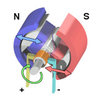
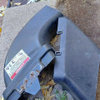
    I removed the transmission, split the case, and took the cover off one side of the bull gear assembly. What you want to do is to prevent the pinion or spider gears from turning, thus both axels are solid with respect to the bull gear and both axles turn and drive. The picture shows that I put several bolts and nuts inside the bull gear assembly, such that they jam the internal spider gears. It now has both wheels turning, and I can cut across steep sidehills without feeling like I am pushing it half the time.


Sponsored
NME Builders LLC
Average rating: 5 out of 5 stars2 Reviews
Remodeling Company in New Albany, Ohio