Software
Houzz Logo Print
prairiemoon2

Most nutritious vegetable varieties

Has anyone read the book 'Eating on the Wild Side'? Great read. The author did a huge amount of research on many studies that have been done, whose aim was to determine if some vegetable varieties are more nutritious than others. I found it fascinating and have adjusted the way I shop at the grocery store and I'm looking for different varieties to grow for next year now, too.

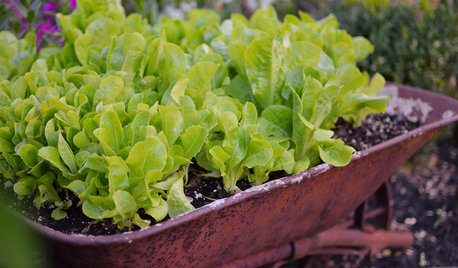
For instance, we've been fans of Romaine, but she convinced me that Loose head red leaf lettuce is much more nutritious, so we are eating a lot more of that.

I found a copy of the book at the library and couldn't put it down.

Comments (6)

  • 13 years ago

    For greens it makes sense that leaves exposed to sun will be more nutritious than hidden, blanched leaves.

    There have been numerous discussions here about the role of commercial breeding of vegetables unintentionally leading to lesser nutrition due to genetic changes to the plant.

    Arguably all breeding of plants has led to changes in nutritional content from the wild ancestral sources, probably in general being an increase in carbs and proteins and decreases in everything else. A good reason to eat at least a few weeds now and then.

    On top of all that is the role of soil health in plant nutrition.

  • 13 years ago

    Yes, that is one of the points the author makes in the book. She does also reference studies done where the nutrient content was calculated and identifies varieties of fruits and vegetables that have had their nutrition calculated to be more than others.

    She points out that to try to find all the wild versions of these vegetables and fruits is almost impossible but she offers a lot of suggestions. And tips on storing and cooking to retain the nutrition. For instance there is a study that reports that if you crush or cut up garlic (crushing in a garlic press is best) and immediately put it in a hot pan to cook, you've just reduced the nutrition to a minimum. She suggests letting it rest and wait 10 minutes before putting it in the pan, and the explanation for why.

    She also had a few recipes in the book and I tried two of them and they were both big hits at my house.

  • 13 years ago

    The author, Jo Robinson, unfortunately is a crap shoot with her information.

    She recently wrote a piece for the NYTimes that was hugely panned for having extreme falsehoods about how super sweet corn is produced that required an editor to step in and correct her article post-publishing.

    I can't speak on the book in question, but some of her cultural anthropology writings about the history of modern agriculture and the development of modern crops leaves a lot to be desired.

    I would recommend looking at other published resources or search for confirmation on any subjects that one might want to take to heart, especially if it's going to lead in a change to dietary habits. It's also worth mentioning she has no formal training/education in food science, food production, or nutrition though she has co-written some books with legitimate scholars.

  • 13 years ago

    Re: garlic, the "nutrition", intended as vitamins, minerals etc., does not change a bit when crushing or not crushing. What changes is the allicin content, which is a compound created by exposure to air. Although I agree with CRN's post, "legitimate" is a word that puts us on a slippery slope. Salatin is not legitimate, and neither is the inventor of the pluot. Farmerdill is not legitimate. "Having considerable practical experience" is a preferred term.

    In regard to nutrition, the OP should decide what he wants. Calories or micronutrients? For calories, the top vegetables are avocado, sweet potatoes, and potatoes. For micronutrients, kale, collard and other members of the leafy brassica group take the crown, although many other greens are close in value. It is possible that cabbage is the best combination, since it has good calories, good nutrients, and the best vegetable mass production per square foot. If you visit a traditional farmer market here in Michigan, what you see is what is nutritious and productive in this zone. There is really very little waste in traditional Michigan cooking (which I consider very advanced).

  • 13 years ago

    I'm just saying she has co-authored some books in the past dealing with health with people who are legitimately qualified to speak in their field. They've done research, they've immersed themselves in their fields, and they've gotten their phDs from schools that are both accredited and respected.

    Just having a phD doesn't make someone always right or an authority, but...unless slanted in ideology...it does provide a check/balance for someone like Jo Robinson who doesn't even have a college education.

    Yes, you don't need a college education to be an expert and even experts disagree on some things, but Jo Robinson has shown in the past through some of her writings (especially when it comes to food anthropology/history) that she's not on the "right track" for some of the points she publishes as facts.

    I'm not calling her a hack...she's just not immersed as an authority and I'm not too sure she double checks some of the information she takes in as truths. She's right more than she's wrong...but some things are not fully fact checked.

  • 13 years ago

    I agree with glib. Although I would add apples as a rich carbohydrate
    source that can be homestead grown (as opposed to small grains).
    They also have a low glucose index rating.

    For micro-nutrients I would also add turnip greens, okra, and chicory.
    I too have been adding more wild foods to my diet over the last few years.
    Especially nettle, dandelion, and wild fruits.
    They are so easy to grow and very disease resistant.

    Here is a link that might be useful: Garden For Nutrition

    This post was edited by GreeneGarden on Sat, Aug 24, 13 at 0:20