My builder uses Houzz Pro to plan the timeline and give detailed estimates and daily updates with photos of progress, and provide invoices at pre-agreed key points in the build. This made the whole experience much more efficient and stress-free.
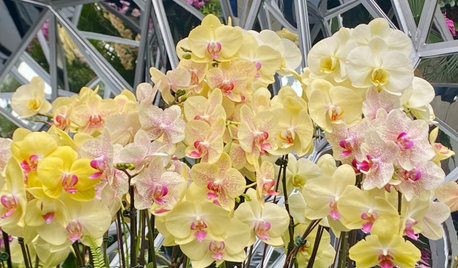
I have visited them and bought from them. they have some very nice plants mainly Phals but they do get other kinds in periodically. Blooming plants are in the $25 range. The plants I got I think were the Taida Salu and Taida Golden Girl (I'm not home so I can't check the labels). It is definitely worth a visit just walking in to the green house and being surrounded by tables of blooming orchids is a treat. But be prepared for the woman to follow you around like a shadow which can be a bit annoying.
I just looked them up - always looking for new vendors, and see their original and main location is in Taiwan, and they established a branch in NJ in 2005.
Because of the Taiwan connection, is there an extra concern about virused plants?
Whictecat8- I'm not sure if there is an extra concern about viruses, that is an area way beyond my limited expererience. The one virused plant I had was a NOID phal from Costco and showed color breaks in the flowers.
I can say that while walking through the NJ Taida greenhouse where most of the phals were blooming I did not notice any obviously virused plants (ie no noticible color breaks in the blooms or in the leaves.) I have also not tested the two that I have from them. They have some very nice orchids and I was definitely drooling over all of them and wishing for a higher budget for orchids since they are practically in my backyard (its a 7 minute drive)and I know I will be going back.... :)
LOL! It is very hard to resist but if I come home with too many orchids at once my family will certainly revolt on me. Especially since it would mean a need for even more light setups :) I grow in our main living areas since my unfinished basement gets way too cold and has little in the way of windows for additional sunlight. So the only optimal grow areas are ones we use everyday. I have no spare bedrooms to set up as a grow room since I have three kids and they all have their own rooms. So I am also limited on space too.
Oh well...My next house (hopefuly in the next few years will ideally have a south facing all season sunroom for all my plants.) This time while house hunting I plan on bringing a compass with me to check if there are enough windows in the right areas. :) Then I should have plenty of room..... ;) Larissa
Interesting... I didn't know virused plants have "breaks" in color... I have a Taida Salu (not from Taida Orchids) that bloomed and two of the flowers have some very tiny areas of "off" coloring... so I guess it could be a virused plant? Oh well. It was only $4 so I can't complain.
I'm not that hard core, so I can't say it concerns me that much. I'm not looking to put plants up for awards or grow them in the hundreds. It's just for fun and my personal enjoyment. (which it has been!)
Can one virused plant transmit a virus to another? Are these orchid viruses air borne? Or are they only transmitted through exchange of material?
If you have such a wealth of reliable sources for orchids, why risk something that is doubtful? On the other hand, it is much more pleasureable to hand-pick your purchases than to order them online. Larissa, why move house? If you wait long enough the kids will leave and THEN you can go wild! Mine did, eventually. The vacuum got filled up with books and papers, which are now being gradually replaced by orchids. I can now clear my workspace of its clutter, and then I plan to fill up its east-facing window with lots of phals - should be ideal for them. Judy
Yes, viruses can be spread from one plant to another.
Some theories hold that water splashing from a diseased plant to a healthy plant can transmit a virus. Others say that viruses are spread only through contact with "raw" surfaces. This happens when people don't wash their hands or sterilize instruments before going to the next plant when repotting and trimming roots, for example.
If you search the archives for "virus," you'll get a sampling of the range of concern. Many (all?) of the Taiwanese growers produce orchids on a massive scale, supplying the big box stores.
The complaint has been that the Taiwanese growers aren't as careful about testing for viruses as those selling to the hobbyist market - usually U.S. growers. If an original stock plant(s) was virused, then the thousands of plants we see in endless, neat rows in Taiwanese greenhouses are, too. This happens when the original plants aren't tested before breeding with them.
The problem for folks on the forum & other hobbyists occurs when U.S. growers buy from Taiwanese wholesalers and don't test for viruses.
On the other hand, some collectors and U.S. growers have plants they know are virused, and they've decided to keep them and take all precautions. Others assume they've got plants with viruses, even if there aren't symptoms, and handle all their plants accordingly.
Interesting Whitecat8 because what I have found out is the main Taiwanese breeders ARE testing their plants for virus before they go into production. These are the breeders who are creating new plants, not mass producing with who knows what. Most of the careless virus spreading is actually coming from the USA.
Virus cannot be spread in the air or from watering dripping on one contaminated plant to another one that isn't contaminated. It has to be spread from wet wound to wet wound.
counselor "off" coloring is not a description of the color break virus. It is not unusual for a first time blooming seedling to have color that will improve with age.
Use good hygiene, disinfect your potting utensils and enjoy your orchids.
This is new info for me, about the main Taiwanese breeders testing their plants and viruses spreading is mostly coming from the U.S. Do you mean U.S. growers? Where is this info available?
And yes, I was referring to the Taiwanese mass producers. Taida says they have more than 9 hectares, or 22+ acres of "cultivating areas" for orchids, mostly Phals, in Taiwan and NJ.
Maybe that's small, compared to other orchid businesses in Taiwan - numerous Phals and Dtps have Taida in the name. Is Taida creating new plants, and they aren't one of the culprits?
Also, one forum member said recently that Russ Vernon, the next IPA President, indicated to the poster that he would address the issue of virused meristems from Taiwan.
From what you're saying, he should address careless virus spreading in the U.S., too?
I think it may be possible to transmit virus from one plant to another with splashed water. If the virused plant is exuding droplets of glucose, which most phals do, then these droplets will also contain virus. When you water these plants, this virus will get splashed into the crown of adjacent plants. We know that both bacteria and fungi can attack this soft, new tissue. It would seem to make sense that viruses could do the same. Even if they canÂt get into this new tissue, they certainly can get into any cut or scrape on a leaf. In any case, I think it is difficult to unequivocally say that viruses cannot be transmitted to adjacent plants by splashed water.
Mike - if viruses could be spread that easily, there wouldn't be an unvirused orchid in captivity.
I think to unequivocally say that viruses can be transmitted to adjacent plants by splashed water is irresponsible. 99.9% of the people reading this Board are not commercial growers, do not have greenhouse where a hose is used to mass water their plants and should not be put in a panic mode over something they might not ever get. If they do, if proper hygiene is followed, will never effect the rest of their plants.
Unless people are willing to never buy or bring in another plant, there is no guarantee their next plant won't have a virus.
Brooke - who received four plants last night from the President of the orchid club, expects two new species phals today in the mail and is working on an order from Ecuagenera to be picked up at MidAmerica in Sept.
I received two large orders of phals yesterday. One was from a well known grower in Florida. They were stem propagations of his awarded plants. Every single one of them was virused. I know a lot of this is just my opinion, but I do test my plants, so at least it's an informed opinion.
This is a direct quote from Dean Stock posted on another forum regarding the transmission of virus: "....Others have plants overhead and let the water from one pot fall on other plants. Any obvious habits in the greenhouse such as these will guarantee the spread of virus but other things like smoking in the greenhouse will not."
I do not advocate the testing of orchids by the typical grower because it is just not worth the money, but when you have tens of thousands of dollars in your plants and you have been growing them for several decades, virus awareness, testing and prevention become important. I would like to add that I am not a commercial grower by any measure and that there are many people in my orchid society with at least as many plants as I have. This is likely true for members of this forum as well.
Mike didn't "say unequivocally that viruses can be transmitted to adjacent plants by splashed water." He said "it may be possible."
I have only 90+ plants and no greenhouse, and the splashing/spilling concept applies to my collection. With my set up, it would apply if I had room for only 20 plants.
Inside, my plants are fairly crowded on drip trays. I try to keep them from touching each other but don't always succeed. If I watered with the watering can over the drip trays, there would be splashing. Instead, each plant is taken off the tray and watered over a big pot.
Outside, the plants are on slatted shelves w/ no drip trays. If I didn't take out each plant and water it separately, water from one pot would fall into multiple pots below, and the splashing would be considerable.
The last 3 summers, the few days it's been in the 100s with no breeze, I've misted the whole lot with the hose, knowing it was a risk.
Quite a few Forum members with small collections put them on shelves outside during the summer, and many say they water with a hose, and they need this info about risks.
Without info about viruses, newer growers could have multiple plants affected before they realized what was wrong. At that point, good hygiene won't save those plants.
As one among the 99.9% of growers on the Forum, I'd rather have information about possible threats to my plants, maybe panic, and decide what to do, if anything, rather than to have others withhold that info or say the risk is almost non-existent when it's not, motivated by what they think is my own good and so I won't panic.
And congrats on the new arrivals. "Working on an order from Ecuagenera..." Sweet.
I agree with Whitecat. I don't know how others grow their plants but mine are injured, knicked, spikes cut, etc. They are crowded together on trays in Winter, and on shelves outdoors in Summer. They are watered together with the hose and rain. Sharing water can spread virus. Insects can spread virus. I would not knowingly purchase a virused plant.
There are a few I am sure are virused and I keep them segregated both in and outdoors. I hold on to them for their beauty or sentimental reasons.
I don't go crazy and don't have the time or resources to spend my days worrying. But I do believe in being cautious. I have tested plants to rule out virus. I like to share divisions and plants with others and would not want to infect their collection.
I think what I have been advocating is the "common sense" approach to orchids and the possibility of a virus in ANY plant a person adds to their collection.
The seed was planted by Mike on the virus thread that wouldn't die, that phals from Taiwan growers were virused.
Whitecat8 sees the vendor Taida mentioned and brings up the virus issue.
Mike quotes Dr. Stock but the Dr. also said that he has probably tested more phals than any other grower/breeder and found the stock originating from the USA to have more virus issues than plants from Taiwan.
Mike is a commercial grower and seller. I think it is wonderful he tests all of his plants because he certainly has had bad luck in acquiring plants to resell. His last batch came from a USA source - that's tough to take from an awarded mericloned plant. I hope he got his money back from the seller.
I consider EVERY commercial grower to have a virused plant, somewhere, in his greenhouse. One careless, sloppy, lazy employee can contaminate multiple plants when the owner isn't looking over their shoulder.
I consider any plant I receive from a private grower/friend to have the potential to be virused.
Folks I'm not saying the virus issue isn't out there. It is rampant in the oncidium family, cymbidiums, catts and of course, phals. It could be in other genera too but not have obvious symptoms because of their growth habit. Are you aware that if you grow tomatoes and orchids, you could get a virus in your orchid collection from tomatoes.
The information isn't being swept under the rug - it is out there for the world to google. It behooves everyone who has more than one or two ornamental phals used as table decoration to read and be aware of it.
If you use common sense, practice safe repotting methods. keep your plants as insect free as possible, not reuse water from a previously watered plant, virus will not wipe out your collection. You will lose more plants to improper growing conditions than you ever will to a virus.
Where did you get the idea that IÂm a commercial grower? IÂve sold some plants on ebay, but probably no more than 40 or 50 in the last 5 years. Check it out for yourself. The last items I sold were my sonÂs 20 year old toys. The only things currently for sale are prehistoric ceramic items. IÂm just like everyone else on this forum, except I have been buying a lot of plants recently in an attempt to replace ones I had to throw away earlier this year. Most of the plants I have been buying are averaging about $40 and to that I add about $5 for the cost of testing. There is no reselling going on. These are for me.
I think the discussion about virus in orchids wonÂt die because there is so much conflicting information. Some reliable people say that it doesnÂt easily spread and that even if it does, it doesnÂt matter because the plants will be just fine, that they are more likely to die from other causes. All I can say is that this has not been my experience, but I certainly donÂt have all of the answers. IÂm just trying to make sense of what I am seeing as I test these plants from various sources.
I do think about viruses every time I buy a plant, but I also look for signs of scale or mealybug. I try to get the healthiest plant I can get for the money IÂm spending. I regard each purchase as if the plant might be with me for many years and indeed some have become old friends who reward me each year with tremendous displays of flowers.
I think my attitude towards virus was much like yours until I got really burned earlier this year. It didnÂt just cost me money. I lost a lot of these old friends and IÂm much more careful now about what I let into my greenhouse.
lwowk
whitecat8
Related Professionals
Lake City Landscape Architects & Landscape Designers · Amherst Landscape Architects & Landscape Designers · Leominster Landscape Architects & Landscape Designers · Saginaw Landscape Architects & Landscape Designers · Allentown Landscape Architects & Landscape Designers · Longview Landscape Architects & Landscape Designers · Shreveport Landscape Contractors · Fall River Landscape Contractors · Omaha Landscape Contractors · Bend Landscape Contractors · York Landscape Contractors · Fort Smith General Contractors · Davenport General Contractors · Champaign General Contractors · Liberal General Contractorscounselor4444Original Author
lwowk
whitecat8
lwowk
counselor4444Original Author
savtaj
whitecat8
highjack
whitecat8
orchid527
highjack
orchid527
whitecat8
counselor4444Original Author
jane__ny
highjack
orchid527