Software
Houzz Logo Print
meldy_nva

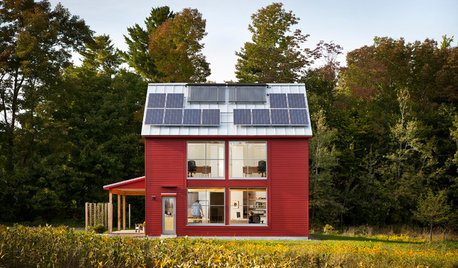
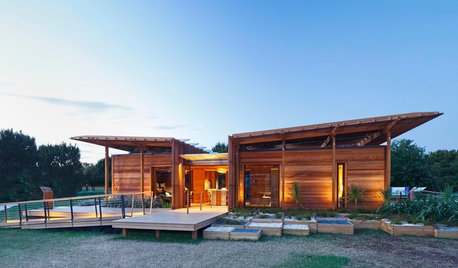
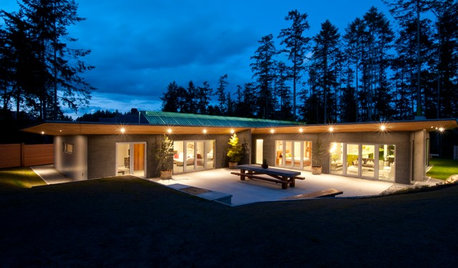
Solar Decathlon 2007

19 years ago

This seems to be the best of several sites about the recent competition.

I was glad to see marketability considered. It's good to have demonstrations of ideas, but they need to be attractive to the consumer to be viable.

Here is a link that might be useful: Solar Decathlon 2007

Comments (8)

  • 19 years ago

    It's nice to see how new homes can be built using solar technology. But the real strides will be in the retrofitting of older homes to solar. But that's the problem with all new technologies, not just solar. There is the old infrastructure that has to be changed or adapted to the new technology. Older infrastructures are behomethic, Luditith nightmares, that resist changing. This is the slow down. Automobiles did not replace the horse and carriage overnight, and it is unrealistic to expect society to change to the new energy sources overnight. But the change is coming, for whatever reason.

  • 19 years ago

    Michael, I know what you mean. DH has been reading up on solar power & trying to figure out how much it would cost to do our existing house. Not cheap.

  • 19 years ago

    What is realistic before we even consider adding active energy, is to take advantage of the passive technology already in existence. Homes property sighted, with the correct exposure and attention paid to the use of earth berming could automatically reduce the energy needed to maintain comfort. Heat loss is directly proportional to the area of the surface exposed, for instance, so what are builders doing? Making huge homes with lots of surface.

    Even my chicken coop built seventy five years ago has a roof slant and window exposure to keep the coop cool in summer and take advantage of the sun in winter. Keeping energy use down isn't completely about energy star appliances and insulation. It's about the whole picture.

    The first g'house we installed, I did a lot of planning beforehand to make it as energy smart as I could, as I grow winter crops in it. You cannot imagine the gas consumption required to keep an easter lily crop at 72 degrees when it's twenty below. That's a temperature rise even the furnaces couldn't maintain.

    What we need to do is to give incentives to builders or penalties if that doesn't work to get them to learn to incorporate efficiency into the design of shelters and not rely on high tech stuff to compensate for poor planning, so that what we hit is a compromise.

  • 19 years ago

    The big picture has not only to include passive and active energy solutions, but must also include codes that are not directly related to energy efficiency. There are seimic, tornadic, hurricanic, and snow load codes to be met in the differining parts of the country, and the world.

    It does get complex.

  • 19 years ago

    Using solar power as an alternative energy source,buying hybrid cars,and everything else we can do as individuals matters to a small extent,but the single most important thing we can do to make the biggest difference in energy conservation and less dependency on oil,is to elect officials in Washington of like mind. Nothing else comes close to making such a big impact on our future.

  • 19 years ago

    I love the 75 year old chicken house with solar orientation! We are leasing so our efforts have been minor and against heat (AC use) rather than cold. Cheap DIY solution for my western windows in bedroom until my 7-foot Liquidamber tree grows taller was a 12-foot sail fastened to house. It filters sun to 10 degrees cooler, plus the "sand" color gives a lovely golden glow in my bedroom.

    For floor to ceiling 12 foot west-facing window in kitchen I hung netting from eaves and grew Japanese Climbing Fern, Cypress Vine, Cardinal Climber and Manettia inflata "Firecracker Vine"...all except Fern are hummingbird favorites. Didn't completely block sun but looking thru lacy green vines at hummers was a joy.

    One other thing that helped was getting AC checked... it had a minute leak in coolant pipe which meant air wasn't getting cooled properly. Also changing filters in AC every two weeks ... sometimes every week if like now it's dusty outside from no rain or in heavy pollen periods. Not only healthier for us but easier on AC unit.

    And Marda...I think the tide is beginning to change with the public, which maybe then will change voting. There's even one whole 1/2 hour on HGTV featuring energy saving ..called Life with Ed. Funny and quirky host and I hope it lasts. josh

    Here is a link that might be useful: Sun Sail

  • 19 years ago

    One thing that almost any houseowner can do now, is to invest in solar hot water heating. Passive and low maintenance systems have been available for decades, one simply has to decide which is most suitable. Change-over ranges from quite easy to install [and somewhat expensive] to a bit complicated but easier to maintain. The one dependable thing is that you will notice your water heating bills plummet (25 to 70% of the average electric or gas bill is for heating water). According to the studies I've read, you can realistically expect to save a *minimum* of $300 per year which would pay off the solar in less than five years... after that your cost for hot water is maintenance and upkeep. I put solar water heating just behind sufficient insulation as one of the most effective low-cost, long-term house improvements.

    Josh, I've been using grapevines to cover the south- and west-facing house walls. The year I let the Concord cover the BR roof, we rarely needed A/C. Put another way, without the grapevines, the south-facing brick has been metered at 125° when the air temp was a moderate 75°; the vine covered portion was several degrees cooler than the air.

    Now, let's attack those horrendous open-air parking lots which lack a single shade tree... Or, the next time you go to town, take a look at all those roofs. Why aren't there solar panels on that wasted space?! Every time I hear about another nuclear plant needed to produce electricity, I want to say don't bother spending a billion dollars to pollute the planet, spent a quarter-billion and cover those public roofs with PV panels!

  • 19 years ago

    I love the 75 year old chicken house with solar orientation!

    You know Josh, my house built sometimes in the 1820s to 30s was built with the same goal in mind. The north side of my house has fewer windows than the south. In summer when the sun is overhead, the rooms get very little direct sunlight from those south facing windows and the house stays cool and darker, but in winter, when the sun sinks lower toward the horizon, the light and warmth just flow into that side of the house. That wasn't an accident. Wood was abundant and there for the taking, but it involved a lot of work harvesting and preparing it for use, so energy conservation was an issue.

    When the Victorian era hit, you will see the correlation of the increasing wealth of the population due to the beginning of the industrial era, discovery of manufactured coal "gas" and then natural gas, and see it reflected in the expression of house designs. The typical Victorian house and those built until the "war" years were energy hogs, because it was too cheap and easy to heat them. We entered a conservation "dark ages" and the technology of passive design for energy conservation pretty much got lost to the culture, save chicken coops. LOL. Now, I read about the "new" discoveries of architects concerning passive energy conservation and just laugh. It's been around so long it's merely being rediscovered, for the most part.

    There have always been a few forward thinking social prophets, however who saw the writing on the wall. According to D. Urbinato in an Energy Citations Database, "complaints about the smoky air (from burning sea coal in English cities) as an annoyance date back to at least 1272, when King Edward I, on the urging of important noblemen and clerics, banned the burning of sea-coal", with punishments of torture or death resulting for those who refused to obey the ban.

Sponsored