Software
Houzz Logo Print
amateur_expert

Honeysuckle

20 years ago

I have read a lot on here about different types of honeysuckle being invasive. Is the Lonicera fragrantissima (winter/fragrant honeysuckle) one of these?

I read on Garden Watchdog that Greenwood nursery is mostly reliable - why are they selling it so cheap?

Comments (15)

  • 20 years ago

    Lonicera fragrantissima is considered a non-native invasive, although probably not as prolific as Lonicera japonica.

    Are you trying to get a fragrant winter bloomer? A couple of the native honeysuckles have fragrant flowers but they generally bloom a bit later.

  • 20 years ago

    Can anybody tell me why I keep getting mixed answers to this question? I asked a local landscaper today and he said it was not considered invasive.

    How exactly is it invasive, for those who think it is?

  • 20 years ago

    Invasive to your landscaper probably means it takes over the garden. L. fragrantissima does not take over the garden, not the way some Honeysuckles will.

    Invasive for Jenny means that it takes over in wild locations at the expense of native species. L. fragrantissima does seed itself and is found wild in most eastern states. It is officially listed as noxious in Tennessee and considered a pest in several other southeast states.

  • 20 years ago

    So, that means that in my garden I would be fine but will the honeysuckle be putting out little babies all over my neighborhood?

  • 20 years ago

    Yes, that is what it could mean. You don't always see the direct effects of invasive plants. Birds can carry the seeds off to other places (and usually do).

    Here's a link to one of the native honeysuckles, many cultivars are now available, offering choices from yellow to deep red.

    Here is a link that might be useful: Lonicera sempervirens

  • 20 years ago

    Thanks for the links.

    I'm torn as to what to do. My BIL - who is a landscaper - let me borrow his Taylor's Guide to Shurbs to find something for a particular spot in my back yard. The fragrant honeysuckle is the only thing that met my requirements!

    Here's what I need: shrub that grows to at least 6 feet, grows fairly fast, and can tolerate drought and lots of shade. What I am trying to do is help block the view to my neighbors' houses at the corner of my yard (where there happens to be a large tree).

  • 20 years ago

    How about a full size rhododendron? If you give them plenty of room they can be really nice. In shade they will grow more slowly and not bloom as well, and you might have to prune a bit to keep them compact.

    It's pretty hard to find something non-invasive that is also a fast grower. Tempting as it is, it's better to be a little bit patient. The years will fly by much faster than you think, and you will have to live with your choice for many years. Even something that doesn't grow like lightning will be good sized in a few years.

    How close to the tree are you planting? How about another tree, like a hemlock?

  • 20 years ago

    amateur_expert - if you're looking for a privacy screen type plant, then there are some shade/drought-tolerant/fragrant plants that you could try - eg., Calycanthus floridus (sweet shrub), Viburnum x burkwoodii (which is supposed to be fragrant), etc. One question regarding that tree is whether it is deciduous or evergreen?

  • 20 years ago

    The tree is already there, fully grown, deciduous. I'm planting within a few feet of it out of necessity. In the winter, spring, fall, there is not much shade but the area gets a lot of shade in the summer. That corner of the yard is South East - so the area got morning sun until my neighbor put up a shed.

    The Sweet Shrub looks nice. The Virburnum isn't listed as shade-tolerant in my book. Also, I don't necessarily care about fragrance.

  • 20 years ago

    "Plant Invaders of Mid-Atlantic Natural Areas" is just about the best reference for invasive species. It is based on field-collected data taken over many years. L. fragrantissima is one of seven Asian bush honeysuckles that are on their bad list.
    I have always considered this plant to be rather non-descript. It is very common in Maryland as highway plantings. The local athletic field has a long, monstrous hedge of them.
    Contrary to a previous post, I have never noticed even the slightest fragrance in any native Lonicera.
    The suggestion of rhododendron is a good one, also leatherleaf viburnum. Let's hope you're not planting under Norway Maple.
    Sam

    Here is a link that might be useful: Plant Invaders of Mid-Atlantic Natural Areas

  • 20 years ago

    amateur_expert - I have a circa 1961 "Taylor's Encyclopedia of Gardening" that I grew up with (and I never liked their newer books - they never seemed to capture the old-fashioned botanical spirit of the older ones...lol) and it doesn't really specify either way other than their "ease of culture", although other sources claim many of the viburnums can tolerate part sun spots and I have seen many at the edge of an understory and/or in high shade.

    I did think of another that you could try that is evergreen (not necessarily fragrant) and that is a shade plant and that's an aucuba. The Gold Dust cultivars could even brighten up the spot. If you can get a male & female pair, you'll get some nice red berries out of the female. Here is my sister's just last weekend (it came with the house and she had to move them a few years ago when she bought the house because once she took down 2 huge American Hollies from the backyard, they were suddenly getting too much sun where they were. They are about 40 years old and were a dickens to move but she rejuvenation pruned them and babied them and they're pretty content now (she has a similar situation as you with her neighbors and put up her own fence, etc. She also inherited that huge camellia to the right with the pink flowers on it (you could try one of those too!).

    {{gwi:247366}}

    Sam - I have grown Goldflame honeysuckle (Lonicera x heckrottii which is a cross of the native Lonicera sempervirens and Lonicera americana, a european hybrid), and it was fragrant, although some have purchased ones that weren't. The downside of that particular variety is the powdery mildew that can take them down, so I decided on pure native honeysuckle this year with L. sempervirens 'Blanche Sandman'. I also have a Lonicera x mandarin which has some L. sempervirens it it too (but no fragrance). I have been really really impressed by the native honeysuckles and the beautiful cultivars that are available (and the sheer flower size!).

  • 20 years ago

    Oh, no! I had no idea that L. fragrantissima is invasive, I ordered 3 of them a couple of years ago, from Forestfarm. They are real monsters, too.

    Probably the best way to keep them (or the ONLY way) would be to cut them back really hard right after blooming. That means they won't work for the OP, but they'd actually work better for me that way.

    Amateur_expert, how about a sambucus? They do well in shade, and are native. Or, for an evergreen, Ilex pedunculosa. It's got non-spiny leaves and lovely berries. Mine are in deep shade but produce berries anyway. They are not especially rapid growers, but not too slow as evergreens go.

  • 20 years ago

    Sambucus does well in shade? I didn't know that -it's not listed in my book that way. But thanks! I'll check it out.

  • 11 years ago

    Lonicera fragrantissima is still blooming here. I am very sensitive to the invasive nature of some Asian species. Considering how commonly this plant is planted here I have never seen any volunteers.

    That distinct lemon smell is hard to resist, how does so much fragrance come out of such a small flower?

  • 5 years ago
    last modified: 5 years ago

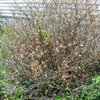
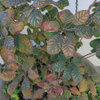
    Bikeriding this morning, a gust of wind brought this great lemony fragrance my way. This honeysuckle is commonly planted along highways in my state. Many spent flowers on the ground, it has been blooming for about a month. Winter honeysuckle is a good one to bring some branches in the house and brighten up the winter days. pic taken 03-31-21