Software
Houzz Logo Print
linda_hershey4490

what is this plant

18 years ago

I'm gonna try this again,,,,,,,,Can anyone tell me what this plant is, and is it hardy or tropical. Thanks.

Here is a link that might be useful: pond plant???

Comments (23)

  • 18 years ago

    That is a pickeral rush spelling might be off. I have them in my pond nice marginal plant.

  • 18 years ago

    There it is! Disregard my post on your other thread, Kitt. :)

    Brenda

  • 18 years ago

    Are you sure it is pickerel rush, I have that and it has a purple cone shaped flower. Is there more than one kind of pickerel rush besides the blue/purple one and a white variety. The flowers on this are very tiny like baby's breath and is an airy look. The leaves are tough, leathery, and rounded, and Is IT HARDY to zone 5.

    thanks.

    Kitt

  • 18 years ago

    This leaves me totally confused. Sandy

  • 18 years ago

    Do you have more than one plant in that picture? The broad leaf does look like pickerel rush.

  • 18 years ago

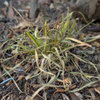
    I tried to take the picture from the top so you could see the leaves, their rounded, tough, not pointed like a pickerel. You can see the flower stalk it is that feathery stuff coming off the top. The plant to the right of it is planted in the same basket, it is a rush. I bought them as a planted basket. It was called an instant pond.
    I have searched and searched and can't find out what it is. It is approximately 16' tall in the leaves and the top part that is blooming is another foot or so above that. The blooms are airy and had a bunch of tiny whiteish purple flowers on it.

  • 18 years ago

    I have added more pictures for identification. Please help! I really need to know if it's hardy to zone5.

    thanks.

    Kitt

    Here is a link that might be useful: unidentified plant?

  • 18 years ago

    It's one of the water plantains, probably Alisma plantago-aquatica, Alisma triviale or Alisma subcordatum.
    Definately hardy to zone 5 if you drop the plant to the bottom of the pond.

    Here is a link that might be useful: Water Plantain Info

  • 18 years ago

    Joyce,

    thank you soooo much, yes definitely is that plant, I love hostas and I thought it looked like one, would figure it is in the same family of Plantains, thanks!

    Kitt

  • 18 years ago

    Joyce is correct!

  • 18 years ago

    Thanks LeeAnne!
    kittcatt, It may look like a hosta, but it is not in the same family.
    It's just one of those very misleading common names.
    That is why I always use the latin or 'botanical' name.

  • 18 years ago

    Joyce
    I do believe Hostas were developed from the common weed Plantians, If I am not mistaken. This is what I was told.
    Also, in researching it, it looks like it is hardy to zone 6. Do you think I should bring it inside to winter, or outside. thanks!

    Linda

  • 18 years ago

    No, hostas were not developed from the common weed plantain.
    Hostas have now recently been classified in the Agave (Agavaceae) family.
    (up until that they were in the Lily Family, aka Liliaceae. Botanists are always reclassifying plant families and it can be maddening! But DNA proves the case.)

    Hostas were not developed from another plant.
    Hosta venusta is a tiny species hosta from which most Hosta cultivars (cultivar means cultivated variety) were developed.

    The weed plantains are in the Plantaginaceae family, not related to Hostas in any way.

    When you see a hosta referred to as Hosta plantaginea it's translation from Latin to English simply means 'Hosta with leaves like plantain'. It does not mean, in any way, that a hosta and a plantain are the same plant, or in same family.
    Many people confuse the second botanical name of a plant with it's actual genus, when the first name of a plant is the genus, the second name is the species name, and usually describes it's flowers or leaves, and often by comparing it to another plant already well known. Such is the case with Hosta plantaginea.

    Depends on the website, some day Water Plantain is hardy to zone 5, others say zone 6. Some even say zone 4.
    For the winter: If you drop it to the bottom of the pond, below the iceline, it will be fine. :)

    Also, just an FYI for fun, Hostas used to be called Funkia. I like Funkia better....LOL!

    More good reading:
    http://en.wikipedia.org/wiki/Hosta
    http://www.americanhostasociety.org/evolutionofhosta.html

    Here is a link that might be useful: Understanding Botanical Names....

  • 18 years ago

    Thank you for that post, Joyce! That's exactly why I prefer botanical names, as well. :)

    Brenda

  • 18 years ago

    Good for you, Brenda! :)
    Being a professional landscape designer and planner, I am required to know each and every botanical name of every plant we use, or could use in the future. (off the top of my head 99% of the time) This is because there are so many misleading and confusing common names such as 'Plantain Lily' for Funkia...errr... I mean Hosta. ;) It is soo-ooo misleading! (the cultural requirments for Plantain and Hostas are opposites) I also must know all native plants and invasives by both botanical and common names. Another horrible aspect of common name usage it that common names often can represent several different plant groups, totally unrelated. For example: 'Bluebells'. Depending on where you are from, Bluebells can be several different kinds of plants, from tropical aquatics to hardy northern woodland perennials.
    The software I use for my landscape designs is loaded with many basic plants, but I can also add any plants I want, especially as new cultivars are created. Of course it is by botanical name, but there is also a subheading for common names. I can do a search with my landscape design software. So when a customer comes in with a common name for a plant they want or claim to have, I inwardly wince, and know it's gonna take a while to actually find out what it is. Most of the time a common name search comes up with at least a half dozen plants, all unrelated.
    It just makes more sense to use botanical names because they are precise, no room for error or assumption.
    I still do like my Funkia collection better! ;)

  • 18 years ago

    Joyce, so is that.... fun- KEE- a,..??.. pronunication.......ha ha...

    That is why I ask you guys, someone has to know!

    I have 1 ft shelves 2 ft shelves and 3 ft bottom, where do you suggest, on the 2 ft shelf? I am glad to know it's a hardy, I really like it and have never seen it around here before......
    Kitt

    Kitt

  • 18 years ago

    How deep does your ice get?

    I pronounce it: FUNK-eeya. ;)

  • 18 years ago

    Usually just 3 or so inches at the most.

  • 18 years ago

    One more common name that is a personal pet peeve (PPP)...African daisy! Osteospermum, Arctotis, Dimorphotheca...and sometimes Gazania. Oy! :D

    Brenda

  • 18 years ago

    I found some of these plants growing in a stream across the street from my pond...I put two in pots and have them in 12-15" water...They were on the edge of the stream when I dug them up.....

  • 18 years ago

    Old Chinese proverb - A picture is worth a thousand words. I don't understand why this thread doesn't include pictures so we can see what everyone has done to give their ponds a natural edge. I appreciate having an image to inspire me.

  • 18 years ago

    Joyce said,
    " Another horrible aspect of common name usage it that common names often can represent several different plant groups, totally unrelated.............."

    And if I may add,That it can cause more arguments, than enough, among well meaning gardeners and forum members here. LOL

    I find that some plant nurseries or garden centers, etc, will just arbitrarily give a common name to plants, without a second thought about whether it is correct or not.
    A very misleading practice.
    "Horton"

  • 18 years ago

    SOOOO true Horton...and then people believe it like gospel.
    They don't realize that many retail nurseries and garden centers don't hire the smartest employees, just the cheapest and/or easiest to come by. No matter how much these employees 'pontificate' at you, or how much they come off as an expert, it is still your responsibility to look the plant up somewhere online, or in a book, and learn of it's proper cultural requirements. Buyer beware and all that. Remember, the salespeople and nursery employees #1 priority is to sell you a plant no matter what.
    I've even had some nursery buyers tell me what name they are going to give the plant to make it sell better.
    (we are not a retail nursery here)
    You should see the back of my Jeep!
    I just came back from a local wholesaler with stuff for the gardens of my new house.
    I am now looking it all up to make sure that THEY told me the right info even though they are one of the most primo wholesalers around here. :)