Software
Houzz Logo Print
flowers4nancy

How do you clean weed out?

16 years ago

hi everyone

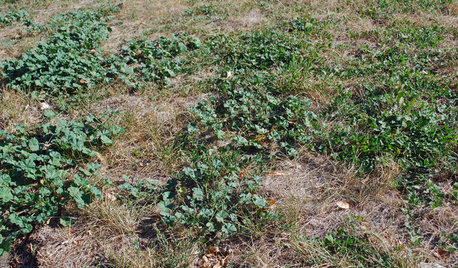
My perennial beds are over run with weeds. I was not able to weed them all last year. How do I clean them up? I am thinking about digging up all plants and then tilling or spraying beds. This way I can start fresh, but it will be alot of work. This year I will be able to tend to them. Any suggestions best way to get my Perennial beds back to flower beds not weeds.

Comments (18)

  • 16 years ago

    Solution may vary with various type(s) of weeds. Do you know their names?
    In general, you could try cutting them down and then cover them up with landscape fabric (available at garden centres) or you can use thick layers of newspapers. Leave those spots where perennials are as manual/hand weeding can be done there. Then add couple of inches of mulch on top of landscape fabric.

  • 16 years ago

    OH GOD .. NEVER...EVER .. waste your money on the cloth ....

    let me simplify it this way .. while you are laying it down.. new weed seeds are being blown on top of it .. it will do nothing.. in the long run .. to stop new weeds .. though it may inhibit that beneath it ...

    also .. it will be a pain to plant new things.. and i predict .. within a few years.. you will be cursing ... and removing it all ...

    now.. if it were me ... and i had an invaded bed ... i would remove all the GOOD plants either to a holding bed.. or pots ....

    then i would spray it all.. according the label with generic round up .. and give it a week or two to die off.. then respray .. wait another few weeks .. and hopefully by about mid may [in my z5] .. replant the whole ...

    then you should do all kinds of research about proper MULCH ... most weed seed need sun and soil contact for germination ... ONE of the uses of mulch is to shade or cover the soil.. so that even if the seed makes it down to the soil ... it does not have the requisite sun ... thereby reducing the amount of weed seed that sprouts.. e.g if only 5 of every hundred seeds sprout.. you are way ahead of the game ... and most likely be able to hand remove just 5 ...

    and do not confuse compost or soil conditioner with a mulch ... new post on that if interested ...

    if it is as bad as you imply ... JUST DO THE JOB RIGHT.. and you will be happy ..

    if it really isnt all that bad ... avoid the chems.. and just promise yourself to get out there for an hour ever night.. its very therapeutic ... and hand weed a 2 by 2 foot area.. and immediately cover the CLEAN area with a proper mulch ... so what if it takes a month .. just get it done.. before all the weeds start seeding again ... which means ID'ing the weeds you have might be very helpful ...

    good luck

    ken

  • 16 years ago

    Thanks for the replies
    The weeds I know I have are Canada Thistle, Creeping Charlie, Dandelion, Goldenrod, Lambs Quarters, Ragweed, Quackgrass, and some kind of Thistle flat and very prickly with long tape root. Yes Ken I think I will have to do what you said. I have the pots to put the plants in. For the thistle with long tape root if I try to get all I can and diretly spray what is left would that kill it, or maybe boiling water? I think the weeds came from top soil I purchased 2 years ago as they seem to be in only those beds.
    Thanks
    Nancy

  • 16 years ago

    With the weeds you've identified, I would recommend following Ken's RoundUp suggestion, unless you are very meticulous and diligent with your hand-weeding! ;)

  • 16 years ago

    I notice no one has commented on your cultivating to remove the weeds. With good reason, as your cultivation will bring to the surface as many new seeds as the cultivator tears out the plants. I agree with Ken's advice, not always, but this time. Al

  • 16 years ago

    I would very carefully spray round up on all the weeds. Put the round up in a small spray bottle, use a piece of cardboard as a shield and get on your knees.
    I dribble round up ALL the time around plants and never have problems.
    If the weeds are tall, cut them a few inches from the ground then spray the round up. If you don't mind waiting a few days, alternately, you could spray all the leaves with Round up then wait a few days before cutting it down. Don't pull it up.

    After spraying, let the round up dry, a couple hours at most in the sun, then carefully spread the mulch on top.
    I have been doing this for years in giant and small beds and it works great.
    No need for all that digging.
    If you want to, after spreading the mulch or perhaps before,
    spread some preen.

    This will easily get rid of almost all weeds. There will be an occasional difficult one that will pop back up
    but then hit it with round up again and put a little mulch on top of it so you don't have to look at it.

  • 16 years ago

    Yes, and not only would cultivating bring a ton of new weeds seeds to the surface, but it would actually have the effect of multiplying and distributing the rhizomatous perennial species, especially the Canada thistle and quackgrass. Hitting them with the roto-tiller would just make your problems even worse.

    flowers4nancy, most tap-rooted weedy thistle species in your area are either biennials or short-lived perennials, so you don't need to go too crazy digging up every bit of root. Dabbing a little undiluted Round Up (or a generic glyphosate, or also triclopyr instead) on any remaining cut surfaces will usually kill-off any portion of a weed's roots that you can't dig out. But if you're following Ken's suggestions, then all of this is academic anyway, since the Round Up that you broadcast over the bed will kill all the thistles completely by itself.

    On the whole, I would second Ken's advice as well, which was wise and well-stated. I do, however, sometimes wish he could give the ellipses and the "Caps Lock" key a bit of a rest while he's typing. But as I always say, c'est la vie!

    Good luck!

  • 16 years ago

    quack grass.. my god ... might not die with 3 sprays with round up ... its one of THE weeds from hell ...

    it might take you all year to win this battle ...

    do you have space for a whole new bed??? perhaps.. start a new bed.. move everything over there.. and prep this one for NEXT year ...

    after repeated killing .. lasagna bed development would be supreme ...

    and take the time to nearly bare root your plants.. and insure you arent taking runners into a new space ...

    ken

  • 16 years ago

    Thanks everyone
    Yes I think Ken's idea is the best. I do have another bed my man is making this week for me.(raised) Getting better soil for this one and lots of compost. I have a heart problem and need least intence method, this is why I will be home for this year (waiting for heart surgery). I do have 2 boys 9 and 11 but I am sure everyone knows how hard it can be to get kids to help. hehe

  • 16 years ago

    Part of the problem here is probably that Nancy has too much bed space and too little time.

    Part of g_ardening is controlling weeds, and if they get way ahead of you it would be wise to cut back on the amount of work that needs to be done.

    Persistent picking, adequate mulching and using a hoe will get most weeds under good control if you haven't set yourself too huge a task to begin with.

  • 16 years ago

    Canadian thistle isn't killed by roundup. It will be topkilled, but the roots aren't phased by roundup. Find a different herbicide, read the labels, there are others out there that WILL list Canadian thistle right on the label.

    However, at this point, getting the plants out of the weeds instead of the other way around really is the most prudent method. Personally I would get out there and hand dig as much of the Canadian thistle and spreading grass as possible, but I have a strong back and plenty of gardening time.

    One note: When mixing roundup and other herbicides from concentrate use soft or filtered water in your mixing container. Hard water will bind up the ingredients in roundup, making it less effective or not effective at all. For example, if you use hard water from the outside tap with roundup concentrate it really can take 3 or 4 sprayings to kill things. Use soft or even distilled water and often times 1 spray will do the trick. Professionals will add Ammonium Sulfate to the concentrate as another method to neutralize calcium in the water, greatly increasing the effectiveness of glyphosate without increasing the amount used.

    Good luck!

    Chris

  • 16 years ago

    I use either a milk jug or 2 liter pop bottle with the bottom cut out as a shield for spraying Round Up among perennials. I spray down the hole you pour out of using the bottle to cover the weed entirely.

  • 16 years ago

    I just tidied up an extremely weedy area last fall that was overgrown with aggressive plants like Canada Goldenrod, Vinca minor, Deer tongue, and misc. weeds. There were some Hosta and Dicentra mixed in. Marked the perennials I wanted to save, then mowed everything else down real low. Then spread a double layer of cardboard/newspaper right on top of the mowed weeds and in between the perennials. Then spread about 2 inches of aged wood chips.

    I got a finished look very quickly and so much easier than digging, weeding, spraying etc. The weeds will hopefully just die under the cardboard and (I used a double thick layers and overlapped well, with the aggressive weeds). Perhaps you can do this with your overgrown bed.

    It went from this -

    To this. I will let the weeds die underneath before moving perennials around much. Also plan to shape the shrubs and expand the mulch farther down the walkway this year.

  • 16 years ago

    Awesome story and pictures, terrene. How long ago did you do that? (I assume that photos as verdant as those probably aren't from 2010 yet in deepest darkest Massachusetts). Are there good or bad times of year to do it? I'm interested in how the results turn out over time. I like the method of using cardboard or newspaper with a layer of mulch or wood chips or compost or some other organic matter over top to smother weeds, and I've used that technique myself in some situations. So far I've had mixed results using it on deep-rooted, rhizomatous perennial weeds, though. I think it's especially useful for weeds like the Vinca minor you mentioned, which is quite resistant to Round Up, and forms a vigorous and tangled mat of stems and foliage on and near the surface of the soil. The biodegradable smothering method is perfect for it. I'm curious how well it works on something like the goldenrod, which has a much more substantial rootstock, and could conceivably persist underground for a while and try to eventually sprout back through the wood chips and the cardboard as it starts to decompose. And the quackgrass and Canada thistle that flowers4nancy mentioned could be even worse. But maybe not; I don't have enough experience with this approach to weeding to really know. It would seem that if nothing else, this technique might at least result in fewer, more widely spaced weeds remaining, which would then be easier to dig out or spray with Round Up individually, as opposed to the overwhelming jungle of weeds you started out with. And the cardboard/newspaper method could be a particularly good strategy for someone like flowers4nancy, who said she needed a low-intensity approach to weed control. It sure beats hand-weeding!

  • 16 years ago

    Newspaper works great on killing grass and weeds like creepy jenny and vinca. certain weeds will pop up, then you can digg them out. I avoid chemicals. I use table salt to kill thistle and castor beans for moles. I am sure there are more remedies like that.

  • 16 years ago

    How is table salt not a chemical?

  • 16 years ago

    excuse me! can you drink roundup? I eat table salt!

  • 16 years ago

    Whether or not a substance is edible or safe to consume does not define it as a chemical or not. Table salt is a chemical, and that's neither a good thing nor a bad thing. Table salt happens to be a chemical that's found in nature, and that we're all familiar and comfortable with, but it's still a chemical. And of course table salt is toxic to people at high enough doses. Table salt can persist in the soil for a long time, and it's toxic to varying degrees to many animals and most plants. I'm not saying that table salt is dangerous, or that you shouldn't use it to kill weeds. But you're kidding yourself if you think it's not a chemical, or that it's inherently and automatically in a different category from glyphosate or other pesticides.