Software
Houzz Logo Print
gardennatlanta

beneficial insects

16 years ago

Aphids are AWFUL this year--the worst I can remember. I'm trying to "go green" and seriously limit the chemicals I use in my garden.

I've tried spraying off the aphids with a hard stream of water from the hose in the morning but by afternoon, the rose buds are COVERED (they look kind of like moss roses) with new aphids.

I've tried going around and gently squishing them but more come right back.

Has anyone done well purchasing preditory insects like lady bugs? My favorite local garden center is selling them. The information says they can eat 50 aphids a day. I probably have that number on many individual rose buds.

Any suggestions? Insecticidal soap? More lady bugs?

Comments (23)

  • 16 years ago

    Same here. I have seen a lot of ladybugs and some LB larve. I'm just waiting it out until the growth on the roses matures. I think then they will go away.

  • 16 years ago

    yes, I have been wondering about this since the aphids are truly ravenous this year. Those of you who have a no-spray garden - what exactly do you mean. I consider myself fairly clued up about harmful chemicals bu t I do use Savona, a soft soap on my aphid ridden plants - not any other detergent based substances such as washing-up liquid. Berneficial insects - hmmm! As gardenatlanta pointed out, there are literally gazillions of aphids so you would need an army of insects to really make any inroads. Of course, ladybirds, lacewings and bluetits et al will dispose of some for you but don't waste money buying ladybird larvae or other biological controls. Anyway, the reason I ask about no spray is because some of you have tested roses to destruction. What would conceivably be the outcome if I just ignored the aphids? I should say also that they do not discriminate between types of roses so I don't believe for an instant that there are any roses which might be resistant.Even worse than the damage incurred by sap sucking is the fact that they are wicked disease vectors spreading all kinds of virus. So, you no-sprayers, share the news. Just how do you deal with aphids.

  • 16 years ago

    I use soapy water with a little spirit added, both in a shallow ice cream dish and in a spray can and squish the bugs, too. If possible I dip the whole shoot in the soap solution, if not, I spray. This is an early summer problem here, if I manage to get rid of most of the aphids by early vigilance they are not a big problem later. Ladybugs appear too late here and are no help.

  • 16 years ago

    I have read that purchasing ladybugs doesn't do any good - they just fly away in a few hours or days (which would probably be to your neighbor's house!). I don't have any personal experience with that happening, it's just what I've read.

    Lynn

  • 16 years ago

    A light dusting of corn starch or flour can help.

  • 16 years ago

    Nothing. I do nothing. The aphids are tiresome but not disastrous; and the roses don't appear to be particularly bothered by them. A couple of things I've mentioned before: ladybugs need places of refuge, which they find in an untidy garden, with tall grass and a litter of dead twigs, so don't be too neat; and, gardens are complex, and we don't really know all the effects of our various interventions. This is why I keep my gardening really simple, no chemicals, no spraying, no fancy fertilizers, and for old roses and ornamental plants it seems to work.
    Melissa

  • 16 years ago

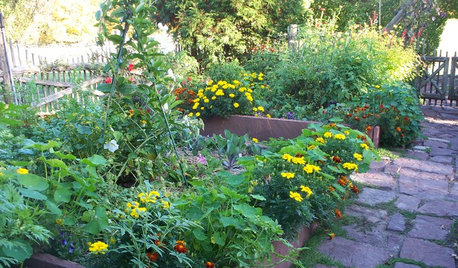
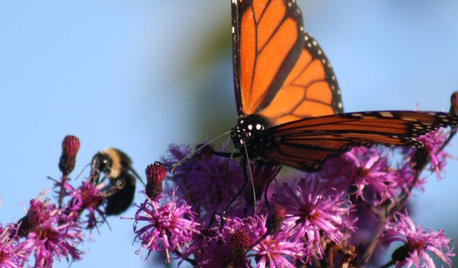
    If you can, it's a good idea to leave an area of the yard as a meadow garden. Plant some bee/butterfly/bird shrubs and flowers in this area...it will really help the beneficials. Also, alyssum is a great underplanting flower. Shades out weeds and brings in the little beneficial insects that need such small flowers. Sally Jean Cunningham's Book, Great Garden Companions has some great ideas for plants that will attract beneficials. It's helped me a lot :)

  • 16 years ago

    I use the jet setting on my spray nozzle. It works very well. Ladybugs I buy are refrigerated - this apparently puts them in a slumber state. My nursery advised me to keep them cold until dusk, then release them. That way they stay in the garden longer. I didn't buy any this year. There seem to be quite a few but the jet spray is what I rely on.

  • 16 years ago

    This is the second year that I waited for the beneficials, and it worked. The aphids DO seem to prefer some roses to others (Cecile Brunner, hands-down rose of choice), but they eventually worked around to the others. I posted a thread a few weeks ago, titled "John Wayne, the Cavalry, & the U.S. Marines" about my efforts, and how it worked out. In the case of CB, she never had a bud that made it, she was so overwhelmed, but she is now putting out new growth like mad, and the warmer weather is coming, so I'm hoping she will be better able to manage.

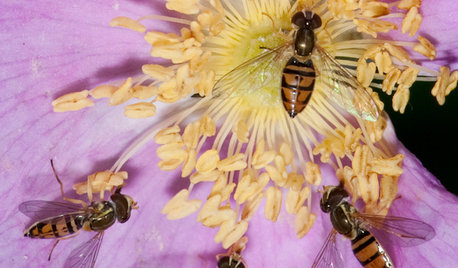
    A few things: As I only have 3 roses, and in containers, I moved them close to each other and positioned branches to make bridges from one rose to another - this was after I discovered the ladybug larvae on one of the plants were apparently running out of food. This little stratagem worked really well. Two of these larva are now attached to a couple of leaves on one of the other plants and going through metamorphosis. I also had some hoverfly larvae, and they do a great job, too. My thinking on this (and I freely admit that I am only a couple of years into roses) is that the beneficials are not going to want to lay eggs on plants that do not provide an ample food supply. Of course, I could be totally wrong on that - maybe they just look for a rose bush and go at it!

    I should add that, although it worked for me ( so far, anyway), I was certainly prepared to try something else if I thought a rose was going to be hopelessly damaged. It was really exciting to see it work, though, and also to see the little Nature Lesson of the ongoing life cycles.

    Laura

  • 16 years ago

    Aphids are worse than usual in my garden, too. Variations in weather lead to different rates of reproduction for pests and predators. I do see quite a few ladybugs though, and I expect the aphids to subside sometime during the first flush. There won't be noticeable harm unless aphids coat a shoot tip constantly for several days or a week--then the resulting bud and foliage may be a little below par, not a big deal.

    Either I wipe them off or I spray with 1 tsp. dish soap/quart of water in a squirt bottle, spraying only the shoots that are coated with aphids. They die and turn black in 12 or 24 hours. I wouldn't use chemical insecticide because, in my experience, aphids will always be controlled by predators eventually.

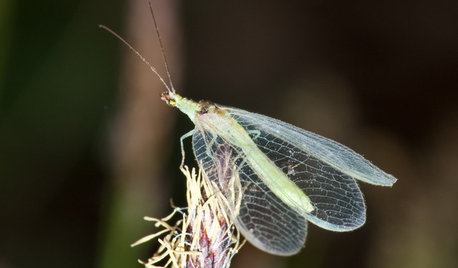
    I doubt releasing ladybugs does much good in an average garden. They are highly mobile and most of them will fly away. If there is a diverse environment, ladybugs will come to the aphid bonanza and build up rapidly. Syrphid larvae and wasps are important predators in my garden. You may also get green lacewings.

  • 16 years ago

    gardennatlanta, I grow all naturally and have been practicing my own brand of Integrated Pest Management for 7 years and it works beautifully. I've a mixed garden, with loads of roses (some grown well, some not :). Right now the ladybug larvae (google them for appearance) are out in full force gobbling up aphids. I don't do anything to the roses and they always look super. It took three years to get a great balance but now I've got it! I used a lot of native plants like prairie plants (native to US, not necessarily to Atlanta) and they grow well, and attract many good bugs. They also attract aphids and other things - however the more aphids I have, the more beneficial have to eat and increase their numbers. Providing mulch under trees and in moist areas during cooler weather really helps the ladybugs breed.
    Congrats on trying to do it naturally!

  • 16 years ago

    Several days ago I was out admiring the thick carpet of aphids on the roses, but only on some. I guess some are tastier or more tender than others. There were ladybugs here and there. I saw ladybug eggs under a rose leaf. Yesterday I say the larvae.

    The aphids don't seem to be doing much harm, and I don't do anything. Well, sometimes I knock them off with a handy twig, but that's just for fun. On the growing shoots they are so thick and continuous I doubted whether something was wrong with the rose at first. Not very pretty, but pretty amazing, nonetheless. It will be amazing with the ladybugs get rid of them, too.

  • 16 years ago

    I had the opportunity to speak with the horticulture director of Middleton Place Gardens in Charleston, who has a strong emphasis on organic gardening at the plantation. He started purchasing lady bugs a few years ago and finds they have done an excellent job keeping aphids under control. He said they tend to stay in the area and are now almost 'self sustaining', laying their eggs and reproducing.

  • 16 years ago

    Hmm. Interesting. I too see and saw layers of aphids. Now my blooms are open and I see no damage at all. Do they actually damage the blooms on y'alls roses? I don't spray for anything and have never used a pesticide. But the beneficials are probably here since there is lots of meadow land around.

  • 16 years ago

    I've had some blooms open that look like the top was eaten off the bud. When the bloom is fully open it looks funky and kind of half there. I've been thinking it was the aphids, is it something else?

  • 16 years ago

    If the bud had its top chewed off that wasn't from aphid feeding. The mouth of an aphid is essentially a needle. It inserts its mouth into the plant's soft new growth and sucks out the sap the plant was counting on to provide nutrients to its new growth. Consequently heavy aphid feeding stunts and twists the new growth. Chewing damage is caused by other insects with mouths designed for chewing.

  • 16 years ago

    I stopped spraying for bug and insects 2 years ago and this year yes the aphids are really bad but a blast from the hose and my walking by and just squishing them is helping. I do have to agree that the aphids like some roses more than others. The aphids don't really bother me so much.
    JBs, now that is another story, twice a day I walk the garden and dump them into soapy water.

  • 16 years ago

    Ladybugs are cheap..why not give it a try?

  • 16 years ago

    The buds that look sawed off--but aren't--have a birth defect stemming (reportedly) from cold temperatures during early stages of bud development. Some varieties, for ex. Aloha and several Austins, are susceptible. I think it is called bullhead or bullnose. I'm sure it has nothing to do with aphids.

    Aphid damage that I've noticed affects upper leaves more than blooms. These leaves may be cupped wavily and mottled/stippled in shades of green.

  • 16 years ago

    The stunting and twisting was what happened to my Cecile Brunner, to every growing tip and therefore to every bud, none of which were ever able to bloom. But now there is a lot of new growth, including bigger buds and leaves, with everything looking very healthy. There are a few aphids here and there now on all the bushes, and my ladybug larvae are still in metamorphosis stage, and no hoverflies at present. But SOMETHING is turning those few aphids into "mummies" - probably those tiny winged things on the undersides of the leaves. They have been working away all this time, while the big stars (ladybug alligators and hoverfly vacuum-cleaner green worms) have gotten all the attention - I hereby publicly thank them!

    Laura

  • 16 years ago

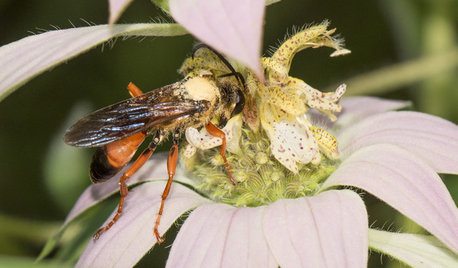
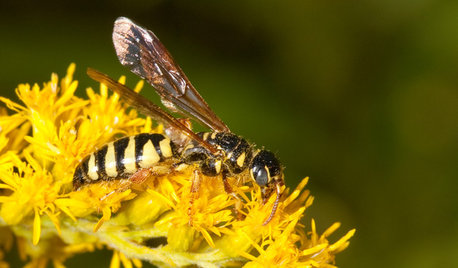
    Laura, there are really tiny wasps that lay eggs on aphids and the larvae eat their insides.

    I've never seen aphids wipe out a flush like you describe; sounds awful.

  • 16 years ago

    Michael -

    Well, it was, kind of. But all my roses are very young, so perhaps it would have looked less disastrous if Cecile had been a full-grown plant. I kept thinking that the experiment (of waiting for predators) was worth holding on for, because when Cecile IS a full-grown bush, there would be very little I could do to help - pesticides of any kind are not an option for me, not is spraying with a garden hose (my garden is on a balcony, and there is no hose). That rose was the aphids' primary target last year, as well as this year, and it was very nearly as devastated - but a single hoverfly larva just vacuumed the aphids all up. Unfortunately, the first so-called flush was over by that time, as it was this year. Afterwards, though, the rose did a lot better. It seems as though that first onslaught is the worst one.

    Thanks for the info about the tiny wasps - I THINK I'VE SEEN THEM!! They looked like tiny mosquitoes to me, but I wasn't sure if they were helping in the War of the Aphids or if they were possibly helping themselves to a little munch on what the aphids had left. Hurrah for our side!!!

    Laura

  • 16 years ago

    Michael, I HAVE seen those little flying things hanging around! I thought, "oh no, now something else to destroy my rose buds." I'm glad to know that they are helping, not hurting.

    I did end up buying a container of lady bugs. I let them loose in the evening and have seen very little of them since. BUT, the aphid population is WAY down. Something seems to be helping.

    Thanks for the great info. I'm glad I don't have to spray chemicals that kill all the good bugs (like the pollinators) as well as the bad ones.