Software
Houzz Logo Print
steveningen

Steer vs. cow manure

19 years ago

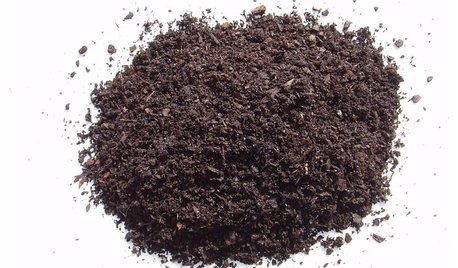
Forgive me if this topic has already been discussed. I did do a search, but read some conflicting information and am a bit confused. Essentially, what are the main differences and benefits between the two? In what situation is one preferred over the other? I'm assuming that bovine doodie sold in the box stores for a couple of bucks (both cow and steer) have been composted to some degree, otherwise they would contain pathogens.

Enlighten me (i.e. give me the straight poop)

:)

Steven

Comments (17)

  • 19 years ago

    Steer = castrated male
    Cow = female

    ...that's the precise definition. For labeling the manure bags, I suspect that steer manure might commonly refer to feed lot manure, while cow manure would typically come from dairies. Same animal, though the feed given would be somewhat different.

    For your purposes, the two products are the same thing. More important than steer or cow is the quality of the product. Some of the cheaper versions are full of dirt and other unknown bits and pieces. You never know how well the stuff was composted, but it was probably at least aged. If is doesn't stink, then it should be OK to use.

    It's preferable to get manure as close to the source as possible--though I realize that may be difficult or impossibe for some.

  • 19 years ago

    I'm assuming that bovine doodie sold in the box stores for a couple of bucks (both cow and steer) have been composted to some degree, otherwise they would contain pathogens.

    AaaaaaaHAHAHAHAHAHAHAHAHAHA! I suppose you could call it partially composted even if the cow dumped it straight into the plastic bag. But I think you can count on it containing pathogens UNLESS it smells fresh as a forest floor after a spring rain. That's what finished compost smells like.

    You weren't going to eat it were you?

  • 19 years ago

    The information that I found listed Dairy Cow manure at 25.15.25 and Steer manure at 70.30.40 That's quite a substantial difference. I thought the question was a legitimate one to ask, that being why people would choose to use one over the other.

    I'm glad you're amused, dchall. No, I wasn't going to eat it.

  • 19 years ago

    I think dchall was laughing more at the product--those cheap bags of manure are sometimes crap in more ways than one.

    There's really no way to tell the exact nutrient content of what is in those bags without sending it off to be tested. Depends on age, what the cattle were fed, etc.

    As for eating it...I wouldn't use it to top dress--worked into the soil the manure shouldn't contain anything harmful to people or plants.

    There are generally better sources of nutrients and organic matter out there, some of them even less expensive if not free. If this manure is the best you can obtain for now then get it.

    Jason

  • 19 years ago

    Steers are generally fed a diet higher in grains than dairy cows are, so they put on weight (fat) faster, and that may account for the higher readings. Dairy cows are fed more roughage, grasses, because a lot of grain cuts into milk production.

  • 19 years ago

    I suppose IÂll tackle this one since I live on a dairy farm, have an ongoing composting system, and grow great vegetables using composted manure.

    It is important to discuss the source of manure. Most packaged steer manure is from last-stage feedlots or slaughterhouse stockyards, while commercial cow manure tends to be from larger factory-type dairy farms. This has a direct impact on the type of hormones and medications found in manure.

    Steer manure is going to have more of the steroid-type hormones in smaller quantities, while cow manure is going to have more estrogen-type hormones in higher amounts. If the manure is from factory-type farms then more of the synthetic hormone, rBGH, will be present.

    Cow manure might show more medications (antibiotics, etc.) than beef because stockyards are required to withhold all medications for 72 hours before slaughter. Although, dairies are under the same obligation to withhold milk for the same period, they certainly donÂt separate the manure.

    It used to be true that "steers are generally fed a diet higher in grains than dairy cows", but not necessarily now with the factory-type dairies. In fact, watch what your milk prices do now that ethanol is now pushing up the price of corn. The big reason cow manure is lower in nitrogen is because it is diverted into milk production in the cow. On the other hand, most of the "modern" cow manure is usually much higher in phosphorus. This becomes a problem on dairy farms that spred manure on the land, because while nitrogen leaches readily, phosphorus doesnÂt and can build up in the soil. Moreover, it is next to impossible to separate the bedding materials from manure from smaller dairy farmer. Most factory-type diaries do not use bedding; instead, they flush the manure with water into holding ponds and let it separate. Manure from these types of farms comes from the bottom of the ponds when they are drained.

    In the end, it probably doesn't matter all that much if we are talking about a few bags of commerical manure in a small vegetable garden on a city lot. It ultimately is organic matter which is always a good addition to any garden.

  • 19 years ago

    Thanks for the clarification on this. There's surprisingly little detailed info out there about how that poop finds its way to big box stores.

    I've rarely use the stuff you can get for $1.29. I do use it when I amend for roses. They seem to thrive on the Black Cow product available at Lowes.

    Again, thanks for the info. Be happy in your gardens!

  • 19 years ago

    That was very helpful. Thanks!

  • 9 years ago

    I came upon this thread by searching "steer manure vs cow manure". I have a rock and sand backyard that I am slowly trying to amend. Only steer manure is available in my local Lowes. I have added a few bags. Within a short time - I have seen earthworms in my garden. Just before I amend, I dig about 2 feet deep and I remove the rocks and boulders (foothills of mountains). The sand is lifeless with not even one earthworm, but now in areas already amended, it is different. I am pleased.

  • 9 years ago

    That's great.

    The most important thing is to get some -ANY - compost into that soil. That's more important than what kind.

    One thing I wanted to say while reading through this thread is that composting tends to equalize inputs toward a common endpoint. Although there can be some differences in the final NPK based on the inputs, differences in ingredients will be muted somewhat in the final product. The quoted "Dairy Cow manure at 25.15.25 and Steer manure at 70.30.40" (presumably NPK based on dry weight) will be much less drastic of a difference in the resulting compost. Not only that, but NPK is not the most important thing about compost - it is much more of a soil texture improver than a fertilizer, hence the importance of using any compost rather than none.

    Actually the amount of organic matter can vary a lot too, depending on how much extraneous soil, etc. is mixed in. Cheaper compost tends to have more of that. Not to discourage you from using cheap bagged products - they do have a place especially when you need a lot.

    You might consider a pickup load or a truckload if you have a large area to amend.

  • 9 years ago

    Thanks. I agree. For now my philosophy is "something is better than nothing".I used to live in Central Illinois and took that (black gold) soil for granted. It has been a learning experience with sand and rock. I am fairly new here and have to figure out where to get a large amount from.

  • 9 years ago

    The most important thing about soil is to get organic matter into that soil, compost and manure are just one form of organic matter. Soil containing about 6 to 8 percent organic matter would be a really good soil. Sources of organic matter are pretty much what makes compost, manure, vegetative waste of all kinds, all of which can be incorporated in soil before or after composting.

  • 9 years ago

    Thank you. I have been working in small 2' by 3' feet areas where I dig about 2 feet deep and remove all the large stones/boulders. At the very bottom I drop the kitchen waste for the last few days - usually a 2 - 4 inch layer. then put some shredded newspaper and mix of compost and native soil for the rest. It is slow going but gratifying that I have at least small patches where the plants have a chance.


  • 9 years ago

    If you're digging two feet deep you could actually put some chunks of wood in there if you have them. You might expect that to deplete nitrogen but for some reason it doesn't, and the slow fungal decomposition provides a spongy medium for both water and plant roots to hang out. Look up 'hugelkultur'.

  • 9 years ago

    I would think that steer manure would be heavy with sodium since it presumably comes from a feed lot. Dairy cow, not so much.

    Of course, there's no truth in labeling for manure, so who knows what you are really getting?

  • 9 years ago

    Please be careful with cattle manure, because if the cattle have eaten grass or hay that was sprayed with persistent herbicides, the herbicides can actually persist right through the cattle's digestion and the composting pile, and can make your soil hostile to broad-leafed plants (including most vegetables) for up to a few years! Google Aminopyralid and phrases like "persistent herbicide ruined my soil" if you haven't heard of this.

  • 9 years ago

    I had the impression that stuff lasted for one or two seasons at the most. Definitely something to watch out for though. Easier to verify if you get manure from a local source - you can just ask the farmer what they're feeding the cattle and what they use on their hay fields.

Sponsored
AIS Renovations
Average rating: 4.5 out of 5 stars15 Reviews
Custom Craftsmanship & Construction Solutions in Franklin County, Ohio