Software
Houzz Logo Print
joshtx

Warped Growth

13 years ago
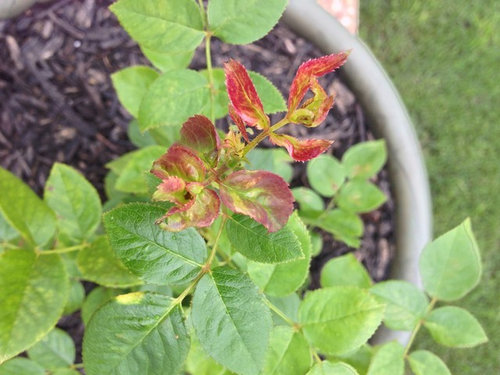
I have a picture here to show what I am having problems with. New growth comes out of my plants stunted and deformed, looking a bit chlorotic. It happens on my HTs and Austins. Perhaps over watering? I considered aphids but these plants are potted and don't have any of the little buggers on them.

Comments (17)

  • 13 years ago

    It does look something like the aftermath of a very severe aphid infestation. I don't know what else to suggest--herbicide? Something terribly wrong with the soil?

    Have they recently been repotted, and did you have healthy growth for a while after repotting? Are the plants in a standard potting mix?

  • 13 years ago

    It looks like aphids to me too- but if you don't see any my next guess would be thrips. They will eat furled leaves.

    I'd take a nuclear infestation of aphids to thrips any day. Hate them.

  • 13 years ago

    This is the newest growth after repotting them from their original containers. I will check again for aphids, but these plants have never been in a bed where aphids were present. Thrips is a possibility, I wasn't aware they would feed on new growth. And I agree, give me aphids all day long over thrips.

  • 13 years ago

    Look with a 6x hand lens and see if little critters are all over it.

    If aphids were involved, they would have smothered the growth tips for at least a week, a couple of weeks ago, to do that much damage.

  • 13 years ago

    Josh, I'm in Houston and I'm seeing that type of damage also. I think its thrips.

  • 13 years ago

    JoshTX

    I'm guessing thrips. I believe a lot of pest discussions down there (and in FL) are centering on chilli thrips. These little buggers damage leaves and buds and can cause coloring to bronze. I good source of info in your general vicinity for this and other pesty questions is Texas A&M's AgriLife Extension Service. By the by, it seems chilli thrips are causing some gardeners in your area to develop RRD panic because the bronzed foliage superficially resembles RRD. Just mentioning this tidbit because I know my worrywart nature often rockets into worst case scenario land.

    Carol

  • 13 years ago

    Here is a helpful link from the University of Florida - scroll down for photos of chili thrip damage on roses. There are two more links to more photos showing plant damage near the bottom of the page.

    Here is a link that might be useful: photos of chili thrip damage

  • 13 years ago

    There are thrips and there are chili thrips and chili thrips are much worse.

    Chili thrips have been known in Texas for at least the past three years.

    Right now, the internet information from Florida is the strongest and best on chili thrips (which have a lot of host plants in addition to roses) and which can destroy a rose garden if they are there, aren't identified and left to damage the roses.

    Your county extension agents in Texas should be able to help.

  • 13 years ago

    I can see chili thrips being a possibility since I have battled thrips since the season started. All of the belligerent storms we have had, however, seem to have washed them out of the soil.

    I try not to spray pesticides in the garden, since it is so full of healthy fauna. I know that pesticides do not discriminate and the thought of killing the bees, ladybugs, butterflies, pill bugs, and earthworms (they come to the surface at night) makes me cringe. Not worth a few warped growths.

    Considering these are in pots on the back porch away from any other planted thing, would it be okay to spray some Orthene in order to deal with these buggers?

  • 13 years ago

    I try to manage things without chemicals too.... but I have the same thoughts as you about trying to control it in your pots. If the thrips show up here again, I will definitely treat the plants I am giving my mom before I send them to her.
    A couple thoughts. 1) know what works on the thrips you have. (is orthene the best? for chili thrips? or whichever you have)

    also realize that thrips are everywhere in the garden- so you might just be wasting your time and they'll be reinfesting in a moment. I recommend putting up blue sticky traps to see.

    That said, if these plants are new- they may have come with a worser infection than you have generally and it might be good to eradicate them before they get out of control. I started paying careful attention to the rose and lily plants I buy after buying several infested plants which destroyed my summer of blooms when I did not treat them. (Greenhouses often have a hard time controlling their thrips infestations). It spread through my property like a fire. The areas right near the new plants were swarming with them, a lilttle further away was less infested, and the edges of my garden had a light infection by summer end.

  • 13 years ago

    I am bumping this topic back up to the top to provide something to ponder: could this perhaps be a result of Bayer fungicide spray?

    I ask because this particular rose sits downwind of my pot ghetto/quarantine area, which I sprayed down due to a blackspot problem I was having. What leads me to believe this may be a result of spray is that the new basal shoot this plant is throwing does not show sign of the damage seen above. Further more, another identical plant (my other Ambridge Rose) which is not close enough to have received an unintended spraying does not show any signs of damage to its new growth as well.

    I know that chili thrips was tossed around as a possibility, but since the other plant does not show such signs of damage I don't feel like thrips is the issue. These two Ambridge Roses both came from the same nursery and were sitting next to each other, and it would stand to reason that if thrips were having a field day with one they would do the same with the other.

  • 13 years ago

    Josh, I've never heard of fungicides causing twisted red new growth. Herbicides can cause damage to foliage, but I don't think that's your rose's diagnosis. PDX isn't--knock on wood--suffering a plague of chilli thrips, but photos I've seen of chilli thrips damage to new growth seems to my eyes to be the best match to your warped growth. Plantloverkat's link to the U of FL's site is a good one. Check out the following section: "Damage Photos The first and second photos show symptoms of thrips damage to new growth on roses. The last photo demonstrates what the new foliage should look like." The twisted red foliage in the upper right photo resembles yours. However, with that said, it appears that you have, at most, a minor plague on your hands. I'm not big on pesticides, but I'd follow an expert's prescribed treatment. Maybe the Antique Rose Emporium has a good suggestion for your single infestation. I've always found the ARE folks to be very helpful. Sorry about reinforcing my first post. I know "chilli thrips" is not what you want hear. Carol

  • 13 years ago

    I'm pretty stumped about your problem. I had a fairly bad case of chilli thrips in my garden last year, and I REALLY hope to not see that again. I got so used to seeing it that I could recognize it on random people's roses when I drove past their houses. This whole area was hit pretty bad.

    I DO have a few pictures from then that look like yours, but most of them look pretty different. And it was everywhere. Only a few of my roses didn't have at least some damage that had to be cut off. I had to cut all of my bushes down several feet (depending on original size) before clean foliage would finally grow back. I also sprayed with spinosad, but I don't feel like that helped as much as cutting everything back and immediately bagging and disposing of the clippings.

    I'm too lazy to size my pictures so that they don't take up half the page, but here's the link to my photobucket album where they are. Hope the link works.

    Here is a link that might be useful: My Ugly Rose Pictures Album

  • 13 years ago

    One thing that occurs to me -- there are some viruses which will cause damage similar to this. Rose Spring Dwarf Disease is one of them. I've seen it only once, but it looked similar to this, IIRC.

    RSDD is spread by budding, and no other method of transmission has been mentioned. If it is that, it should become less apparent as the season proceeds.

    Jeri

  • 13 years ago

    Thank you Brittie, Carol, and Jeri for your feedback.

    After taking a look at Brittie's photos I would have to agree with the chili thrips diagnosis. I looked through the University of Florida's website on chili thrips and, lo and behold, one of the plants that chili thrips live in are Indian Hawthornes. We probably own upwards of 15 Hawthornes packed tightly together in the front bed, and have inadvertently provided a veritable mansion for these little invaders.

    Looks like it is time to go to war.

  • 13 years ago

    Josh

    Jeri may be a genius! Rose Dwarf might be spot on. It would match your isolated infection. A couple of years ago, there was a very short thread on Rose Spring Dwarf disease on the Roses Forum called "Rose Spring Dwarf virus" (March 2010). There's a photo, and it does look rather like yours. Spring Dwarf is viral, but the jury has not pronounced sentence as to contagion. The infected plant will produce odd growth in springtime and grow out of the visible signs summer-fall. Let us know how your story unfolds.

    Carol

  • 13 years ago

    Carol and Jeri,

    I will snap a few pictures of the leaves now that they are more mature and easier to see. Perhaps that will help to make a diagnosis easier.

    Thanks!