Software
Houzz Logo Print
greenguyj

compost to fill raised beds?

19 years ago

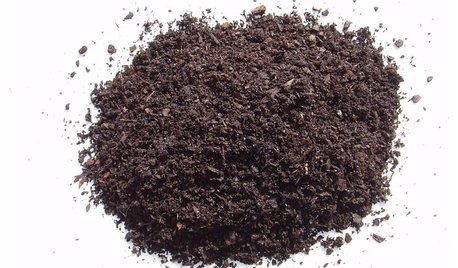
I have access to a large quantity of free compost from a neighboring municipality and am hoping to use it to fill my new raised beds. Is it a good idea to use only (or mostly) compost to fill beds for veggies? What do you think?

Comments (18)

  • 19 years ago

    It is possible but not generally recommended. The ideal recommended mix is for 12-15% of the bed to be organic matter - 3 cu. yards for 1000 sq. feet. You can go some higher but you will still need soil, sand, and other components for a number of reasons - for water retention (compost is very porous), minor mineral nutrients, stabilize the volume in the beds, plant stability, etc.

    Compost continues to decompose, settle, and compress...in other words disappear. There have been several discussions recently on this question so I'll go dig some of them up for you and post some of the links for your reading pleasure. ;)

    Here is a link that might be useful: Such a thing as too much compost?

  • 19 years ago

    Here's a link to the most recent discussion I could find. Hope it helps.
    Straight compost to fill beds?

  • 19 years ago

    Along with organic matter (compost) you need the mineral matter (clay, sand, silt) so your plants roots have some stability. As compost is digested by the soil bacteria (it does not settle) the nutrients feed the plants, so compost is converted into some other substance, but it does not simply disappear.

  • 19 years ago

    "The ideal recommended mix is for 12-15% of the bed to be organic matter.."

    My veggie beds are seldom less than 50% OM, and frequently more.

  • 19 years ago

    In 1999 I built 12 simple raised beds (4' x 4' x 8" boards put together with 4" deck screws) and had a dumptruck-load of compost delivered to fill them. It came from the municipal site in the next county, about a 45-mile drive, and was about 12 yards of compost. Since I wasn't a resident of that county I had to pay for it, and the bill came to $147.00 - quite a bargain. I had a mountain of compost - very exciting!


    Anyway, the only preparation I did was to put down thick layers of newspaper or cardboard inside the frames, watered that down really well, filled them to overflowing with compost, then watered that, stirred it a bit with a fork, and covered it with just enough straw to keep any weeds in check.


    2 or 3 weeks later, when I was ready to plant a couple of boxes with early stuff, I pulled off the straw and used it as path mulch (since I'd neglected to measure the width of the lawnmower this turned out to be important), dumped a bag of cheap topsoil on top and smoothed it out. That was it.


    Until 2002, the only things added to these beds were small amounts of grass clippings & my own compost used as side dressing. For the most part I grew vegetables (lots of tomatoes & peppers), herbs, and some flowers. In 2001 I added a 4' x 8' x 8" dedicated strawberry bed and 3 more 4' x 4' x 8" beds and filled them the same as the originals.


    By 2002 the first beds had settled by maybe 3 inches so I got a smaller load of compost and refilled'em, along with more topsoil. I honestly never had a single, solitary problem doing this - no plants falling over, no constant watering, and not a smidge of blossom end rot - so I'd definitely recommend it - at least to folks in zone 5, as I know absolutely nothing about gardening anywhere else.


    I've got a boatload of pics from 2001 although they're no longer on my computer, just saved in several emails. If anyone would like to see them, feel free to contact me.

  • 19 years ago

    Well, like I said at first, "It's possible but it is generally not recommended".;) Suggest you Google "planting in pure compost" and you'll find lots of good unbiased info on the subject and it's potential problems.

    What's the old saying? "In a perfect world...". Well in the real world, compost is a soil amendment, not a growing medium. ;)

  • 19 years ago

    we grow our vege's in mushroom compost not much difference between that and any other composted organic material around, and as vegetables can be grown in containers where dirt isn't used then why won't they grow in composted material? guess if you look at our pic's of what we do and how healthy our plants look it might answer some questions.

    len

    Here is a link that might be useful: len's garden page

  • 19 years ago

    You didn't say how tall your raised beds are. Mine are only raised using 2"x6" lumber. I add compost and peat moss to raise the level up, but I also dig the existing soil as deeply as possilbe and mix thoroughly with the organic supplements. Works great on such short beds, but maybe not so good on higher beds, although I'm sure it would help.

  • 19 years ago

    When compost is the only thing you have to build a raised bed, use it. I do because I refuse to buy soil and I don't see any problems with using something I made for literally no $$.

  • 19 years ago

    Isn't a lasagna bed 100% OM, and eventually ALL compost.

  • 19 years ago

    Yes. And to answer the first person's post, if you have an unlimited supply of 100% compost, by all means - use it. You can always get a compost test to determine pesticide residue toxicity since it's coming from a municipal source.

  • 19 years ago

    Hey guys! I never said don't use it. Grab it and use it by all means. But unless it is the only material you have available to you for some reason - which is difficult to believe - then it is still better to add soil, sand, silt, shredded leaves, hay, straw, wood chips and/or other materials to it rather than using pure finished compost. That is what the original question was and I answered it ASSUMING that they wish to create long-standing, ideal growing beds.

    I'd also point out that there is a great deal of difference between filling a bed with already finished compost and either lasagna gardening or composting-in-place sheet composting. Len - I have studied your beds and according to your website you have alot more stuff in there than just mushroom compost (newspapers, cardboard, kitchen leavings, branches, etc. ;) That is all I am advocating.

    Isn't a lasagna bed 100% OM, and eventually ALL compost

    No, most contain some soil as well or should according to the original author.

    Yes, they are made up of layers of multiple organic materials that have not yet begun to compost alternated with layers of finished compost if available and layers of soil and
    (1)they have to be refreshed at least semi-annually with new materials to keep them going and productive
    (2)can have drainage problems - ponding it's called - as the water runs right through them and pools in the ground below
    (3)require more watering than a soil based garden
    (4)can have both plant stability and nutrient imbalance problems that can result in either poor growth or super-growth with little or no produce production.

    Lasagna gardens and sheet composting gardens are compost piles in process, not finished compost. They are great but they are not a bed of finished compost.

    So, donn's beds are 50/50. Fine. A bit rich but if it works go for it. I will hazard the guess that you will get better production if you cut back a bit on the OM. But it's not growing in straight compost. Tosser has added straw and topsoil to his. Not straight compost either. Ideal.

    So if greenguy takes the municipal compost and layers it into his beds with additional organic materials he will have a lasagna bed. If he also adds layers of soil, sand, clay, or silt he'll have a garden. ;)

  • 19 years ago

    I've grown in beds that were 90% compost, and 100% lasagna. The only problem I had was that the taller plants (toms, peppers, etc) needed good support because the ground was so loos that they easily blew over.

    If you're worried- dig out 4-6" of the material, fill with compost, mix in that soil that you saved. Essentially double digging.

  • 19 years ago

    Heavy compost worked for me last year. In southern Maine the record books list last year as a very special season. It was the worst gardening year in Maine history. Cold, wet and overcast skies. The fog and rain started on April 23 and didnÂt quit until July 12. Then 10 days of July sun followed by a return to unrelenting cold, wet and overcast.

    Frost date here is early-mid September so August in Maine is very crucial. The entire month of August was ideal.

    My soil was a mix of leafs, topsoil and composted cow poop. Probably 75% compost.

    Despite MaineÂs record coldest, wettest and darkest growing season and most of my garden killed by mold and fungus and wilt, the 75% compost gave me some amazing results. Compare this Mortgage Lifter to the dime placed beside it.

    {{gwi:289654}}

  • 19 years ago

    We just built 4 raised beds that are 18" tall. I've filled them with a mix of mushroom compost, horse manure/straw mixture and horse manure/shavings mixture. I was hoping for a little top soil when our landscaper comes to do our lawn, but if he doesn't get here soon, I'll be planting in what I have, as I refuse to buy top soil by the bag when I have tons of my own material.

  • 19 years ago

    I have made lasagna beds a few times with no soil added. Usually I put a very thin layer on top, less than an inch. Now that my pile of topsoil from basement re-excavation years ago is almost gone, I expect to use even less. Never noticed any problems with it. There is soil UNDER the bed, and as the cardboard/newspaper rots away, that soil gets mixed up into it. But the very first year when there is little or no soil (sometimes I just put finished compost on top for the layer to plant seeds in) things always grow as well as any other year. I know, not finished compost, but still it is on the way to being that.

    This year I meant to sprinkle a layer of finished compost over the top of my large new lasagna bed. However, melons, tomatoes, peppers, and one morning glory are already growing there (volunteers) and a friend just gave me 6 tomato plants that desperately need to be planted. So, I am thinking about planting right in the thing with no special top layer, since my lasagna layers are already mounded up really high.

    One year, being worried about the no soil issue, I crumbled bits of burnt/powdery rocks into a new lasagna bed, figuring there were some kind of minerals and so on in that. Don't know if it helped, but I am sure it didn't hurt. A tenant runs sweatlodges, so I have lots of crumbly rocks that have been heated to high temperatures available.

    Marcia

  • 19 years ago

    I have several beds filled with %100 compost. the only drawback I see is they shrink a whole lot and I have to add lots more compost every year. My area used to be a farm. They farmed it out and then built houses. The soil is completely used up. DH and I built frames and started filling them. Even our'lawn' is nothing but weeds. 'Real grass' won't grow here. We haven't had time to think about the lawn. There is always something more interesting to do.

  • 19 years ago

    I bought my house in 2003, and I made a raised bed that summer. My uncle has an area where he dumps all of the leaves and grass. I got a truck load of that, and used it to fill in the bed.
    {{gwi:289655}}
    Hosta and canna grew like weeds in it. The only problem I had was some of the prennials, like black eyed susan and purle coneflower, found the soil too rich, and they didn't thrive. As for the compost shrinking, I add mulch every year, so it's not a problem.
    The small clumps of sedum had the bed almost completely covered by the end of summer.