Software
Houzz Logo Print
dntquilter

What happens during bud formation....

13 years ago
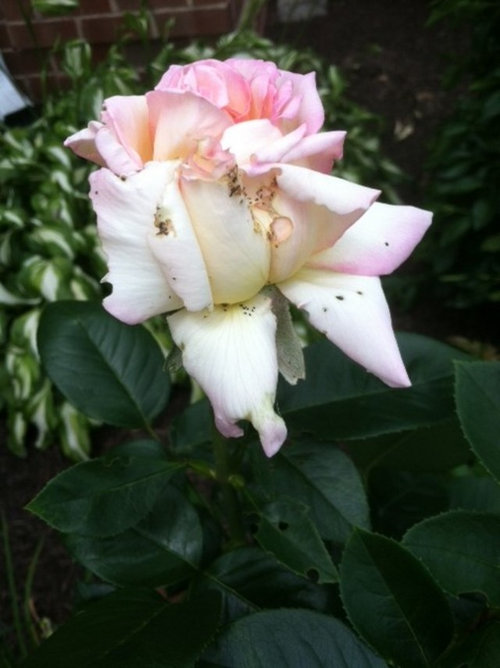
.... to cause this type of malformation? Now I live near Three Mile Island, but that's been over 30 years ago. LOL.

Another bud on this same bush is just fine, but a bud on my Love Rose is looking similar.

Thanks, as always, for your vast knowledge.

Scott in PA

Comments (17)

  • 13 years ago

    I've had some rather odd buds this spring too. I've chalked it up to the weather. We had a very long cold gray wet spring with just a few days of hot sunshine popped in between. The roses would put on rapid growth every time it got warm and sunny and then just sit for the next week or so because it was back down into the 40s and gray and wet again. That went on for a few months and some of the resulting blooms were pretty mis-shaped. As they're putting on new buds now, and the weather has evened out some what, they look much better.

  • 13 years ago

    Thank you, Seil. Good Answer! Good Answer! Just what I was hoping for. The spring here has been that way too. Now perhaps the more steady higher temps are here to stay. As much I despise the heat, I now have to be happy for it because of my babies.

    Would you deadhead these buds before the open? Wondering if it is better for the plant to expend it's energy on new growth?

    Thanks again,

    Scott in PA

  • 13 years ago

    Yes, I would take off anything you see that's opening like that. But wait until you're sure it's messed up because not all of them will be.

    The other thing I've noticed this spring, and others in my rose society have too, is that a lot of the roses are putting on these huge candelabras of blooms. I think every one of my HTs did this on me. Some of them are amazing and beautiful but it wasn't very good for my show last week, no nice long stems, lol! The weather can have a huge affect on how they grow. I have PM and black spot because of all the dampness but otherwise they're growing like weeds!

  • 13 years ago

    Thank you, Seil.

    I've had the candelabra effect too, and have been disappointed by that. Glad to know that is a function of the weather too.

    Scott

  • 13 years ago

    Scott, the "malformation" I see are the beetle chewed holes in the petals. Japanese Beetles and their relatives (Hoplea) and several others chew holes through the rolled up petals resulting in the Swiss Cheese effect I see in your photo. Check for beetles noshing on your buds. Kim

  • 13 years ago

    Thank you, Kim. As a matter of fact, about the time these particular buds were in being formed, my rose bed looked like a swarm of bugs from a horror movie. Against most everyone's preference I sprayed. That brought things under control. I haven't seen any JBs, and the lady bug nyphms and lady bugs are back.

    I'll take a closer look today again, but I believe I can look forward to nicer buds going forward.

    Incidentally, it was only Peace and Love that suffered from this. Barbra S. and others seem to be fine.

    Thanks again for putting my on beetle alert,

    Scott in PA

  • 13 years ago

    Definitely chewing damage from beetles. There may also be a malformation that isn't obvious in the picture; I can't tell. Those happen beyond your control. A variety that does it too often gets shovel-pruned in my garden.

  • 13 years ago

    Michael, I need to look-up hoplea as recommended by Kim.

    I just went out to look for beetles, and found a big rose slug. Again. Dang those things won't quit.

    Shovel pruning at this point would send me over the edge. These are all new plants this spring :(

    Scott in PA.

  • 13 years ago

    Kim,

    I've tried to find information on the hoplea, and I can't find a thing. Any idea as to why?

    I haven't seen any JBs out there.

    Any help would be greatly appreciated. My "Love" rose opened today, and it has some swiss cheese disease too!

    Thanks!

    Scott

  • 13 years ago

    Hi Scott, the "Swiss Cheese" petal issue isn't a disease. BUGS are eating your buds. The link below is to Baldo Villegas' pest and disease pages. Baldo is our recently retired, California State Entomologist. Very knowledgeable rosarian and a heck of a nice man.

    Hoplia Beetles are covered at this address there.
    http://www.sactorose.org/ipm/84hopliabeetles.htm

    You may not have Hoplias in Pennsylvania, but you probably do have your own version of them such as Japanese Beetles; perhaps a type of Curculio Beetle ( http://www.ipm.ucdavis.edu/PMG/GARDEN/PLANTS/INVERT/rosecurculio.html ). There are a number of beetles across the country which cause the kind of damage your photo shows. SOMETHING has eaten holes in your rose buds. When the petals unfurled, you see the Swiss Cheese effect. It's much like cutting snowflakes out of folded paper. One small hole produces amazing results! Kim

    Here is a link that might be useful: Baldo Villegas Bug and Insect pages

  • 13 years ago

    The most common rose-eating beetles in the East are JB, spotted cucumber beetle, Asian beetle, and June bug. Asian beetles resemble JBs but are paler--mottled light tan--and 1/16" smaller.

    DNT, I said IF a variety CHRONICALLY produces malformed flowers, I get rid of it. Some roses have a genetic defect for proliferation or vegetative centers that is triggered by certain weather conditions. I also said I see no malformation in your picture, just beetle damage.

  • 13 years ago

    Thank you all for your input. I have searched for beetles and can't find any. Thank you too for the link.

    I'll keep a continued watch. Meanwhile my neighbors must think I am nuts.

    Scott in PA

  • 13 years ago

    Don't just search for bugs, search for frass as well. Frass is a fancy all purpose word for bug excrement.

    Use the size of the frass to give you an idea of the size of the bug. All those small black dots are frass. They are the evidence that bugs were there.

    Big caterpillars leave behind lots larger pieces of frass.

    (Ignore the urban dictionary definition of frass.)

  • 13 years ago

    To hopefully wrap up this thread, I'm declaring myself out of the woods. I've searched and searched for beetles and the like, and really, I have every day for some time.

    After reflecting on the situation, I feel that the impacted buds were probably munched on in the days preceding the morning that I felt it absolutely necessary to spray.

    On the Peace rose, a new bloom has opened, and is damage free. Likewise, JFK had a candelabra situation going on. The first to open was lacey, I dead headed another because of fuzzy mildew on the bottom of the bud, but two more have opened and are looking nice.

    Thanks again to all who chimed in. Your passion for roses and willingness to help us "newbies" is so very much appreciated.

    Scott in PA

  • 13 years ago

    I think you nailed it, Scott! You HAD beetles before you sprayed, when the buds were immature. You took care of the problem (at least temporarily) by spraying; or your "beetle season" expired about the time you noticed the issue and took action. Roseblushlyn has issues with curculios in her garden. Instead of spraying, she theorized she could control them by disbudding her roses when they were active. She was right! Instead of a garden full of them, she eliminated their food source and a whole generation of them being raised in HER garden. Now, she has some, but not the swarms of them she had previously. That's something you might consider in the future so you might actually be able to control them without pesticides. Congratulations! Kim