Software
Houzz Logo Print
floral_grow

New England Aster Needs Help

17 years ago

Hi,

I purchased a New England Aster about 2 weeks ago, planted it right away in a sunny location. I noticed today some of the leaves have what look like a brownish or red tinge around the outside of the leaves, and the center of the plant is all brown. What did I do wrong. This is my first time with an aster and I was really looking forward to seeing it bloom.

Did I not plant it deep enough, should it be in partial shade?

Hoping anyone who knows anything about this plant can help me.

Thanks,

Barb

Comments (7)

  • 17 years ago

    I'm far from an expert on Asters, but August is generally not a great time to plant perennials.

    I planted a coneflower this weekend, which is usually a really tough plant, but when I got home today it was drooping and aborting its buds.

    I planted NE Asters last fall, after the temps had dropped, and I still had to water them just about every day. But the ones I planted in the early spring (and in the partial shade) have needed little supplemental water.

  • 17 years ago

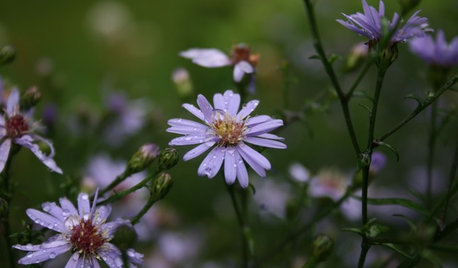
    Could be either a sun problem, a moisture problem, or a PH problem, or all three combined. How much sun does the sunny location get? There's a slight chance your aster may be getting a little too much sun, as this type of aster (Symphyotrichum novae-angliae) prefers sun to partial shade.

    Many garden websites, nursery websites etc., will say to plant New England Aster in full sun. But in the wild, New England Aster grows in moist meadows, moist open woods, or on stream banks, indicating that it can take full sun, but that the soil needs to be kept moist.

    New England Aster also needs a well-drained soil, and will not do too well with a heavy clay soil that doesn't drain well.

    New England Aster also likes an acidic soil with a PH around 6.8. You may want to test the soil in the spot where you have it planted with one of those soil PH tester kits with the little test tubes to be sure the soil is acidic. If you have the aster planted close to any concrete foundation of a house or other structure, the soil may be too alkaline due to the concrete. If so, you may need to move the aster away from the structure's foundation to a more acidic PH area of the garden.

    Doesn't sound like powdery mildew, which can be a problem with this type of aster.

    Hope this helps...

  • 17 years ago

    thank you. I was told to plant it in full sun, however, maybe that was a mistake. Will try to move it to a better spot. I have read where some people said they did have the browing in the center of the plant, and this was normal for this plant. I hope it survives and blooms.

  • 17 years ago

    I agree with torajima re planting perennials in the middle of summer. It is just too hot for transplants to acclimate.
    I usually plant perennials in early spring of early fall when the weather is cool.

    If the sun is bright and warm/hot, I usually shade new transplants with newspaper or cardboard boxes or pots and give them good ventilation. I also water them everyday for at least 5-7 days until they perk up.

    Good luck with your aster.
    :-)

  • 17 years ago

    I agree too that if you choose to transplant, wait until the air cools down in the early fall. Also, be sure the new spot has soil that tends to be on the moist side, and that the soil has an acidic PH.

    The shading method described in the post above sounds great, and your transplanted aster will need regular watering as described in the above post. When transplanting, you can also try this procedure:

    1. Dig a hole about twice as wide as the plant roots. Fill with water and let water drain out into the surrounding soil.

    2. Place plant in hole. Fill the hole with water and let the water drain out again.

    3. Fill hole with soil. I'd recommend adding some organic compost to the soil that you fill the hole with. This will help the soil retain moisture, and improve soil drainage in the long term.

    Symphyotrichum ericoides or Aster ericoides (Heath Aster) is the aster that does better in sunnier spots and can tolerate a dry soil (once it's established) if you are looking for an aster for a sunnier spot, although all perennials need regular watering until established.

    Heath aster is sort of a low-growing, bushy type of plant as compared to the New England aster. It has white flowers.

    Good luck ...

  • 17 years ago

    Another thing could be just stress from moving. My plants almost always show stress on a move and then come back strong!

  • 17 years ago

    I agree...the aster could just be stressed from being planted in August. I would wait till fall and see if it's still browning, and then transplant in the fall if the plant is still having problems.

    Just an addition to the "watering the hole" procedure above...In step 2, after placing the plant in the hole, fill the hole halfway to the top with soil, and THEN fill the hole with water. Let the water drain out and then move on to step 3 where you fill the entire hole with soil up to the top. Sorry about that...typed that too quickly before!

    Good luck again...