My builder uses Houzz Pro to plan the timeline and give detailed estimates and daily updates with photos of progress, and provide invoices at pre-agreed key points in the build. This made the whole experience much more efficient and stress-free.
I'm in zone 5. I've never grown any of these crops before, but I'm determined to vary our diet more and go to the store less. Are these crops able to be WS'd, or should I sow them indoors about now? The Scorzonera says it will take 120 days, and will they take transplanting?
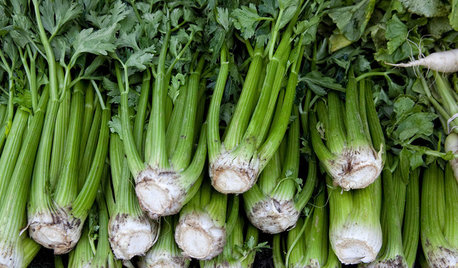
I've never heard of growing celery around here but always wondered if you could if you started it inside. I'm fond of leeks, too, those I read you have to hill up the soil around the bulb part to keep it white. California growers may also do that with celery, not sure.
I wonder if our northern ancestors had celery? I suppose it's not worth trying to grow because I don't use much but always like to have some on hand, end up throwing some of it away.
Too bad you can't preserve it like for potato and tuna salad. I always cut up some leaves as well as the celery for soups and stews. If I cooked more stir fry, I'd use a lot more of it.
As to WS'ing it to get a jump start, I don't know, sorry. I'm adventurous and I'd try if I wanted to or start inside (which is not the best option but works for a lot of things). If I didn't have anyone to advise me, I'd figure the days, then not sow in containers outside in the dead of winter but more toward the last two weeks of March/early May, but it might work starting it now.
What are you going to do with a lot of stalks of celery assuming you are successful at growing it? I've never used celeriac or the first one in your subject line.
I'm hoping to use the celeriac as you would celery, but since it's a root I'm hoping it will keep longer. Same goes for the cutting celery, I hope to cut and come again, to use it in soups and for flavoring, since it doesn't really form stalks.
Cutting celery is grown a bit more like cilantro, I got it will do wonderfully for you in zone 5. I start it in about 2 weeks here, since it likes cooler weather. I grow Scorzonera, and a few other unusual root veggies (but no celriac here yet as my hubby HATES it). I start mine in fall, winter sowing will do so well for you. The babies sprout quickly and don't mind freezing cold so don't worry about them. Transplant while young and they will transplant OK. Biennial, keep your seeds and re-plant where you want them because those seeds scatter with parachutes something like dandelions. You should find this vegetable relatively easy to grow - they take so long as they are biennial and will give you good roots next spring. We grew celriac in zone 5, no problems. Winter or spring sowing should be fine.
Thanks, milehighgirl. Cutting celery might be worth a try, may even be able to grow it like parsley in the house but dulled flavor compared to outside. Thank you for the link, looks a little hard to find.
I'm open to trying new things, so the thing to do is buy celeriac and see how I like it. Celery seeds are not a good substitute but I use them on my Campbell's tomato soup with a dollop of butter and a couple of my recipes.
Eating celery as is is good for you, but I can't chew raw vegetables very well any more.
I just worked out two alternate potato salad recipes, one my family is crazy about. They don't require celery, but the traditional one isn't the same without it.
The edible part of celeriac is its delicious, large, white-fleshed root. The copper-colored parts of the inside of celeriac roots are not disease, but are how celeriac looks. Unless bitter, the green tops could probably be used as an aromatic veg. when making stock, but it is the root that's the reason to grow celeriac. A well-grown celeriac root is about 6 inches across.
The Fedco variety linked-to above is not a celeriac, but green stalk celery. Fedco has "Brilliant" celeriac, but their description is for the "diamond" variety! Gourmet seeds has a few; Grow Italian.com has a variety that grows to 3-4 inches (in 100 days!). U must be kidding me. My first choice for seeds is usually Sand Hill Preservation, but their variety, Monstorpolgi, lacks meaningful description (but you could e-mail them for information). Victory Seeds has Giant Prague for $1.55.
Hopefully someone with experience in growing celeriac roots will stop by and drop you a line or two about their know-how and favorite varieties. 100 days to maturity is an investment, so the variety grown better yield sizable roots, at leat 6 inches dia., otherwise there's little eatable root left after it's knobby skin is peeled (forget about smooth-skinned celeriacs; those exist only in the wishful-thinking catalog descriptions).
Celeriac is especially valuable diced and added to soups, both in the making of the stock (as an aromatic veg.), and added to the soup together with carrots, and leeks. Ahh, leeks. That's another top-notch veg. that you might consider growing. The coarse leaves of leek (top, dark green, & tough) are for making stock, then discarded. The tender white and green parts are sliced and added to the soup that's eaten. Or slice leeks in half length-wise and poach with chicken or beef and serve as a side veg.
Celeriac, carrots, onions, and leeks are indispensible vegs when making poached chicken (and chicken soup), and boiled beef (and beef soup). Ahh, I forgot horseradish!
Thank you for your good information. I did actually buy Monstorpolgi from Sand Hill, as well as the cutting celery from Fedco. You are correct, there is little information in the Sand Hill catalog, so that's why I'm trying to figure this out. It sounds as if I can go ahead and winter sow it, so that's good.
I would also like to know what to do with regard to the Scorzonera seed I ordered. Is it a warm-season root crop that needs warmth to germinate, or can I go ahead and winter sow?
Scorzonera: hopefully someone with knowledge about this veg will stop by and give you some good information. I'm unfamiliar with almost everything about it...
Worth mentioning that if you don't want to risk growing celery for only occasional use, consider lovage. A perennial herb, larger than celery, partial shade, occasionally gently reseeding itself, available whenever you want it for soups. Stronger flavor than celery, tougher stalk, but very good for soups and garnish.



aliska12000
milehighgirlOriginal Author
Related Professionals
Trenton Landscape Architects & Landscape Designers · Ithaca Landscape Architects & Landscape Designers · Poughkeepsie Landscape Architects & Landscape Designers · Panama City Landscape Contractors · Elizabethtown Landscape Contractors · Florence Landscape Contractors · Jacksonville Cabinets & Cabinetry · Sioux City Cabinets & Cabinetry · Portsmouth Cabinets & Cabinetry · Albany Cabinets & Cabinetry · Youngstown Cabinets & Cabinetry · Durango Cabinets & Cabinetry · La Grande Cabinets & Cabinetry · Yakima Cabinets & Cabinetry · Fairbanks Cabinets & Cabinetrygirlgroupgirl
aliska12000
P POD
milehighgirlOriginal Author
P POD
girlgroupgirl
milehighgirlOriginal Author
kellygirrl