Software
Houzz Logo Print
gaetanol

100% compost in raised beds?

17 years ago

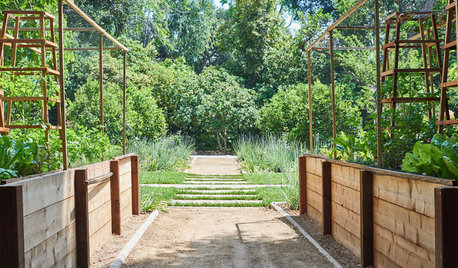
I just built a raised bed for a vegetable garden. My town provides free compost, enough to fill my bed, even if I didn't add anything else. I have peat moss and perlite (as well as plenty of clay soil). Is there any reason I should NOT use 100% compost as my growing medium? I'm in the Northeast and it's been pretty wet here for periods.

Thanks,

Guy

Comments (23)

  • 17 years ago

    I did that and have a lot of shrinkage. It was well aged too.
    I think you should be prepared for that, but my plants did great.next spring I'll just add another layer :)
    :) Laura
    Maybe the worms ate it.

  • 17 years ago

    Compost is alive and the Soil Food Web that is active in compost will continue to digest that material causing it to "shrink". I use just compost as my potting soil adn find that I need to add more during the growing season because the bacteria keep on munching it and converting the nutrients in that compost into food the plants can use.
    Peat moss is vastly over rated as a soil amendment and since there are other things that are much more renewable then peat moss every will be they should be used in place of that expensive and valueless material. The only reason to use Perlite is if drainage is a problem, and that is not something I've seen with my compost.
    However, if you do use 100 percent compost you will find, as others here have, that you need to add quite a lot of compost every year to keep the raised beds filled while a raised bed with 8 to 10 percent compost mixed in with the soil you have will not need nearly as much compost each year to maintain the needed level of organic matter.

  • 17 years ago

    Mix about 70% dirt and 30% compost, then when it shrinks, add more compost on top.

    100% pure compost isn't as great as many people think.

    Do NOT use peat moss, perlite or any other bagged stuff in a garden bed. You do NOT need it! it's an expensive ripoff, especially when you have FREE compost available.

  • 17 years ago

    In the same vein that (sphagnum) peat is over rated as a mineral (garden) soil amendment, compost is vastly over rated as a component of container soils. It does NOT drain well, it collapses quickly and is too water retentive. If you use unfinished compost so particles are larger to promote drainage, you should expect the inevitable N immobilization associated with its breakdown. If compost was such a great choice as a part of container media, it would be widely used commercially, but it is consciously avoided, even though in most cases it's FREE, because of the reasons I outlined.

    Sorry for straying from the raised bed topic, but I wanted to note that because a few can MAKE something work well enough to meet their individual expectations is no indication that others will be satisfied. What Lazygardens said is more along the lines of what I would suggest in raised beds.

    Al

    Here is a link that might be useful: I'll take you to a related thread if you click me!

  • 17 years ago

    I did the same also because I wanted it to be a well drained bed for early spring I found out it took a lot if water in the summer but plants did great

  • 17 years ago

    Peat is an organic soil amendment not a mineral part of the soil structure.

  • 17 years ago

    Lol - Wow, such a keen grasp of the obvious ....

    "In the same vein that (sphagnum) peat is over rated as a mineral (garden) soil amendment, compost is vastly over rated as a component of container soils." is perhaps very slightly ambiguous if you're intentionally looking for an obscure meaning, but I think most readers would have read it to mean: "In the same vein that (sphagnum) peat is over rated as an amendment to/for mineral (garden) soils, compost is vastly over rated, by some, as a component of container soils." ..... but I'm grateful for the opportunity to reiterate.

    Al

  • 17 years ago

    :-)

    Kinda reminds me of one of my elderly relatives...out of the blue she'd say something based on a word that came up in a conversation 30 minutes earlier. We usually had no clue what she was talking about, but it was entertaining!

    Lloyd

  • 17 years ago

    Isn't compost a natural inoculator for seeds? I can't see why it would be bad for your garden. It's as good for your plants as manure, but it won't burn the plant and you can even plant in it directly. I would take my chance at 100 percent compost if it's free especially unless there is something truly wrong with it.

  • 17 years ago

    I have a couple of raised beds (each 4x8') currently under construction. So far it's a wood frame with about 4" of crappy local "topsoil" added to the bottom. I gave that a week to settle some, had lots of rain. Topped that with about 3" mixed straw and grass clippings and coffee grounds. I'll add more UCGs as I get them from the coffee shop. Yesterday I topped that with a couple of inches of wonderful, sweet-smelling homemade compost. Now, it will have several weeks to settle (I'll keep it moist) then mound leaves on top in a few weeks when they fall. It'll all be covered with a cotton sheet and put to sleep for winter. I hope for (expect) nice rich black soil in there by the time I plant tomatoes in them next spring.

    Adding some organic matter yearly is a great thing to do. However, I don't want to have to add THAT MUCH every year and I hope the added soil will prevent that.

    Karen

  • 17 years ago

    If the author goes ahead and uses 100 percent compost for her vegetable garden I guarantee she wont have to worry about what they taste like, they will have died in the first few days of trying to grow on what's in it.

    I think Guy, you have been led down the garden path by some who write about compost's abilities to grow things.
    Don't YOU BELIEVE IT. Compost, like fertilizer, is used to enhance the soil, not grow in it.

    If your compost is any good at all, then use as little as 25% and no more than 35% by volume and work it in down at least six inches. Do not leave it near the surface where it could cause harm to delicate roots.
    Watering the surface will only take it down a minor few inches and will not work on the overall picture.

  • 17 years ago

    The plants will fall over

  • 17 years ago

    Open bottom or closed bottom? I filled my beds with nothing but compost, but it was also open bottomed and I worked it down into the underlying clay. It's also situated on a slight slope so drainage wasn't an issue. I've had a bumper crop of everything I planted including the root crops which didn't seem to be affected in any significant way by the inevitable shrinkage. The only thing that did poorly was the corn, but that was my own dumb fault; because I planted them too close. Basically I don't see a problem so long as you have some native soil underneath for the plants to go into and you insure proper drainage of your beds.

  • 17 years ago

    I think that jerrycan has it right; compost is a soil amendment, compost is not soil.

    Soil contains trace minerals that plants need.

    I heard that melons grow well in straight compost and I tried it. The melon plants that did well were the ones that found some mineral soil to sink their roots into.

  • 17 years ago

    I agree with Pam. Making guarantees about how plants will perform in compost ("death in days") w/o knowing the particulars (plant material, weather, fertilizer program, moisture levels .... ad infinitum) is illustrative of the same naivetee as the statement Pam called to his attention and the one about watering.

    Al

  • 17 years ago

    I generally try to be polite online, but this dreck challenges me to keep my manners intact. What jerrycan5 said is a plain lie. "If the author goes ahead and uses 100 percent compost for her vegetable garden I guarantee she wont have to worry about what they taste like, they will have died in the first few days of trying to grow on what's in it."

    I fill my raised beds with about 99% compost, lasagna style so they compost in situ. We just finished our tomato canning for the season (sauce, juice, salsa, ketchup, etc.) and canned over 50 quarts of our organic tomatoes. I assure you all that tomatoes do not grow on dead plants!

    more jerrycan5 nonsense: "Do not leave it near the surface where it could cause harm to delicate roots. Watering the surface will only take it down a minor few inches and will not work on the overall picture." In the fall when I pull up the tomato plants I often find the roots growing through visible leaves and clumps of horse manure. They are happy with this. I hardly ever watered the tomatoes, since they have the most compost around them which gives off its own water during the season, so they were never looking stressed like the plants in my more soil-y beds.

    Compost does not harm roots. I can't imagine how this person came up with these odd statements. Just made them up evidently.

    Marcia

  • 17 years ago

    I planted in 100% compost beds and holes this year and got decent but seemingly stunted growth on my tomatoes, cukes, and squash.

    Here's what I think the problem was.

    The native soil is clay, the free city compost used is heavy but not as heavy as the clay.

    To keep the plants from wilting in the summer heat, I had the mini-bubblers on each day for 1/2 hour. Any less than this and the plants wilted mid-day.

    The water would drain through the compost and then get "stuck" in the clay soil. The beds were about 2 feet high (or 2 feet deep for the holes). So the compost might be at the right moisture level, but the clay soil below was saturated. This effectively limited the volume of the soil my plants were growing in. And they all were smaller this year than in past years where I hadn't used 100% compost.
    The yields were still ok, but smaller on smaller plants.
    The early girl tomato was only about 4' high when usually I get at least 6'-7' tall.

    Using a post hole digger I dug down next to a tomato and saw how the clay was saturated, even though the compost was just moist.

    So too much of a good thing.

    Next year I'm adding clay soil to my beds and no compost, to even out the water holding capacity between the beds and the native soil beneath.

  • 17 years ago

    I have planted lots of things in deep compost over the years with success. My bumper crop of cucumbers this year were grown in a mix of my compost, municipal compost and packaged cow manure. I once just knocked down two compost piles, raked them to a depth of two feet, and planted my tomatoes on the lawn where the piles were mounded up. Beautiful tomatoes.

    I use deep compost mulches, deep leaf mold mulches and deep hay mulches---and always have, thanks to my learning to garden in the 70s, so I know one thing for sure---here in Maine, somewhere near Bangor, on a lake, in zone 5, between the years of 1974 and 2009, you can garden successfully in deep compost.

  • 17 years ago

    annpat,

    Bangor Maine, what beautiful countryside. I'm originally from Maine.

    I'd thought about the problems I had with 100% compost and thought that the water drainage variance wouldn't be problem in faster draining soil. Soil like Maine's.

    While I miss the faster drainage Maine soil has compared to California clay, the rocks aren't missed. Spent much time in Maine digging up big rocks in garden beds there.

  • 17 years ago

    With clay underneath drainage is key. As I said my beds are 100% compost over clay, but it's on a slope so excess water drains away. All of my tomatoes topped my 6'6" cage and most reached about 4' back down towards the ground. Some went even further.

  • 11 years ago

    Made raised beds this year - a first for me - used 99% town supplied compost. In 6 weeks I am harvesting zucchini, tomatoes & peppers. Cilantro & parsley are like bushes! have small rocks & sandy soil underneath for drainage / root holdings. I don't understand the nay sayers. Don't knock it until you try it !


  • 10 years ago

    annpat(5-Maine) Hahaha. Now I know what to expect if I find myself gardening in Maine, near a lake, near Bangor, with deep compostin 1982!