Software
Houzz Logo Print
theaceofspades

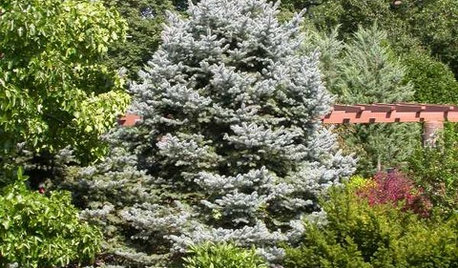
Green Blue Spruce needles a nitrogen source?

18 years ago

I have shredded 10 cu. yards of branches and leaves and my pile is starving for nitrogen. I am seeing temps of 125 and last week it was 145. If I mix in a lot of green needles would it help build up nitrogen. How come green leaves have nitrogen and when they turn brown they don't have much nitrogen.

Comments (9)

  • 18 years ago
    last modified: 11 years ago

    Nitrogen tends to be one of the more volatile nutrients and can easily be lost to the atmosphere. The needles from evergreens, pines, firs, spruces, etc., may contribute some N to your mix but they usually have a coating that does a good job of slowing the digestion process that would release that N. Internal temperatures in the 145 degree range indicate that there is not that much lack of Nitrogen to feed the bacteria, and they are busy and working.

  • 18 years ago
    last modified: 11 years ago

    I agree with Kimmsr, those temps sound just about right. I wouldn't do anything at all with it. Just let nature work the pile.

    Karen

  • 18 years ago
    last modified: 11 years ago

    If you are not bound by the rules and regulations of USDA organic certification etc, adding high nitrogen granular lawn fertilizer works very well for composting chipped branches. A couple of ten pound bags should be a good start for 10 cubic yards.

    You will end up with more finished compost in the long run because the pile will not have to respire off as much carbon to get to the final 10-15:1 C:N ratio of stable humus the way it would if you were adding high nitrogen vegetable matter.


    Piles of chipped branches cool off after a few weeks once the sap nutrients are used up. This leaves a big pile of blond colored wood that just sits there for a couple of years. Mineral nitrogen chemically links directly to lignin at elevated composting temperatures so you don't get the high nitrogen loss to the atmosphere you might expect from an "enhanced" pile of wood chips. This humification chemical reaction turns the lignin chocolate brown pretty quickly and the nitrogen also boosts the activity of the microbes.

    I usually turn in the nitrogen a couple of times when the pile cools down. It jacks the temps up in a couple of days each time.

  • 18 years ago
    last modified: 11 years ago

    spiced ham, I got an MTD chipper shredder a month ago and ground a multitude of branches and leaves. The pile is 70 wood bits to 30 leaves by volume. I add food scraps and grind rib, steak and chicken bones, but that is not much. Would it be worth it to add 200lbs. fish guts from a fish market periodically. How do you get top shelf compost starting from branches and leaves. I got lots of wood ash does that hurt the pile. I usually dump the ash in the asparagus patch, but would like to use rich compost there.

  • 18 years ago
    last modified: 11 years ago

    If you don't want to use fish guts, call some of your local feed stores and ask if they have alfalfa meal. It's higher than it used to be, but I paid $12 for a large bag (40 lbs?) last fall. It's a really good, easy to store and handle bio-activator. It doesn't take an awful lot, but a few handsful as you layer your clippings will work wonders.

    Cottonseed meal (preferably organic and non-genetically-modified), or blood meal can be okay, too. Although the blood meal does tend to attract dogs and varmints.

    Sue

  • 18 years ago
    last modified: 11 years ago

    Fish scraps should work well. Chip piles that large filter odors well (I put a smelly skunk in mine this summer (and racoon, groundhog, squirrel)). I have more problems with deer climbing on and digging out salted peanut shells from the pile than I do with animals trying to dig out meat, but that is because there don't seem to be many of those animals around here. It only takes a few days in a hot pile for fresh meat to turn into goo that varmints won't eat. I think repeatedly tossing kitchen meat scraps on top of a small pile would cause more of an animal problem than ammending a large pile with a lot of fish at one shot, just make sure all of the fish is covered by several inches of chips.

    I would avoid the wood ash because it will alter the pH and shift the microbe balance away from the lignin attacking fungi you want and toward the bacteria that don't work on wood as effectively. And, only use the wood ashes on soil that has tested as acidic, ash is mostly lime. If the pH is too high then nutrients will be bound up and you have screwed up the soil long term by trying to help it. There are alot of articles on the web about proper use of wood ashes.

    Unammended branch wood chips take several years to turn into stable compost because of the high carbon ratio (100:1-500:1) and large particle size. The small amount of initial nitrogen only supports a smal microbe community, and must be repeatedly recycled as those little guys die and release it back to the environment. so it takes a while for the carbon to be respired off down to the stable C:N ratio of humus. The good news is that hardwood wood has a higher proportion of lignin= eventual stable humus than soft materials. The best branch wood to chip is after the leaves have fallen because the tree stores nutrients in the twigs, not the roots, for spring bud-leaf growth.

    You can incorporate about two inches of FRESH branchwood chips into the top 4-5 inches of soil every 3 years rather than or in addition to compost. This feeds the soil microbe community in a way compost does not, betters the soil structure through microbial action, and is above the level where nitrogen will be pulled away from roots. Studies have shown that repeated applications do not pull nitrogen out after the first year. When you compost the material all of the microbial action takes place in the pile so the soil particles do not benefit from the chemicals put out by the living microbes, but this is only really useful information if you are trying to save really poor soil with a limited amount of ammendment material, or if you have overfertilized (P and K) through years of adding organic manure composts.

    I used semicomposed wood chips to turn baren heavy clay into top notch garden soil last year. The leafy branch wood was chipped/composted last December, and turned in to a new clay garden plot in late March. The added nitrogen really helped it to cook under the snow, break down and blacken up quickly, although there were still alot of "blond" patches that didn't get any nitrogen in the pile. I did need to add some nitrogen to the garden in the summer, but that was better than forgoing the new garden and waiting an extra year until the compost was ready. I used about 5 inches of chip compost into 10-12 inches of clay soil. Areas where I used a lower proportion of chip compost to the soil soil were still very much clay like at the end of the season. Next year I'll over-compensate with a large amount of chip compost as well to break down the remaining clay even further and then follow the rules (1-2 inches of compost/year)to maintain soil quality.
    (Why was it leafy in December?...that pile of brush was cut in Sept-Oct, but the chipper guy showed up a couple of months late.)

    Good luck with it

  • 17 years ago
    last modified: 11 years ago

    This past spring I bought 5 yards of compost and 5 yards of Black mulch. We roto tilled areas of thin lawn and now have green lawn due to the added compost. In the garden it did not work so well, the plants declined and did not grow good. Their were leaves in the compost. I added lime to the lawn reseed so I did the same with the garden. I'm thinking their was a deficiency in the soil N due to the unfinished compost. The new lawn also got starter fertilizer so did well. But later on the vegetable garden did very well. The carrots grew long and nicely formed in the darker garden soil. The sweet potatoes will be dug for thanksgiving. I am going to bury the fish guts tomorrow. I love composting! With the chipper shredder I don't need to buy compost or mulch.

  • 17 years ago
    last modified: 11 years ago

    After reading through all these messages I don't see that the OP ever got an answer to the question. I can't help you with information about nitrogen in pine needles, but I thought I would try to reengage the readers toward the original question.

    Still I have other thoughts on what you asked and what has been said. If you are getting temps anywhere above the outside air temperature, your pile has at least some "greens." At 145 degrees F your pile had plenty of greens. All the USDA requires to kill the pathogens is 120 if I'm not mistaken.

    Regarding green and brown leaves: the color of the leaves has nothing to do with whether they are "green" or "brown." Materials that are considered "green" are those with a relatively high amount of protein. Protein is made from amino acids which carry nitrogen in them. Thus high protein (but dry and brown) wheat and coffee grounds are much more "green" than most green tree leaves. Most grass plants carry their protein in the grass blades until the grass goes to seed. Then the protein is stored in the seed. On the other hand, "brown" plants simply are those that have minimal protein in them. Their physiology is dominated by carbohydrates (sugar and cellulose). Any material which is a seed, nut, bean, or is otherwise considered to be high in protein is a green. Most animal dung is considered to be green because it has plenty of protein left in it. Much of that protein is from the bacteria inhabiting it.

    Soil microbes do not eat (or decompose) nitrogen and carbon. They decompose protein and carbohydrates. This is very important to understand if you are trying to manage your pile. As soon as you drift away from the biology of the compost and try to make it a chemical process, it is very easy to become disoriented regarding how all this works.

    biological approach ==> protein and carbohydrates
    chemical approach ==> nitrogen and carbon

    Kimmsr said early in this thread that nitrogen was one of the more volatile nutrients in compost. This is because when you have too much protein, the protein decomposition process can result in ammonium materials. When they get wet the become ammonia which you can smell either as recognizable ammonia or as the sour or worse smells of rotting meat. In that sense, nitrogen is volatile, but you can control that off gassing by covering the pile with plenty of low protein materials like leaves (but not grass). These materials seem to absorb the odors and hold them in the pile.

    Note also that the chemical fertilizer suggested by spiced_ham above does not contain protein and thus is not a direct food for the compost microbes. It is usually a salt and probably responsible for more microbe deaths than for benefit. Spiced_ham went on to say,

    "You will end up with more finished compost in the long run because the pile will not have to respire off as much carbon to get to the final 10-15:1 C:N ratio of stable humus the way it would if you were adding high nitrogen vegetable matter."

    I think I would disagree with that but I don't really understand it. Compost piles do not normally respire carbon. Microbes digest it along with protein, vitamins, and minerals. If the pile is not managed you might get a "methane" smell which indicates gassing off of carbohydrates, but that would be abnormal rather than normal as he indicates. The lack of any gassy smells indicates you are not losing carbohydrates. If you are trying to tune up your pile and you have too much carbohydrate, the solution is to add protein, not salty chemicals.

    Personally I'm not that concerned with the ratios of materials in my pile. It starts with 20 or 30 bags of other peoples' tree leaves tossed on the open ground. Then we start burying banana peels, pumpkins, and kitchen scraps. It might be ready next year or not. It certainly never heats up with the minimal amounts of protein it gets, but it always decomposes.

  • 17 years ago
    last modified: 11 years ago

    So fall shredded branches have lots of stored carbohydrates in the buds and cambium. I always threw dead stuff on a pile and it never heated. The big green branch heap lurking on the side and stagnant compost pile made me get a shredder. And as luck would have it the branches were green enough to heat the pile. My neighbors have been putting out 50 bags of leaves each in the last 2 weeks. I use a Deere lawn tractor to mulch in the leaves. They put their tractors away and use blowers. Some folks are slow learners. I've got a Colorado blue spruce to take down, but next year I'll put those leaves to use.