Software
Houzz Logo Print
melissa_thefarm

Digging

17 years ago

October is a busy month. We're shifting potted plants indoors or into cold greenhouses, planting young herbaceous perennials and aromatic plants out into the garden (ca. 200 of the latter; this isn't a minor task), mailing out rose cuttings, planting cuttings we receive. I haven't gotten around to planning orders yet. This is also the month to go visiting to see other gardens.

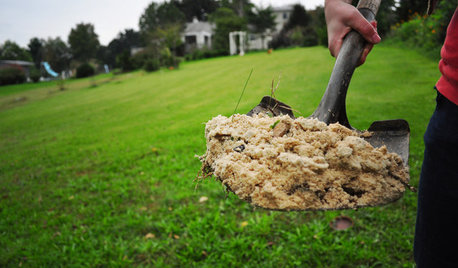
I have a general sense of having too much to do and not enough time to do it in, but I'm enjoying working in the garden just the same. I forgot weeding and mulching: we clean up when we plant out the babies. I also forgot planting out the roses rooted from cuttings taken a year ago. A lot of these are going into places where roses died or failed to thrive, so the soil obviously needs to be amended. This is where the digging comes in. We've been mulching for a few years now and in many places the difference shows: the ground is moist, there's a layer of humus, we have earthworms. In other places the soil is intransigent and calls for more work. My husband hauls out a sack filled with bagged compost (the kind used for potted plants) and coarse sand, and pulls out chunks of adobe-like gray clay. We break up the chunks with our hands or the shovel, add all the composted hay we can find around the hole, add the bagged compost and sand, and mix it up. We make a big hole, or at least bigger than we used to do. We plant the rose, water generously, mulch, and hope that this time it will work. Obviously it's the tough roses that go in these spots. The worst areas are also in full sun and battered by wind. Bourbons, Albas, forms of R. foetida, and Damasks seem to offer the most promising candidates for these difficult positions, though there are surprises like 'William Lobb', a tall purple moss that has always done well.

We're slowly cutting down and, I hope, killing the greedy and invasive elms (they're the only plant I'll allow my husband to use herbicide on) and replacing them with flowering ash, wild pear, and oaks, mostly in the form of seeds. The ground where we want trees is also very poor, so here too we mulch with hay: I began doing this once I noticed how many tree seedlings I had to pull out of the garden beds. Of course in thirty years we'll have our belt of woods, but you have to start some time.

We still have a couple of tons left from the forty-five tons of hay we bought in spring of 2008 after rain ruined the local farmers' harvest. It has been a godsend (for us, not for the farmers), but we're nearing the end of it; once it's all gone we'll have to scrape along somehow. I think we'll use up the remainder this fall, as we continue to add mulch where it's gotten thin. We could use the same amount all over again, I'm afraid: I'm looking forward to a time when the garden will be more nearly self-sufficient in supplying its own organic matter. We allowed room for a big compost heap in the big garden.

Melissa

Comments (6)

  • 17 years ago

    Melissa, I can relate! Our clay, alkaline soil is quite a challenge. Good for you in using the ruined hay! I didn't start gardening till about 6 years ago. I started digging out all the garbage soil and replacing it with compost and quickly realized what an uphill battle I was facing. It's taught me to be much more selective with the plants I choose. It's much easier to pick a plant that will tolerate the soil than to try to amend it into ph perfection. Having said that, I still work on the soil. I had a few bales of leftover Kansas grass hay we bought during a drought a few years ago. My three horses were on spring grass by then and didn't eat it, so I stacked out of the way. When I went to move the hay I found the most beautiful soil under the bottom bale. Perfect compost! So I know you are on to something! Fortunately, the horses compost my hay for me, LOL. The trick for me is to use the manure that comes when the horses are hay fed, October thru April here and not on pasture. The pasture manure is full of weed seeds! Do you live near any people with horses? We are generally delighted to share! You could compost the manure with the remaining hay to stretch it out some. I know really fresh manure can burn plants so I wait until it dries out, then mix it with compost.
    You have learned the "secret" to planting in clay soils, which is dig a wide hole, but not deeper than the roots will go, amend and mulch. Clay settles quite a bit. You are winning the soil battle bit by bit, so keep fighting! Thanks for updating us on your month!

  • 17 years ago

    treebarb,
    We actually live right next to a dairy farm, but Italian farmers caught on a long time ago, and they KNOW their manure is gold: fat chance of getting any of it from them. There's a riding stable some miles away, but its horse poop is taken as well. Also, since we don't have a truck or a tractor, transportation is always an issue if there's anything heavy or bulky to move. There are limits to what a Fiat Punto can haul. Anything we use in the garden has to hauled in our arms or by a tractor, as it's too steep for any other form of transportation. So last year was miraculous, and now we'll just have to get along as best we can. I ardently wish I had more hay. You're so SO lucky to have horse manure!!!!
    I agree I have to pick my plants, though this is true for everyone who gardens. A recent visitor to the garden said, "You have bad soil but your plants grow well". This struck me as a profound insight. As I wrote to another gardener, in ornamental gardening there's no such thing as bad soil; there's only soil that's not suited to the plants the gardener wants to put there. Not all plants want the kind of soil that tomatoes adore. However, if I want to have something besides Bermuda grass and knotweed in the garden, I have to amend it. Sometimes I think all the roses are just my incentive to improve the soil, which is the true goal, just as my daughter's reward for practicing on the piano is to be allowed to watch movies. What kind of changes do you see in your garden soil? What are you growing?
    Melissa

  • 17 years ago

    For a few years I tried impatients, begonias, dahlias, things totally unsuited for here. I just didn't know any better. I just bought whatever I thought was pretty. My, how fast they died! I noticed was how hard it was to dig and that there were no worms in my soil. I started planting a lot of trees and while doing this I was smart enough to ask and listen to the nursery folks about what grows well here and why. That lead me to learn more about soil and ultimately to have my soil tested. I have a 7.9 ph with low nitrogen and phosphorous, so I started adding compost and bone meal. Success with the trees gave me more confidence to try roses. I started with one Grootendorst rose and didn't kill it, so I planted 2 more. Then I put in a Variagata Di Bologna (probably not spelled that way) after amending heavily and that sucker took off! I learned I have the makings of some of the best compost around with the horses and wasn't even using it! Now I try to mix about a third amended soil into the native soil I dig out and use the worst clay clumps to build moats around the plants. I like to mix peat moss, compost and manure together. This works well for shrubs, junipers, annuals and bulbs. I've started using mulch, too. I bought a twin compost tumbler this year and am learning how to make my own compost. Now I find worms most of the time and can dig much more easily. I sure know when I hit a spot that hasn't been amended! This year I've been planting hyssops, yarrow, lavender, ice plants, coneflowers, iris and a few ornamental grasses. I am amending these even less than a third since they are supposed to like my alkaline clay. They've done really well and I'm hopeful they will winter well. The yarrow has really taken off and while I bought it as a filler plant I find I really like it. I know a lot of people don't. I've posted with you previously about my lilac and rocky mountain juniper windbreak project. With roses I amend probably 30 to 40% and use Mile High Rose food. I also use fish emulsion. The way I see it I get one chance to really make a good home for them. The roses I planted this year are Harlekin, Awakening, Barrone Prevost, Louise Odier, Midnight Blue, Hansa, AusMary, Henry Kelsey and Mountain Minonette. No losses yet! I won't get into the veggie garden, I've run on too long as it is. What grows for you?

  • 17 years ago

    treebarb,
    I remembered vaguely the posts about lilacs. It sounds like you're on a classic gardener's curve, and are really going to know what you're doing, happily for the plants and soil in your care.
    My inclination is to use primitive means and pick my plants in as informed a fashion as I can, and see what happens. Our soil is exceedingly compact gray clay, as I probably said earlier, but contrary to what I used to think, I'm wondering now if it isn't close to neutral Ph: roses that other gardeners tell me get chlorotic in alkaline soils don't suffer this problem in my garden. As far as drainage is concerned, the heavy soil is compensated for by the steep slope, so aromatic and other plants that require good drainage seldom have problems. I did lose a couple of plants of rosemary last year when we had several weeks of rain in late spring, normally a dry period. With our dry summers fungal diseases aren't a great problem, though cane borer did a lot of damage this year to the roses, and I wonder if it may not continue to worsen.
    I grow old and older roses: Teas and Chinas, Noisettes, a few Bourbons, Hybrid Musks, Albas, Damasks, Gallicas, species and their hybrids, and a miscellany of others. I love the David Austin roses, but they don't like my conditions. I think I could become interested in Hybrid Teas, but they'd need to be carefully selected and placed. Aromatic gray-leaved hardy plants are essential: lavender, sage, rosemary, artemisia, thyme, and others. Spring-flowering bulbs do well, especially daffodils that the critters don't eat; and tall bearded iris, mostly primitive kinds, are all over the place. A lot of deciduous shrubs are at home here: mock orange, lilac, forsythia, ligustrum, for example; evergreen broadleaf shrubs are more difficult. I love box and yew, both somewhat difficult to get started. Olives are happy here (we'll see what happens when we get a cold winter), as are Italian pines and Italian cypresses, both more typically found further south, but we're in a warm spot. Bay laurel is great if it has a protected spot with some shade. I'm looking more at plants that characterize central and southern Italy, like myrtle and Pistachia lentiscus. Honeysuckle and clematis are good; so are peonies if they're correctly placed; possibly the tree peonies are easier than the herbaceous ones in sun. We've started a lot of Chinese fan palms (Trachycarpus fortunei) from seed. I grew up in north Florida with palms as part of the wild landscape and they don't have the cultural and esthetic associations for me that they do for Italians. Here often they're used in ways that suggest stuffy pretension, or a Riviera-like, highly artificial landscape; we'll see if I can introduce them into a rustic garden and make them work. I also have a lot of herbaceous perennials lately bestowed on me by friends and that I don't know well. I'll see how it all comes together.
    Melissa

  • 17 years ago

    I have been warned about chlorosis here, but so far have just had my pink Groot affected. The leaves turned the lightest yellow with darker green veins. I thought it was a goner. I dug in Ironite and a big helping of rose fertilizer in this summer and it came back, but I know this will be a battle for me with this plant. The fact that you aren't seeing it means your efforts are paying off! Doesn't that feel good? You may be right about your ph, too.
    I enjoy hearing what you're growing, particularly the herbs. I want to try more of them next year as I think they will do well here. I just wish our growing season wasn't so short. We can't start our veggie gardens here until late May and our first hard freeze was 3 weeks ago. I bet your growing season is much longer. It's very interesting that we are both growing a lot of the same plants, despite the differences in climate. You've given me some ideas for other plants to try, except the palms and myrtles. They don't have a prayer here. And I did kill a yew and a couple of arborvites, so I have plenty to learn. Thanks for sharing!
    Barb

  • 17 years ago

    treebarb,
    The big difference between us is that I'm gardening in zone 8 and you're gardening in zone 5. That makes recommendations difficult. Spring-flowering bulbs and peonies would be work very well, though! If you're interested in trees and shrubs, you might want to get (or check out of the library) Michael Dirr's 'Manual of Woody Plants'. This is a fascinating compendium of every tree, shrub, or vine that grows or could grow in American gardens: no pretty photos, but absolutely jammed with information. I imagine you already have 'The Sunset Western Garden Book'.
    Concerning roses, I would imagine the Albas would do well for you, and possibly the Damasks; this is assuming you don't mind once-flowering shrubs. Bourbons are another possibility among old roses. It's too cold where you are for the warm-climate roses that thrive for me: Teas, Chinas, Noisettes. There are cold-hardy ramblers, but I don't know them, and the Hybrid Perpetuals, which I've never grown. Breeders have done a lot breeding roses for cold climates.
    Have you tried clematis? These have a surprising tolerance for summer drought and heat, possibly because mine have their roots deep in nice heavy clay with a mulch above that. I believe they don't mind cold winters.
    Melissa