Software
Houzz Logo Print
veryzer

Wanted: Sawfly Larvae Predator

17 years ago

Must be willing to work evenings and weekends.

Suggestions?

Comments (19)

  • 17 years ago

    Day labor only, but yellow jackets are usually up for the job.

  • 17 years ago

    It usually takes a couple weeks into sawfly larvae season for the natural predators to show up in my garden. Can't remember just now what the predators are, but sooner or later they usually show up and the larvae are gone.

    Kate

  • 17 years ago

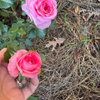
    I used safers insectide soap on our first year rose and it worked to kill the sawfly larvae.
    Our larger older rose bush, I picked some off, but, other than that, did NOTHING. They ate for awhile, then disappeared.
    They totally ate our neighbors 6ft X 6ft shrub plant. It was not a rose, but, another type of shrub that's located on our property line right outside our fence.
    I was in panic mode. (LOL)


    {{gwi:329200}}

  • 17 years ago

    They totally ate our neighbors 6ft X 6ft shrub plant. It was not a rose, but, another type of shrub that's located on our property line right outside our fence.

    Hmmmmm....... You sure they were the same as the sawflies going after your roses? There are different sawflies that feed on different plants (just as there are different moths & butterflies that feed on different plants when they're caterpillars). As a boy my very first experience with sawflies was when a bunch of them were doing a job on the mugho pines in front of my parents house when I was growing up. IIRC, that sawfly only eats the needles of certain species of pines and never bothers roses.

  • 17 years ago

    How long was sawfly season last?

  • 17 years ago

    That does not look like any sawfly damage I've ever seen. Sawflies rarely eat their way entirely through a leaf, leaving strange 'stained glass' windows in them. That looks more like general caterpillar damage, maybe tent caterpillars of some sort.

    BTW, tent caterpillars are the only thing I've personally have had do enough damage to leaves that something had to be done about it.

  • 17 years ago

    Yes, the same slug that was on our neighbors bush, also attacked our roses.
    It looked exactly like a bristly rose slug from a pic on a website. So, I assumed that's what it was. I'm searching for the website, but, can't find it yet.

    {{gwi:329199}}

  • 17 years ago

    The slug or whatever that was here was all green with tiny bristles, the face was orange/brownish.
    A website, which I can not find yet, had the perfect close-up pic of what we had here. They called it a bristly rose slug.
    I still can not find that website with that certain pic.
    I wish I would of bookmarked it.

  • 17 years ago

    veryzer and jim1961: try this site, "Baldo's Buggiest website"...

    http://buggyrose.tripod.com/ipm/84rosesawflies.htm

    An excellent source that I suggest you bookmark.

    I certainly understand the comments by mad gallica. The typical sawfly damage looks more like this...

    {{gwi:336323}}

    The sawfly larvae, more often called the rose slug, is not a slug at all and they will be found on the underside of the rose leaf and are quite small. Note the small size of the three on this leaf.

    {{gwi:336324}}

    And, finally, a close up photo.

    {{gwi:336325}}

    I had a bad early infestation this year. The control is easy once you identify them...they respond to almost any insecticide but are not controlled by BT in my yard.

    Bob

  • 17 years ago

    Excellent photos, Bob!!!

    In this garden, getting the first ones via squishing (as soon as damage appears) significantly reduces the damage. Here they have several generations per season and if you get the very first ones, less eggs = less larvae = less damage.

  • 17 years ago

    Paper wasps prey effectively on rose slugs. These are the slender 1" wasps, black with yellow rings on the abdomen. I often see them hunting among the roses. In my garden there are rose slugs every season, but they rarely live long enough to do massive damage.

  • 17 years ago

    Thanks for the tips. They've been at it all summer really, but have recently gotten hungrier, I guess. It seems that we get mostly bumblebees and regular honeybees (though I suppose there's probably not a "regular" type)so there's not much in the way of predators. I'm certainly not going to spray now, but if they come back with a vengeance next year and I can't get around to squishing them all, is there a recommended insecticide to minimize damage (to the insect world)? Is Safers Soap readily available?

    Thanks.

  • 17 years ago

    they respond to almost any insecticide but are not controlled by BT in my yard

    That part about the Bt makes sense. While there are a few different formulations of it for different pests I've never heard of one for sawflies. By far the most common form of Bt is the strain (it's a bacterium species) that kills caterpillars. The bacteria produces a protein that shreds the caterpillar's gut once it's ingested by the caterpillar.

    What makes the different formulations different is the Bt strain they use. There's one that does the same thing to mosquito and black fly larvae, and I believe there's another one that works with some beetle grubs. Apparently the different strains produce slightly different proteins that work in different insect digestive systems.

    As I said, I've never encountered a Bt strain for sawflies.

  • 17 years ago

    Matt, you can get 'Safers Soap' in the garden section @ Menards.
    -terry

  • 17 years ago

    Safers is just one brand of insecticidal soap, so do a price comparison. These products can be found in any garden center or garden department.

    York, you are correct about the Bt. Since sawflies are not related to caterpillars at all, they will not be controlled by the strain of Bt used to control caterpillars. They are prey to a host of parasites and predators, however, and are very easy to remove by hand.

  • 17 years ago

    That's been my experience, greenhaven. This spring they were a pain, but the last few weeks they've been defoliating new growth.

  • 5 years ago

    Yes, sawflies are Hymenoptera, and Bt won’t kill the larvae. Some leaves on our roses are skeletonized by the time I notice the damage and start picking off the larvae. I think they emerge before our wasps start patrolling.

  • 5 years ago

    And they are very specific to host plant. And the species can look very different. The pine sawfly larvae we had were pale green with little black squares. The button bush larvae are a very pale blue gray. The rose larvae are a light green. Different critters, but all can do a lot of damage to their host plants.