Software
Houzz Logo Print
joereal

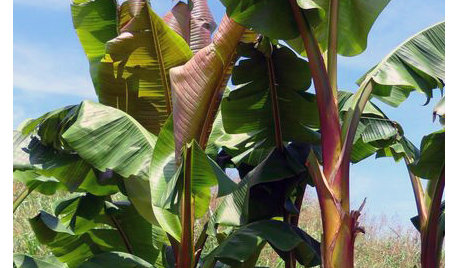
Musa sikkimensis real cold hardy

21 years ago

I have cold hardy types:

M. Basjoo, M. sikkimensis, California Gold, Dwarf Brazilian, Dwarf Namwah, Dwarf Orinoco, Gold Finger, Raja Puri, etc.

I left them outside the entire last winter. The lows briefly went down to 23 deg F, we had several frosty nights. Here's the partial results on my first inspoection:

Musa sikkimensis did not suffer any damage on its leaves! Not a single leaf took frost bite.

All the other cold hardy types lost their leaves but have their trunks survive. California Gold and M. Basjoo were the last ones to lose their leaves, followed by Brazilian, Misi Luki, Orinoco, Gold Finger, Dwarf Nawah and Raja Puri, Williams, Manzano, FHIA-23.

The bananas that died back to the ground level are: SDC, Lakatan, Kru, Kofi, Grand Nain, Zebrina, Thousand fingers, Hua Moa, Mauritius.

After a month, I will report which did not resurrect and have died down completely. My listing will be much more complete/

Comments (11)

  • 21 years ago

    Cool Observations! I'm Gonna have to try one of those Sikkimensis...

    WeatherGuy

  • 21 years ago

    M. sikkimensis should be good as exotic ornamentals, the fruits are not palatable.

  • 21 years ago

    There's a researcher in Ohio who is trying Musa V(something) Pink Velvet. He claims that it survives -6 with minimal protection and it flowers and fruits each year.

    The fruit are claimed to be somewhat edible, but filled with buckshot sized seed.

    I personally have no experience, just thought it was intersting.

    ~Chills

  • 21 years ago

    That would be M. Velutina. I've not heard that it was that cold-hardy with a zone rating of 9A-11.

  • 21 years ago

    Velutina is grown here in zone7. I believe it comes back with no protection. (I have not grown it yet)

    Thanks very much for the cold info, JoeReal.

    seahorse

  • 21 years ago

    I spoke to him, via email, and he says that Velutina has survived 0 degrees with little damage, but that may be the extent of its hardiness as this last winter his outdoor one died (-14 F) even with protection.

    He says that it is easy enough to winter indoors in case your outdooe one doesn't make it.

    ~Chills

  • 21 years ago

    Musa sikkimensis does well here in Z8 Norway, but they grow slowly compared to Musa. Basjoo, atleast as a young plant. I believe M. Sikkimensis needs some warmer weather to really take off than m. basjoo.

  • 21 years ago

    I have had the exact oppostite experience with M.basjoo, and M.sikkimensis. My M.sikkimensis seems to put out growth at the coolest times(slows in full heat), and M.basjoo wakes up when it starts to get warmer.
    These differences must be from the widespread origins of M.sikkimensis(BTW the M.sikkimensis I am talking about is a tissued cultered one here in the states, probally from Agri-starts originally) Maybe my new seedlings will prefer some heat!

  • 21 years ago

    Hi JoeReal,

    Where abouts in CA do you live. I'm native to norhtern CA and was curious to know if you have any luck with williams or texas star blooming?

  • 21 years ago

    I've got the Williams bloom at perfect time this late spring, so it is going to have mature properly filled banana fruits this October.

    Texas star actually bloomed first, but I am beginning to think that what I got is not Texas Star but a lousy ornamental banana from the looks of the fruits.

    My California Gold is now starting to open up its bloom, I think it is late, but I hope it would catch up. With all the heat wave we're having, and a record hottest July to boot, the blooms and growth are delayed on the Ca Gold. I hope it will make it to have harvestable fruits.

  • 7 years ago

    seedling from Helen's Hybrid


    It's supposed to be a cross of sikkimensis with another edible banana, chini champa

Sponsored