Software
Houzz Logo Print
hooferginger

Oriental Poppy problem

18 years ago

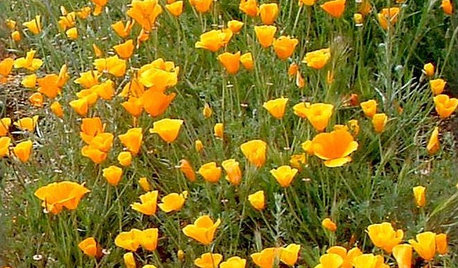
Help! My beautiful Oriental Poppies are hiding beneath the foliage. They get morning shade, and lots of afternoon sun, but they don't grow long enough to see. There are these big beautiful ruffly orange flowers way down in there. Anyone know what's wrong?

Comments (11)

  • 18 years ago

    I used to have this issue when my oriental poppies didn't get enough sun throughout the day, and they were next to a black walnut tree. I have the poppies in much more sun now (and nowhere near the black walnut tree) and they've got really long stems and huge blossoms. So...I would think they might need more sun, and maybe check to see what else could be affecting them.

  • 18 years ago

    Can you explain in a little more detail the needed chill hours? My oriental poppies also had the same problems. I did not get mine in the ground until mid November so they probably did not accumulate enough total chill hours.

  • 18 years ago

    Dormancy is a resting phase when plant metabolic activity and growth are negligible. Dormancy is triggered by increasing cold temperatures and decreased day length, the same stimuli associated with leaf loss in deciduous plants. Once dormancy has been established growth, can only be re-initiated after the plant has experienced a required number of hours (i.e., chill hours) at cool temperatures (i.e., 32-45°F; 0-8°C). Chill hours are accumulated during the autumn and winter seasons. This clever adaptation allows a plant to sense winterÂs approach and to schedule a resting phase during the coldest season. Growth resumes during more favorable conditions in spring, but only after ample cold weather. Matching the length of a cropÂs chill hour requirement to the climate is critical. Selecting crops with a very large chill hour requirement relative to the hours of cool temperature at a location would not prevent plants from resuming active growth in the spring; however, it would reduce the number of fertile flowers produced by the plants. Crops, such as peaches, with short chill hour requirements, may completed early in the cold season may break dormancy during a warm period mid-winter, resulting in freeze damage when more typical cold temperatures resume. Chill hour requirements vary within a crop.

  • 18 years ago

    I have a question, would putting them in a pot help get their winter chill more? Don't potted plants outdoors get a little colder than ones in the ground? I just ask because I have a poppy plant outside in a old watering can as decoration and it just started blooming and is so pretty. Mine is red though, so I don't know if it's oriental poppy? It was some cheap drug store seed I directly sprinkled in a bunch of places to see if it would work and it only took off in the old watering can filled with potting soil, probably why it took better than right in my bad soil. Ok, sorry, too much info you didn't need, lol. It's so pretty though, red with black center, especially in the old watering can sitting next to an oak barrel planter, I've been meaning to take a pic.

  • 18 years ago

    I don't think that it is always a problem with lack of winter chilling with Oriental Poppies here near the bay; I have seen plenty that do just fine with normal flowering stems and in less than full sun here in Berkeley. It may be that some cultivars are better than others, but I have seen enough around to know that they aren't that difficult here.

  • 18 years ago

    Another question, when exactly is the bloom period? I have red orientals that has been in bloom for 6-8 weeks. The peachy colored, sorry I don't recall it's name, have not even a bloom in sight. Do you think they will flower this season or will it wait until next season? We are already pretty hot here in the valley and my other poppies have pretty much melted in a matter of two days. The Red orientals on the other had are still blooming and the stems have lengthend somewhat.

  • 18 years ago

    If you continue to have failures with the oriental poppies, i would recommend the opium poppy p.somniferum, which is an annual, but does beautifully for me every year in coastal san diego. i have the large double peony flowered pink variety, and they are self-seeding, show stoppers every spring. Mo

  • 18 years ago

    I feel obligated to point out that P. somniferum is the latin name for the opium poppy and it is illegal to grow in the U.S. Enforcement is uncommon but not unheard of - more than one person has had their garden torn up by DEA agents who are a little overzealous (or do I repeat myself) and found themselves incarcerated.

    Ryan

  • 18 years ago

    don't want to hijack the original posters discussion, but my poppy seeds were purchased locally at a nursery. opium poppy seeds are also the poppy seeds used on breads and desserts, and obviously are not of the same opium level as those plants bred for drugs. i will have to do more research on whether garden strains, bred for looks, are now illegal in the US, but thanks for your comments. Mo

  • 18 years ago

    Mo,

    In this particular case, ignorance is bliss and more importantly a valid excuse. Welcome to the war on drugs. For those of you with no interest in growing the florist's poppy, common poppy, breadseed poppy, I recommend the article at the end of this post. Those of you who do, don't follow the link. Reading a few words in cyberspace is enough to transform you from a law abiding citizen to a criminal guilty of possession of a class I controlled substance.

    Take Care,
    Ryan

    Opium Made Easy

Sponsored
Haus Studio
Average rating: 4.8 out of 5 stars28 Reviews
Franklin County's Preferred Custom Cabinetry & Design Studio