Software
Houzz Logo Print
gmb7

feedin and fertilizers

21 years ago

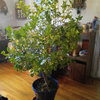
hello what is the best fertilizers for dwarf lemon meyers i have an all purpose liguid its 10 -15 - 10 shulz plant food .. i was going to try osmulate for acid loving plants and a liquid for azaleas are any of these better then others.... i dont think these plants are all that old maybe 2 or 3 year plants they are flowering and have lemons on them.... also how often should i feed them and fertilize.. thanks

Comments (13)

  • 21 years ago

    Good post...I think with winter coming.. fertilizing should be slowed down. the trees need a time to rest In door, outdoor, greenhouses

  • 21 years ago

    Gmb, I agree with Dale..One or two more feedings should do depending on sun and growth.
    The Azalia food is good for citrus..is that a pellet or water soluable? Toni

  • 21 years ago

    the azalea food is water soluable... i was wondering if the pellets osmulate are good also for acid loving plants and do you use them together ...... i was at the garden section and there were so many different kinds to choose from ... my trees are still growing new growth and are budding new flowers

  • 21 years ago

    Gmb, wow, I've never seen an Azalia food that was water soluable..The type I find are pellets.
    The pellets you mention, are they osmulate or osmocote?
    I've never heard of osmulate, but will do a search..Now you've got my curiosity..lol
    As a last feeding this year, even though I've been using Citrus fertilizer, I'm going to add a dose of Osmocte and spray foliage with Fish Emulsion..This will be done in Oct. Toni

  • 21 years ago

    Realize that citrus are NOT "acid-loving" plants, in the sense that azaleas and blueberries are. Those crops would like to be in the 4.5-5.0 pH range (strongly acidic). Citrus on Poncirus or 'Swingle' rootstock prefer about 5.3-6.0, and on true genus citrus roots, would like to be in the 5.5-6.5 range -- just mildly acidic. So acid-forming fertilizers are useful if your soil is naturally alkaline, but if not, they may overdo the acidification, and your plants won't perform as well as they could. And in an area such as central Florida, where we start out with a soil with a natural pH of about 4.5, we use lime (mostly dolomite) on our citrus frequently, to keep them happy.

  • 21 years ago

    gmb7, when the roots of citrus trees take up (absorb) nutrients from a container's medium, or from the ground, if planted outside, they always take the nutrients up in the ratio of 5-parts nitrogen, for every 1-part phosphorus (P205) and 3-parts potassium (K20). This is a 5-1-3 absorption ratio. It is best to find a fertilizer that matches this ratio as close as possible, especially for containerized plants. Nitrogen (the first number), and potassium the last number are both water soluble and will easily leach from the container or leach from the soil by flushing with clear water when, and if, they ever reach toxic levels. Phosphorus (the middle number) is generally not all that soluble and tends to build up in the container or soil, and is hard or impossible to leach out. The fertilizer you mention above is a 1-1.5-1 ratio. It is supplying the element least used by citrus at the highest rate. 10-15-10 is a horrible fertilizer formula for citrus. Lastly, you can fertilize your trees once a month,or once every two weeks, or once a week or fertilize with every watering. It all depends on the amount of fertilizer you apply with each feeding. I feed all of my trees using the constant feeding method (fertilize with every watering) at the rate of 200-ppm nitrogen. I fertilize all year long, as my trees are grown inside a greenhouse and get plenty of light, heat and humidity even during the winter months. If you grow inside a house, you would reduce feeding (but don't completely stop) during the winter. - Millet

  • 21 years ago

    ok getting my notes ....it was osmocote i was looking at and the one for acid loving plants was 19 6 12.... and the water soluable for azalaes was 9 6 6 so either one of these would be good and by millets formula the 19 6 12 would be the closest but some of these didnt have all the nutrients like iron and manganese ... i also looked at citrus spikes no good for pots but those were 10 15 15 and they had all the nutrients and is it ok to fertilize when the tree is budding one of mine is budding right now

  • 21 years ago

    Yes, you can fertilize at any stage of tree growth. Fertilizer spikes (I never use them) are ment for trees planted in the ground. If your tree is budding, then fertilizing is even more important. Actually you should fertilize approximately one month before bloom to fortify the tree to help assist in blooming and fruit set. Better late than never. Take care. - Millet

  • 21 years ago

    Gmb, I have two types of Osmocote, and both say, Feeds up to 4 months. So if you give a full doss in say, the beginning of Oct, you will not have to feed until the beginning of February. Toni

  • 21 years ago

    toni what kind of citrus fertilzer do you use i picked up some osmocote the 19 6 12 kind they had... but they dont sell much for citrus here in mass...ill have to see what they have next time i visit california they must have all kinds out there

  • 21 years ago

    Citrus need the major three plus minors. You will find that Fertilizer "made for citrus" varies quite a bit. You are wasting your money buying a "citrus" fert. Just make sure you are giving the plant what it needs & you will be fine.

  • 21 years ago

    I could easily agree with Laaz on this matter. Citrus fertilizers used by most commerical growers for grove trees that are planted IN THE GROUND have formulas such as 6-6-6, 8-8-8 and even 10-10-10 for older trees. In all actuallity, citrus is (as Laaz says) not all the fussy about fertilizers. Give them NPK plus minors. I do believe, however, for trees that are containerized, it is best to use a fertilizer that replaces the nurtients in the same ratio as are taken from the growing medium by the tree, to avoid build-ups. I just read an article from Germany, about how phosphorus builds up in containerized potting mediums, due to formulas which contain a high lever of P2O5. - Millet

  • 21 years ago

    Gmb, it's impossible finding Citrus food here in IL, too, which is why I've used Azalia fertilizer over the years. I finally found citrus food online..the company is Hoffman, 12-6-8..the Osmocote is 19-6-12. I've never used the Osmocote before, so this is a first.
    I was told by a woman who owns a citrus nursery in Fl to spray Fish Emulsion on citrus which is what I'll be doing before bringing them indoors for winter. This nursery uses the FE as a foliar food and insecticide. The oil in FE works similar to Neem Oil. As a last feeding in Oct, I will sprinkle the Osmocote, and spray leaves w/FE.
    Because I live in Il and our winters are grey w/very little sun, I do not believe in feeding from Nov-Mar.As soon as the days grow longer, then it's back to feeding. The same applies to many other tropicals, sub-tropiclas, cacti and succulents. I do not believe in force-feeding..
    As an example, even though I've perrenials in my garden that are evergreen, I do NOT fertilize them. I truly believe plants need a rest, and my conclusion is verified in citrus books. I can name 3 books and several other plant books I own that discuss winter care.
    Of course everyone grows their plants how they see fit. Since you're in z8, you may have longer sunnier/warm seasons than we do, so you may be able to feed plants for longer periods. Also, your spring/summers may start earlier than ours. Experimenting is the way to go. One other thing, do not, during any season, overfeed..Other than over-watering which is the number one killer of plants, I believe over-feeding comes in a 3..Number 2 is underwatering. Toni

0
Sponsored
Peabody Landscape Group
Average rating: 3.5 out of 5 stars8 Reviews
Franklin County's Reliable Landscape Design & Contracting